



7 Reasons to Hire a Salesforce Consultant in 2026
Salesforce
5 MIN READ
May 15, 2023

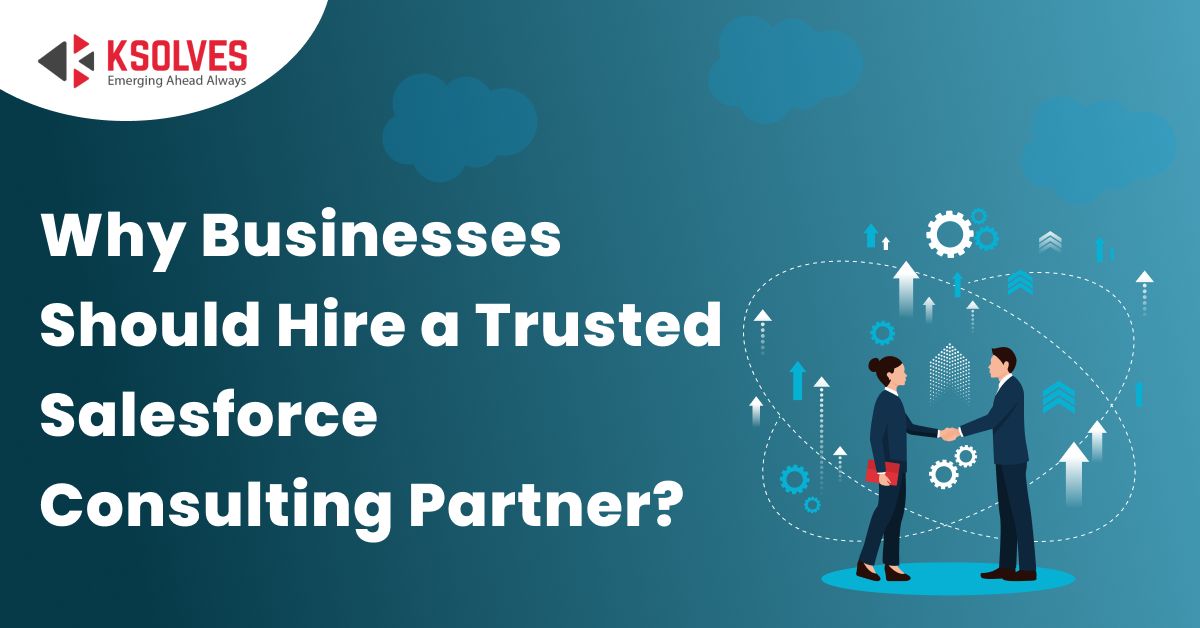
Investing in Salesforce does not automatically translate into better sales, stronger customer relationships, or higher returns. Many businesses still struggle with disconnected applications, inconsistent customer data, complicated workflows, and low CRM adoption, even after investing in a powerful platform. Without the right strategy and technical expertise, Salesforce can become another system that employees have to manage rather than a tool that helps them work smarter.
The challenge is not always the platform itself. It is how well Salesforce is configured, integrated, and aligned with your business processes. According to Salesforce’s 2026 State of Sales report, the average seller spends just 40% of their time actually selling, leaving substantial room for improvement through better processes and automation.
This is where a certified Salesforce consultant can make a difference. From planning your CRM implementation to customizing workflows and integrating business applications, the right consultant helps you turn Salesforce capabilities into practical business outcomes.
What Does a Salesforce Consultant Do?
A Salesforce consultant helps businesses identify their CRM requirements and configure the platform to meet their operational and strategic goals. Rather than recommending features without understanding the business, a consultant evaluates existing processes, identifies inefficiencies and develops a solution around specific requirements.
Their responsibilities typically include:
- Business process assessment: Understanding how sales, marketing and customer support teams currently operate.
- CRM strategy and implementation: Planning the Salesforce setup, selecting suitable products and configuring the platform.
- Customisation and development: Creating custom objects, fields, dashboards, automation and components where standard functionality is insufficient.
- System integration: Connecting Salesforce with ERP, marketing automation, finance, e-commerce and other business applications.
- Data migration and quality management: Cleaning, validating and transferring customer records from legacy systems.
- Training and adoption: Helping employees understand the system and use it consistently.
- Ongoing optimisation: Monitoring performance, resolving issues and adapting Salesforce as business needs change.
For example, a B2B company that manages leads through spreadsheets, email and separate sales tools may need a unified CRM. A Salesforce consultant can map its existing sales process, configure lead assignment rules, automate follow-ups and build dashboards that help managers understand pipeline performance.
The objective is not simply to implement Salesforce. It is to make the platform useful for the people who depend on it every day.
Read More: What Does a Salesforce Consultant Do? (Role, Skills & Benefits)
Salesforce Development and Consulting: Why It Matters
Salesforce consulting and development serve different but complementary purposes. Consulting establishes what the business needs, why those requirements matter and how Salesforce should support them. Development turns those requirements into working solutions when configuration and standard features are not enough.
Consider an organisation that wants to automate its quotation process. A consultant first reviews the approval hierarchy, pricing rules and sales team’s requirements. Salesforce developers can then build the required functionality, integrate pricing data and configure approval workflows.
Combining consulting with development helps businesses avoid unnecessary customisation, control technical complexity and create solutions that can scale as requirements evolve.
It also makes it easier to plan future improvements, whether the business wants to introduce advanced reporting, integrate additional systems or explore AI-powered capabilities.
7 Reasons to Hire a Salesforce Consultant in 2026
1. Ensure a Smooth Salesforce Implementation
Salesforce implementation involves more than creating user accounts and configuring a few fields. It requires a clear understanding of business processes, data structures, security requirements, user roles and reporting needs.
An experienced consultant helps establish the right foundation before the system goes live. They can identify which processes should be automated, which features need customisation and how information should move between departments.
Example: A growing retail business wants to use Salesforce to manage leads from its website, social media campaigns and sales enquiries. Without proper planning, duplicate records and inconsistent lead assignments may create confusion. A consultant can configure lead capture, duplicate management, assignment rules and reporting to help the sales team manage enquiries more consistently.
A structured implementation also reduces the risk of expensive rework and gives employees a clearer understanding of the new system.
2. Automate Repetitive Tasks and Improve Sales Productivity
Sales representatives need time to build relationships, understand customer requirements and move opportunities forward. However, manual data entry, repetitive follow-ups and administrative work can consume a significant part of their day.
Salesforce consultants identify suitable opportunities for automation using tools such as Flow and other platform capabilities. They can configure automated notifications, task creation, approval processes and lead assignment rules based on business requirements.
Example: When a prospect submits a demo request, Salesforce can automatically assign the lead to the relevant sales representative, create a follow-up task and notify the team. If the opportunity reaches a particular stage, the system can trigger an internal approval or remind the owner to take action.
These improvements help reduce manual effort, make processes more consistent and allow employees to focus on higher-value work.
3. Create Better Customer Experiences Through Personalisation
Customers expect businesses to understand their needs and provide consistent experiences across different touchpoints. However, this becomes difficult when customer information is scattered across departments or applications.
Salesforce consultants help create a more complete view of customer interactions by organising records, improving data quality and connecting relevant systems. They can also configure segmentation, personalised communication workflows and service processes based on customer information.
Salesforce’s State of the AI Connected Customer research found that 73% of customers felt that companies treated them as individuals in 2024, compared with 39% in 2023. The findings highlight the importance of meaningful customer experiences, alongside the need to handle personal information responsibly.
Example: A customer contacts a company’s support team about a delayed order after previously speaking with a sales representative. With a properly configured Salesforce environment, the support agent can access relevant customer details and interaction history rather than asking the customer to explain everything again.
By connecting customer information and improving team coordination, businesses can deliver more relevant, consistent service.
4. Integrate Salesforce With Your Existing Business Applications
Many organisations use separate systems for accounting, inventory, marketing automation, customer support and order management. When these applications do not communicate effectively, employees often have to enter the same information multiple times or switch between platforms to find answers.
A Salesforce consultant assesses the existing technology stack and identifies the best integration approach, whether through APIs, native connectors, middleware or other suitable solutions.
Example: A manufacturing company uses an ERP system to manage inventory and Salesforce to manage customer relationships. Integrating the two platforms can help sales representatives access relevant stock information while preparing quotations, reducing the need to request updates manually from the operations team.
The right integration strategy improves data consistency, supports faster decisions and reduces avoidable administrative work.
For businesses connecting Salesforce with multiple enterprise applications, Salesforce integration services can help establish a more connected technology environment.
5. Keep Your Salesforce Environment Secure and Scalable
As a business grows, its CRM requirements change. New employees join, reporting requirements become more complex, additional applications are introduced and access permissions need regular review.
Without a clear approach to system management, businesses may accumulate unnecessary customisations, inconsistent permissions and outdated automation.
A certified Salesforce consultant can review user roles, permission sets, sharing rules, data access and existing configurations. They can also help establish development and testing practices that reduce the risk of disrupting business operations when changes are introduced.
Example: A company expands into new regions and hires separate sales teams for each market. The Salesforce environment must allow employees to access the records they need while restricting information that should remain confidential. A consultant can review the access model and configure permissions in line with the organisation’s requirements.
Planning for scalability from the beginning also makes it easier to add new teams, processes and integrations without repeatedly rebuilding the system.
6. Reduce Long-Term Costs and Improve Return on Investment
Salesforce can deliver substantial business value, but poorly planned implementations may lead to unnecessary custom development, unused licences, recurring maintenance expenses and expensive rework.
Hiring a Salesforce consultant helps businesses make informed decisions about implementation scope, product selection, customisation and ongoing support. Consultants can identify opportunities to use standard platform functionality before recommending more complex development.
Businesses can also engage consultants for specific projects or ongoing support instead of building a large in-house team for every requirement.
Example: A small professional services company may need help migrating customer records, configuring sales dashboards and automating opportunity updates. It may be more practical to engage a consultant for these defined requirements than to recruit several full-time Salesforce specialists.
However, cost savings depend on the project scope, engagement model and quality of delivery. Businesses should evaluate the total cost of ownership rather than choosing a provider based on the lowest initial quotation.
7. Access Expert Support and Prepare for Future Innovation
Salesforce continues to evolve, and businesses need to assess new features against their actual requirements. Introducing a new capability simply because it is available does not guarantee better performance.
A Salesforce consultant helps evaluate platform updates, identify relevant improvements and plan upgrades without disrupting existing workflows. They can also support user training, system health checks, troubleshooting and ongoing optimisation.
As organisations explore AI-powered Salesforce capabilities, consultants can assess suitable use cases, data readiness, access controls and human oversight requirements.
Example: A customer service team wants to use AI to help agents find relevant knowledge articles and draft responses. A consultant can review the available customer data, identify appropriate workflows, establish permissions and define when human approval is necessary.
This approach allows businesses to adopt new capabilities gradually while maintaining appropriate control over customer information and business-critical processes.
Companies Offering Salesforce Consulting Solutions: How to Vet Them
Choosing among companies offering Salesforce consulting requires more than comparing prices or reviewing a partner badge. The provider should understand your business requirements, have relevant technical expertise and demonstrate a clear approach to delivery.
Use the following criteria when evaluating potential consultants.
- Verify certifications and partner credentials. Check relevant Salesforce certifications and confirm the provider’s current partnership status. Match the team’s skills to your project requirements.
- Review relevant project experience. Ask for examples of implementations, integrations or custom development projects similar to yours. Experience with a comparable business model can be particularly valuable.
- Assess technical and business expertise. A good consultant should understand both the platform and the processes it needs to support. Ask how they would approach your specific challenges.
- Understand the delivery methodology. Look for clear project milestones, testing procedures, communication practices, data migration plans and responsibilities.
- Discuss post-implementation support. Establish who will handle troubleshooting, maintenance, user training, system updates and future enhancements after launch.
- Evaluate pricing and scope. Request a transparent breakdown of deliverables, assumptions, exclusions and ongoing costs. Clarify how changes to the project scope will be managed.
- Measure success against business goals. Agree on relevant indicators, such as lead response time, data quality, user adoption, reporting accuracy or manual tasks reduced.
A reliable consultant should be willing to explain the reasoning behind their recommendations, including when a standard Salesforce feature is sufficient and when custom development is genuinely necessary.
Why Choose Ksolves for Salesforce Consulting?
Businesses need a Salesforce consulting partner that can support them beyond the initial implementation. From understanding business requirements to developing, integrating and maintaining CRM solutions, the right team helps keep Salesforce aligned with changing business priorities.
Ksolves offers Salesforce consulting, implementation, customisation, integration, migration and managed support services. Its Salesforce team works with businesses to understand operational challenges, recommend suitable solutions and develop a roadmap that aligns CRM capabilities with business goals.
Ksolves also provides Salesforce advisory services for organisations that need strategic guidance on their CRM roadmap, solution selection and long-term optimisation.
Whether you are implementing Salesforce for the first time, improving an existing environment or planning a more complex development project, the engagement should begin with a clear understanding of your requirements and expected outcomes.
Conclusion
Salesforce can help businesses improve sales visibility, streamline operations and deliver more consistent customer experiences, but achieving these outcomes requires the right implementation strategy and ongoing management.
Hiring a certified Salesforce consultant gives businesses access to specialist knowledge that can help them make better technical decisions, automate repetitive processes, connect business applications and improve CRM adoption. It also helps organisations plan for future growth without introducing unnecessary complexity.
The key is to choose a consultant who understands your business objectives, communicates clearly and measures success against practical outcomes rather than the number of features delivered.
Ksolves supports businesses across the Salesforce lifecycle, from consulting and implementation to integration, development and ongoing optimisation. With the right expertise, your organisation can turn Salesforce from a CRM platform into a more effective foundation for business growth.
Ready to get more value from Salesforce?
Speak with Ksolves about your CRM goals, current challenges and the next steps for your Salesforce environment.
Frequently Asked Questions
1. Why should a business hire a Salesforce consultant?
A Salesforce consultant helps businesses plan implementations, customise workflows, integrate applications, improve data quality and support user adoption. Their guidance can reduce avoidable implementation issues and align Salesforce with business goals.
2. What is the difference between a Salesforce consultant and a developer?
A Salesforce consultant typically focuses on business requirements, solution design, configuration and implementation strategy. A Salesforce developer builds custom functionality, integrations and components when technical development is required. Some professionals work across both areas.
3. How much does Salesforce consulting cost?
The cost depends on project complexity, required expertise, integrations, data migration, custom development and ongoing support. Businesses should request a scope-based estimate that outlines deliverables and potential additional costs.
4. When should a business hire a Salesforce consultant?
Businesses can benefit from consulting when implementing Salesforce for the first time, migrating from another CRM, integrating disconnected systems, improving an underperforming environment or preparing to introduce new automation and AI capabilities.
5. How do I choose the right Salesforce consulting company?
Review certifications, relevant project experience, technical expertise, delivery methodology, communication practices, support arrangements and pricing transparency. Choose a provider that can explain how its proposed solution will address your specific business challenges.
Frequently Asked Questions
Can businesses benefit from hiring a Salesforce Consulting Partner if they already have an internal IT team?
Yes, businesses with internal IT teams can still benefit from hiring a Salesforce Consulting Partner. These partners bring specialized expertise in Salesforce technology and best practices through which they can help in developing your internal team skills. They can provide guidance, training, and support, ensuring a successful implementation and maximizing the ROI of the Salesforce investment.
Is hiring a Salesforce Consulting Partner only suitable for large enterprises?
No, hiring a Salesforce Consulting Partner is beneficial for businesses of all sizes. Whether small, medium, or large, partners can tailor their services to meet the specific needs and budgets of different organizations. The expertise and guidance provided by a partner can help businesses of any size to leverage Salesforce effectively and achieve their goals.
What if my business needs to change after Salesforce implementation?
A trusted Salesforce Consulting Partner can help to adapt and customize your Salesforce instance to meet changing business needs. They can provide ongoing consultation and recommend enhancements or modifications to align with your evolving requirements. You can contact Ksolves certified Salesforce experts to get professional services.
Can a Salesforce Consulting Partner help with Salesforce Lightning migration?
Yes, a Salesforce Consulting Partner can assist with migrating your Salesforce Classic instance to Salesforce Lightning. They can guide you through the transition, helping you take advantage of the enhanced user interface and features offered by Lightning Experience. Contact Ksolves Salesforce professionals to know more.































Author
About the Author Editorial Team The Ksolves Editorial Team includes certified Salesforce experts, Big Data engineers, AI/ML specialists, Zoho consultants, and experienced technology writers focused on delivering clear, actionable insights for modern businesses. With hands-on experience across Salesforce, Big Data platforms, AI/ML solutions, application development, software testing, and Zoho ERP/CRM, the team publishes practical guides, real-world use cases, and industry updates that support smarter decisions and faster growth. Every article is created to solve business challenges, guide technology adoption, and keep organizations aligned with evolving digital ecosystems.
Share with