



Odoo CRM Lead Management: How to Convert Leads into Opportunities
Odoo
5 MIN READ
August 21, 2023

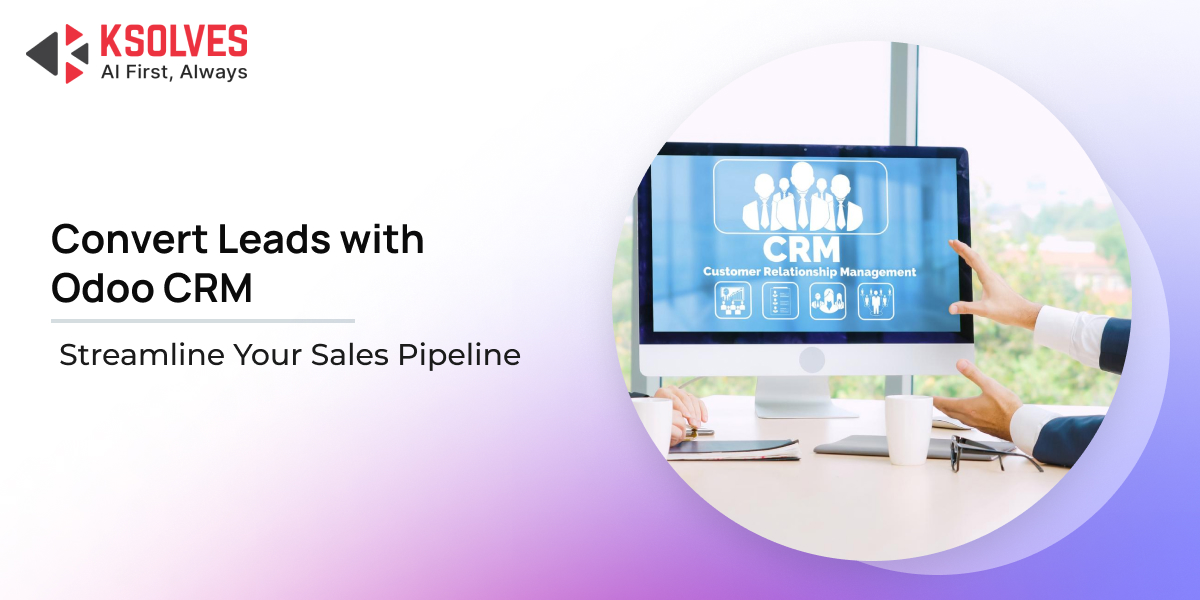
Generating leads is only the beginning of the sales process. The real challenge is identifying which leads are worth pursuing, following up at the right time, and moving qualified prospects toward a sales opportunity.
When these activities are managed manually, sales teams can easily lose track of follow-ups, overlook promising prospects, or spend too much time on leads that are unlikely to convert.
Odoo CRM provides a structured way to manage this journey. By organizing leads, qualifying prospects, converting promising leads into opportunities, and tracking them through a visual sales pipeline, businesses can create a more consistent lead management process.
This guide explains how Odoo CRM lead management works and how businesses can use it to improve the journey from lead to opportunity.
What is Lead Management in Odoo CRM?
Lead management is the process of capturing, organizing, qualifying, and following up with potential customers before they become active sales opportunities.
In Odoo CRM, businesses can work with both leads and opportunities.
A lead represents a potential customer or an initial sales prospect. At this stage, the sales team may not yet have enough information to determine whether the prospect has a genuine buying intention.
An opportunity, on the other hand, represents a more qualified sales prospect that the team intends to pursue.
This distinction allows sales teams to avoid treating every incoming inquiry as an immediate sales opportunity.
For example, a company may receive 500 inquiries through its website, campaigns, events, and other channels. Instead of placing all 500 directly into the sales pipeline, the team can first assess them and convert the relevant prospects into opportunities.
The result is a cleaner and more focused sales pipeline.
How to Convert Leads into Opportunities in Odoo CRM
The conversion process becomes much more effective when businesses establish a clear qualification workflow rather than simply converting every incoming lead.
1. Capture and Organize Leads
The first step is ensuring that incoming prospects are captured in a structured manner.
Instead of allowing lead information to remain scattered across different channels, Odoo CRM provides a centralized record for managing prospect information.
Sales teams can use these records to understand:
- Who the prospect is
- Where the lead originated
- What the prospect is interested in
- Who is responsible for following up
- What activities have already taken place
A centralized record gives salespeople the context they need before contacting a prospect.
It also makes it easier for managers to monitor the overall volume and quality of incoming leads.
2. Qualify Leads Before Conversion
Lead qualification is one of the most important stages of the process.
A high number of leads does not necessarily mean a healthy sales pipeline. If salespeople spend most of their time following up with prospects that have little buying potential, productivity can suffer.
Businesses should therefore define qualification criteria that match their sales process.
These criteria could include:
- Customer requirements
- Product or service fit
- Buying intent
- Budget considerations
- Expected purchase timeline
- Business size or segment
- Geographic or market relevance
The exact criteria will differ by business.
For example, a B2B software company may prioritize company size, business requirements, decision-making authority, and implementation timeline. A wholesale business may focus more on product requirements, order volume, location, and purchasing frequency.
The goal is not to create unnecessary qualification steps. It is to give salespeople a consistent method for deciding which leads deserve further attention.
3. Convert Qualified Leads into Opportunities
Once a lead meets the organization’s qualification criteria, the sales team can convert it into an opportunity.
In Odoo CRM, the conversion process allows the salesperson to move a qualified prospect into the opportunity pipeline rather than continuing to treat it as an unqualified lead.
This is an important distinction because opportunities can then be managed through the sales pipeline with activities, expected revenue, probability, and other relevant information.
The conversion also helps maintain continuity in the sales record instead of requiring salespeople to recreate customer information manually.
4. Manage Opportunities Through the Sales Pipeline
Converting a lead into an opportunity is not the end of lead management.
It is the point where structured opportunity management begins.
Odoo CRM provides a visual pipeline where sales teams can see opportunities according to their current stages.
For example:
New → Qualified → Proposal → Negotiation → Won/Lost
The exact stages can be customized according to the company’s sales process.
Salespeople can use the pipeline to identify:
- Opportunities requiring immediate attention
- Deals that have remained in a stage for too long
- Upcoming follow-up activities
- Expected revenue
- Won and lost opportunities
This provides sales teams with a clearer view of what is happening across the pipeline.
Key Odoo CRM Features That Support Lead Conversion
Odoo CRM brings lead management, sales activities, pipeline tracking, and reporting into one connected system. These features help sales teams move from initial prospecting to qualified opportunities with greater visibility and consistency.
1. Lead and Opportunity Management
Odoo CRM lets businesses manage leads and opportunities within a centralized sales environment. Teams can qualify incoming leads and convert promising prospects into opportunities when they are ready to enter the sales pipeline.
This creates a clearer distinction between potential prospects and active sales opportunities, helping salespeople focus their efforts where they matter most.
2. Visual Sales Pipeline
Odoo’s visual pipeline gives sales teams a clear view of opportunities across different stages of the sales cycle.
Instead of relying on spreadsheets or manual reports, salespeople can quickly identify new opportunities, deals requiring attention, and opportunities nearing closure. Managers can also get a broader view of pipeline health and sales progress.
3. Scheduled Activities and Follow-Ups
Consistent follow-up is critical to lead conversion. Odoo CRM allows sales teams to schedule activities such as calls, meetings, emails, and other follow-up actions directly from CRM records.
With upcoming activities visible to salespeople, teams can maintain a structured follow-up process and reduce the risk of promising leads going unattended.
4. Lead Assignment
Odoo CRM can help distribute leads among salespeople or sales teams according to the organization’s workflow.
Clear lead ownership ensures that prospects have an accountable person or team responsible for qualification, follow-up, and progression through the sales process.
5. Email Integration
Odoo CRM can connect sales communication with CRM records, giving salespeople better visibility into their interactions with prospects and customers.
Keeping relevant communication associated with the corresponding CRM record can make it easier for sales teams to understand previous conversations and continue discussions without losing context.
6. Reporting and Sales Forecasting
Odoo CRM provides reporting capabilities that help teams monitor their pipeline and sales activities.
Managers can use CRM data to assess pipeline performance, expected revenue, opportunity progression, and sales activity, helping them identify bottlenecks and make more informed decisions.
7. Lead Source Tracking
Knowing where leads come from is important for evaluating the effectiveness of marketing and sales channels.
Odoo CRM can track lead sources, helping businesses understand which channels generate prospects and how those leads progress through the sales pipeline. Over time, this can help teams identify the sources contributing the most valuable opportunities.
Best Practices for Odoo CRM Lead Management
Implementing Odoo CRM is only the first step. To improve lead conversion, businesses need a clearly defined sales process and a CRM workflow that supports it. The following practices can help sales teams manage leads more consistently and move qualified prospects toward opportunities.
1. Define Clear Lead Qualification Criteria
Not every lead has the same level of sales potential. Establish clear criteria to determine whether a lead is relevant, qualified, and ready for further engagement.
Criteria may include customer requirements, business fit, purchase intent, budget, or expected timeline. A consistent qualification framework helps salespeople evaluate leads more objectively and keeps unqualified prospects from unnecessarily filling the sales pipeline.
2. Prioritize Timely Follow-Ups
A qualified lead can lose interest when follow-ups are delayed. Sales teams should establish clear response and follow-up practices for new and active leads.
Odoo CRM’s scheduled activities can help salespeople plan calls, emails, meetings, and other actions, making follow-up part of the sales workflow rather than an activity that depends on memory.
3. Keep Lead Data Accurate and Complete
Lead conversion becomes harder when salespeople lack the information they need.
Keep customer details, communication history, requirements, activities, and opportunity information updated throughout the sales cycle. Accurate records give sales teams better context and help prevent repeated questions or missed interactions.
4. Automate Repetitive Sales Activities
Sales teams often spend considerable time on routine administrative tasks. Where the workflow allows it, Odoo CRM automation can help reduce repetitive work such as activity scheduling, reminders, lead assignment, and other predefined actions.
The objective is not to automate every customer interaction, but to give salespeople more time to focus on conversations that require human judgment and engagement.
5. Monitor and Revisit Stalled Opportunities
An opportunity that remains in the same pipeline stage for too long may indicate a follow-up issue, lack of customer interest, an unclear requirement, or another sales obstacle.
Regularly reviewing stalled opportunities helps sales managers identify what is holding deals back and decide whether to re-engage the prospect, update the opportunity, move it to another stage, or mark it as lost.
6. Measure Lead Sources Beyond Lead Volume
The number of leads generated by a channel does not tell the complete story.
Businesses should also track how leads from different sources progress through the funnel, from lead to opportunity and eventually to a successful sale. This provides a clearer understanding of which channels are producing meaningful sales outcomes and where marketing and sales efforts should be focused.
Also Read: The Complete Odoo ERP Implementation Methodology: Step-by-Step Guide for Growing Businesses
How Odoo CRM Helps Improve Lead-to-Opportunity Conversion
Odoo CRM can bring greater structure and visibility to the journey from initial lead to qualified opportunity. By centralizing prospect information, organizing sales activities, and providing visibility into the pipeline, it helps sales teams manage the process more consistently.
1. Reduce Manual Lead Tracking
With lead and opportunity information managed in one CRM environment, sales teams can spend less time maintaining spreadsheets and disconnected records. This creates a more centralized view of prospects, interactions, activities, and sales progress.
2. Prioritize More Relevant Leads
A defined qualification process helps salespeople distinguish between leads that require further nurturing and those with stronger sales potential. This allows teams to focus their time and follow-up efforts on prospects that are more relevant to their offering.
3. Maintain Consistent Follow-Ups
Scheduled activities and reminders help salespeople keep track of calls, meetings, emails, and other next steps. This makes follow-up a more structured part of the sales process and reduces the likelihood of opportunities being overlooked.
4. Gain Clearer Pipeline Visibility
Odoo’s visual sales pipeline allows teams to see opportunities across different stages of the sales cycle. Managers can identify stalled deals, monitor pipeline movement, and spot areas where additional attention may be required.
5. Establish Clear Sales Ownership
Assigning leads and opportunities to specific salespeople or teams creates clear responsibility throughout the sales cycle. This makes it easier to determine who is handling a prospect and helps prevent leads from being left without follow-up.
6. Make More Informed Sales Decisions
CRM reports provide visibility into sales activities, opportunity progression, expected revenue, and other pipeline metrics. Managers can use this information to evaluate performance, identify bottlenecks, and make decisions based on actual pipeline data.
Ultimately, Odoo CRM is an enabler, not a substitute for an effective sales strategy. Lead quality, product-market fit, pricing, sales execution, and the quality and timing of follow-ups all influence conversion. Odoo provides the structure and visibility needed to manage these factors more effectively and build a more consistent lead-to-opportunity process.
Common Lead Management Challenges Odoo CRM Can Address
Many sales teams face similar problems as their lead volume increases.
- Leads Get Lost
When prospects are tracked through emails or spreadsheets, some can easily be overlooked.
A centralized CRM provides a structured place to record and manage them.
- Follow-Ups Are Delayed
Without reminders or scheduled activities, salespeople may forget to follow up at the right time.
Odoo CRM helps teams organize upcoming activities against leads and opportunities.
- Poor Lead Qualification
When qualification depends entirely on individual judgment, the quality of the sales pipeline can vary.
Clearly defined criteria within the CRM process can create greater consistency.
- Duplicate or Incomplete Information
Scattered customer records can create duplication and make it difficult to understand the complete history of a prospect.
A centralized CRM environment helps maintain customer and sales information in one system.
- Limited Pipeline Visibility
Managers need to know not only how many leads exist, but also how many have become opportunities and where active deals currently stand.
Odoo’s pipeline provides a visual way to monitor this progression.
- Manual Reporting
If sales teams spend significant time preparing pipeline reports manually, less time is available for actual selling.
CRM reporting can reduce some of this administrative burden and provide more accessible sales information.
How Ksolves Helps Businesses Optimize Odoo CRM
Odoo CRM delivers the most value when it is aligned with the way your sales team actually works. Instead of forcing your business into a standard CRM workflow, Ksolves helps configure Odoo around your lead management process, sales pipeline, team structure, and business requirements.
As an AI-first Odoo development company, Ksolves combines Odoo expertise with an AI-led implementation approach to build CRM environments that are practical, scalable, and aligned with real-world operations. Our approach focuses on improving configuration accuracy, accelerating implementation, and reducing unnecessary manual effort.
1. Tailored Odoo CRM Implementation
We configure Odoo CRM around your existing sales processes—from lead capture and qualification to opportunity management and follow-ups. This helps ensure your CRM supports your team’s workflow rather than creating additional complexity.
2. CRM Customization and Workflow Automation
When standard Odoo functionality does not fully address your requirements, we can customize workflows and extend CRM capabilities. This can include tailored lead qualification processes, opportunity stages, automated activities, and other sales workflows designed around your business.
3. Seamless Business Integrations
Your CRM should not operate in isolation. Ksolves can connect Odoo CRM with other business systems and Odoo applications to create a more unified flow of information across sales and other business functions.
4. AI-Led Odoo Development
Our AI-led methodologies are designed to accelerate implementation, improve configuration precision, and reduce implementation risks. This enables businesses to move toward a more efficient Odoo environment while keeping the implementation aligned with their operational requirements.
5. Continuous Optimization and Support
CRM requirements evolve as sales teams, processes, and business volumes change. Ksolves can provide ongoing optimization and enhancements to help your Odoo CRM environment continue to support changing business needs.
Conclusion
Effective lead management is not about collecting as many leads as possible. It is about identifying the right prospects, engaging them at the right time, and moving qualified prospects through a clearly defined sales process.
Odoo CRM provides the tools to structure this journey, from lead capture and qualification to opportunity management and pipeline tracking. With the right configuration, processes, and sales discipline, businesses can create a more organized and measurable approach to converting leads into opportunities.
Ready to build a smarter lead management process with Odoo? Connect with Ksolves for smarter Odoo CRM implementation!
Frequently Asked Questions
What is a lead in Odoo 15 CRM?
A lead is the first step toward a future business transaction. When a customer inquires about the company’s services or products, this is referred to as a lead. This lead has the potential to become an opportunity.
Is Odoo 15 available for free?
Although the open-source Odoo Community edition is free to download and use, it has fewer features than the paid Odoo Enterprise edition.
Which Odoo module is best suited to lead management?
The Odoo CRM module also allows you to create a conversion rule to convert visits into leads. You can configure rules to generate B2B leads or opportunities from your website visitors using this exclusive feature.
How do I generate leads automatically?
There are various methods for automating lead generation. For example, chat boxes, cold email campaigns, personalized blog post recommendations, and website usage notifications. All of them are automated to save you time while still producing valuable lead data.
What exactly is Odoo lead enrichment?
The Odoo platform’s lead enrichment options allow users to search for customer information in other reliable sources. Only the emails available can be used to enrich the leads. This feature will enable the user to obtain accurate contact information on potential customers.
































AUTHOR
Odoo
Neha Negi, Presales and Business Associate Head at Ksolves is a results-driven ERP consultant with over 8 years of expertise in designing and implementing tailored ERP solutions. She has a proven track record of leading successful projects from concept to completion, driving organizational efficiency and success.
Share with