



Is Apache NiFi Still Relevant in 2026? Here’s the Honest Verdict
NiFi
5 MIN READ
September 29, 2026

Is Apache NiFi Still Relevant in 2026? Here’s the Honest Verdict
Data integration tools come and go, but Apache NiFi has proven to be one of the more durable names in the space. Nearly a decade and a half after its release to the open-source community, the project is still shipping regular updates, still showing up in job postings, and still anchoring data pipelines inside some of the world’s most demanding IT environments.
The real question in 2026 isn’t whether NiFi still exists. It clearly does. The real question is whether it still deserves a place in a modern data stack crowded with managed ELT platforms, cloud-native orchestrators, and AI-driven integration tools. The answer, based on where and how NiFi is actually being used today, is a qualified but confident yes.
A Project That’s Still Actively Evolving
One of the strongest signals of a tool’s relevance is the pace of its development, and NiFi has kept moving. The 2.x line has continued to mature through 2026 with releases that add real capability rather than cosmetic patches:
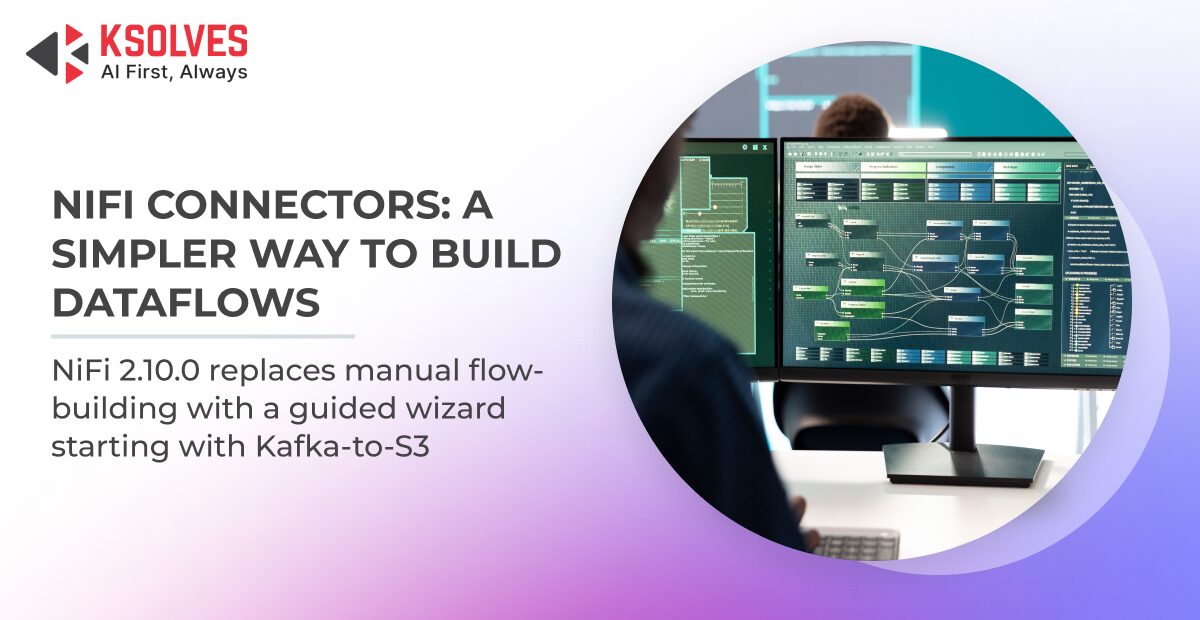
- NiFi 2.9 introduced early support for “Connectors,” a simplified way to configure common integration points, plus Google Cloud Storage support for Iceberg.
- NiFi 2.10 added Git-based branch support for Flow Registry Clients and UI-level support for Connectors, letting teams version dataflows the way they’d version code.
- Both releases resolved well over 100 issues each, a pace that reflects an active contributor base rather than a project coasting on legacy adoption.
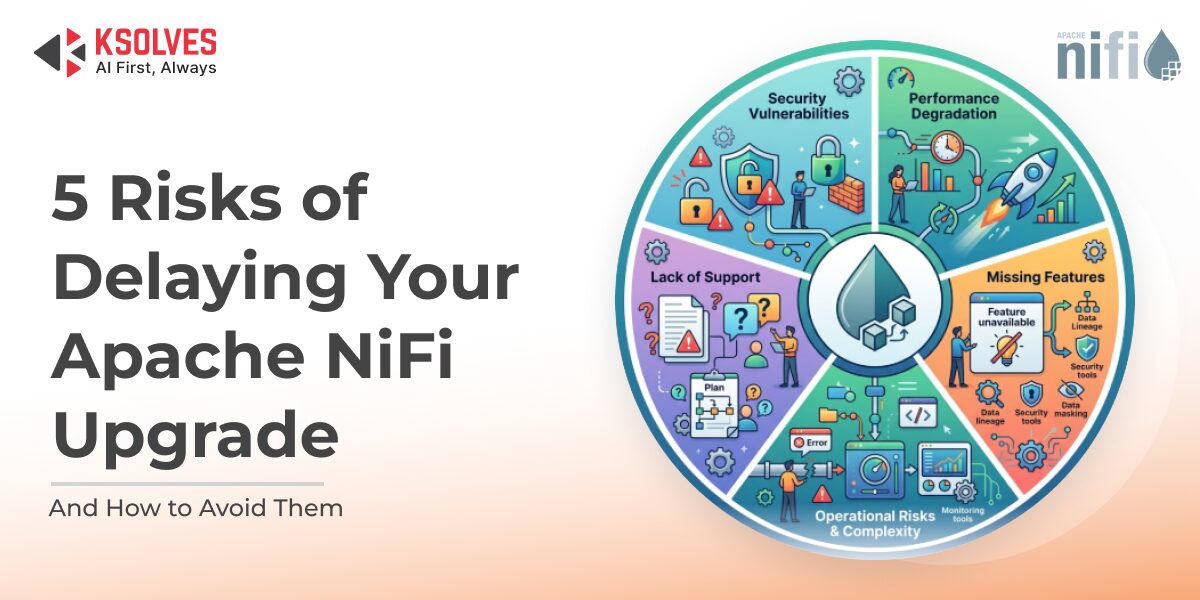
It’s pushed some teams to rethink their orchestration strategy, but it isn’t a sign of decline. It’s the project catching up to how modern engineering teams already manage infrastructure. It does mean “still used” comes with an expectation of migration work for existing deployments.
For teams navigating that transition, Ksolves’ breakdown of common data flow challenges NiFi solves is a useful starting point.
Where NiFi Still Earns Its Place
NiFi was never designed to be a general-purpose ELT tool competing with Fivetran or Airbyte, and evaluating it on those terms misses the point. Its value shows up in a specific set of conditions: environments with many disparate systems, strict governance needs, and real-time, auditable data movement.
Enterprise System Mediation
Large organizations rarely have clean, homogeneous infrastructure. A typical environment might include an aging SFTP drop, a couple of internal REST APIs, a shared file system, a legacy database, some message queues, and a few cloud services, all needing to exchange data reliably. NiFi’s flow-based programming model, expressed through a drag-and-drop visual interface, is built precisely for that kind of mediation.
Regulated, High-Assurance Industries
NiFi shows up disproportionately in the public sector and defense, healthcare, financial services, telecom, and industrial/IoT operations. These are sectors where compliance and traceability matter as much as throughput. Its data provenance tracking records a detailed lineage of every FlowFile as it moves through a pipeline, which makes audits and forensic investigation far easier.
Security Operations and Real-Time Ingestion
Cybersecurity teams often rely on NiFi to aggregate logs and telemetry from firewalls, intrusion detection systems, and endpoint tools, then route that data for near real-time analysis. Back-pressure controls and dynamic prioritization are especially valuable when data volume spikes unpredictably during an incident.
High-Throughput, High-Scale Pipelines
NiFi is also used well beyond modest workloads. Ksolves has documented a case of processing roughly one billion events per second with Apache NiFi, which is a good reference point for what’s achievable with the right cluster sizing and hardware planning.
Edge and Hybrid Collection
Lightweight, edge-oriented deployments and flexible clustered or standalone configurations make NiFi practical for collecting data across industrial equipment, IoT devices, or distributed sites before consolidating it centrally. Ksolves’ roundup of 10 industry-specific NiFi use cases, from fraud detection at banks to shipment tracking in logistics, covers several of these scenarios in more depth.
Building Complex, Compliance-Ready Dataflows? Let Our NiFi Experts Help
How NiFi Fits Alongside Airflow, Kafka, and Managed ETL
Part of what keeps NiFi relevant is that it isn’t trying to be everything. The broader Apache data ecosystem has effectively specialized:
| Tool | Best Suited For | Where It Falls Short |
|---|---|---|
| Apache NiFi | Visual dataflow automation, routing, mediation, provenance tracking | Not built for narrow, high-volume SaaS-to-warehouse replication |
| Apache Airflow | Workflow orchestration, scheduled batch jobs | Not a real-time dataflow or routing tool |
| Apache Kafka | High-throughput, event-driven streaming at scale | No visual flow design or built-in provenance |
| Apache Camel | Enterprise application integration patterns | Code-first; lacks NiFi’s low-code visual interface |
| Managed ELT (Fivetran, Airbyte, etc.) | Fast, low-maintenance SaaS-to-warehouse pipelines | Limited flexibility for custom processing or complex routing |
Comparing NiFi unfavorably to Fivetran for warehouse replication misunderstands what it was built to do.
For a deeper look at how NiFi stacks up specifically against orchestration tools, Ksolves’ comparison of Apache NiFi vs. Apache Airflow is worth a read.
Core Benefits That Keep NiFi in the Conversation
Beyond specific use cases, a handful of core benefits explain why NiFi has held its ground for over a decade:
| Benefit | What It Means |
|---|---|
| Visual, Low-Code Flow Design | The drag-and-drop interface lets engineers build, inspect, and modify complex dataflows without writing extensive custom code for every integration point. |
| Guaranteed Delivery and Fault Tolerance | A purpose-built write-ahead log and content repository ensure data isn’t lost even during node failures or restarts, which matters enormously for mission-critical pipelines. |
| Data Provenance and Lineage | Every FlowFile’s journey is tracked automatically, giving teams a built-in audit trail without bolting on separate lineage tooling. |
| Back-Pressure and Prioritization | Fine-grained control over queue behavior means NiFi can absorb sudden spikes in data volume without overwhelming downstream systems. |
| Strong Security Posture | Native support for TLS, SSH, HTTPS, and role-based access control makes it a natural fit for environments where data sensitivity and compliance are non-negotiable. |
| Extensibility | Custom processors can be written when built-in ones don’t cover a specific need, so NiFi adapts to unusual systems rather than forcing a rigid integration pattern. |
| No Licensing Costs | As an Apache-licensed open-source project, NiFi avoids the recurring software fees that come with many commercial integration platforms. |
Together, these strengths are why NiFi keeps showing up in environments where reliability, traceability, and flexibility outweigh the appeal of a faster, narrower managed tool.
Planning a NiFi Registry Migration or Scaling Your Cluster? We Can Help
Wrapping Up
Apache NiFi remains one of the more capable tools available for organizations that need controlled, auditable, real-time data movement across a genuinely messy systems landscape. A few takeaways to summarize:
- Development is active, not stagnant. New releases keep adding real capability.
- Adoption concentrates in public sector, defense, healthcare, finance, telecom, and security operations: exactly where governance and traceability matter most.
- It’s a complement, not a replacement, for tools like Kafka and Airflow, and it isn’t a competitor to managed ELT platforms.
- It rewards engineering investment. Teams with the bandwidth to run and tune it get outsized value; teams looking for zero-maintenance won’t.
Tools built for narrower, faster problems, such as managed ELT, marketing data hubs, and workflow orchestrators, have rightly taken share in the areas NiFi was never optimized for. But for enterprise mediation, compliance-heavy dataflows, and real-time operational pipelines, NiFi in 2026 isn’t a legacy holdout. It’s still, for the right use case, the best tool for the job.
For organizations running or planning to run NiFi at scale, Ksolves provides Apache NiFi consulting and support services, covering cluster setup, performance tuning, migration off the deprecated Registry, and ongoing operational support.




























AUTHOR
NiFi
Shilpa is the Senior Technical Content Writer at Ksolves. She has a great command over emerging technologies like Big Data, Artificial Intelligence, Microservices, and DevOps. She also has a profound knowledge of Salesforce CRM and loves writing about easy solutions to complex tech issues.
Share with