



Best Use Cases for Next.js in Business Websites
Next.js
5 MIN READ
January 9, 2026

For online businesses today, website performance directly influences user engagement and conversions. According to a study, when a page load time increases from one to three seconds, the bounce rate can rise by 32 percent. This pattern is visible across mobile browsing as well. Google reports that 53 percent of mobile users leave a site if it takes more than three seconds to load. With customer expectations rising and online competition increasing, companies are shifting toward frameworks that deliver strong performance, security, and SEO value.
Next.js has quickly become one of the most widely adopted frameworks for modern web development. Many major brands, including Netflix, TikTok, Notion, and Nike, use Next.js for certain parts of their web experience, especially landing pages, documentation sites, and high-performance front-end surfaces.
With built-in support for server-side rendering, static generation, API routing, and advanced performance optimizations, Next.js offers a unified framework for high-performing digital experiences. For businesses, Next.js is more than a development tool. It directly supports key goals, such as better search visibility, higher user engagement, improved global performance, and faster development cycles.
In this blog, we’ll explore the most impactful Next.js use cases for businesses and why it has become a top choice for building fast, modern digital products.
What Makes Next.js Ideal for Business Websites
Next.js stands out because it gives businesses the right mix of speed, flexibility, and scalability, all essential for building modern digital experiences. These strengths form the foundation of many popular Next.js use cases and make it a preferred choice for high-performing websites.
1. Modern Rendering for Maximum Flexibility
One of the biggest advantages of Next.js 13+ is its modern rendering model powered by the App Router. Next.js now uses React Server Components, Streaming SSR, Server Actions, and built-in caching controls to decide whether a route is static, dynamic, or revalidated. This approach delivers faster performance, smoother updates, and highly scalable architectures, especially for dynamic applications and content-heavy platforms.
2. Powerful Built-in Features That Reduce Development Effort
Next.js comes with essential capabilities out of the box, including file-based routing, Route Handlers (in the App Router) for backend logic, automatic code splitting, image optimization, and built-in CSS/Sass support. These features reduce setup complexity and streamline development, making it easier to build advanced Next.js applications. This is one reason why it remains a top choice for enterprise-grade projects.
3. Strong Performance and SEO Advantages
Speed and visibility are major priorities for any business website. Next.js offers pre-rendered HTML, optimized assets, and smart caching techniques that significantly improve page load times and search performance. These strengths make it ideal for public-facing portals, marketing websites, and content-driven platforms, which are some of the most common practical use cases of Next.js for businesses aiming to boost organic traffic and user engagement.
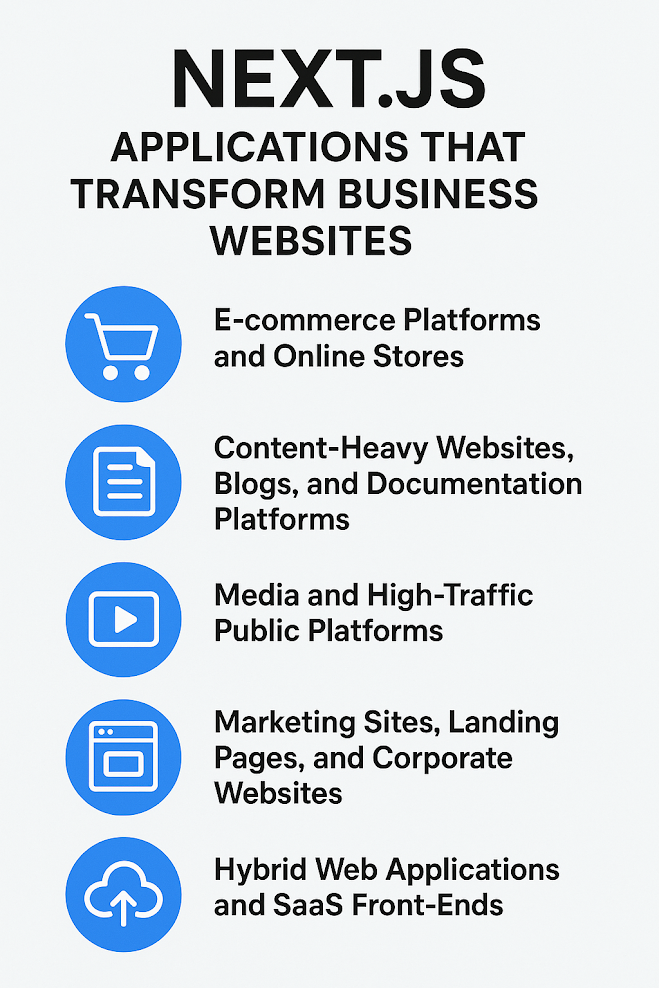
Next.js Applications That Transform Business Websites
Next.js offers a versatile framework that suits a wide variety of business websites and digital platforms. Its hybrid rendering, built-in performance optimizations, and flexibility make it ideal for both public-facing and internal applications. Below are the top Next.js use cases for businesses, along with real-world examples and key benefits.
1. E-commerce Platforms and Online Stores
E-commerce businesses require websites that can handle large product catalogs, dynamic pricing, promotions, and personalization, all while maintaining fast page loads and SEO-friendly pages. Next.js is ideal in this scenario because its hybrid rendering model allows key pages to be server-side rendered for SEO, while product listings and user-specific content can be dynamically generated. This ensures both search engines and customers get the right experience quickly.
Nike has used Next.js for selected parts of its online experience to help manage high-traffic shopping interactions, providing a smooth shopping experience even during peak times. Using Next.js for e-commerce also simplifies content updates, improves performance, and boosts conversion rates through faster and more reliable page loads.
2. Content-Heavy Websites, Blogs, and Documentation Platforms
Websites that publish frequent content updates, such as blogs, news portals, or documentation sites, need fast loading times, SEO optimization, and easy content management. Next.js offers static site generation for pages that rarely change and incremental static regeneration for frequently updated content.
Platforms like Hashnode use Next.js combined with React Server Components to deliver fast-loading, SEO-friendly blog content that stays highly searchable and responsive. This makes Next.js a practical choice for content-heavy websites where performance, scalability, and user engagement are critical.
3. Media and High-Traffic Public Platforms
Sites delivering media content, video, or large-scale interactive applications need to balance performance with dynamic content updates. Next.js allows developers to combine server-side rendering with client-side interactivity, ensuring pages load quickly while supporting complex, real-time data needs.
Platforms such as Twitch and TikTok rely on Next.js for parts of their front-end to deliver fast, engaging experiences to millions of users worldwide. The framework’s performance optimizations, image handling, and code splitting help maintain responsiveness even under high user load.
4. Marketing Sites, Landing Pages, and Corporate Websites
For marketing and corporate websites, first impressions, SEO, and fast load times are crucial. Next.js allows teams to build visually appealing landing pages that are easy to update, SEO-friendly, and highly performant. This makes it easier for businesses to attract leads and maintain a strong online presence without sacrificing speed.
Its built-in routing, image optimization, and simple deployment process help marketing teams iterate quickly on content while keeping performance high, making Next.js the go-to choice for modern corporate websites.
5. Hybrid Web Applications and SaaS Front-Ends
SaaS platforms and web applications often combine static informational pages with dynamic, user-specific dashboards. Next.js supports this hybrid approach through a mix of server-side rendering, static generation, and Route Handlers (in the App Router) for backend logic, making it possible to serve content quickly while powering interactive, personalized features.
By using Next.js, SaaS providers can deliver scalable, high-performance applications that remain SEO-friendly for public-facing pages. The flexibility of the framework ensures smooth updates and reliable performance as the user base grows.
How Businesses Should Decide: When to Choose Next.js
Choosing the right framework is crucial for ensuring a website meets business goals efficiently. Next.js is a powerful option, but businesses should evaluate their needs carefully before adopting it.
- Website Goals
Businesses should first consider the primary objectives of their website. If SEO is a top priority, such as for content portals or marketing landing pages, Next.js provides server-side rendering and static generation to boost search engine visibility. For websites where performance under high traffic and fast page loads is critical, Next.js’ built-in optimizations ensure a smooth experience. Companies also benefit from the framework when they need to deliver rich, interactive features without sacrificing speed. - Content Frequency
The type and frequency of content updates play a key role in framework choice. Websites with mostly static content can leverage Next.js’ static site generation for lightning-fast page loads. Sites that require frequent updates, like blogs, news portals, or e-commerce catalogs, can use incremental static regeneration or server-side rendering to maintain performance while keeping content fresh. - Team and Infrastructure
Businesses should assess their development setup. Next.js allows lightweight backend logic, such as authentication, form handling, and small APIs, using API Routes or Route Handlers. However, complex backend systems should still rely on a dedicated backend service for full functionality and scalability.
Conclusion
Next.js has proven itself as one of the most reliable and future-ready frameworks for building high-performance business websites. Its strengths in server-side rendering, static generation, hybrid rendering, and optimization make it a powerful choice for companies that want better speed, stronger SEO, and scalable digital experiences. From e-commerce stores to content-driven platforms, media portals, marketing sites, and SaaS applications, Next.js supports a wide range of business needs while keeping development fast and efficient.
However, choosing the right approach for your website requires expertise in architecture, rendering strategy, and performance workflows. This is where Ksolves can add real value. With deep experience in modern JavaScript frameworks and enterprise web development, Ksolves helps businesses plan, build, and optimize their applications using the best Next.js practices.
Our Next.js development services cover everything from consulting and architectural planning to full-scale development, migration, optimization, and ongoing support. If you are planning your next digital project and want a future-ready solution built on Next.js, contact our experts at [email protected].


































Author
About the Author Editorial Team The Ksolves Editorial Team includes certified Salesforce experts, Big Data engineers, AI/ML specialists, Zoho consultants, and experienced technology writers focused on delivering clear, actionable insights for modern businesses. With hands-on experience across Salesforce, Big Data platforms, AI/ML solutions, application development, software testing, and Zoho ERP/CRM, the team publishes practical guides, real-world use cases, and industry updates that support smarter decisions and faster growth. Every article is created to solve business challenges, guide technology adoption, and keep organizations aligned with evolving digital ecosystems.
Share with