



Why Most Chatbots Fail and How Generative AI Fixes That?
AI
5 MIN READ
January 20, 2026

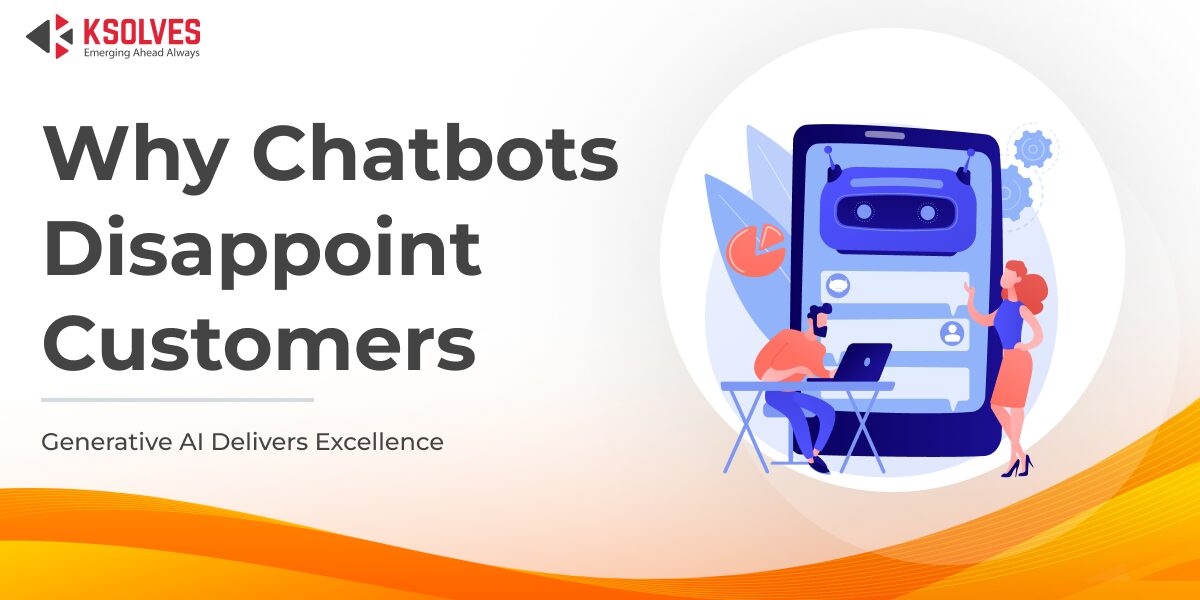
In an era where digital customer engagement defines brand success, chatbots were hailed as the ultimate solution for 24×7 customer service and automation. However, many businesses have discovered the hard truth: most chatbots fail to deliver on their promise. The root cause? A combination of limited capabilities, poor design, and outdated technology. But there’s a solution, i.e., Generative AI chatbots, which are redefining what’s possible.
In this blog, we’ll explore why traditional chatbots often fail, how Generative AI is revolutionizing the field, and how businesses can use this technology to create intelligent and conversational experiences that drive engagement and deliver results.
Why Most Traditional Chatbots Fail
Traditional chatbots, especially those built on rules or scripted logic, often fall short for several reasons, some of which are listed below:
1. Limited Understanding of Natural Language
Many legacy chatbots use keyword recognition or flow-based models. While they can handle simple tasks, they struggle with natural language processing (NLP). Users get frustrated when a bot can’t interpret variations of a question or context.
Example: A customer asking, “Where’s my order?” might be phrased as “Can you check the shipping status?” or “Has my package been delivered?” Traditional bots often miss these nuances.
2. Rigid Conversational Flows
Scripted bots rely on pre-defined paths. If a user deviates even slightly from the expected input, the bot breaks or provides irrelevant answers. This leads to high drop-off rates and poor user satisfaction.
3. Lack of Personalization
Most chatbots don’t have memory or context awareness. Every interaction starts from scratch, lacking continuity or customization. In an age of personalized digital experiences, this is a significant drawback.
4. Scalability and Maintenance Challenges
A study reveals that nearly 60% of chatbot projects fail due to limitations in design and technology. Scaling a rule-based chatbot is time-consuming. Every new feature or update needs manual scripting, which becomes complex and error-prone over time.
How Generative AI Chatbots Solve These Problems
Generative AI brings a seismic shift to conversational AI. Here’s how:
1. Advanced Natural Language Understanding
Generative AI models are trained on vast datasets and can understand context, intent, and variations in human language. Whether users are direct or vague, the chatbot can handle the complexity.
2. Contextual and Dynamic Responses
Unlike rule-based bots, AI chatbots powered by Generative AI can remember user preferences, understand multi-turn conversations, and provide dynamic, context-aware answers, just like a human would.
3. Personalization at Scale
Generative AI allows for real-time learning and personalization. Based on user data, browsing history, or CRM integration, the chatbot can tailor recommendations, support, and even tone of voice.
4. Reduced Development Time
AI-powered chatbots don’t require rigid scripting. Developers can train models on existing knowledge bases or fine-tune them with specific data, saving time and effort during chatbot development.
5. Multilingual and Omnichannel Support
Generative AI supports multiple languages and can be deployed across various platforms, including websites, social media, messaging apps, and voice assistants, offering seamless omnichannel experiences.
How to Implement an Effective AI Chatbot Strategy
To succeed with AI chatbot integration, businesses should:
- Define clear objectives and KPIs.
- Choose the right AI model and platform.
- Integrate with existing systems like CRMs, ERPs, or help desks.
- Continuously monitor performance and retrain models with new data.
- Prioritize user experience – make it intuitive, empathetic, and human-like.
This is where expert help makes a difference.
Looking to Build Smarter Chatbots? Let the Experts Help
Don’t risk falling into the common chatbot failure trap. Partner with specialists in AI and ML services who understand the nuances of Generative AI and can create tailored, scalable, and intelligent chatbot solutions for your business.
Whether you’re starting from scratch or upgrading an existing chatbot, our expert team at Ksolves can help you design, develop, and deploy a next-gen AI chatbot that delivers real value.
Contact us today to explore how our AI chatbot development services can transform your customer experience and business operations.
Conclusion
The chatbot industry is evolving rapidly. While traditional bots struggle with rigidity and poor comprehension, Generative AI chatbots offer a flexible, intelligent, and human-like alternative. Businesses that embrace this shift will not only improve user engagement but also gain a significant competitive edge.
As AI models continue to improve, the line between human and machine conversation will blur even further, and the time to act is now.
Frequently Asked Questions
What makes Generative AI better than rule-based chatbots?
Generative AI chatbots understand natural language, maintain context across conversations, and generate
human-like responses dynamically. Unlike rule-based bots, they can handle ambiguity, personalize
interactions, and scale with minimal manual updates.
Can a Generative AI chatbot integrate with my CRM or ERP system?
Yes. Modern AI chatbot development platforms support integration with CRMs, ERPs, and third-party APIs,
enabling real-time data access, user personalization, and seamless automation of business processes.
What ROI can I expect from investing in an AI chatbot?
Businesses typically see improved customer satisfaction, reduced support costs, and increased lead conversions.
ROI grows as the AI learns and improves through real-time interactions and feedback.































AUTHOR
AI
Mayank Shukla, a seasoned Technical Project Manager at Ksolves with 8+ years of experience, specializes in AI/ML and Generative AI technologies. With a robust foundation in software development, he leads innovative projects that redefine technology solutions, blending expertise in AI to create scalable, user-focused products.
Share with