



Why Financial Services Choose OpenShift for Enterprise-Grade Security and Scalability
OpenShift
5 MIN READ
February 13, 2026

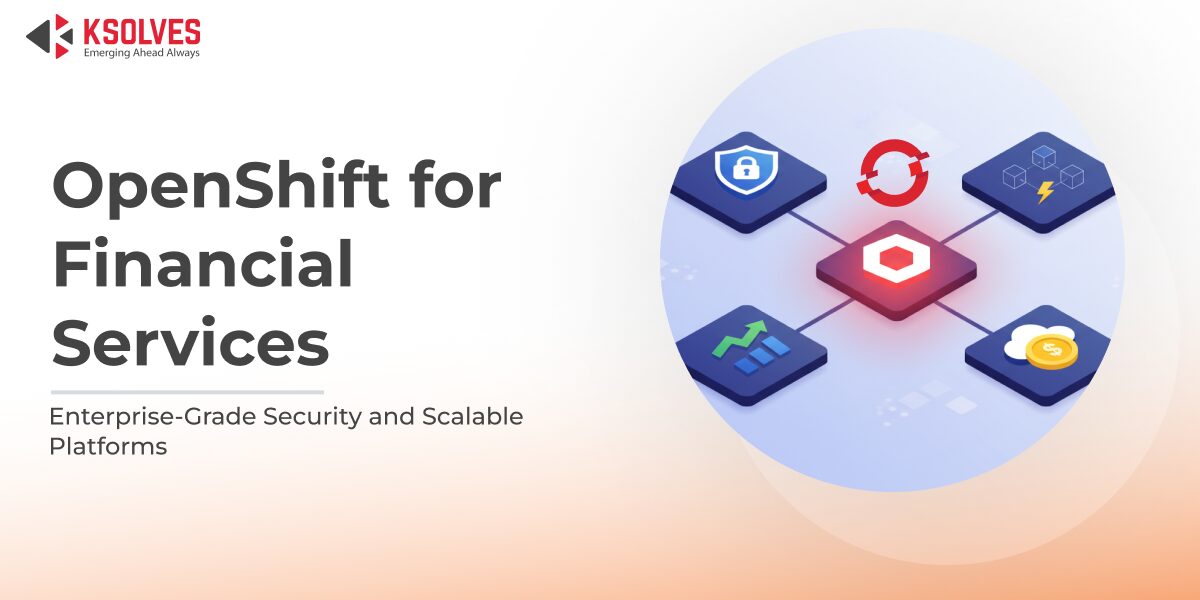
From real-time payments and digital banking to algorithmic trading and embedded finance, today’s financial services operate in an always-on, high-pressure environment. Every transaction must be fast, every system must be available, and every byte of data must be protected.
Customers expect seamless digital experiences, regulators demand stronger controls, and technology teams are expected to deliver new capabilities faster, often across hybrid and multi-cloud environments. Legacy infrastructure and fragmented Kubernetes setups struggle to keep pace, creating operational silos, security blind spots, and scalability limits.
This is where Red Hat OpenShift stands out. Designed as an enterprise Kubernetes platform, OpenShift brings together built-in security, consistent operations, and scalable performance. This makes it a natural choice for banks, FinTech companies, insurers, and capital market firms operating in regulated, mission-critical environments.
In this blog, we explore why financial services organizations choose OpenShift for enterprise-grade security and scalability. Also, we will see how it addresses industry-specific challenges and how it enables secure innovation at scale.
The Core Challenges Redefining Financial Services Operations
Financial institutions face a unique combination of operational, security, and compliance challenges:
- Protecting sensitive data such as personally identifiable information (PII), payment details, and transaction records.
- Handling unpredictable workloads, including transaction spikes during peak business hours or market volatility.
- Meeting strict regulatory and audit requirements across regions and jurisdictions.
- Maintaining high availability for mission-critical systems where downtime is unacceptable.
- Accelerating application delivery without introducing configuration drift or security gaps.
Addressing these challenges requires more than container orchestration; it requires a platform engineered for enterprise and regulated environments.
Why OpenShift Is Ideal for Financial Services
OpenShift goes beyond standard Kubernetes by delivering an enterprise-ready application platform with security, governance, and operational consistency built in. Rather than assembling and maintaining multiple tools, institutions get a unified platform designed to support regulated, mission-critical workloads from day one.
OpenShift provides a consistent and controlled foundation across on-premises data centers, private clouds, and public cloud environments. This consistency allows financial institutions to standardize how applications are built, deployed, secured, and managed.
By integrating security controls, policy enforcement, and lifecycle management directly into the platform, OpenShift helps organizations reduce operational risk, limit configuration drift, and maintain reliability at scale.
Production-Ready Operators Backed by Red Hat
A key advantage of OpenShift for financial services is access to Red Hat–certified, production-ready Operators. Unlike many community-only open source tools, these Operators are tested, supported, and maintained by Red Hat, providing a higher level of stability and accountability.
For financial institutions that cannot rely on unsupported or community-maintained components, Red Hat Operators offer a controlled way to deploy and manage critical platform services such as databases, messaging systems, monitoring, and middleware. This reduces operational risk, improves lifecycle management, and ensures enterprise support for upgrades, patches, and security fixes.
By using certified Operators from Red Hat’s ecosystem, financial services organizations can adopt cloud-native capabilities without compromising on supportability, compliance expectations, or production stability.
7 Core Reasons Financial Institutions Choose OpenShift
1. Built-In Platform and Container Security
OpenShift applies a secure-by-default model that aligns well with financial services requirements:
- Strong isolation between workloads using Kubernetes namespaces, network policies, and container security controls.
- Role-Based Access Control (RBAC) integrated with enterprise identity providers, ensuring users only have the permissions they need.
- Pod security enforcement to restrict privileged containers and limit access to host resources.
These controls help reduce attack surfaces and prevent misconfigurations that could lead to security incidents.
2. Compliance-Ready Architecture
Financial services must demonstrate compliance with standards such as PCI DSS, SOC 2, ISO 27001, and regional data protection regulations. OpenShift supports these needs by providing:
- Comprehensive audit logging of user actions and system changes.
- Centralized policy enforcement across clusters and environments.
- Encryption support for data in transit and at rest through underlying infrastructure integrations.
This makes it easier for organizations to maintain audit readiness and prove compliance during regulatory reviews.
3. Securing the Software Supply Chain
OpenShift helps financial institutions control how applications move from development to production:
- Integrated image registries with vulnerability scanning.
- Controlled deployment workflows using GitOps and declarative configurations.
- Consistent environments across development, testing, and production.
By enforcing trusted build and deployment processes, OpenShift reduces the risk of introducing vulnerable or unapproved components into production systems.
4. Elastic Scaling for Transaction-Heavy Applications
Financial applications often experience unpredictable load patterns. OpenShift supports scalable architectures through:
- Horizontal Pod Autoscaling (HPA) based on resource utilization.
- Cluster autoscaling (when integrated with supported cloud or virtualization platforms).
- Efficient workload scheduling across nodes to maximize resource utilization.
This enables applications to scale during peak demand without manual intervention.
5. High Availability and Resilience
Downtime in financial systems can lead to revenue loss and reputational damage. OpenShift improves resilience through:
- Self-healing containers that automatically restart failed workloads.
- Multi-zone deployments to improve fault tolerance.
- Rolling updates and automated rollbacks to reduce deployment risk.
These capabilities help ensure continuous service availability even during failures or updates.
6. Performance at Enterprise Scale
OpenShift is designed to support large, multi-cluster environments common in financial enterprises. It allows teams to:
- Optimize resource usage through quotas and limits.
- Isolate high-priority workloads.
- Maintain consistent performance across critical applications.
7. Supporting Hybrid and Multi-Cloud Financial Strategies
Many financial institutions operate in hybrid and multi-cloud models to meet regulatory, performance, and business requirements. OpenShift enables this strategy by:
- Providing a consistent Kubernetes experience across environments.
- Supporting workload portability without significant rearchitecture.
- Allowing centralized governance and security policies across clusters.
This flexibility helps organizations avoid vendor lock-in while maintaining control over data and operations.
How Ksolves Helps Financial Services Succeed with OpenShift
Ksolves provides end-to-end OpenShift consulting services tailored to the needs of financial services organizations. We help financial institutions design, implement, and operate OpenShift platforms that support mission-critical workloads while meeting regulatory and scalability requirements. We help them with:
- OpenShift Strategy and Architecture
Designing scalable, secure OpenShift architectures aligned with regulatory and business requirements.
- Secure OpenShift Implementation and Migration
Deploying OpenShift environments and migrating workloads from legacy platforms or unmanaged Kubernetes setups.
- DevSecOps Enablement
Implementing CI/CD pipelines with security controls, policy enforcement, and GitOps-based workflows.
- Performance Optimization and Cost Governance
Optimizing cluster resources, autoscaling configurations, and workload placement to improve efficiency.
- Managed OpenShift Services
Ongoing platform monitoring, upgrades, patching, and operational support.
- Security Hardening and Compliance Support
Applying platform hardening best practices and supporting audit readiness initiatives.
Final Words
For financial services organizations, platform decisions directly impact security posture, regulatory confidence, and the ability to scale without disruption. OpenShift delivers the enterprise-grade foundation needed to run mission-critical financial workloads securely, consistently, and at scale across hybrid and multi-cloud environments.
Ksolves helps financial institutions move from OpenShift adoption to measurable outcomes, like stronger security controls, reliable scalability, audit-ready platforms, and faster, safer application delivery. With deep OpenShift expertise and experience in regulated environments, we ensure your platform is built to support both today’s operational demands and tomorrow’s growth.
Ready to build a secure, scalable OpenShift platform for financial services? Partner with Ksolves!

































AUTHOR
OpenShift
Share with