



How Kubernetes Can Be Used for the E-commerce Industry
Kubernetes
5 MIN READ
January 6, 2026

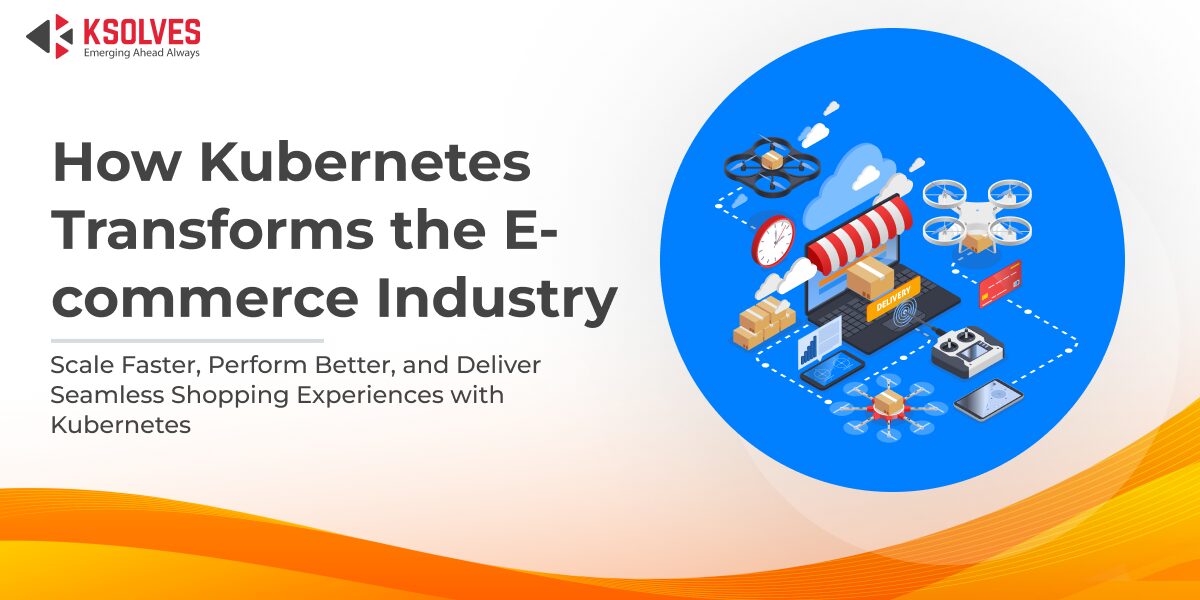
The e-commerce industry has witnessed explosive growth in the last decade. With millions of customers shopping online every single day, businesses must ensure fast page loads, real-time product updates, highly available checkout systems, and secure payment experiences. However, with this rapid expansion come significant challenges/traffic spikes during festive sales, system downtime, complex multi-service architectures, and scalability issues that can heavily disrupt the customer experience.
This is where Kubernetes emerges as a modern and reliable solution. From orchestrating containers to scaling applications automatically, Kubernetes helps online retailers manage unpredictable loads, optimize infrastructure, and deliver uninterrupted shopping experiences.
Why E-commerce Needs Kubernetes
Traditional hosting methods and monolithic application architectures struggle to meet the dynamic demands of e-commerce platforms. A single failure in a monolithic system can bring the entire store down. Scaling the application requires scaling everything, even the parts that don’t need it.
The rise of microservices and containerization has completely transformed how e-commerce systems operate. Platforms can now divide features such as search, checkout, recommendations, and order management into smaller, independent services.
Kubernetes ties all this together by acting as the backbone of scalable, resilient, and efficient e-commerce infrastructure. It provides auto-scaling, fault tolerance, seamless deployments, and improved performance, making it the ideal environment for modern online retail.
Also Read: Cloud to On-Premises Kubernetes: Top Reasons, Challenges, & Best Practices
Key Ways Kubernetes Supports the E-commerce Industry
Auto-Scaling During Traffic Spikes
E-commerce businesses regularly face sudden traffic surges during festive events like Diwali sales, Black Friday, New Year promotions, or viral influencer campaigns. Kubernetes helps manage these spikes effortlessly by automatically scaling microservices in real time. For example, if the checkout service suddenly encounters 10x more traffic, Kubernetes instantly launches additional pods to support the load. Once the traffic settles, it scales the resources back down, ensuring optimal performance while keeping infrastructure costs under control.
Zero-Downtime Deployments
Every second of downtime directly impacts sales and customer trust in the e-commerce industry. Kubernetes eliminates this risk by enabling zero-downtime deployments through features like rolling updates and blue-green deployment strategies. This allows businesses to release new features, push security patches, or upgrade services without disrupting user activity. As a result, customers can continue browsing, adding items to their carts, and making payments seamlessly even while backend updates are being executed.
Also Read: Mastering Apache Spark Deployment on Kubernetes: Best Practices for Efficient Scaling
Better Performance with Microservices
Modern e-commerce platforms rely on multiple interconnected modules such as Search, Checkout, Payment, Notifications, Recommendations, and Inventory Management. Kubernetes enhances performance by ensuring each microservice is deployed, scaled, and managed independently. For instance, if search activity increases due to product discovery trends while payment activity remains stable, Kubernetes scales only the search microservice. This targeted scaling boosts overall system efficiency and reduces unnecessary infrastructure expenses.
Enhanced Security & Compliance
Security is a critical concern for e-commerce brands that manage sensitive customer information and payment details. Kubernetes strengthens platform security with features like Role-Based Access Control (RBAC), secure container images, secrets management, and network policies. These capabilities help retailers meet essential compliance standards such as GDPR and PCI-DSS. By offering multiple layers of protection, Kubernetes ensures that data remains secure and customer trust remains intact.
Also Read: Kubernetes Autoscaling: HPA vs. VPA vs. Cluster Autoscaler
Improved Inventory & Order Management Systems
Accurate, real-time inventory management is crucial especially during high-demand seasons. Kubernetes ensures high availability of inventory, order, and warehouse microservices, allowing businesses to update stock levels instantly. This prevents issues like overselling, stock mismatches, and delays in order processing. With continuous availability and quick updates, customers enjoy a smoother and more reliable shopping experience.
Multi-Cloud and Hybrid Cloud Flexibility
To avoid vendor lock-in and improve global reach, many e-commerce businesses adopt multi-cloud or hybrid cloud strategies. Kubernetes simplifies this by providing a consistent deployment layer across platforms like AWS, Azure, Google Cloud, and on-premise systems. This flexibility enables retailers to deploy applications globally, optimize their cloud expenses, balance workloads effectively, and strengthen their disaster recovery capabilities.
Faster Disaster Recovery
System failures can ruin customer experiences, but Kubernetes significantly reduces this risk with its powerful self-healing capabilities. In case of crashes or failures, Kubernetes automatically restarts failed containers, replaces unhealthy pods, and redistributes workloads across available resources. This ensures minimal downtime and maintains a smooth shopping experience for customers, even during unexpected disruptions.
Also Read: Key Benefits of Running Apache Spark on Kubernetes
Real-Time Use Case of Kubernetes for e-commerce
In one of our recent projects, Ksolves helped a leading e-commerce company overcome frequent database outages and a single point of failure in their Kubernetes setup. The client relied on a single master node, causing complete cluster downtime during failures. Our team implemented a highly available Kubernetes architecture on AWS by deploying distributed master nodes across multiple Availability Zones, setting up a resilient Etcd cluster, customizing AMIs, and configuring load balancing with HAProxy. This ensured uninterrupted access to the Kubernetes API, seamless failover, and improved overall system stability resulting in a robust, high-availability infrastructure capable of handling large-scale e-commerce demands.
Benefits E-commerce Businesses Gain with Kubernetes
- Performance Stability: Kubernetes ensures smooth performance even during massive traffic spikes by automatically scaling resources, preventing slowdowns or outages during peak shopping events.
- Cost Optimization: Instead of scaling the entire application, Kubernetes allows e-commerce businesses to scale only the microservices that need more power, significantly reducing cloud and infrastructure costs.
- Faster Time-to-Market: With seamless deployments and automated rollouts, teams can introduce new features, updates, and fixes quickly, helping businesses stay ahead of customer expectations.
- Increased Customer Satisfaction: By improving page load speeds, reducing downtime, and keeping services consistently available, Kubernetes enhances overall user experience and boosts customer trust.
- Simplified Operations: Kubernetes automates key operational tasks such as self-healing, load balancing, scheduling, and resource allocation, making day-to-day infrastructure management far easier.
- Easy DevOps Integration: It fits perfectly with modern CI/CD pipelines, version control systems, and monitoring tools, helping DevOps teams accelerate development and streamline deployment cycles.
Also Read : Kubernetes for Logistics & IoT
How Ksolves’ Kubernetes Services Help E-commerce Businesses
At Ksolves, we specialize in delivering end-to-end Kubernetes consulting services, Kubernetes development services, Kubernetes implementation services, Kubernetes managed services, and Kubernetes support services tailored specifically for the e-commerce industry.
Also Read: Monitoring Your Kubernetes Cluster with Kube Prometheus
Whether you’re launching a new online store or scaling an enterprise-level platform, our experts ensure:
- Reliable Kubernetes setup and migration
- High-availability architectures
- CI/CD automation for faster releases
- 24/7 monitoring & maintenance
- Cutting-edge security implementation
- Cloud cost optimization
Kubernetes can transform your e-commerce infrastructure, and we’re here to help you leverage its full potential.
Conclusion
Kubernetes has become a crucial technology for the e-commerce industry. Its ability to auto-scale, self-heal, enhance security, and support microservices makes it the perfect solution for modern online retailers. Businesses that adopt Kubernetes can achieve faster performance, higher reliability, and a competitive advantage in a fast-moving digital market.
If you’re planning to modernize your e-commerce operations with Kubernetes, our experts at Ksolves can help you get there faster and smoothly. Contact us today!































AUTHOR
Kubernetes
Share with