



Kubernetes Cost Optimization: 7 Proven Strategies to Cut Cloud Spend
Kubernetes
5 MIN READ
September 25, 2026

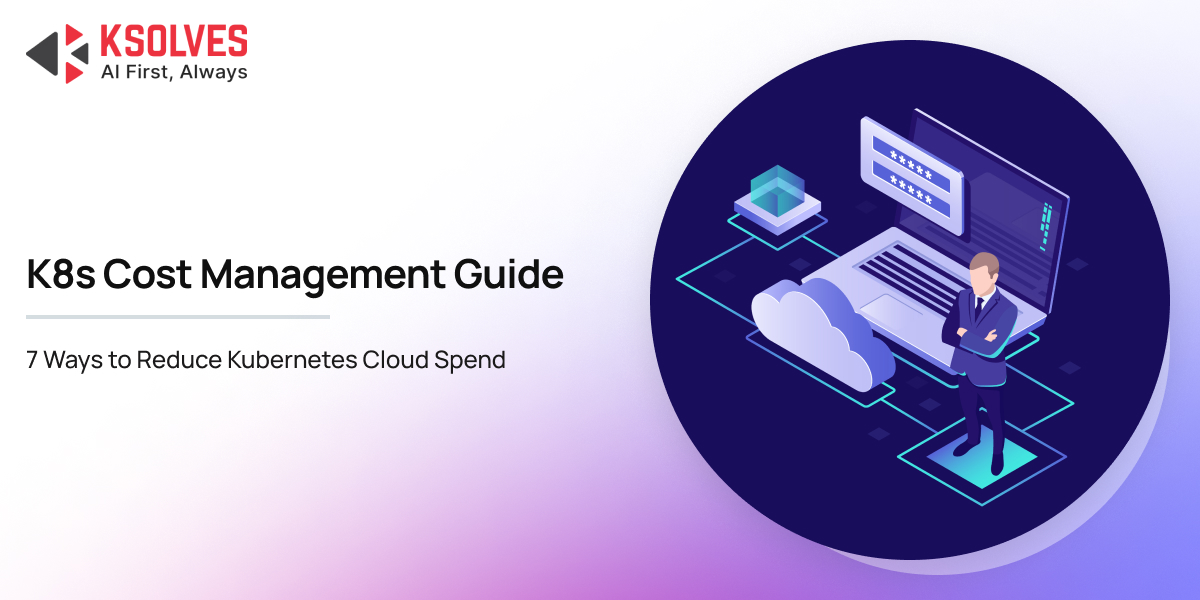
A Kubernetes cluster can look perfectly healthy on paper, every pod running, every dashboard green, and still be quietly burning through cloud budget. That gap is exactly why Kubernetes cost optimization has become a core discipline for engineering and FinOps teams rather than a side project: organizations adopting Kubernetes routinely overspend by 30% to 60%, driven by unoptimized workload allocations, idle dev/test environments, fragmented node scaling, and untracked cross-zone network charges.
Managing multi-tenant or rapidly scaling Kubernetes (K8s) clusters requires moving beyond basic monitoring. Engineering and FinOps leaders need proactive, automated cost-control frameworks that eliminate resource waste without compromising application performance or uptime.
Understanding the Root Cause of K8s Cost Inefficiency
Unlike traditional virtual machine environments where a single server hosts an identifiable application, Kubernetes decouples software workloads from physical compute instances. This creates a primary challenge in tracking cost efficiency, which many engineers describe informally as the Resource Request Ratio.
In plain terms:
In a typical unoptimized Kubernetes deployment, this ratio sits between 0.20 and 0.35. That means 65% to 80% of the compute capacity paid for on your cloud invoice is reserved but never actually used by your applications.
Independent Kubernetes utilization research consistently shows the same pattern: production clusters routinely run at CPU and memory utilization levels far below what teams have requested and paid for.
The Four Pillars of Kubernetes Cost Architecture
Workload rightsizing, infrastructure optimization, network and storage management, and governance form the baseline for effective cloud spend management:
| Pillar | What It Covers |
|---|---|
| Workload Rightsizing | Precise allocation of CPU and memory requests alongside dynamic pod autoscaling. |
| Infrastructure Optimization | Strategic use of Spot/Preemptible instances, Karpenter just-in-time provisioning, and high-density bin-packing. |
| Network & Storage Management | Eliminating cross-availability-zone egress costs and cleaning up orphaned persistent volumes. |
| Governance & Operations | Implementing automated off-hours shutdowns and strict namespace resource quotas. |
7 Strategies to Reduce Kubernetes Costs
1. Right-Size Workload CPU & Memory Requests
The most direct cause of Kubernetes cost bloat is setting resource requests based on developer guesswork. When a pod sets high CPU or memory requests, the Kubernetes kube-scheduler reserves those resources on a node, even if the pod uses a fraction of that capacity.
- Analyze Historical Usage Telemetry: Collect at least 14 to 30 days of metrics across peak traffic windows and batch processing cycles. Set resource requests to match the 90th or 95th percentile (p95) of actual consumption plus a modest headroom buffer (10–20%).
- Decouple CPU Requests from Limits: Avoid setting strict CPU limits on latency-sensitive microservices unless required to prevent noisy neighbors. Unnecessary CPU limits lead to CPU throttling, while conservative CPU requests ensure efficient node scheduling.
- Enforce Admission Control Guardrails: Implement policy engines like OPA Gatekeeper or Kyverno to reject deployment manifests that lack defined resource specifications or exceed maximum limits.
2. Implement Smart Horizontal & Vertical Pod Autoscaling
Manual workload sizing fails under fluctuating application traffic. Combining native Kubernetes autoscaling capabilities ensures workload supply automatically scales alongside user demand.
- Horizontal Pod Autoscaler (HPA): Dynamically adjusts the number of pod replicas based on CPU, memory, or custom business metrics (e.g., HTTP request rates or queue depth).
- Vertical Pod Autoscaler (VPA): Automatically updates CPU and memory requests and limits for running pods based on historical performance.
- Avoid Autoscaler Race Conditions: Running HPA and VPA concurrently on the exact same resource metric (such as CPU utilization) can create conflicting scaling decisions. Use VPA for stateful or single-replica workloads, and HPA for stateless microservices.
3. Blend Spot/Preemptible Instances with On-Demand Capacity
Cloud providers offer spare compute capacity (AWS Spot Instances, Azure Spot VMs, and GCP Spot VMs, formerly called Preemptible VMs) at 60% to 90% discounts compared to standard On-Demand pricing.
A resilient hybrid node pool architecture balances risk and cost savings across two primary tiers:
- On-Demand / Savings Plan Pool: Dedicate stable compute resources to the cluster control plane, ingress controllers, stateful databases, message queues, and single-replica essential services.
- Spot Instance Pool: Deploy stateless microservices, asynchronous background workers, batch processing jobs, and machine learning workloads onto discounted Spot instances.
- Use Mixed Instance Node Pools: Define node groups containing diverse instance types and families across multiple availability zones to minimize interruption probability.
- Enforce Pod Disruption Budgets (PDBs): Ensure critical application replicas remain online during node terminations.
- Implement Node Termination Handlers: Capture the interruption notice each cloud provider issues before reclaiming a Spot node, cordon it, and safely reschedule pods onto remaining instances before eviction. The window varies by provider: AWS gives roughly 2 minutes, while Azure Spot VMs and GCP Spot VMs give roughly 30 seconds, so your drain and shutdown logic needs to be tuned per cloud rather than assumed to be uniform.
4. Optimize Node Density with Intelligent Bin-Packing & Karpenter
Legacy Kubernetes Cluster Autoscalers adjust node count based on fixed instance groups, often leaving partially filled nodes running for extended periods.
- Adopt Next-Gen Just-In-Time Autoscaling: Tools like Karpenter launch flexible, right-sized compute instances directly tailored to the requirements of unscheduled pods, eliminating rigid node group abstractions.
- Enforce High-Density Bin-Packing: Group workloads logically using nodeAffinity, taints, and tolerations to maximize the CPU and memory consumption of active instances.
- Automate Consolidation & Draining: Automatically move workloads away from underutilized compute nodes and terminate the idle host infrastructure.
5. Eliminate Hidden Cross-Zone Network Egress Fees
Data transfer across Availability Zones (AZs) within the same cloud region typically costs $0.01 to $0.02 per GB in each direction. In distributed microservice architectures sending terabytes of traffic between nodes in different AZs, network egress charges can account for 10% to 25% of the entire cloud bill.
- Enable Topology-Aware Hints / Routing: Configure Kubernetes service routing to prioritize sending network traffic to endpoints located within the same availability zone.
- Co-Locate High-Communication Services: Use podAffinity or podAntiAffinity rules to place microservices that frequently communicate with one another on nodes within the same local zone or rack.
- Utilize In-Cluster Private Links: Keep database connections and internal traffic within private network boundaries and local cloud endpoints rather than traversing public interfaces.
6. Clean Up Orphaned Storage Volumes & Legacy Assets
- Identify Orphaned EBS / Managed Disks: Audit PersistentVolumeClaims (PVCs) and PersistentVolumes (PVs) that are no longer attached to running pods.
- Set Proper Storage Reclaim Policies: Configure your StorageClass configurations to use appropriate persistentVolumeReclaimPolicy parameters.
- Offload Inactive Data to Object Storage: Migrate low-frequency logs, build artifacts, and backups from costly block storage classes (e.g., AWS EBS gp3/io2) to cheaper Object Storage (e.g., AWS S3 Glacier, Azure Blob Cold Tier).
7. Automate Off-Hours Shutdowns & Namespace Resource Quotas
Development, staging, and QA environments rarely require 24/7 uptime. Leaving non-production clusters fully provisioned over weekends and overnight accounts for up to 65% in wasted non-prod compute spend.
- Schedule Off-Hours Auto-Downscaling: Deploy automated schedulers (e.g., Kube-downscaler) to scale non-production deployment replicas to zero outside standard business hours.
- Enforce Multi-Tenant Governance with Limits: Apply ResourceQuotas and LimitRanges at the namespace level. This establishes multi-tenant boundaries that prevent individual development teams from provisioning unbounded, unmonitored compute resources.
Not Sure Where Your Kubernetes Budget Is Leaking?
Detailed Comparison Matrix: K8s Cost Optimization Strategies
| Strategy | Implementation Complexity | Primary Cost Target | Typical Spend Reduction | Impact on Cluster Stability | Recommended Frequency |
|---|---|---|---|---|---|
| Workload Rightsizing (CPU/RAM) | Medium | Pod Compute Overprovisioning | 20% – 40% | Very Low (if buffered) | Continuous / Monthly |
| Pod Autoscaling (HPA/VPA) | Medium | Dynamic Workload Fluctuations | 15% – 30% | Low | Automated Continuous |
| Spot Instance Integration | High | Node Compute Pricing | 40% – 70% | Medium (requires PDBs) | Initial Setup + Ongoing |
| Bin-Packing & Karpenter | High | Fragmented Node Compute | 20% – 35% | Low | Automated Continuous |
| Cross-AZ Network Optimization | High | Network Egress Charges | 10% – 25% | Very Low | Architectural / Quarterly |
| Orphaned Storage Cleanup | Low | Unattached Disks & Snapshots | 5% – 15% | Zero Risk | Bi-Weekly / Monthly |
| Off-Hours Auto-Off Schedules | Easy | Non-Prod Cluster Running Hours | 50% – 65% (Non-Prod) | Zero (Non-Prod only) | Immediate Quick-Win |
Strategic FinOps Execution Roadmap
Implementing these strategies effectively requires a structured maturity roadmap over time:
Phase 1: Quick Wins & Immediate Waste Elimination (Month 1)
Begin by cleaning up unattached persistent volumes (PVCs) and unused snapshots. Next, deploy automated off-hours downscaling for dev and staging environments, and enforce baseline cost-allocation tags along with Namespace ResourceQuotas.
Phase 2: Workload Optimization & Autoscaling (Months 2–3)
Implement workload rightsizing based on 30-day p95 CPU and memory metrics. Configure Horizontal Pod Autoscaler (HPA) for stateless microservices, and deploy Karpenter or smart autoscaling to enable high-density bin-packing.
Phase 3: Architectural & Enterprise Governance (Month 4+)
Integrate mixed Spot and On-Demand node pools across multi-AZ clusters. Establish topology-aware routing to eliminate cross-AZ network egress, and connect FinOps metrics directly to business unit economics, such as tracking cost per API request.
How Ksolves Helps Engineering Teams Control Kubernetes Cloud Costs
Executing manual rightsizing policies, tracking cross-account usage, and optimizing multi-cloud Kubernetes clusters takes significant engineering hours that most product teams don’t have to spare. Ksolves’ Kubernetes consulting and managed services close that gap, pairing hands-on cluster engineering with the FinOps discipline needed to keep spend under control long after the initial audit.
What a Ksolves Kubernetes Cost Engagement Covers
- AWS-Level Waste Detection with Ksolves Cloud Agent: Ksolves Cloud Agent is a read-only, dashboard-free FinOps tool that scans EC2, RDS, S3, and EBS across every AWS account behind your clusters, then emails each account owner a report on idle resources, missing cost-allocation tags, and billing anomalies. It catches exactly the kind of waste that sits just outside kubectl’s view: a stopped EC2 instance still billing, an orphaned EBS volume left over from a deleted PVC, or an untagged node group nobody owns. It’s AWS-only today, with Azure and GCP coverage on the roadmap.
- Cluster Health & Cost Audits: Ksolves’ certified Kubernetes consultants assess resource requests, node utilization, and workload placement across your clusters to identify exactly where compute, storage, and network spend is going before recommending changes.
- Rightsizing and Autoscaling Setup: Configure HPA, VPA, and Karpenter (or your existing cluster autoscaler) against real usage data, so node capacity tracks actual demand instead of padded requests.
- Namespace and Workload Cost Allocation: Map cluster spend to specific services, teams, and business units using labels, annotations, and cost-allocation tooling, so engineering and finance are working from the same numbers.
- Spot, Reserved, and Savings Plan Strategy: Design mixed On-Demand, Reserved Instance, and Spot node pools with Pod Disruption Budgets and node termination handling built in, so cost savings don’t come at the expense of uptime.
- Ongoing Managed & 24×7 Support Services: Continuous monitoring, patching, and tuning through Ksolves’ Kubernetes managed and support services, so rightsizing and governance decisions get revisited as workloads change instead of going stale after the first audit.
Every Ksolves consultant uses AI as a daily working tool for code review, testing, and configuration analysis, which means Kubernetes cost and reliability audits move faster: issues that used to take days to trace through logs and dashboards get flagged and verified sooner, shortening the gap between “we think we’re overpaying” and “here’s exactly where, and by how much.”
Working with Ksolves means your engineering team gets a second set of eyes on cluster architecture and Kubernetes cost optimization, without having to hire and staff a dedicated FinOps team.
Frequently Asked Questions (FAQs)
What is the difference between resource requests and limits in Kubernetes?
Resource requests dictate the baseline CPU and memory that the Kubernetes scheduler reserves for a container on a node. Resource limits define the hard ceiling that a container cannot exceed. If a pod exceeds its memory limit, it risks being terminated (OOMKilled); if it exceeds its CPU limit, its execution is throttled.
Why does traditional cloud cost monitoring fail with Kubernetes?
Traditional cloud monitoring tracks expenses at the virtual machine or instance level. Because Kubernetes shares physical nodes across multiple ephemeral pods, namespaces, and services simultaneously, a single cloud invoice item cannot show which team or microservice consumed the underlying resources.
How do Spot instances reduce Kubernetes cluster spend without causing outages?
Spot instances offer up to 90% savings by using spare cloud capacity. By combining Pod Disruption Budgets (PDBs), multi-AZ Spot node pools, and graceful node termination handling tuned to each provider’s notice window, Kubernetes can drain and reschedule stateless workloads onto alternate nodes before a Spot instance is reclaimed.
Should I use Horizontal Pod Autoscaler (HPA) or Vertical Pod Autoscaler (VPA)?
HPA is ideal for stateless microservices that handle variable web traffic by scaling pod replicas horizontally. VPA is better suited for stateful or single-replica applications that cannot easily scale horizontally, adjusting their CPU and memory capacity vertically instead. Avoid configuring both on the same resource metric for the same application.
How much can an organization realistically save through K8s cost optimization?
Savings depend on cluster maturity and workload mix, but many organizations see total cloud spend drop by 30% to 50% within the first 90 days of a focused optimization effort. The fastest wins typically come from automated workload rightsizing, eliminating idle dev/test clusters, cleaning up orphaned storage volumes, and blending in Spot instance capacity.
Eliminate Cloud Waste with Ksolves
Uncontrolled cloud spend doesn’t have to be the price of running Kubernetes. Structured rightsizing, autoscaling, and consistent governance turn a cluster from a black box on your cloud bill into infrastructure your engineering and finance teams can both reason about.
Ready to Get Your Cloud Footprint Under Control?































Author
About the Author Editorial Team The Ksolves Editorial Team includes certified Salesforce experts, Big Data engineers, AI/ML specialists, Zoho consultants, and experienced technology writers focused on delivering clear, actionable insights for modern businesses. With hands-on experience across Salesforce, Big Data platforms, AI/ML solutions, application development, software testing, and Zoho ERP/CRM, the team publishes practical guides, real-world use cases, and industry updates that support smarter decisions and faster growth. Every article is created to solve business challenges, guide technology adoption, and keep organizations aligned with evolving digital ecosystems.
Share with