Project Name
Zero-Downtime Deployments and Auto-Scaling Delivered on AWS ECS for a Live Event Ticketing Platform
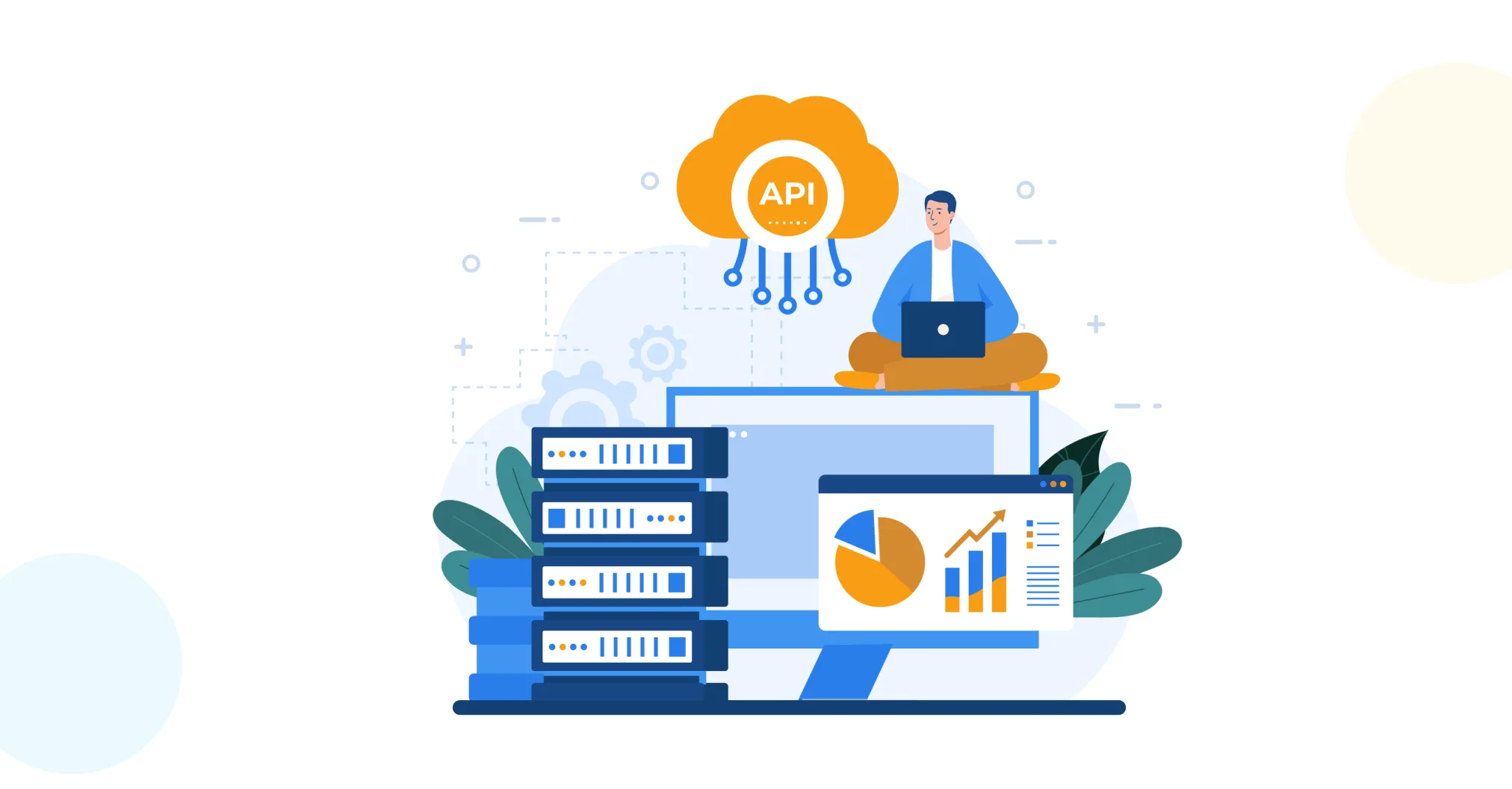

A mid-market SaaS platform headquartered in North America, powering live event ticketing, promotions, and audience engagement for entertainment venues, sports organisations, and festival operators, had built its release process entirely on manual SSH-based deployments. Every production release required engineers to SSH into servers, execute scripts in sequence, and hold their breath – a 30 to 45-minute process that caused visible service disruption on a platform processing thousands of concurrent ticket purchases during flash sales. With a growing customer base and increasing event volumes, static infrastructure and manual deployments had become a direct threat to revenue and reliability. Applying its AI-First approach, Ksolves designed and delivered a fully automated CI/CD pipeline on AWS ECS with Fargate, zero-downtime rolling deployments, and traffic-based auto-scaling.
- Manual, Error-Prone Deployments: Every production release required engineers to SSH into servers, execute deployment scripts manually, and verify each step - a process that consumed 30 to 45 minutes of engineering time and was consistently vulnerable to human error at every stage.
- Service Disruption During Every Release: Deployments caused visible downtime as running containers were stopped before new ones started, interrupting active user sessions and live transaction processing - a critical failure mode for a ticketing platform during high-demand on-sale windows.
- No Traffic-Based Auto-Scaling: Infrastructure was provisioned at fixed capacity. During high-demand event launches, the platform experienced latency spikes and transaction timeouts. During off-peak hours, resources sat idle and costs accumulated with no mechanism to adjust capacity dynamically.
- No Automated Rollback Capability: When a bad release reached production, the only recovery path was another manual deployment of the previous version - a process that extended every incident window by 20 to 30 minutes and required immediate engineer availability regardless of the hour.
- Fragmented Monitoring and No Centralised Alerting: Logs and metrics were scattered across individual servers with no unified dashboard. Detecting deployment failures or performance degradation in real time was impossible, leaving the engineering team dependent on user-reported outages to discover issues.
- Container Image Inconsistency Across Environments: Docker images were built locally on developer machines with no standardised build pipeline, creating environment drift between staging and production and making it impossible to guarantee that what passed testing would behave identically in production.
Ksolves designed and implemented a fully automated CI/CD pipeline on AWS ECS with Fargate, replacing every manual deployment step with a code-committed, tested, and auto-deployed workflow. The governing principle was zero human intervention from commit to production, every release is built, scanned, tested, and deployed through an immutable pipeline, with traffic shifted gracefully and rollback triggered automatically on health-check failure.
- AWS CodePipeline + CodeBuild Automated CI/CD Pipeline: An end-to-end AWS CodePipeline integrated with CodeBuild triggers on every Git commit, automating build, unit test, Docker image creation, and deployment to AWS ECS without any manual SSH access or script execution - every release is fully traceable and auditable.
- Zero-Downtime Rolling Updates on ECS: ECS service deployments were configured with a rolling update strategy and Application Load Balancer health checks, ensuring new tasks are fully healthy before old tasks are drained. No user session is interrupted and no transaction is dropped during any release.
- Target-Tracking Auto-Scaling on ECS Services: AWS Auto Scaling policies based on CPU utilisation and request-count metrics were implemented on all ECS services, enabling the platform to scale from baseline to peak capacity within 2 to 3 minutes during event on-sale windows - and scale back down automatically during off-peak hours.
- ECS Circuit-Breaker With Automated Rollback: ECS circuit-breaker with automatic rollback was configured so that if new tasks fail health checks during deployment, the service reverts to the last stable task definition within 2 minutes - without any manual intervention or engineer availability required.
- Amazon CloudWatch Centralised Observability: CloudWatch dashboards, log aggregation, and deployment alarms were deployed to provide real-time visibility into every release, with SNS alerts triggering on anomaly thresholds and feeding directly into the rollback decision logic.
- Amazon ECR Immutable Container Registry: All image builds were standardised through AWS CodeBuild with Amazon ECR as the single source of truth for every versioned Docker image, eliminating local build inconsistencies and adding automated vulnerability scanning to every image before deployment.
Technology Stack
| Category | Technology |
|---|---|
| Platform | Amazon ECS (Fargate) |
| Infrastructure | AWS Application Load Balancer |
| Processing | AWS CodePipeline + CodeBuild |
| Infrastructure | Amazon ECR |
| Infrastructure | AWS Auto Scaling |
| DevSecOps | Amazon CloudWatch |
- Deployment Downtime Eliminated: Zero-downtime rolling deployments now complete with no user-facing interruption, maintaining 100% availability during every release. Visible service disruption that previously affected every production deployment has been entirely removed from the release process.
- Deployment Time Reduced by 85%: The automated pipeline completes build-to-production in under 5 minutes with zero manual steps, down from 30 to 45 minutes of hands-on engineer time per release. The team can now ship multiple releases per day without coordination overhead or production risk.
- Auto-Scaling Response Within 2-3 Minutes: Target-tracking Auto Scaling adjusts ECS capacity within 2 to 3 minutes of traffic spikes, scaling from 2 to 10+ tasks on demand during event on-sale windows and contracting automatically during off-peak periods to eliminate idle resource spend.
- Mean Time to Recovery Cut by 90%: The ECS circuit-breaker triggers automatic rollback within 2 minutes of health-check failure, reducing mean time to recovery from 20 to 30 minutes of manual re-deployment to a fully automated 2-minute recovery - with no engineer intervention required.
- Infrastructure Cost Optimised by an Estimated 40%: Fargate per-task billing combined with automatic scale-to-baseline during idle periods has significantly reduced compute spend versus the always-on, fixed-capacity server model that previously ran at 15 to 20% utilisation during off-peak hours.

A live event ticketing platform shipping manual, SSH-based deployments that caused service disruption on every release, was transformed into a fully automated, zero-downtime delivery engine through Ksolves’ DevOps consulting services. AWS CodePipeline and ECS rolling deployments eliminated all manual steps and reduced deployment time by 85%, while target-tracking Auto Scaling ensures the platform handles event traffic bursts within 2 to 3 minutes without over-provisioning. With automated rollback cutting mean time to recovery by 90% and Fargate billing optimising infrastructure costs by an estimated 40%, the engineering team now ships with confidence – and the platform is positioned to support 10x event volume growth without scaling operational overhead.
Still Deploying Manually to Production and Hoping Nothing Breaks?