



Top 10 Questions to Ask Before Choosing an OpenShift Consulting Partner (With Checklist)
OpenShift
5 MIN READ
January 20, 2026

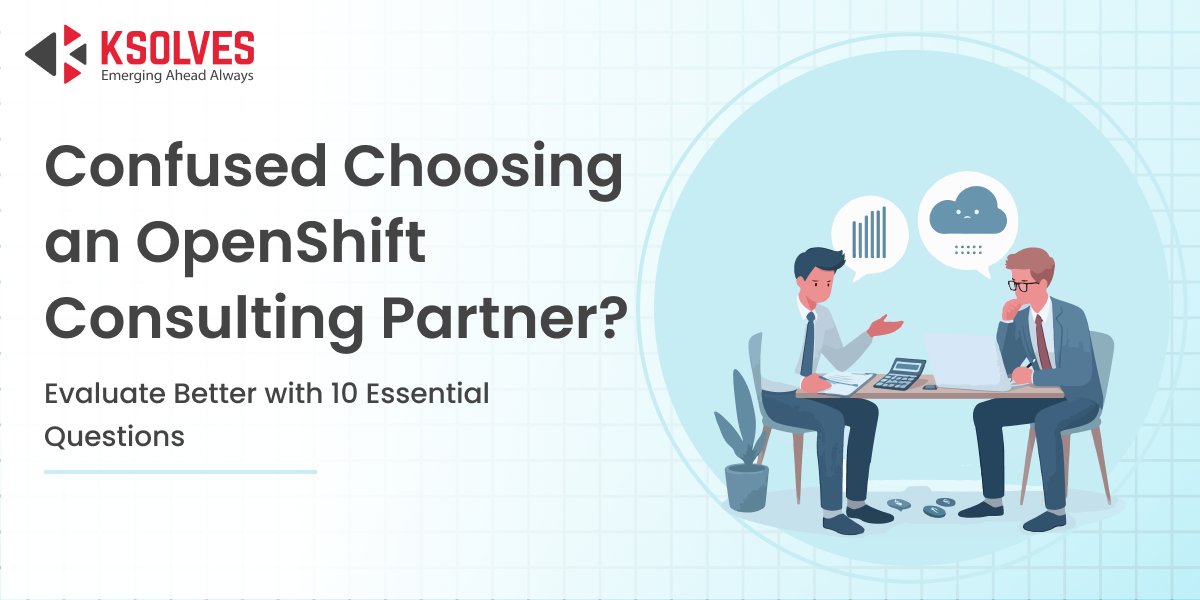
In today’s fast-paced business landscape, leveraging containerization platforms like OpenShift can significantly improve the efficiency, scalability, and agility of your IT infrastructure. However, successfully adopting OpenShift requires expert guidance. That’s where an experienced OpenShift consulting partner comes in.
Choosing the right consulting partner can mean the difference between a smooth deployment and an ongoing struggle to get the most out of OpenShift. To ensure you make the right choice, it’s critical to ask the right questions. These questions not only help assess a partner’s capabilities but also ensure your specific requirements are understood and addressed.
Here are the top 10 questions to ask your OpenShift consulting partner to make sure you’re partnering with a knowledgeable, reliable, and efficient team.
Why Do You Need an OpenShift Consulting Partner?
Adopting OpenShift is a strategic move that can significantly accelerate your organization’s modernisation journey. But it’s also a complex platform that requires deep technical expertise to implement, optimize, and maintain. That’s where an OpenShift consulting partner becomes invaluable.
1. Expertise Beyond Basic Kubernetes Skills
While OpenShift is built on Kubernetes, it includes many additional components – Operators, Service Mesh, CI/CD pipelines, security layers, registry management, monitoring tools, and more. A consulting partner brings specialized skills to configure, secure, and operate these enterprise-grade capabilities the right way.
2. Faster, Risk-Free Adoption
A seasoned partner understands the pitfalls organizations face during OpenShift adoption. They help you avoid misconfigurations, performance issues, incorrect cluster sizing, and security gaps. Their proven frameworks ensure faster deployment with minimal downtime and zero guesswork.
3. Migration Without Disruption
Moving workloads from legacy systems or from VMs to containers can be risky. An OpenShift consulting partner:
- Assesses your current architecture
- Identifies container-ready workloads
- Plans around dependencies
- Ensures minimal business disruption
The goal is a smooth transition where your teams continue working without operational delays.
4. Optimized Architecture for Long-Term Use
OpenShift’s power lies in how well you architect clusters—node placement, autoscaling, persistent storage, observability stacks, network policies, and more. Consultants bring architectural best practices that ensure:
- High availability
- Efficient resource utilization
- Better performance under load
- Scalability as your needs grow
This avoids costly rework down the road.
5. Security and Compliance Done Right
Securing an enterprise OpenShift deployment requires deep knowledge of:
- RBAC
- Image security
- Multitenancy isolation
- Network and pod security
- Secret management
- Cluster-wide policy enforcement
A consulting partner ensures everything is configured securely from day one, aligned with your compliance requirements.
6. Empowering Your Internal Teams
Beyond deployment, a good partner trains your teams to manage OpenShift confidently. They provide documentation, guidance, and operational playbooks that reduce your dependency and strengthen internal capabilities.
7. Continuous Support and Optimization
OpenShift is not a one-time setup. It requires continuous:
- Monitoring
- Patching
- Cluster tuning
- Performance reviews
- Upgrades and enhancements
A consulting partner stays with you through the lifecycle, ensuring your OpenShift environment remains healthy, secure, and aligned with business goals.
10 Most Essential Questions to Ask Your OpenShift Consulting Partner
1. What OpenShift Certifications and Experience Do Your Consultants Have?
The first step in evaluating your potential consulting partner is understanding the expertise they bring to the table. Look for partners who employ Red Hat Certified OpenShift Administrators (EX280) or Red Hat Certified OpenShift Developers (EX288).
Certifications like these indicate that the consultants have undergone rigorous training and passed tests that prove their ability to deploy, manage, and troubleshoot OpenShift environments effectively. It’s also essential to ask for specific project examples or case studies where the consulting team successfully implemented OpenShift in businesses similar to yours.
2. Can You Share Examples of Past OpenShift Projects Similar to Ours?
A strong consulting partner should be able to demonstrate experience with deployments that closely resemble your use case. Ask for examples of similar industries, workloads, or system requirements they’ve worked with.
Request detailed case studies or client testimonials that explain the challenges faced, solutions implemented, and tangible results achieved. A solid track record in projects with similar complexities shows that the partner is well-prepared to handle your deployment needs effectively.
3. How Do You Approach OpenShift Migration or Deployment?
Migration and deployment are often the most critical phases of adopting OpenShift. Your partner should have a clear and structured methodology for moving your applications, data, and services to OpenShift.
Some important aspects to inquire about include:
- Deployment strategy: Will it be on-premises, in a public cloud, or hybrid?
- Preparation and planning: Do they perform an assessment phase to understand your current environment and dependencies?
- Minimizing downtime: What strategies are used to ensure minimal disruption to your ongoing operations?
Their approach should prioritize business continuity and efficiency, ensuring the transition to OpenShift is smooth and seamless.
4. What Tools and Best Practices Do You Follow for OpenShift Migration?
OpenShift migration isn’t just about moving your apps; it involves optimizing your existing infrastructure for containerized environments. Ask about the tools and best practices your consulting partner uses to support the migration process.
Common tools include:
- CI/CD Pipelines (Jenkins, GitLab, OpenShift Pipelines (Tekton) for cloud-native CI/CD automation, etc.)
- Red Hat Ansible Automation Platform for automating cluster operations and application deployments.
- Helm charts and Operators for efficient app packaging and management.
The consultant should also focus on long-term strategies like auto-scaling and resource optimization to ensure your OpenShift environment is agile, secure, and high-performing.
5. How Do You Ensure Security and Compliance in OpenShift Deployments?
Security is non-negotiable in any enterprise IT system. When adopting OpenShift, your partner should demonstrate deep knowledge of both security and compliance requirements relevant to your industry.
Some key security features they should address:
- Role-based Access Control (RBAC): Ensuring that the right users have appropriate access to resources.
- Network Policies: Setting up effective network segmentation to minimize risk.
- Security Contexts: Running containers with the minimum necessary privileges.
- Cluster-wide encryption at rest using OpenShift-managed storage providers such as ODF.
If you’re in a regulated industry (e.g., healthcare or finance), inquire about how the consulting partner will meet compliance requirements (e.g., HIPAA, GDPR). They should have a proven track record in maintaining compliance while ensuring secure deployments.
6. How Do You Manage Vulnerabilities and Security Patches?
OpenShift, like any complex system, requires regular security patches and updates. Your consulting partner should have a proactive plan for identifying and managing vulnerabilities.
This includes:
- Regular security audits and vulnerability scanning of containerized workloads.
- Patch management: Clear processes for timely updates without disrupting critical services.
- Zero-day vulnerability handling: A system in place for responding to new threats.
Ensure that your consulting partner implements a comprehensive vulnerability management plan that minimizes security risks without affecting uptime.
7. How Do You Optimize OpenShift Performance and Resource Utilization?
Once OpenShift is deployed, performance becomes a critical concern. Ask your consulting partner about how they will monitor and optimize performance, including:
- Node placement and affinity: How they ensure workloads are distributed optimally across nodes for high availability and performance.
- Autoscaling: Do they set up auto-scaling based on traffic or resource demand to ensure optimal resource usage?
- Performance benchmarking and tuning: Will they perform stress tests to ensure the system can handle future growth?
A well-optimized OpenShift environment should support rapid scaling, minimal resource wastage, and high availability for critical workloads.
8. How Do You Handle Disaster Recovery and High Availability?
Disaster recovery (DR) and high availability (HA) strategies are essential for ensuring business continuity in the event of system failures or disasters.
Your partner should explain:
- HA architecture: Multiple OpenShift masters, clustered nodes, and replicated data stores to ensure fault tolerance.
- Backup and restore strategies: Periodic backups, including persistent storage, configurations, and application states.
- Disaster recovery plans: Processes for recovering from both small failures and large-scale outages.
Ask for documentation or case studies that demonstrate their ability to implement and test disaster recovery and high-availability solutions.
9. What Level of Ongoing Support and Training Do You Provide?
OpenShift is a powerful platform, but managing it requires specialized knowledge. Your consulting partner should provide:
- Training programs: Offer on-site or online training for your internal teams, ensuring they can manage and troubleshoot the platform after deployment.
- Support options: Clear details about the level of support they offer post-deployment, including response times, service levels, and dedicated support resources.
- Documentation: Ensure that your teams receive comprehensive documentation for troubleshooting, maintenance, and day-to-day management.
Inquire about support tiers (24/7 support, emergency response times, etc.) and the availability of skilled experts for critical issues.
10. How Do You Collaborate with Internal IT Teams During and After Deployment?
Collaboration is key to a successful OpenShift deployment. Ask your consulting partner about their approach to working with internal teams. A good partner will:
- Foster knowledge transfer: Empower your team to take over once deployment is complete.
- Collaborate on DevOps: Integrate with your existing DevOps tools and workflows to ensure smooth operations.
- Maintain communication: Establish regular check-ins to discuss progress, challenges, and next steps.
The relationship with your OpenShift consulting partner should be collaborative, transparent, and geared toward long-term success.
Why Choose Ksolves as Your OpenShift Consulting Partner
Choosing the right OpenShift consulting partner can define the success of your modernization journey. At Ksolves, we bring deep technical expertise, industry-proven methodologies, and a business-first approach that ensures your OpenShift ecosystem is not just deployed but optimized, secure, and future-ready.
1. Certified OpenShift Experts With Real Implementation Experience
Ksolves’ OpenShift engineers are certified, skilled, and experienced in architecting, deploying, and scaling enterprise-grade OpenShift environments. Our team has delivered solutions across hybrid, multi-cloud, and on-premise infrastructures, ensuring you get guidance backed by proven technical excellence.
2. End-to-End OpenShift Enablement
We go beyond deployment. Ksolves provides complete lifecycle support, including:
- Cluster sizing and architecture design
- Enterprise security hardening
- CI/CD pipeline setup
- Migration of legacy apps to containers
- Performance optimization and observability
- Ongoing management and upgrades
This holistic approach ensures your OpenShift platform is stable, optimized, and aligned with business goals from Day 1.
3. Minimal-Disruption Migration Framework
Ksolves follows a structured, minimal-risk migration approach designed to avoid downtime and operational disruptions. Whether you’re moving from monolithic systems, legacy VMs, or existing Kubernetes clusters, our team ensures a seamless transition backed by detailed assessments, dependency mapping, and phased rollouts.
4. Strong Focus on Security & Compliance
Security is at the heart of every OpenShift engagement at Ksolves. We implement:
- RBAC with least-privilege principles
- Network Policies and Security Context Constraints (SCCs)
- Image scanning and vulnerability management
- Secret encryption and compliance-ready controls
- Multi-tenancy isolation
Our security-first approach ensures your OpenShift environment is protected from day one and remains compliant with industry regulations.
5. Tailored Solutions, Not Templates
No two organizations operate the same way, and neither should their OpenShift environment. Ksolves customizes architecture, deployment strategy, automation workflows, and operational processes based on your unique business needs. This ensures maximum efficiency and long-term ROI.
6. Accelerated Delivery With Proven Best Practices
With years of experience across Kubernetes, containerization, CI/CD, and cloud-native development, Ksolves uses repeatable best practices and automation-driven workflows to speed up deployment without compromising reliability or security.
7. Seamless Collaboration With Your Teams
We work as an extension of your IT and DevOps teams – co-owning responsibilities, providing extensive knowledge transfer, and ensuring your internal teams are fully equipped to manage the platform independently.
8. Reliable Support & Continuous Optimization
OpenShift environments evolve rapidly. Ksolves provides ongoing support, proactive monitoring, regular cluster audits, performance tuning, and upgrade assistance to ensure your ecosystem remains resilient, high-performing, and aligned with business growth.
Conclusion
Selecting the right OpenShift consulting partner is key to a smooth, secure, and scalable cloud-native journey. By asking the right questions, you ensure your partner has the expertise, processes, and vision needed to support both your immediate deployment and long-term growth.
With deep technical expertise and proven OpenShift experience, Ksolves helps enterprises adopt and optimize OpenShift with confidence. We ensure secure architectures, seamless migrations, and ongoing performance.
Ready to maximize the value of OpenShift? Partner with Ksolves and build an infrastructure that’s truly future-ready.































AUTHOR
OpenShift
Share with