Project Name
Rapid Kubernetes Infrastructure Deployment with DevOps Automation
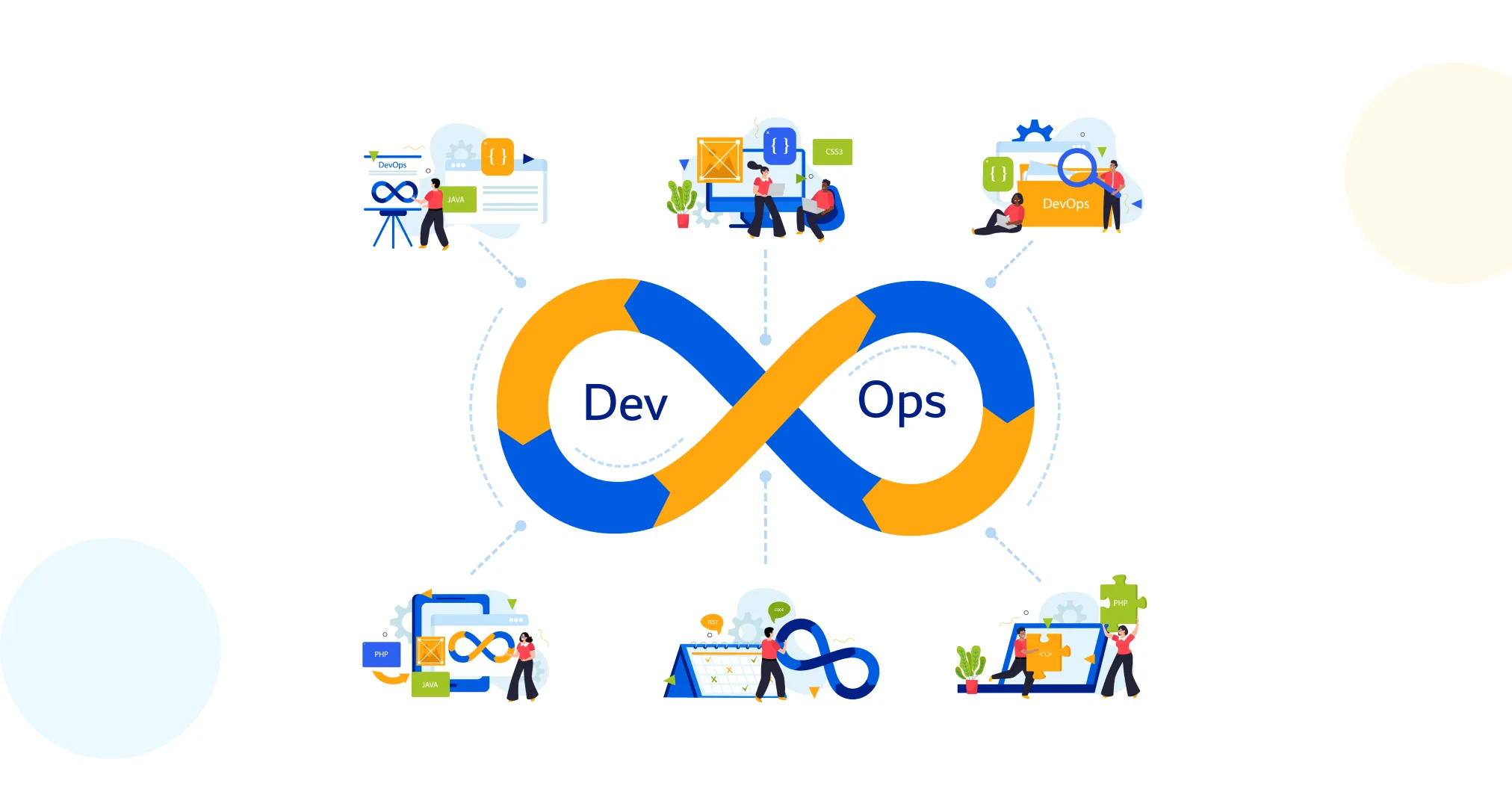

A fast-growing technology company offering cloud-native applications was struggling to scale its infrastructure. As microservices proliferated, the need for a reliable, production-grade Kubernetes environment became critical. Manual provisioning was inconsistent and error-prone. Infrastructure setup took several days, delaying development cycles and increasing operational overhead. Ksolves stepped in with a DevOps-first approach, leveraging Infrastructure as Code (IaC) and GitOps workflows to enable rapid, repeatable deployments. The result was a system that reduced deployment time from days to a few hours while ensuring SOC 2-aligned security architecture and high availability.
The challenges faced by the client are as follows:
- Manual Infrastructure Provisioning: Lack of automation led to "snowflake" clusters that were impossible to replicate.
- Environment Drift: Differences between Staging and Production caused "it works on my machine" failures.
- Lack of Standardization: No version-controlled infrastructure patterns existed.
- Slow Release Cycles: Infrastructure was a bottleneck for CI/CD pipelines.
- Scalability Constraints: Manual scaling couldn't keep up with dynamic traffic spikes.
- Security Gaps: Lack of Network Policies and RBAC (Role-Based Access Control) created potential vulnerabilities.
Ksolves implemented a fully automated, production-grade Kubernetes framework:
- Modular IaC with Terraform: We designed versioned Terraform modules to provision VPCs, subnets, and clusters. To ensure collaboration and safety, we implemented Remote State Management (S3/GCS Backend) with State Locking (DynamoDB) to prevent concurrent deployment conflicts.
- Automated Cluster Bootstrapping: Beyond the control plane, we automated the installation of essential K8s Add-ons (External-DNS, Cert-Manager, and NGINX Ingress Controller) using Helm providers, ensuring a "batteries-included" cluster from minute one.
- GitOps-Driven CI/CD: We integrated ArgoCD for continuous delivery. This shifted the source of truth to Git; any change to the repository was automatically synced to the cluster, enabling self-healing infrastructure.
- Resource Optimization: We implemented Horizontal Pod Autoscaler (HPA) for application scaling and Karpenter (AWS) / Cluster Autoscaler (multi-cloud) to dynamically provision worker nodes based on pending pod demands, optimizing cloud costs.
- Observability Stack: A "Production-Grade" environment requires visibility. We deployed a Prometheus and Grafana stack for real-time metrics, Fluentd for log collection, and Loki for log aggregation and querying.
- Security-First Architecture: We enforced Namespace-level isolation, integrated AWS IAM Roles for Service Accounts (IRSA) to follow the Principle of Least Privilege, and utilized HashiCorp Vault for secure secret management.
- Deployment Time Reduced Significantly: Infrastructure provisioning time was reduced from several days to just a few hours through full automation.
- Improved Deployment Consistency: Standardized templates ensured identical environments, reducing errors and deployment failures.
- Faster Release Cycles: Automated infrastructure provisioning accelerated CI/CD pipelines, enabling quicker application rollouts.
- Enhanced Scalability: Auto-scaling capabilities allowed the system to handle varying workloads efficiently without manual intervention.
- Stronger Security Posture: Automated security configurations minimized the risk of manual misconfigurations.
- Operational Efficiency Gains: Reduced manual effort enabled engineering teams to focus on development and innovation rather than infrastructure setup.
- Monitoring and Logging Enablement: Integrated monitoring and logging tools provided real-time visibility into cluster performance, application health, and system metrics.
- Environment Standardization: Predefined templates ensured identical configurations across development, staging, and production environments, eliminating inconsistencies.
By transitioning from manual workflows to a GitOps-driven Kubernetes architecture, Ksolves empowered the client to scale without friction. The combination of modular Terraform scripts, automated Helm deployments, and robust Observability ensures a system that is not just fast, but resilient and secure.
As an AI-first company, Ksolves further enhances these environments by embedding predictive scaling insights leveraging AI-driven traffic forecasting models to anticipate load spikes and scale clusters proactively before demand hits. We continue to support the organization by optimizing its Cloud-Native footprint for the future.
Ready to accelerate your infrastructure with AI-driven DevOps?
Let Ksolves help you deploy, scale, and optimize Kubernetes environments faster and smarter.