



Monolithic vs Microservices: What’s the Major Difference?
Microservices
5 MIN READ
December 24, 2025

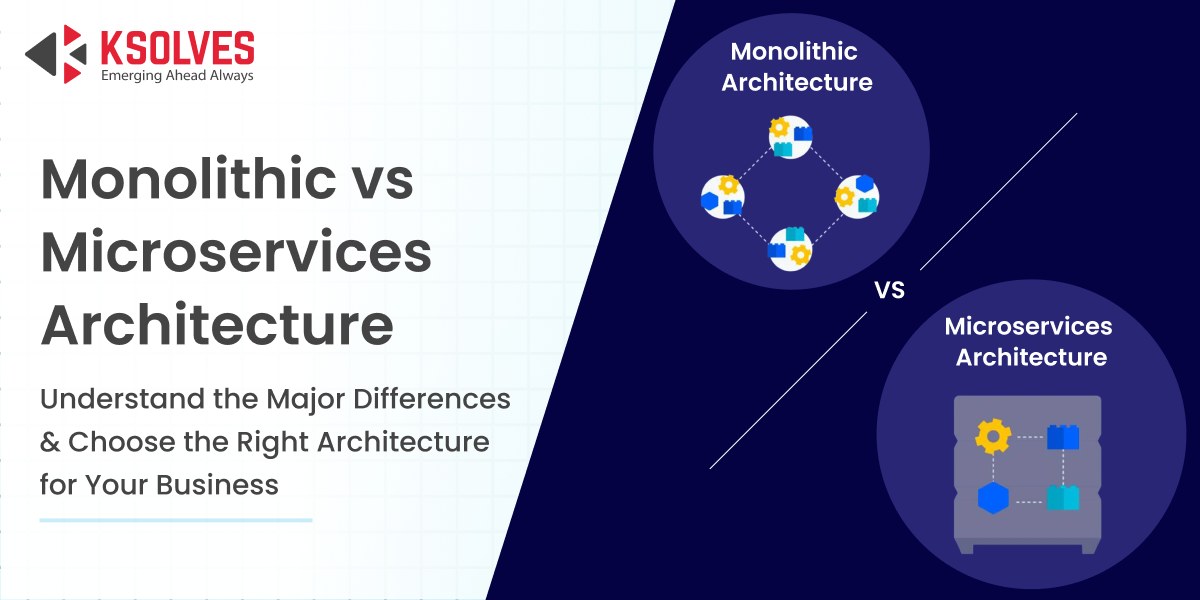
Choosing the right software architecture has never been more critical. As applications grow in complexity, user expectations rise, and release cycles shrink from months to days (or even hours), the debate of monolithic vs microservices architecture directly impacts scalability, speed to market, team productivity, and ultimately business success.
In this post, we’ll break down monolithic vs microservices, explore their core differences, and help you decide which approach fits your organization best.
What is Traditional or Monolithic Architecture?
Definition
A monolithic architecture is the traditional way of building applications where the entire system is developed, deployed, and scaled as a single, unified codebase and executable.
How It Works
All components, UI, business logic, data access layer, authentication, etc. are tightly intertwined and run as one process. A single codebase is compiled into one artifact (e.g., a WAR/EAR file or executable binary) that is deployed to servers.
Key Characteristics
- Single codebase and deployment unit
- Tight coupling between modules
- Simple to develop and debug in early stages
- Runs as one process
Where It Is Commonly Used
- Startups and MVPs (fast initial development)
- Small to medium-sized applications with predictable load
- Enterprise software with stable requirements (e.g., ERP systems, legacy banking cores)
Limitations
- Becomes harder to maintain as the codebase grows
- Scaling requires duplicating the entire application
- A bug in any module can bring down the whole system
- Long build and deployment times
- Difficult to adopt new technologies or frameworks
What is Microservices Architecture?
Definition
Microservices architecture is an approach where an application is composed of small, independent services that communicate over well-defined APIs (usually HTTP/REST or messaging queues). Each service owns its own database and is responsible for a specific business capability.
How It Works
Instead of one large application, you have dozens or hundreds of small services (e.g., User Service, Order Service, Payment Service, Recommendation Service). They are developed, deployed, scaled, and maintained independently.
Key Characteristics
- Decentralized governance and data management
- Services communicate via lightweight protocols
- Independently deployable and scalable
- Designed around business domains (Domain-Driven Design)
Ideal Use Cases
- Large-scale, high-traffic applications (Netflix, Amazon, Uber)
- Products with rapidly evolving features
- Organizations with multiple development teams
- Systems requiring extreme scalability or resilience
Why Businesses Prefer Microservices Today
- Faster release cycles (multiple deployments per day)
- Better fault isolation
- Ability to scale only the services that need it
- Freedom to use the best technology for each service (polyglot persistence/runtime)
Key Differences: Microservices vs Monolithic Architecture
| Aspect | Monolithic Architecture | Microservices Architecture |
| Structure | Single codebase, tightly coupled modules | Loosely coupled, independent services |
| Scalability | Vertical (bigger servers) or replicate the entire app | Horizontal scaling of individual services |
| Deployment Approach | The entire application is deployed at once | Independent deployment of each service |
| Development Speed & Agility | Slows down as team/codebase grows | Faster feature delivery, parallel teamwork |
| Technology Flexibility | One tech stack for the whole application | Polyglot, each service can use a different language/framework/DB |
| Fault Tolerance & Reliability | Single point of failure | Failure in one service doesn’t crash others |
| Team Structure | Works well with small teams; large teams face bottlenecks | Enables autonomous, cross-functional teams (Conway’s Law friendly) |
| Operational Overhead | Low (single process, simpler monitoring) | Higher (service discovery, tracing, API gateway, etc.) |
How Ksolves Helps You Choose & Implement the Right Architecture
As a leading Microservices Development Company with over 500 successful projects, Ksolves specializes in both modernizing legacy monolithic systems and building greenfield microservices applications from scratch.
Our services include:
- Architecture Assessment & Roadmap – We analyze your current monolithic system, business goals, traffic patterns, and team structure to recommend the optimal path (lift-and-shift, strangler pattern migration, or full microservices redesign).
- Custom Microservice Design & Development – Domain-driven design workshops, service decomposition, event-driven architectures, containerization (Docker + Kubernetes), and CI/CD pipelines.
- Technology Expertise – Java Spring Boot, Node.js, Go, .NET Core, Python FastAPI, Kafka/RabbitMQ for messaging, Istio/Linkerd service mesh, Grafana/Prometheus observability.
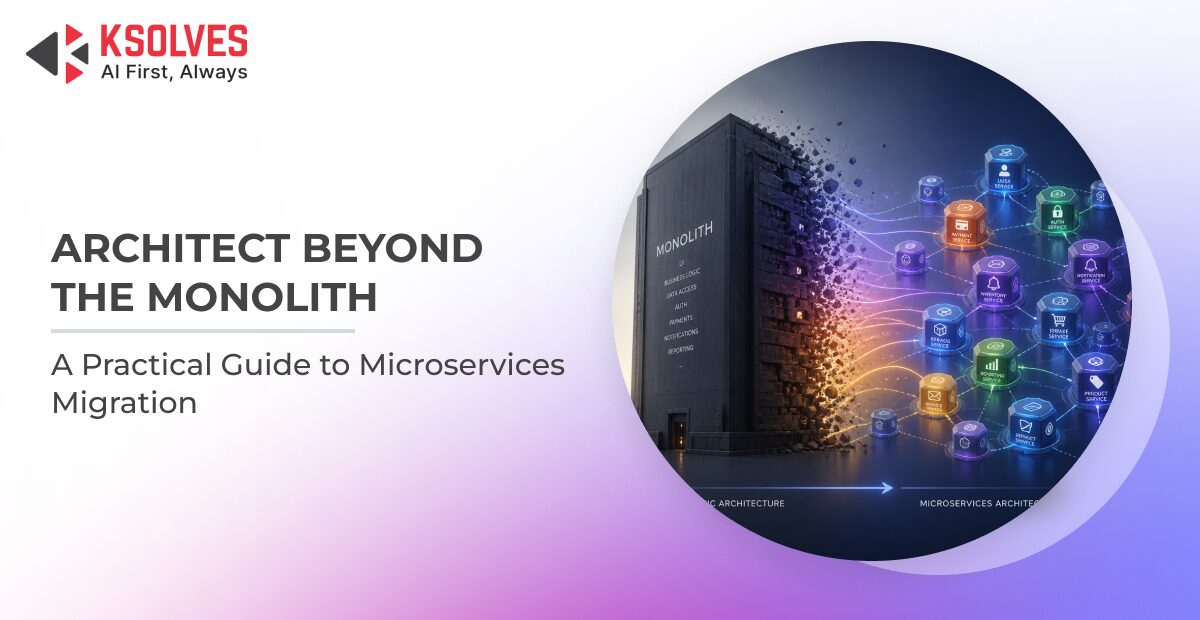
- Proven Migration Frameworks – Zero-downtime migrations using Strangler Fig pattern, feature flags, and database refactoring strategies.
Whether you’re asking “Should we break our monolith?” or “How do we start with microservices?”, our architects provide unbiased guidance—no one-size-fits-all sales pitch.
Conclusion: Monolithic or Microservices: Which One Wins?
There is no universal winner in the monolithic vs microservices debate:
- Choose monolithic if you’re a startup, building an MVP, or have a small team with stable requirements.
- Choose microservices if you need rapid innovation, extreme scalability, resilience, and have the organizational maturity to handle distributed systems.
The right answer depends on your current scale, growth trajectory, and team capabilities.
Ready to evaluate monolithic vs microservices architecture for your product? Contact Ksolves today for a free architecture health check and personalized migration roadmap.

































AUTHOR
Microservices
Share with