Project Name
How Ksolves’ AI-Driven ERPNext Implementation Helped a Food Distributor Reduce Stockouts by 45%
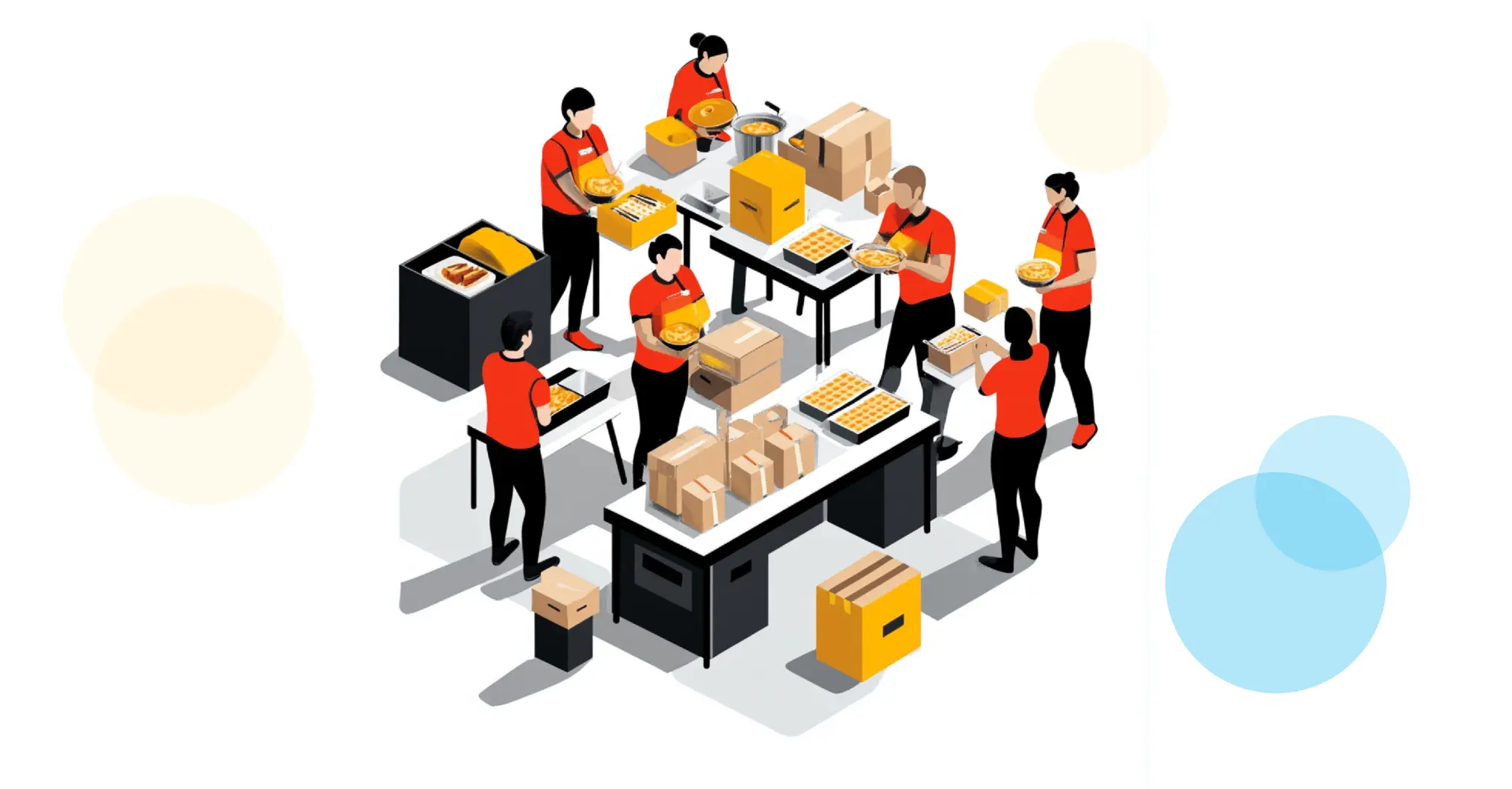

A mid-size food distribution company operating across multiple regional warehouses was running procurement, inventory, and order fulfillment on a combination of spreadsheets, legacy accounting software, and manual approval chains. With a catalogue of over 4,000 SKUs, including perishable and near-expiry items, the business was losing revenue to recurring stockouts, missing delivery windows, and carrying significant dead stock. Compliance with food safety traceability requirements was managed through paper records; a process that slowed audits and created exposure.
The company partnered with Ksolves to deploy a fully configured ERPNext for food distribution across its inventory, procurement, sales, and finance operations. This AI-driven ERPNext implementation was completed in roughly half the typical timeline; because every Ksolves consultant uses AI as a daily working tool for configuration review, testing, documentation, and workflow design. The result was a connected, real-time ERPNext stock management system that brought stockout incidents down by 45% within the first quarter of go-live.
-
Fragmented Inventory Visibility Across Warehouses
Stock data was maintained separately at each warehouse location, with no real-time synchronisation. Warehouse teams used local spreadsheets and emailed daily stock summaries to a central operations team. By the time procurement decisions were made, stock figures were 12–24 hours out of date. This lag was a direct cause of both stockouts at active locations and surplus accumulation at others; a core problem that ERP for food distributors is specifically designed to address. -
Manual Reorder Process With No Demand Signal
Purchase orders were raised manually based on buyer experience and periodic stock counts rather than any demand forecasting ERPNext logic. There was no system-generated reorder point or minimum stock level configured against actual consumption patterns. During seasonal demand spikes, common in food distribution, buyers were regularly caught short, leading to emergency procurement at above-market rates. -
No Batch or Expiry Tracking for Perishable Items
The product catalogue included fresh produce, chilled goods, and items with short shelf lives. These categories were not tracked by batch or expiry date in the legacy system. As a result, older stock was not consistently rotated, leading to near-expiry write-offs and occasional delivery of short-dated goods to retail customers, a source of complaints and credit note requests. -
Disconnected Sales and Procurement Workflows
Sales orders were processed in one system while procurement decisions were made in another, with no live link between incoming customer demand and purchasing actions. When a large order came in for a product close to its reorder level, procurement teams were not automatically notified. This disconnect meant that stockouts followed a predictable pattern: a demand spike the system could not translate into a timely purchase action, and a clear signal that AI in supply chain management was needed. -
Compliance and Traceability Gaps
Food safety regulations in the client's operating region required full forward and backward traceability on all perishable stock - from supplier batch to delivery note. This was managed manually using physical records and scanned documents. Audit preparation took several days, and the accuracy of trace records depended entirely on whether warehouse staff had completed their paper documentation correctly. -
Delayed and Inaccurate Financial Reporting
With inventory data in spreadsheets and invoicing in a separate accounting tool, the finance team spent several days each month reconciling stock valuations against financial records. Cost-of-goods calculations were estimates rather than actuals, which distorted margin reporting and made pricing decisions unreliable, particularly for items subject to supplier price fluctuations.
-
Centralised Inventory Management in ERPNext Across All Warehouses
The foundation of the engagement was deploying ERPNext customization for inventory management across all warehouse locations under a single unified instance. Each physical site was configured as a separate warehouse entity, with real-time stock ledger entries reflecting every goods receipt, transfer, and dispatch as they happened. Operations and procurement teams now work from the same live data, eliminating the 12–24 hour reporting lag, and delivering the ERPNext inventory optimization the business needed across all locations simultaneously. -
AI-Assisted Demand Forecasting and Reorder Configuration
Ksolves applied AI in supply chain management to map 18 months of sales history against stockout incidents and seasonal demand patterns. This demand forecasting ERPNext configuration established reorder levels and safety stock thresholds at the item and warehouse level. Auto-replenishment rules now trigger draft purchase orders when stock drops to the configured threshold, replacing reactive manual checks with proactive, data-driven procurement signals. -
Batch and Expiry Date Tracking With FEFO Logic
All perishable and near-expiry SKUs were configured with batch-level tracking inside the ERPNext stock management system. Batch numbers are captured at goods receipt and carried through every subsequent transaction. The system enforces First Expiry, First Out (FEFO) picking logic during stock reservation, ensuring older batches are dispatched first. Expiry alerts flag items approaching their use-by date before they become write-offs. -
Sales-to-Procurement Workflow Integration
Sales orders and purchase requisitions are now connected within the same food distribution ERP software instance. When a confirmed sales order pushes a tracked item below its reorder threshold, the system automatically creates a purchase requisition for buyer approval. This closed-loop workflow removed the operational gap between customer demand and procurement response, cutting the average time from stockout signal to purchase order from 3 days to same-day. -
Automated Batch Traceability for Regulatory Compliance
With every goods receipt, transfer, and delivery note carrying batch reference data, ERPNext now generates a complete traceability chain for any item in the catalogue. Forward trace; from supplier batch to customer delivery note; and backward trace are both available from a single report with no manual effort. Audit preparation that previously took days now takes minutes. -
Integrated Stock Valuation and Financial Reporting
ERPNext's accounting module was configured to run alongside inventory operations on a unified chart of accounts. Every stock movement now posts a corresponding accounting entry in real time. The finance team no longer reconciles spreadsheets against invoices at month-end. Stock valuation, COGS, and gross margin reports are generated directly from the system, using actual landed costs calculated through ERPNext's Landed Cost Voucher feature.
-
45% Reduction in Stockout Incidents
Within the first quarter after go-live, stockout incidents across all tracked SKUs fell by 45%. The combination of real-time stock visibility, system-driven reorder triggers, and the closed-loop sales-to-procurement workflow eliminated the delays that had consistently caused stockouts during demand spikes. For businesses looking to reduce stockouts in supply chain operations, this outcome reflects what structured ERPNext inventory optimization delivers when configured against real consumption data. -
30% Decrease in Emergency Procurement Spend
With reorder levels configured against actual demand patterns and automatic replenishment triggers in place, buyers no longer responded to shortages through emergency spot purchasing. The reduction in unplanned procurement translated directly into lower average purchase costs, as orders were placed on regular terms with preferred suppliers rather than at short-notice rates. -
Near-Zero Perishable Write-Offs
FEFO picking logic and expiry alerts brought perishable write-offs close to zero within two months of go-live. Warehouse teams now receive automated alerts for items approaching expiry, allowing these items to be prioritised in dispatch before they become unfit for sale. Customer complaints related to short-dated deliveries dropped to zero in the same period. -
Audit-Ready Traceability in Minutes
Full forward and backward traceability for any SKU is now available on demand from ERPNext's batch trace report. What previously took the compliance team several days to assemble from paper records and scanned documents is now a single report run. The client completed its first post-implementation food safety audit without a single documentation finding. -
50% Faster Month-End Financial Close
Automated stock valuation entries and real-time COGS tracking cut the finance team's month-end reconciliation process by more than half. The team now focuses on analysis rather than data correction, with margin reports available within 24 hours of period close rather than after a week of manual consolidation. -
Unified Operational Visibility Across All Locations
Warehouse managers, procurement leads, and the operations director now work from a single dashboard. Inter-warehouse stock transfers, pending purchase orders, open sales orders, and expiry alerts are visible in one place. Decision-making speed improved significantly, with no more dependency on emailed summaries or weekly reporting cycles.
This project is a practical illustration of what a well-executed ERPNext for food distribution delivers: live inventory data, automated replenishment, batch traceability, and financial reporting that closes on time. The 45% reduction in stockouts was not the output of a single feature; it came from connecting procurement, inventory, sales, and finance into one system and configuring it against real consumption data. Ksolves’ AI-driven ERPNext implementation compressed the deployment timeline while ensuring every configuration decision was grounded in the client’s operational reality, not generic defaults.
For ERP for food distributors, the measures that matter are stockout rate, write-off value, audit readiness, and procurement cost. This engagement moved all four in the right direction within the first quarter. If your business needs to reduce stockouts in supply chain operations and is currently relying on disconnected tools and manual procurement decisions, a structured ERPNext for food distribution implementation is the most direct path to fixing it. Talk to Ksolves about your ERPNext project.
See What an AI First Erpnext Implementation Will Look Like When It’s Built Around Your Data.