



How Odoo Automates Raw Material Procurement for Food & Beverage Businesses
Odoo
5 MIN READ
February 12, 2026

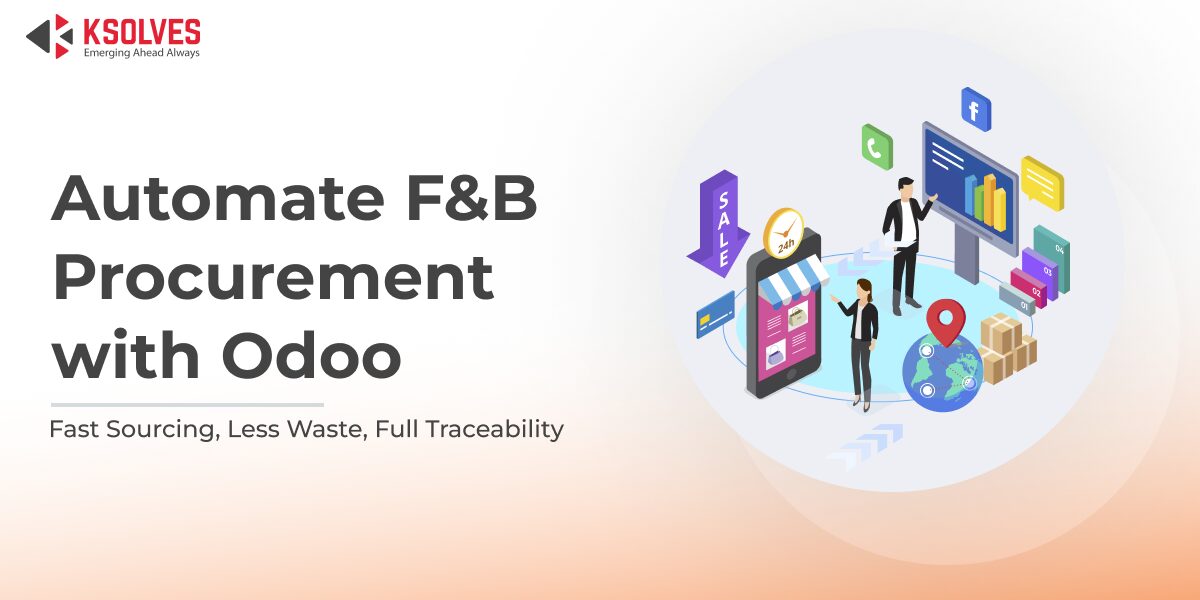
Raw material procurement plays a critical role in the Food & Beverage (F&B) industry, where product quality, shelf life, compliance, and cost control are tightly interconnected. Even small inefficiencies, such as delayed purchasing, excess inventory, or lack of traceability, can quickly lead to wastage, production disruptions, and regulatory risk.
Yet many F&B businesses still manage procurement through manual processes or disconnected systems, making it difficult to align purchasing with real-time demand, inventory levels, and production plans.
Odoo ERP addresses these challenges by automating raw material procurement and seamlessly integrating purchasing with inventory, manufacturing, quality, and finance. This enables F&B businesses to maintain optimal stock levels, reduce spoilage, ensure traceability, and make procurement decisions based on accurate, real-time data.
In this blog, we explore how Odoo automates the entire raw material procurement lifecycle for food and beverage businesses, covering inventory-driven purchasing, supplier management, quality control, compliance, and the measurable business benefits of procurement automation.
Understanding Raw Material Procurement in the F&B Industry
Raw material procurement in the food and beverage industry is inherently complex due to the nature of the products being sourced. Unlike standard manufacturing inputs, F&B raw materials require careful handling and timely procurement to maintain quality and compliance.
Key characteristics include:
- Perishability and limited shelf life, requiring accurate purchasing and timely replenishment.
- Batch and lot-level traceability to ensure food safety and enable effective recalls.
- Strict quality and regulatory compliance, governed by food safety standards.
- Price variability is influenced by seasonality, availability, and supplier dependency.
These factors demand procurement systems that are accurate, time-sensitive, and fully traceable, leaving little room for manual errors or delayed decisions.
Why Procurement Complexity is Higher in F&B
Procurement in the F&B industry goes beyond simply purchasing materials – it must remain tightly synchronized with demand, production, and inventory conditions. This complexity arises from:
- Unpredictable demand patterns driven by seasons, promotions, and changing consumption behavior.
- Multi-location operations, including kitchens, manufacturing plants, and distribution centers.
- Thin profit margins, where overstocking, spoilage, or emergency purchases directly erode profitability.
As a result, F&B businesses need procurement processes that are not only efficient but also responsive and controlled. Automation becomes essential to maintain consistency, minimize waste, and ensure procurement decisions are always aligned with real operational demand.
Common Procurement Challenges Faced by F&B Businesses
- Manual Purchase Planning and Forecasting Gaps
In the absence of automated procurement systems, F&B procurement teams often rely on spreadsheets, historical assumptions, or experience-based ordering.
This results in:
- Over-purchasing to buffer against stockouts, increasing inventory holding, and spoilage.
- Under-purchasing due to inaccurate forecasts, leading to production delays.
- Poor alignment between purchasing, consumption, and production plans.
Such reactive procurement practices directly contribute to excess inventory, higher wastage, and inconsistent production schedules.
- Lack of Real-Time Inventory Visibility
When inventory data is spread across multiple systems or locations, procurement decisions are made with incomplete information. Common consequences include:
- Inaccurate or outdated stock levels.
- Delayed replenishment and missed reorder windows.
- Last-minute or emergency purchases at premium costs.
Without real-time visibility, procurement teams are forced into firefighting instead of planned purchasing.
- Supplier Management Inefficiencies
Managing multiple suppliers without a centralized system creates operational blind spots, such as:
- No unified view of supplier pricing and contracts.
- Inconsistent delivery timelines and follow-ups.
- Limited ability to track and evaluate supplier performance.
These gaps make it difficult to negotiate better terms, ensure reliable supply, or build long-term vendor relationships.
- Compliance, Quality, and Traceability Issues
Manual and fragmented tracking methods significantly increase compliance risks in F&B operations. Businesses often struggle to:
- Trace raw material batches across inventory and production.
- Execute recalls quickly and accurately when required.
- Provide audit-ready documentation for food safety and quality inspections.
Without end-to-end traceability, even minor compliance gaps can escalate into operational disruptions and reputational risk.
How Odoo Automates the Food & Beverage Procurement Lifecycle?
Odoo automates the end-to-end procurement process by connecting demand signals, inventory levels, and supplier workflows into a single system. Instead of reactive purchasing, F&B businesses gain a structured, rules-driven procurement flow.
This ensures raw materials are sourced at the right time and quantity, with full control, traceability, and cost efficiency.
1. Centralized and Demand-Driven Procurement
Odoo provides a single source of truth for stock levels, purchases, and consumption. Real-time data flows seamlessly across departments, reducing manual coordination and reconciliation.
Procurement activities are triggered automatically using reordering rules, ensuring purchases are initiated when inventory falls below defined thresholds. RFQs and purchase orders are generated based on actual demand, enabling timely replenishment without overstocking.
2. Smart Planning Aligned with Sales and Production
Procurement planning in Odoo is directly linked to sales orders, production requirements (Bills of Materials), and historical consumption data. This allows procurement teams to plan purchases accurately, align sourcing with production schedules, and respond effectively to demand fluctuations common in F&B operations.
3. Real-Time Inventory Control and Traceability
Odoo Inventory offers real-time visibility across multiple warehouses and locations. Raw materials can be tracked by batch and lot numbers, with expiry date management for perishable goods.
FIFO and FEFO strategies ensure older or soon-to-expire stock is consumed first, helping reduce wastage and spoilage. Automated alerts notify teams before materials expire.
Also Read: Top 5 Odoo Inventory Apps for 2025
4. Supplier Management and Cost Control
With Odoo Purchase, businesses can maintain supplier-specific price lists, track lead times, and evaluate delivery reliability. RFQs enable vendor comparisons before finalizing purchases, supporting better pricing decisions and stronger supplier relationships.
Built-in reporting helps monitor purchase spend, price variations, and cost-saving opportunities.
Also Read: The Role of Odoo ERP in Supply Chain Management to Enhance Visibility and Tracking
5. Quality Checks and Compliance Management
Odoo Quality allows businesses to define quality control points for incoming raw materials. Inspection results are recorded digitally, with acceptance or rejection rules enforced at receipt. This supports food safety compliance and simplifies audit readiness through documented quality checks and traceability.
6. Seamless Integration with Production and Inventory
Odoo Manufacturing integrates directly with procurement and inventory. Raw materials are automatically reserved for production orders, and purchase orders are triggered when stock is insufficient. This minimizes production delays caused by material shortages and ensures smoother production planning.
7. Multi-Location Inventory Optimization
Odoo supports centralized procurement for multiple kitchens, plants, or warehouses. Inter-warehouse transfers and location-based stock visibility enable optimal inventory distribution across the supply chain, reducing excess stock at individual locations.
8. Approval Workflows and Supplier Collaboration
Configurable approval workflows allow multi-level purchase approvals based on value or category, along with budget controls to prevent unauthorized spending. Procurement teams can send RFQs and purchase orders digitally, track confirmations, and monitor delivery status, reducing follow-ups and communication gaps.
9. Procurement Analytics and Performance Insights
Odoo dashboards provide visibility into procurement performance, including purchase cycle time, supplier delivery reliability, and order fulfillment status. Decision-makers can analyze raw material consumption trends, spending by supplier or category, and price fluctuations over time to support data-driven procurement decisions.
Business Benefits of Automating F&B Procurement with Odoo
Automating procurement in the Food & Beverage industry brings measurable benefits across operations, compliance, and supplier management. Odoo helps businesses reduce manual effort, control costs, ensure traceability, and build stronger supplier relationships, enabling smarter, data-driven decision-making.
Operational Efficiency & Cost Savings
- Reduced manual effort: Automation eliminates repetitive tasks, freeing teams to focus on strategic procurement decisions.
- Faster procurement cycles: Rule-based purchasing and real-time inventory updates speed up order processing.
- Lower emergency purchasing costs: Proactive replenishment reduces last-minute orders and associated premium costs.
Improved Compliance & Traceability
- End-to-end batch tracking: Complete visibility of raw materials from supplier to production.
- Faster recalls and audits: Digital records enable quick response to quality or safety issues.
- Enhanced food safety compliance: Built-in checks ensure adherence to regulatory and internal quality standards.
Stronger Supplier Relationships
- Transparent pricing: Centralized supplier data ensures fair and consistent purchase terms.
- Performance-based evaluations: Track delivery reliability and quality to identify top-performing vendors.
- Data-driven negotiations: Historical purchase data helps negotiate better pricing and contract terms.
Final Words
In the food & beverage industry, procurement accuracy directly impacts quality, compliance, and profitability. Odoo enables food and beverage businesses to move from reactive purchasing to data-driven, automated procurement, without compromising control or compliance.
By integrating procurement with inventory, production, quality, and analytics, Odoo creates a resilient and scalable procurement framework that supports growth while minimizing waste and risk.
With Ksolves’ Odoo implementation services, F&B companies can implement Odoo tailored to their unique operations, ensuring seamless automation, regulatory compliance, and measurable cost savings.
Ready to automate your F&B raw material procurement with Odoo?
Partner with Ksolves, an experienced Odoo implementation partner, to build a procurement system designed for your operational realities.






























AUTHOR
Odoo
Neha Negi, Presales and Business Associate Head at Ksolves is a results-driven ERP consultant with over 8 years of expertise in designing and implementing tailored ERP solutions. She has a proven track record of leading successful projects from concept to completion, driving organizational efficiency and success.
Share with