



How Odoo PLM Simplifies Engineering Change Order (ECO) Management
Odoo
5 MIN READ
February 11, 2026

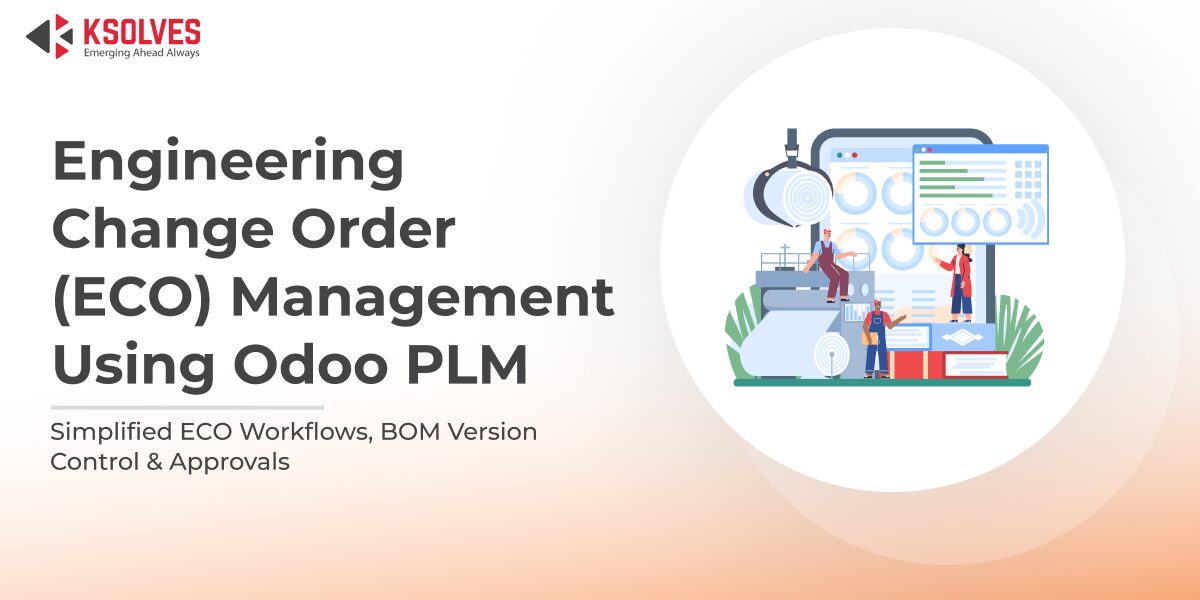
Engineering changes are unavoidable, but managing them shouldn’t be complicated. Even a minor design update can impact engineering, manufacturing, procurement, and quality. Yet many organizations still rely on emails and spreadsheets to handle Engineering Change Orders (ECOs), leading to version confusion, delayed approvals, and operational risk.
Without a structured process, ECOs slow down production, increase rework, and make traceability difficult. Odoo PLM addresses these challenges by centralizing ECO management, enabling controlled revisions, clear approval workflows, and real-time collaboration across teams. Changes are approved faster, implemented accurately, and aligned with ongoing operations.
In this blog, we explore how Odoo PLM simplifies Engineering Change Order (ECO) management and helps manufacturers maintain control, visibility, and agility throughout the product lifecycle.
Understanding Engineering Change Orders (ECOs)
An Engineering Change Order (ECO) is a structured process used to propose, review, approve, and implement changes to a product’s design or manufacturing definition. These changes may affect:
- Product specifications
- Bills of Materials (BOMs)
- Manufacturing instructions and workflows
- Quality standards or regulatory requirements
By formalizing how changes are introduced, ECOs ensure that every modification is documented, reviewed, and traceable, reducing risk across the entire product lifecycle.
Why ECO Management is Business-Critical
When ECOs are poorly managed, even small design changes can create outsized operational problems, including:
- Production delays caused by unclear or delayed approvals.
- Manufacturing errors due to outdated or incorrect BOMs.
- Higher scrap, rework, and material costs.
- Increased difficulty during audits and compliance reviews.
Effective ECO management keeps engineering intent, shop-floor execution, and business objectives aligned. It enables organizations to implement changes quickly, without compromising quality, cost control, or compliance.
Common Challenges in Traditional ECO Management
Engineering changes shouldn’t feel risky, but when managed through disconnected tools and manual processes, even simple updates can disrupt production, inflate costs, and slow down decision-making. These are some of the most common issues organizations face with traditional ECO management approaches.
1. Lack of Version Control and Visibility
Many organizations still manage engineering changes using spreadsheets, shared drives, or disconnected tools. This often creates confusion around:
- Which version is the latest and approved.
- Which design should be used for production.
- Who made the change and for what reason.
As a result, outdated or incorrect designs can easily make their way to the shop floor.
2. Manual and Fragmented Approval Processes
When ECO approvals rely on emails or offline documents, the process becomes:
- Slow and inconsistent.
- Heavily dependent on manual follow-ups.
- Lacking clear ownership and accountability.
Without real-time visibility into approval status, critical changes are delayed, impacting production schedules.
3. Poor Cross-Department Collaboration
Engineering changes rarely affect a single team. Manufacturing, procurement, quality, and inventory teams must all stay aligned. In the absence of a centralized system:
- Teams work in silos.
- Information gets duplicated or lost.
- Miscommunication leads to errors and rework.
4. Limited Traceability and Compliance Readiness
Traditional ECO methods make it difficult to maintain a reliable audit trail. During audits or quality reviews, organizations struggle to answer:
- What exactly changed?
- When was the change approved?
- Who authorized it?
- Which products, BOMs, or orders were impacted?
This lack of traceability increases compliance risk and reduces confidence in the change management process.
What Makes Odoo PLM a Strong Fit for ECO Management
Odoo PLM is built to handle engineering changes as part of a connected manufacturing ecosystem, not as isolated tasks. By combining structure, integration, and scalability, it enables organizations to manage ECOs with greater speed, control, and confidence.
1. Native Integration with Odoo ERP
Odoo PLM is tightly integrated with Odoo’s Manufacturing, Inventory, Purchase, and Quality modules, ensuring:
- A single, reliable source of truth for all product data.
- Automatic propagation of approved changes across downstream operations.
- Better alignment between engineering decisions and shop-floor execution.
This integration minimizes manual updates and reduces the risk of inconsistencies across systems.
2. Structured and Standardized ECO Workflows
Odoo PLM provides predefined ECO stages that bring clarity and consistency to the change process. Organizations can:
- Standardize how changes are proposed, reviewed, and approved.
- Replace ad-hoc, email-driven workflows with structured processes.
- Ensure consistent change management across teams, products, and locations.
The result is a more predictable and repeatable ECO lifecycle.
3. Scalable for Growing Manufacturing Operations
From simple assemblies to complex, multi-level BOMs, Odoo PLM scales with business needs. As product lines expand and engineering complexity increases, the system continues to support:
- Higher volumes of ECOs.
- More detailed version control.
- Evolving operational and compliance requirements.
How Odoo PLM Simplifies the ECO Lifecycle
Odoo PLM brings structure and transparency to every stage of the Engineering Change Order process, from the initial change request to final implementation on the shop floor. Instead of managing changes in isolation, teams work within a connected system that ensures accuracy, accountability, and speed.
1. ECO Creation and Change Identification
Odoo PLM allows engineering teams to initiate ECOs directly from product records or existing Bills of Materials (BOMs). Each ECO captures:
- The reason for the change.
- Impacted components, assemblies, or operations.
- Supporting documents and design updates.
This ensures that every change starts with clear context and documented intent, reducing ambiguity from the outset.
2. Version Control and Revision Management
Managing revisions is one of the most critical aspects of ECO management—and Odoo PLM handles it natively. The system:
- Automatically creates new product and BOM versions for approved changes.
- Preserves historical versions for reference and traceability.
- Clearly distinguishes between draft, approved, and obsolete revisions.
This prevents outdated designs from reaching production and ensures teams always work with the correct version.
3. Configurable Approval Workflows
Odoo PLM supports configurable, role-based approval workflows aligned with organizational structure. This enables:
- Involvement of engineering, quality, and operations at the right stages.
- Clear ownership and accountability for approvals.
- Faster decision-making without compromising control.
Approvals are tracked in real time, eliminating the need for manual follow-ups and email-based coordination.
4. Real-Time Collaboration Across Teams
Because ECOs are managed in a centralized system, all stakeholders have access to the same information. This allows:
- Engineering, manufacturing, procurement, and quality teams to stay aligned.
- Real-time visibility into ECO status and progress.
- Faster resolution of dependencies and questions.
Cross-functional collaboration becomes proactive instead of reactive.
5. Seamless Implementation into Manufacturing
Once an ECO is approved, Odoo PLM ensures that changes are applied accurately and consistently. Approved revisions are:
- Automatically reflected in manufacturing BOMs.
- Available for future production orders.
- Isolated from ongoing production where required.
This ensures that engineering changes are implemented without disrupting active operations or introducing errors on the shop floor.
Key Benefits of Using Odoo PLM for ECO Management
When engineering changes are managed within a connected PLM system, the benefits go beyond operational efficiency. Odoo PLM helps organizations reduce risk, improve decision-making, and maintain consistency across the product lifecycle.
- Faster Change Cycles
Defined workflows and in-system approvals remove guesswork from the ECO process, enabling teams to move changes forward with clarity and momentum, without delays caused by manual coordination.
- Improved Accuracy on the Shop Floor
By linking approved ECOs directly to production-ready BOMs, Odoo PLM ensures manufacturing teams always work with the correct design intent. It reduces the likelihood of build errors and downstream corrections.
- Built-In Traceability for Governance and Audits
Odoo PLM maintains a complete, time-stamped history of every change, making it easy to track decisions, approvals, and implementation timelines without extra documentation effort.
- Stronger Cost and Inventory Planning
Engineering changes often have hidden cost implications. Odoo PLM provides early visibility into material and component updates. It allows teams to make informed decisions that limit waste, prevent surplus stock, and support better procurement planning.
How Ksolves Helps Manufacturers Maximize Odoo PLM Value
Implementing Odoo PLM is only the first step. Real value comes from aligning the system with how engineering, manufacturing, and quality teams actually work.
As a leading Odoo implementation partner, Ksolves helps manufacturers turn Odoo PLM into a practical, scalable ECO management solution that delivers measurable operational control.
Our approach includes:
- Process-First ECO Design
We map your real-world engineering change workflows across design, approvals, and production to ensure Odoo PLM supports your processes, not the other way around.
- Purpose-Built Configuration
From approval hierarchies and BOM revision control to cross-module integration, we configure Odoo PLM to ensure changes flow accurately from engineering to the shop floor.
- Targeted Customization Without Complexity
Where standard features fall short, we deliver focused customizations that improve usability and control, without compromising system stability or upgrade paths.
- Continuous Optimization and Support
As product complexity and business scale increase, we help optimize workflows, improve adoption, and evolve your PLM setup to meet new operational demands.
With deep experience in Odoo implementations for manufacturing organizations, Ksolves ensures your ECO processes are not just implemented, but consistently executed and trusted across teams.
Final Words
Effective ECO management isn’t just about having a PLM system; it’s about implementing it in a way that truly fits your manufacturing operations. Without the right process design and execution, even the best tools fall short.
With deep expertise in Odoo PLM and manufacturing-focused ERP implementations, Ksolves, a trusted Odoo Gold Partner, helps organizations transform ECO management into a structured, reliable, and scalable capability. From designing practical workflows to ensuring seamless adoption across engineering and production teams, we focus on delivering real operational value, not just system configuration.
Ready to simplify your Engineering Change Order process? Partner with Ksolves today!
Schedule a Free Consultation






























AUTHOR
Odoo
Share with