



7 Ways Nonprofit Organizations Maximize Impact with Salesforce Implementation
Salesforce
5 MIN READ
April 24, 2026

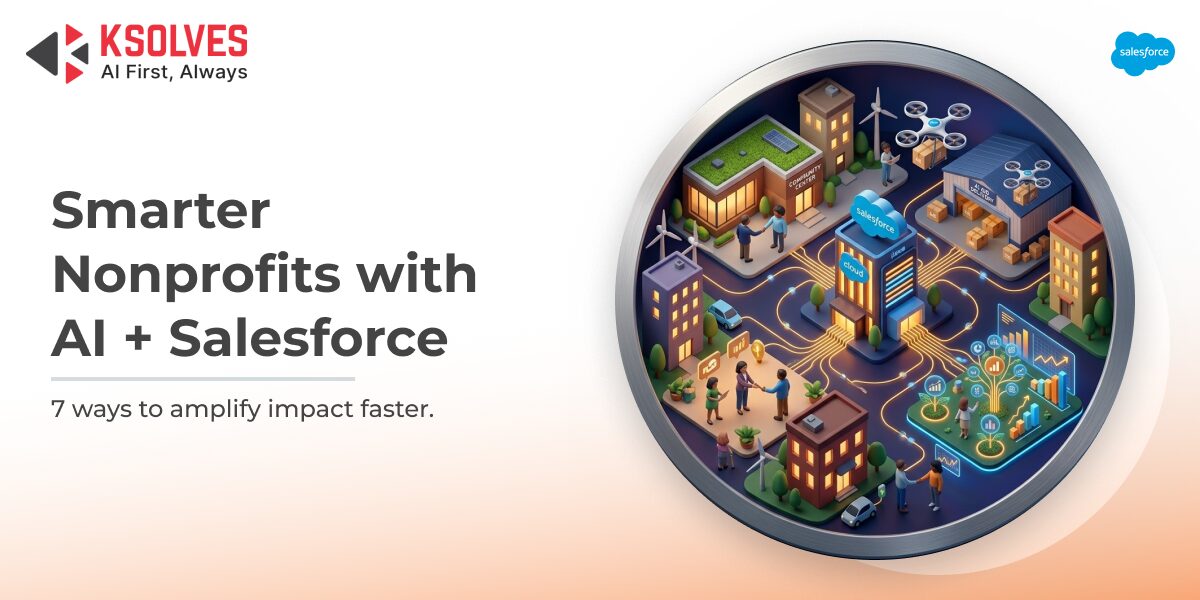
Nonprofits are driven by purpose, not profit. Yet making a lasting impact often comes with real hurdles such as limited resources, fragmented data, and growing demands from donors and communities. Every dollar, every volunteer hour, and every campaign must deliver maximum value.
This is where Salesforce, combined with AI capabilities, becomes a true game-changer for the nonprofit sector. More than just a CRM, it empowers nonprofits to build stronger donor relationships, run smarter campaigns, and track every initiative with precision. With AI now embedded into the Salesforce platform through tools like Einstein AI and Agentforce, nonprofits can move from reactive management to proactive, data-driven decision-making.
In this blog, we explore 7 powerful ways nonprofits maximize their impact with AI-powered Salesforce implementation, from streamlining donor management to unlocking predictive insights that fuel long-term growth.
Key Takeaways
- Salesforce centralizes donor, volunteer, and program data in one unified platform
- AI-driven tools like Einstein help nonprofits personalize engagement and predict donor behavior
- Automated workflows reduce manual effort and free staff to focus on mission-driven work
- Real-time dashboards and reports support smarter, faster decision-making
- Salesforce scales with your organization as programs and donor networks grow
How Nonprofits Drive Greater Impact with AI-Powered Salesforce Implementation
Salesforce for nonprofits empowers organizations to streamline operations, strengthen donor relationships, and amplify their mission impact. With AI now built into the platform, nonprofits can achieve greater efficiency, transparency, and long-term sustainability than ever before.
- Centralized Donor and Volunteer Management
Nonprofits often struggle with scattered data spread across spreadsheets, emails, and disconnected tools. Salesforce solves this by creating a single source of truth for every donor, volunteer, and partner. All interactions, donations, and engagement histories are stored in one unified system, making it easier to track relationships over time.
AI-powered data management tools help eliminate duplicate records and flag inconsistencies automatically, ensuring clean and accurate data without the manual overhead. Fundraising staff, program managers, and volunteer coordinators can access the same real-time information, strengthening trust and helping nonprofits build long-lasting relationships that fuel continued support.
- Streamlined Fundraising and Campaign Management
Fundraising is the lifeblood of every nonprofit, yet managing multiple campaigns, pledges, and donor contributions can quickly become overwhelming. With Salesforce, organizations gain a centralized platform to plan, execute, and monitor fundraising campaigns from start to finish.
AI-assisted tools help identify the right audience segments, recommend optimal campaign timing, and predict which donors are most likely to contribute. Every donation, pledge, and fundraising milestone is tracked in real time, while automated workflows handle pledge reminders, donor acknowledgments, and follow-ups, reducing manual effort and ensuring timely communication. The result is greater efficiency, increased donor trust, and higher overall contributions.
- Personalized Donor Engagement
Building lasting donor relationships requires more than generic updates. With Salesforce and Einstein AI, nonprofits can deliver highly personalized communication tailored to each donor’s preferences, history, and giving patterns.
Whether it is a thank-you message after a donation, a birthday greeting, or a campaign update aligned with past contributions, every interaction feels personal and meaningful. AI surfaces the right message at the right time, making donors feel genuinely valued rather than just solicited. This approach strengthens long-term relationships, increases donor retention, and creates a steady support base for ongoing and future initiatives.
Explore how Ksolves Salesforce services can help you build smarter donor journeys.
- Program and Service Tracking
For nonprofits, impact is measured not only by funds raised but by the difference made in people’s lives. Salesforce enables organizations to track programs, beneficiaries, and outcomes in a structured and transparent manner. From enrollment to service delivery, every detail is recorded in one place, making it easier to measure effectiveness and identify gaps.
With AI-powered reporting, program managers can spot trends in service delivery, flag at-risk beneficiaries, and optimize program design based on real outcomes rather than estimates. This level of visibility is essential for accountability to donors, board members, and regulatory bodies, and it helps nonprofits build stronger trust with all stakeholders.
Also Read: Top Salesforce Non-Profit Cloud Consultants
- Data-Driven Decision Making
In the nonprofit sector, every decision has a direct impact on the communities being served. Salesforce empowers leaders with real-time dashboards and customizable reports that bring clarity to complex data. From donor contributions to program outcomes, leadership gains actionable insights at a glance.
AI takes this further by enabling predictive analytics, helping organizations forecast fundraising outcomes, anticipate donor churn, and allocate resources more effectively. This data-driven approach also simplifies grant reporting and compliance requirements, ensuring data is accurate, accessible, and audit-ready. Nonprofits can build greater credibility with funders and make faster, smarter decisions that amplify their mission.
- Enhanced Collaboration and Productivity
Nonprofits often face challenges when teams work in silos, leading to duplication of effort and missed opportunities. With Salesforce, all teams from fundraising to program delivery share access to a unified platform, ensuring everyone works from the same information.
Seamless integrations with everyday tools like email, calendars, and productivity apps reduce administrative burden and free up staff to focus on mission-driven activities. AI-assisted automation handles routine tasks such as meeting scheduling, data entry, and follow-up reminders, so teams can spend more time where it matters most. This connected ecosystem boosts productivity and fosters stronger cross-team collaboration.
- Scalability and Long-Term Sustainability
Nonprofits evolve over time, whether by expanding programs, entering new regions, or growing their donor network. Salesforce provides a flexible, scalable platform that adapts to these changes without requiring a complete system overhaul. As organizations grow, new features, users, and integrations can be added with ease.
With AI tools like Einstein and Agentforce embedded into the platform, nonprofits can predict donor behavior, automate outreach at scale, and surface insights that keep them ahead of trends. This makes Salesforce not just a tool for today but a long-term investment in sustainable, mission-driven growth.
Also Read: 6 Practical Ways Nonprofits Use Salesforce to Retain Donors Effectively
Conclusion
Nonprofits carry the responsibility of driving social change, often with limited resources and growing expectations. AI-powered Salesforce implementation gives these organizations the tools to work smarter by centralizing donor data, streamlining fundraising, enabling transparency in program tracking, and delivering real-time insights for better decisions.
With AI now deeply embedded in the Salesforce platform, nonprofits can move beyond manual processes and reactive strategies toward a smarter, more proactive approach to mission delivery. Partnering with Ksolves ensures tailored implementation, seamless integrations, and expert guidance every step of the way. With Ksolves, your organization can accelerate its journey toward greater efficiency, stronger donor trust, and lasting impact.
Ready to transform your nonprofit with AI-powered Salesforce? Contact Ksolves today and let us help you build a smarter path to mission success.
Frequently Asked Questions
Why should nonprofits use Salesforce instead of other CRMs?
Salesforce is designed for nonprofit needs through the Nonprofit Success Pack (NPSP). It offers scalability, flexibility, and features such as donor management, program tracking, and AI-driven fundraising tools in one platform.
How does AI improve Salesforce for nonprofits?
AI tools like Einstein and Agentforce help nonprofits predict donor behavior, personalize communication, automate routine tasks, and generate insights from program and fundraising data to support faster decisions.
Is Salesforce affordable for nonprofits with limited budgets?
Yes. Salesforce provides discounted pricing and donation programs for nonprofits. With the right setup, organizations can reduce inefficiencies, save time, and improve return on investment.
Can Salesforce integrate with tools nonprofits already use?
Salesforce integrates with email platforms, accounting systems, payment gateways, and productivity tools, helping keep data connected and reducing duplicate work.
How can Salesforce support nonprofit growth in the future?
Salesforce scales with growing organizations. Its infrastructure and AI capabilities help predict donor behavior, forecast fundraising outcomes, and adapt to changing needs without major system changes.
































Author
About the Author Editorial Team The Ksolves Editorial Team includes certified Salesforce experts, Big Data engineers, AI/ML specialists, Zoho consultants, and experienced technology writers focused on delivering clear, actionable insights for modern businesses. With hands-on experience across Salesforce, Big Data platforms, AI/ML solutions, application development, software testing, and Zoho ERP/CRM, the team publishes practical guides, real-world use cases, and industry updates that support smarter decisions and faster growth. Every article is created to solve business challenges, guide technology adoption, and keep organizations aligned with evolving digital ecosystems.
Share with