



Smart Factories: How Salesforce Powers Industry 4.0
Salesforce
5 MIN READ
January 22, 2026

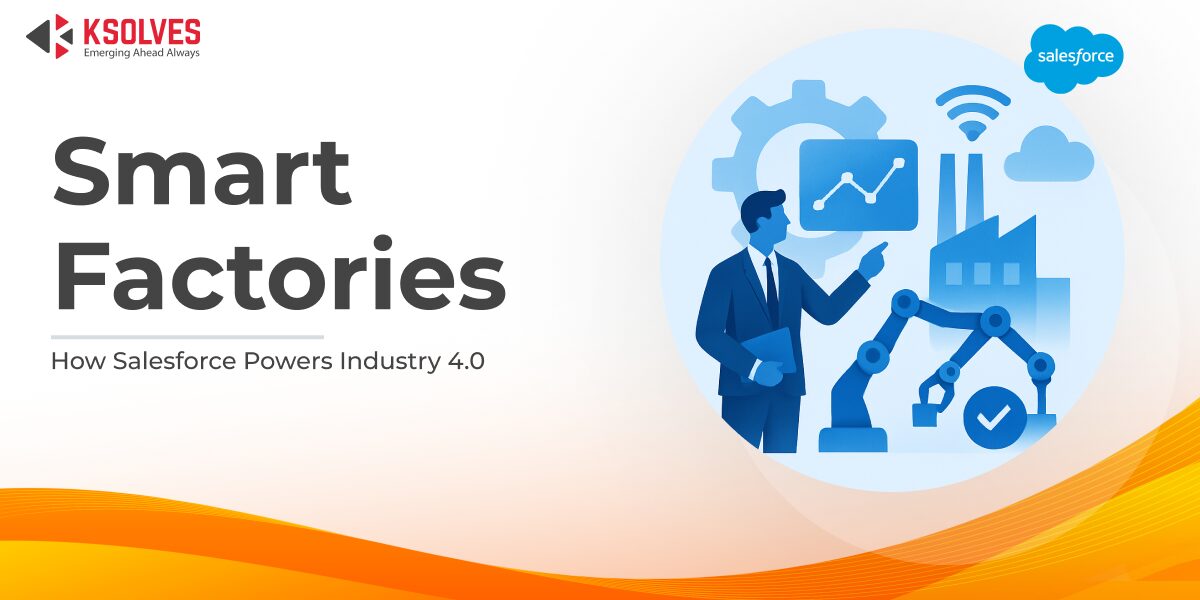
We’re living through the fourth industrial revolution—Industry 4.0—a time when digital technologies like AI, IoT, machine learning, and advanced analytics are reshaping manufacturing. Unlike traditional factories, today’s smart factories thrive on real-time data, automation, and system-wide connectivity to optimize every aspect of production, from supply chain to customer experience.
A smart factory is defined by its ability to make data-driven decisions, self-optimize performance, and adapt to changing conditions on the fly. Machines, systems, and people are seamlessly connected, enabling predictive maintenance, quality control, and end-to-end visibility across operations.
This is where Salesforce plays a critical role. While widely known as a customer relationship management (CRM) platform, Salesforce has evolved into a powerful enabler of Industry 4.0. It offers integrated solutions for managing data, automating workflows, connecting stakeholders, and unlocking insights across your manufacturing ecosystem.
Understanding Industry 4.0 and Smart Factories
Industry 4.0 represents the digital transformation of manufacturing. It is known to blend physical production with digital intelligence. It’s powered by advanced technologies like the Internet of Things (IoT), Artificial Intelligence (AI), robotics, big data analytics, and automation, all working together to create smarter, more adaptive manufacturing environments.
The key goals of Industry 4.0 include:
- Operational Efficiency – Streamlining processes to reduce downtime and waste.
- Predictive Maintenance – Using sensor data and analytics to fix equipment before it fails.
- Supply Chain Agility – Quickly adapting to market changes and disruptions with real-time visibility.
At the core of these innovations is data, and managing it effectively is essential. That’s where CRM, ERP, and real-time data systems come in.
A modern CRM like Salesforce not only helps manufacturers manage customer relationships but also integrates with ERP, IoT, and production systems to create a unified platform. This allows for end-to-end visibility, informed decision-making, and synchronized operations – from the factory floor to the customer doorstep.
Smart factories are not just about automation; they’re about connecting everything and acting intelligently.
Why Salesforce for Industry 4.0?
Salesforce is often seen as just a CRM, but for manufacturers embracing Industry 4.0, it’s much more than that. It’s a comprehensive digital platform that brings together data, intelligence, and automation, helping factories become smarter, more agile, and more customer-centric.
At its core, Salesforce in manufacturing offers a cloud-first, scalable approach that supports rapid innovation without the heavy lifting of traditional IT systems. Whether you’re managing customer relationships, integrating production data, or automating service workflows, Salesforce provides the flexibility and speed needed for digital transformation.
One of Salesforce’s biggest strengths is giving you real-time insights about your customers. It also helps you see what’s happening in your operations, so you can make quick, smart decisions. By integrating with ERP systems, IoT platforms, and supply chain tools, Salesforce becomes your single source of truth. It unifies data across departments, enabling proactive decision-making, predictive maintenance, personalized service, and faster issue resolution.
In a smart factory, where everything from machines to customer expectations is constantly evolving, Salesforce helps you stay ahead by connecting technology, people, and processes in one intelligent ecosystem.
Key Salesforce Products Driving Smart Factory Transformation
Salesforce in manufacturing offers an integrated suite of products that power every layer of a smart factory—from sales and service to operations and analytics. These tools help manufacturers automate workflows, predict outcomes, and gain real-time visibility across their production landscape.
Here’s how each product contributes:
- Salesforce Manufacturing Cloud – Purpose-built for manufacturers, this cloud aligns sales and operations teams for better forecasting and planning.
- Demand forecasting based on real-time data
- Production planning aligned with customer commitments
- Account-based insights to manage key relationships
- Service Cloud – Service Cloud implementation enhances after-sales service and support with automation and IoT integration.
- Predictive maintenance using connected device data
- Automated field service scheduling and dispatch
- Seamless IoT integration for proactive issue resolution
- Sales Cloud – Sales Cloud empowers manufacturing sales teams and channel partners to work more effectively.
- Centralized dealer/distributor relationship management
- Streamlined contract and sales agreement workflows
- Visibility into pipelines and performance across channels
Also Read: Boosting Sales Performance with Salesforce Sales Cloud
- Einstein AI & Analytics – With Einstein AI and Analytics, you can bring intelligence to factory operations and decision-making.
- Predictive insights for smarter resource planning
- Anomaly detection in production and service workflows
- AI-driven recommendations to reduce manual effort
- MuleSoft – MuleSoft enables seamless data integration across the smart factory ecosystem.
- Connects Salesforce with ERP, MES, and IoT systems
- Streamlines workflows across legacy and modern platforms
- Ensures real-time data availability for all departments
- Tableau – Tableau turns complex factory data into clear, visual insights.
- Real-time dashboards for plant performance and KPIs
- Custom analytics for quality, downtime, and throughput
- Data storytelling for faster executive decision-making
Use Cases: How Smart Factories Use Salesforce
Smart factories rely on Salesforce to go beyond traditional CRM functions. This enables them to automate operations, reduce downtime, and create a closed loop between customer data and factory performance. Here are some real-world use cases that show how Salesforce drives smarter manufacturing:
- Predictive Maintenance using IoT + Service Cloud
Connected machines send real-time data through IoT sensors, allowing manufacturers to detect early signs of wear or failure. Salesforce Service Cloud captures this data and triggers automated maintenance workflows before issues cause downtime.
- Prevent unplanned breakdowns
- Reduce maintenance costs
- Improve equipment uptime and lifespan
- Sales and Operations Planning (S&OP) with Manufacturing Cloud
Salesforce Manufacturing Cloud provides a unified view of sales agreements, forecasts, and operational plans. This helps align sales, finance, and production teams for more accurate planning and better demand management.
- Align production with market demand
- Improve forecast accuracy
- Eliminate silos between sales and operations
- Supply Chain Visibility through Integration with MuleSoft
MuleSoft connects Salesforce with ERP, MES, and third-party logistics platforms to create end-to-end visibility across the supply chain. Manufacturers gain a real-time view of inventory, order status, and vendor performance.
- Respond quickly to supply chain disruptions
- Streamline procurement and logistics
- Enable real-time tracking and alerts
- Field Service Automation for Remote Troubleshooting and Repairs
With Salesforce Field Service, technicians are automatically assigned to jobs based on location, skills, and availability. They receive real-time instructions and access to customer and equipment history, enabling faster issue resolution.
- Reduce response times and service costs
- Empower field agents with mobile tools
- Enhance customer satisfaction with quicker fixes
- Customer Feedback Loop for Continuous Improvement
Using Salesforce CRM, smart factories can collect, analyze, and act on customer feedback in real-time. Whether it’s product quality, service experience, or feature requests, feedback is routed back into the system to inform production and R&D.
- Improve product quality and design
- Enhance customer experience
- Support innovation based on real-world input
Benefits of Using Salesforce in Smart Factories
In a smart factory environment, agility and intelligence are everything, and that’s exactly where Salesforce shines. By centralizing business and operational data, Salesforce helps manufacturers move from reactive decision-making to proactive strategy.
One of the biggest advantages is having all your data in one place. Instead of jumping between systems, teams get real-time visibility into everything from customer demand to machine performance. This makes it easier to spot issues, plan effectively, and act faster.
Another major benefit is seamless collaboration. With sales, service, and operations working from the same system, communication gaps shrink and efficiency rises. For example, sales teams can see production timelines, and service teams can access order histories without digging through spreadsheets.
Smart factories also need to move fast, and Salesforce supports that. It helps reduce time-to-market with predictive planning and automation, while also making your supply chain more responsive to disruptions or demand spikes.
Finally, Salesforce is built for growth. Its cloud-native, scalable platform means you’re ready to adopt new technologies, whether it’s AI, IoT, or robotics, without overhauling your systems.
In short, Salesforce doesn’t just support smart manufacturing; it amplifies it, giving you the tools to innovate, scale, and lead.
Why Partner with Experts Like Ksolves?
Deploying Salesforce in a manufacturing environment requires tailored solutions, system-level integration, and domain understanding. Ksolves brings all three together.
- Deep Manufacturing & Salesforce Expertise
We understand the unique challenges manufacturers face and build Salesforce solutions that support production efficiency, quality control, and field operations.
- Trusted Salesforce Summit Partner
As a top-tier Salesforce Summit partner, we bring proven methodologies, certified professionals, and successful implementations across global manufacturing firms.
- Smart Integrations with Factory Systems
Whether it’s MES, ERP, IoT, or legacy systems, we ensure seamless connectivity using platforms like MuleSoft to give you a unified digital ecosystem.
- End-to-End Project Ownership
From strategy and design to deployment, training, and post-launch support, we manage the entire Salesforce lifecycle.
- Aligned with Industry 4.0 Goals
Our Salesforce manufacturing solutions are built to enable predictive maintenance, real-time analytics, automated workflows, and faster decision-making.
Conclusion: The Future of Manufacturing is Data-Driven and Connected
As manufacturing evolves with Industry 4.0, companies that embrace digital transformation are better positioned to lead. Salesforce in manufacturing brings together data, teams, and processes to improve visibility, streamline operations, and deliver better outcomes.
With solutions like Manufacturing Cloud, Service Cloud, and MuleSoft, manufacturers can plan more accurately, manage customer relationships more effectively, and make faster decisions based on real-time insights.
Whether you’re aiming to modernize your production processes, strengthen partner collaboration, or improve after-sales service, Salesforce provides the tools and flexibility to make it happen. And with a trusted implementation partner like Ksolves, you can turn your transformation goals into measurable results.
Have questions or need help getting started? Reach out to us at [email protected].
Frequently Asked Questions
FAQs
What is Industry 4.0, and how does Salesforce fit into it?
Industry 4.0 refers to the digital transformation of manufacturing through technologies like IoT, AI, robotics,
and automation. Salesforce supports this evolution by offering cloud-based tools that connect operations, sales,
service, and supply chains in real time.
Can Salesforce integrate with existing factory systems like ERP or MES?
Yes, platforms like MuleSoft enable seamless integration between Salesforce and core systems such as ERP (e.g.,
SAP, Oracle) and MES. This ensures data flows freely across your digital factory setup.
How does Salesforce enable predictive maintenance in smart factories?
By connecting IoT devices to Salesforce Service Cloud or Field Service, manufacturers can monitor machine health
and schedule proactive maintenance. This reduces downtime and repair costs.
Is Salesforce suitable for small or mid-sized manufacturing companies?
Definitely. Salesforce solutions are highly scalable and can be tailored to fit the needs and budgets of growing
manufacturers as well as large enterprises.
How does Manufacturing Cloud support S&OP (Sales and Operations Planning)?
Manufacturing Cloud offers a centralized platform for forecasting, tracking partner commitments, and aligning
sales with production planning, making your S&OP process more transparent and data-driven.































Author
About the Author Editorial Team The Ksolves Editorial Team includes certified Salesforce experts, Big Data engineers, AI/ML specialists, Zoho consultants, and experienced technology writers focused on delivering clear, actionable insights for modern businesses. With hands-on experience across Salesforce, Big Data platforms, AI/ML solutions, application development, software testing, and Zoho ERP/CRM, the team publishes practical guides, real-world use cases, and industry updates that support smarter decisions and faster growth. Every article is created to solve business challenges, guide technology adoption, and keep organizations aligned with evolving digital ecosystems.
Share with