



10 Proven Node.js Performance Tips for Scalable APIs in 2026
Node.js
5 MIN READ
May 14, 2026


A high-performing API is the backbone of any modern digital product. Whether you are powering a mobile app, a SaaS platform, or large-scale enterprise software, speed and responsiveness directly influence user satisfaction. Node.js has become a popular choice because of its event-driven, non-blocking architecture, but getting the best performance out of it requires intentional optimization.
Poorly structured queries, blocking operations, and inefficient code paths can quickly slow down your entire system. As traffic grows, these issues become even more visible and can translate into lost conversions, higher bounce rates, and increased server costs.
In this guide, we explore practical Node.js performance optimization strategies that help you boost API speed, reduce latency, and build an application that remains fast and scalable under heavy demand.
Why Node.js Performance Matters
Node.js is fast by design, but performance is never guaranteed. As your API starts handling higher traffic, even small inefficiencies can grow into major bottlenecks. Slow endpoints lead to higher latency, frustrated users, and increased infrastructure costs.
On the other hand, a well-optimized Node.js application delivers quicker responses, improved throughput, and a noticeably better user experience.
Strong Node.js performance also supports long-term scalability. When your API is optimized from the ground up, it can handle more requests without requiring constant hardware upgrades. This makes performance optimization not just a technical goal, but a business advantage.
This article covers practical Node.js best practices that help you avoid common bottlenecks and build APIs that stay fast, stable, and efficient as your application grows.
Also Read: Node.js Architecture: Understanding Core Components, Benefits, and Trade-Offs
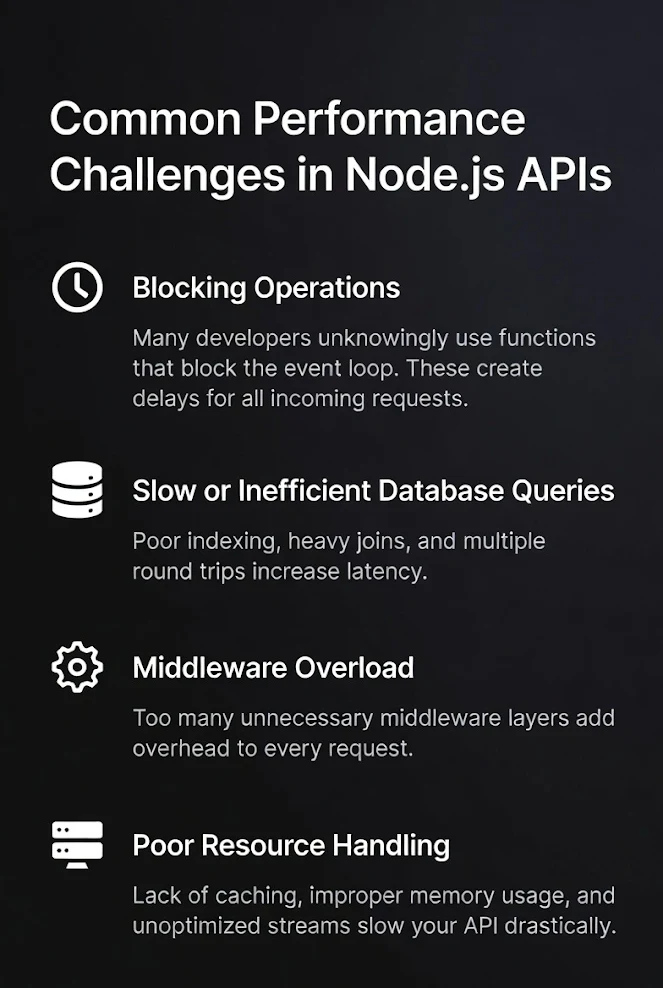
Key Performance Challenges in Node.js APIs
Before diving into the tips, here are some typical issues that impact Node.js API performance.
Top Node.js Performance Optimization Strategies
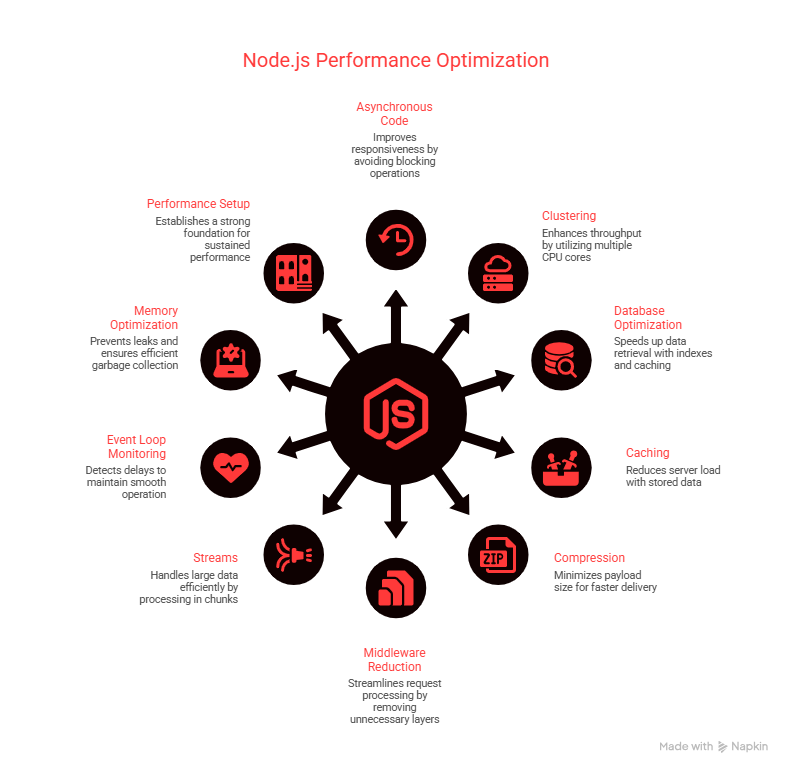
The above-mentioned challenges can be easily tackled with the right Node.js optimization strategies.
1. Use Asynchronous and Non-Blocking Code
Node.js performance depends heavily on the event loop. Any blocking code freezes all active requests. Always prefer async methods, promises, and async or await syntax. Make sure you avoid synchronous file system operations and CPU-intensive tasks inside the main thread.
Using non-blocking operations directly increases your Node.js API performance and reduces latency under heavy load.
2. Implement Clustering and Load Balancing
Node.js runs on a single thread by default. Clustering allows you to use all CPU cores effectively. Tools like PM2 or the built-in cluster module help spawn multiple worker processes. This improves throughput and ensures consistent performance during peak traffic.
Load balancing distributes requests across your cluster and prevents one worker from becoming a bottleneck.
3. Optimize Database Queries for Speed
Database inefficiency is one of the biggest killers of Node.js performance.
Useful techniques include:
- Adding indexes to frequently queried fields
- Reducing the number of queries per request
- Using optimized query builders or ORM features
- Caching expensive queries
Optimizing your database layer helps improve Node.js speed more than almost any other fix.
4. Use Caching for Faster API Responses
Caching minimizes the load on your servers and reduces response time significantly. Redis, Memcached, and in-memory caches are commonly used.
Types of caching you can apply:
- Database query caching
- Response level caching
- Application-level caching
Caching ensures you deliver faster and more consistent API responses, especially for frequently accessed endpoints.
5. Enable Compression and HTTP/2
Compression reduces payload size and speeds up client communications. Using gzip or Brotli can significantly reduce the size of responses.
HTTP/2 further improves Node.js performance through multiplexing, header compression, and better connection handling. The combination can drastically reduce load times for API responses.
6. Remove Middleware Bloat
Many Node.js applications overuse middleware. Every extra piece of middleware slows down request processing. Review your stack regularly and remove any items that are not essential. Lightweight routers and selective middleware usage can boost Node.js API performance noticeably.
7. Use Streams for Large Data Processing
When handling large files or data sets, avoid loading them entirely into memory. Streams process data in chunks and reduce memory pressure. This approach results in faster responses and prevents sudden crashes or slowdowns.
Streaming is a crucial Node.js best practice for APIs that involve file uploads, reports, CSVs, or media processing.
8. Monitor Event Loop Delays
The event loop is at the heart of Node.js performance. Tools like Clinic, Prometheus, New Relic, and the built-in performance hooks help you detect event loop delays. If the delay increases, your API may slow down. Monitoring helps you identify blocking functions and memory leaks early.
9. Optimize Memory Usage and Garbage Collection
Memory leaks cause slow performance and frequent pauses. Regular profiling helps identify issues in your code, especially with large arrays or long-lived objects. Avoid unnecessary global variables and clean up timers and listeners correctly.
Optimizing memory usage leads to smoother garbage collection cycles and better Node.js optimization overall.
10. Use a Performance Focused Node.js Setup
A strong foundation sets the tone for your entire application. Keep your Node.js version updated. Use environment-based configurations. Follow modular coding patterns. Maintain lightweight routing and use efficient logging solutions. These small steps combine to provide sustained Node.js performance improvements.
[Also Read: Top 10 Node.js Libraries to Supercharge Backend Development]
How Node.js Performance Optimization Impacts Business Growth
A well-optimized Node.js application does more than reduce load time. It directly affects:
- User satisfaction
- Scalability
- Server cost reduction
- Better retention
- Higher conversions
Companies with high-performing APIs are able to expand faster and handle more traffic without unnecessary infrastructure spend.
How Ksolves Node.js Consulting and Development Services Can Help
Optimizing a Node.js application requires a mix of architectural expertise, performance tuning, and efficient development practices. Ksolves supports businesses through both Node.js consulting services and Node.js development services in the USA to help you build APIs that are fast, scalable, and future-ready.
Ksolves’ capabilities include:
- End-to-end performance audits to identify bottlenecks
- Database optimization and indexing strategy
- High-performance API architecture and redesign
- Code refactoring and modular development
- Load testing to ensure stability under heavy traffic
- Real-time monitoring setup for the event loop and memory usage
- Complete Node.js performance optimization services for long-term improvements
Whether you need expert consultation or hands-on development support, Ksolves helps you build high-performing Node.js applications that enhance user experience and scale smoothly.
Conclusion
Strong Node.js performance does not happen by accident. It comes from consistent monitoring, smart architectural decisions, optimized code, and efficient resource usage. By implementing these Node.js best practices, you can build APIs that deliver fast and reliable responses even under heavy workloads.
If you want specialized help, Ksolves experts can guide you through optimization and ensure your application stays future-ready. You can contact us at [email protected].

































Author
About the Author Editorial Team The Ksolves Editorial Team includes certified Salesforce experts, Big Data engineers, AI/ML specialists, Zoho consultants, and experienced technology writers focused on delivering clear, actionable insights for modern businesses. With hands-on experience across Salesforce, Big Data platforms, AI/ML solutions, application development, software testing, and Zoho ERP/CRM, the team publishes practical guides, real-world use cases, and industry updates that support smarter decisions and faster growth. Every article is created to solve business challenges, guide technology adoption, and keep organizations aligned with evolving digital ecosystems.
Share with