



Cyber Security and Cyber Resilience: A 2026 Guide for Business Leaders
Cybersecurity
5 MIN READ
April 8, 2026

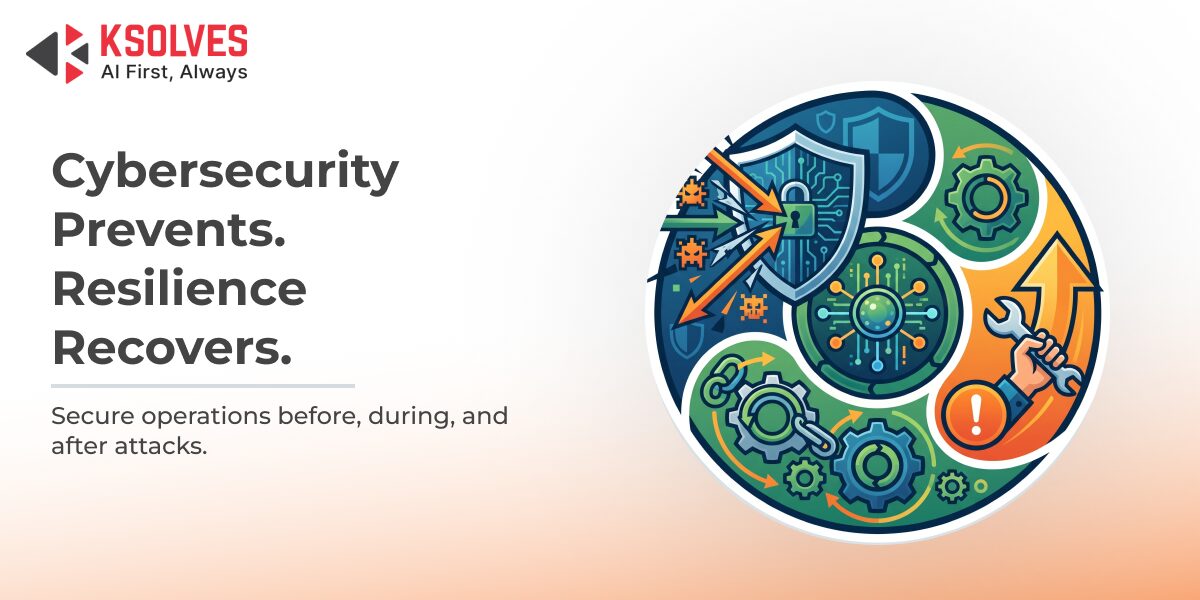
Strong cybersecurity has always been the first line of defense. Firewalls, endpoint protection, identity management, and compliance frameworks are not optional layers but the foundation that every organization must get right before anything else.
But even the most mature cybersecurity programs must acknowledge, in 2026, that no defense is impenetrable. The question organizations are increasingly asking alongside “How do we keep attackers out?” is “When an attack gets through, how fast can we recover and keep operating?”
This is where cyber resilience comes in. It does not replace cybersecurity. It builds on top of it. Together, the two form a complete security posture that protects your organization before, during, and after a cyber incident. This blog explains both, clarifies how they work together, and outlines a practical framework for 2026.
The Scale of the Problem Has Changed Everything
The threat landscape in 2026 is not a continuation of previous years; it is an escalation. Ransomware groups now operate like corporations, nation-state actors target critical infrastructure openly, and AI-powered phishing makes social engineering attacks nearly indistinguishable from legitimate communication.
According to a report, the average cost of a data breach for U.S. companies reached an all-time high of $10.22 million, more than double the global average of $4.44 million.
Real-World Example: MGM Resorts (2023)
When MGM Resorts suffered a social engineering attack in September 2023, the breach took down hotel systems, casino floors, and digital key cards across multiple properties for several days. Estimated losses exceeded $100 million. MGM had extensive cybersecurity investments. What it lacked was a sufficiently rehearsed resilience-and-recovery plan. The incident became a textbook case for why prevention alone is not enough. The incident is a reminder that prevention and recovery must both be in place.
These numbers reinforce why cybersecurity spending remains critical, and also why organizations need to pair it with tested recovery and continuity capabilities. The difference between businesses that survive these incidents and those that collapse often comes down to how well their security investments covered both prevention and response.
What Is the Difference Between Cyber Security vs Cyber Resilience?
Understanding the difference between cybersecurity and cyber resilience is not a technical exercise. It is a strategic one.
Cybersecurity is the practice of protecting systems, networks, and data from digital attacks. It includes firewalls, endpoint protection, identity management, patch management, encryption, and compliance frameworks. Its primary goal is prevention: stop the attack before it causes damage. This is the non-negotiable baseline for any organization operating in 2026.
Cyber Resilience is a broader, business-level capability that builds on top of cybersecurity. It ensures that when a breach or disruption occurs despite strong defenses, the business continues to function, critical data is recoverable, operations are restored quickly, and stakeholders remain confident. Its primary goal is continuity under pressure.
Think of cyber security as the lock on the door and the alarm system on the wall. Cyber resilience is the business continuity plan that activates if someone still gets through. You need both.
Key Differences at a Glance
Cyber Security vs Cyber Resilience
| Dimension | Cyber Security | Cyber Resilience |
| Focus | Prevention | Prevention + Recovery |
| Scope | IT systems | Entire business operations |
| Mindset | Reactive to threats | Proactive and adaptive |
| Metric | Incidents blocked | Recovery time and operational continuity |
| Owner | IT / CISO | C-Suite, Board, Operations |
| Relationship | The foundation | The layor built on that foundation |
What Is Cyber Resilience for Business?
At its core, cyber resilience for business is the capacity of an organization to anticipate, withstand, recover from, and adapt to adverse cyber conditions without significant disruption to its core functions. It assumes that cybersecurity controls are already in place and asks what happens next if those controls are overcome.
This definition encompasses four distinct capabilities:
- Anticipate: Continuously assess your risk environment through cybersecurity risk management. This involves identifying threats, evaluating vulnerabilities, quantifying potential impact, and prioritizing investments based on actual business risk. This includes both strengthening your cybersecurity controls and monitoring for gaps that resilience planning must cover. Regular dark web monitoring and threat intelligence subscriptions tailored to your industry vertical are part of this layer.
- Withstand: Deploy the cybersecurity controls that reduce the likelihood and blast radius of any attack. This includes network segmentation, data backups, access controls, and zero-trust architecture. Strong ability to withstand starts with solid cybersecurity fundamentals.
- Recover: Have tested, documented, and rehearsed recovery procedures. How quickly can your team restore systems? Who has the authority to make decisions during an incident? What is the communication protocol for customers, regulators, and partners? Define your Recovery Time Objective (RTO) and Recovery Point Objective (RPO) for every mission-critical system. These numbers must be known before an incident occurs, not during one.
- Adapt: Use every incident, near-miss, and threat intelligence report as an input to evolve both your cybersecurity defenses and your resilience procedures. Every post-incident review should result in a documented policy or process change, not just a verbal debrief.
The Cyber Resilience Framework 2026: What It Looks Like in Practice
A cyber resilience framework in 2026 does not exist in isolation from your cybersecurity program. It integrates with it. Think of it as the operational layer that makes your cybersecurity investments more effective by adding governance, continuity, and recovery capabilities.
Pillar 1: Risk-Driven Governance
Cyber resilience starts at the top. Business leaders must integrate cybersecurity risk management into enterprise risk frameworks. This means regular board-level reporting on cyber risk, clear risk appetite statements, and accountability structures that go beyond the IT department.
Pillar 2: Proactive Threat Intelligence
Reactive security is outdated. In 2026, leading organizations subscribe to threat intelligence feeds, conduct regular red team exercises, and run continuous penetration testing to identify exploitable gaps before attackers do.
Pillar 3: Operational Continuity Planning
Business continuity cybersecurity is the bridge between the IT team and the rest of the organization. Business continuity plans must specify which systems are mission-critical, the maximum tolerable downtime for each, and the manual workarounds to use when digital systems fail. This pillar does not replace cybersecurity controls. It complements them by defining what happens operationally when those controls are tested.
Pillar 4: Incident Response Preparedness
A well-documented incident response plan is worthless if it has never been rehearsed. Tabletop exercises, full-scale simulations, and regular war-gaming sessions ensure that every stakeholder knows their role when a real incident unfolds. NIST SP 800-61 provides a widely adopted incident response framework that aligns well with existing cybersecurity programs.
Pillar 5: Supply Chain and Third-Party Resilience
According to the Verizon 2025 Data Breach Investigations Report, third-party involvement in data breaches rose from 15% to 30% in a single year. Extending your cybersecurity standards to vendors through risk assessments, contractual obligations, and continuous monitoring is now as important as securing your own perimeter.
How Ksolves Helps Organizations Build a Complete Security Posture
At Ksolves, our cybersecurity services cover the full range of controls organizations need as their foundation, like endpoint protection, identity and access management, security architecture reviews, compliance readiness, and vulnerability assessments. We help organizations get the fundamentals right before adding complexity.
Beyond the foundational layer, we work with organizations to build the resilience capabilities that make those cybersecurity investments more durable. This includes cybersecurity risk management frameworks, business continuity programs, incident response planning, and supply chain risk assessments.
The result is not a choice between cybersecurity and resilience. It is a complete & integrated security posture built around your organization’s actual risk profile. No two businesses face the same threat landscape, which is why we do not offer one-size-fits-all solutions.
Whether you are looking to strengthen your existing cybersecurity program, layer resilience capabilities on top of it, or build both from the ground up, our team brings the technical depth and business understanding to deliver outcomes that matter. Reach out to us at [email protected] to start the conversation.
Conclusion
Cybersecurity keeps your defenses strong. Cyber resilience ensures the business keeps running when those defenses are tested. In 2026, business leaders who understand the relationship between the two are the ones making the right investments.
The organizations that manage cyber incidents well are not the ones that choose resilience over security or security over resilience. They are the ones who built both, connected them to their operational reality, and rehearsed what happens when something goes wrong.
Connect with our cybersecurity experts at Ksolves to build a security strategy that covers both prevention and resilience.
FAQs
1. What is the difference between cybersecurity and cyber resilience?
Cybersecurity is the essential practice of preventing attacks through controls like firewalls, encryption, and access management. Cyber resilience builds on top of cybersecurity by ensuring that even when an attack succeeds, the business can continue operating, recover quickly, and adapt. In 2026, organizations need strong cybersecurity as the foundation and resilience as the operational layer above it.
- Does investing in cyber resilience mean cybersecurity matters less?
No. Cyber resilience assumes that strong cybersecurity controls are already in place. It does not replace prevention. It extends it by adding recovery, continuity, and adaptation capabilities. Organizations that cut cybersecurity spending in favor of resilience planning are making a strategic error. Both are required.
3. How does a cyber resilience framework 2026 improve business continuity?
A cyber resilience framework integrates with your existing cybersecurity program and adds operational continuity planning on top. It covers governance, threat intelligence, incident response, recovery planning, and third-party risk management. This ensures businesses can restore systems quickly and maintain essential operations during incidents that bypass cybersecurity defenses.
4. Why is business continuity cyber security now a board-level priority?
Cyber incidents now affect revenue, customer trust, legal compliance, and operational stability. Boards are expected to ensure that organizations invest in both strong cybersecurity controls and tested recovery capabilities. Neither alone is sufficient at the scale and sophistication of threats in 2026.
































AUTHOR
Cybersecurity
Share with