



Boosting Sales Team Performance Through AI: A Practical Guide
AI
5 MIN READ
March 20, 2026

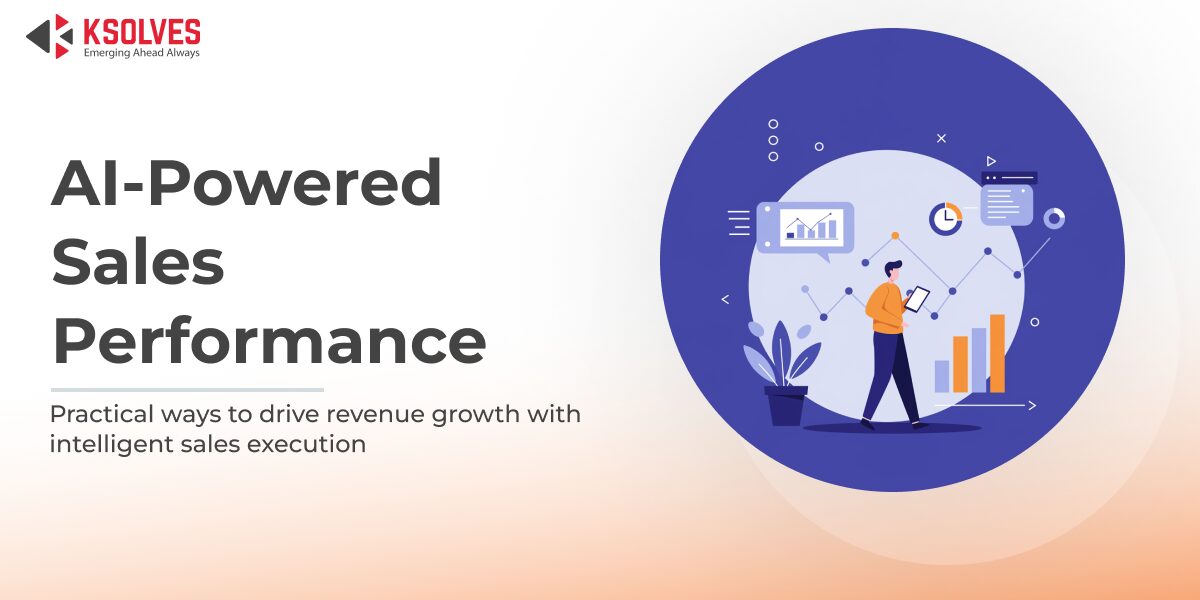
Sales teams are under constant pressure to close more deals with fewer resources, longer buying cycles, and increasingly informed buyers. According to a study by Oxford Economics, sales representatives spend only around 35% of their time actively selling, while the rest is consumed by administrative tasks, CRM updates, and internal processes. Traditional sales strategies, while still important, are no longer enough on their own. Legacy CRMs and manual processes slow reps down by forcing them to spend excessive time on data entry, reporting, and switching between tools instead of selling.
To stay ahead, companies must shift from intuition-based selling to intelligent, data-driven execution. This is where Artificial Intelligence (AI) steps in, not as a futuristic promise, but as a practical solution that is already transforming how top-performing sales teams operate. Hence, this blog explores how AI can significantly boost sales team performance, improve decision-making, and more.
Why AI Matters in Sales
Sales is no longer just about relationships or gut instinct. Modern selling demands data-backed insights, speed, personalization, and scale. AI brings all these to the table, offering:
- Predictive analytics to identify high-value leads: AI can analyze historical deal data and recent buyer activity to predict which leads are most likely to close in the coming week.
- Automated lead scoring for prioritizing outreach: Lead scores automatically change based on real time actions such as email opens, website visits, or demo requests.
- AI-driven coaching tools that enhance rep performance: Sales managers can see which reps struggle with objections or talk too much on calls and coach them with specific insights.
- Smart assistants to handle administrative tasks: AI assistants automatically log calls, update CRM records, and schedule follow-ups without manual effort.
- Conversational intelligence to analyze sales calls: AI analyzes call transcripts to detect buyer intent, sentiment changes, and common deal blockers across the pipeline.
These capabilities free up sales representatives from routine tasks, allowing them to focus on what they do best: selling.
Key Ways AI Can Boost Sales Performance
The following are the best ways in which AI can boost your sales performance:
1. Lead Scoring and Prioritization
Not all leads are created equal. AI-powered lead scoring systems analyze multiple data points to assess a prospect’s likelihood of conversion. These include past customer behavior, email engagement metrics such as opens and clicks, web-tracking data such as page visits and time spent, and product usage patterns that indicate intent and readiness. By combining these signals, AI assigns accurate lead scores that help sales teams focus on high-potential prospects, reduce wasted effort, and shorten sales cycles.
Practical Tip: Integrate your CRM with AI tools like Salesforce Einstein or HubSpot’s predictive lead scoring to prioritize leads automatically.
2. Predictive Forecasting
Accurate forecasting is critical for planning and resource allocation, but manual forecasting often suffers from bias, missed seasonality, and static assumptions. AI improves accuracy by using pattern recognition to track deal progress, anomaly detection to flag pipeline risks, and seasonality analysis to account for recurring sales trends. This results in more reliable, real-time revenue predictions.
Practical Tip: Use AI forecasting tools to monitor pipeline health, identify risk areas, and adjust strategies in real-time.
For businesses looking to build these capabilities from scratch, partnering with an experienced machine learning consulting team can accelerate the path from raw pipeline data to reliable revenue forecasts.
3. Sales Coaching and Performance Insights
AI analyzes calls, emails, and other sales interactions to deliver actionable coaching insights. It evaluates filler word usage, keyword detection, and recurring objection patterns, while also identifying traits of top performers such as tone, talk-to-listen ratios, and objection-handling techniques. These insights help standardize best practices and improve overall sales performance.
4. Automating Administrative Tasks
Sales representatives spend a significant portion of their time on non-selling activities, such as data entry, scheduling, and follow-ups. AI-powered tools can automate these tasks, allowing reps to spend more time closing deals.
Practical Tip: Implement AI assistants like Drift or Conversica to handle initial outreach, schedule meetings, and manage email sequences.
5. Personalized Outreach at Scale
AI enables hyper-personalized outreach by analyzing buyer personas, content preferences, and past interactions. Using generative AI, sales teams can auto-write personalized emails, draft tailored proposals, and create customized follow-up scripts at scale. This ensures the right message reaches the right prospect at the right time, without sacrificing consistency or relevance.
Also Read: List of Best AI Companies in India – 2026
Implementing AI in Your Sales Organization
Transitioning to AI-enhanced sales processes doesn’t require a complete overhaul. Start small, focus on high-impact areas, and scale up as needed.
Step 1: Identify Pain Points
Where is your sales team losing the most time or opportunities? Is it poor lead quality, long sales cycles, or inaccurate forecasts? Pinpoint the areas with the biggest room for improvement.
Step 2: Choose the Right Tools
Select AI tools that integrate well with your existing CRM and workflows. Look for user-friendly platforms with strong support and proven ROI.
Step 3: Train Your Team
Adoption is key. Provide training sessions, demos, and ongoing support to ensure your sales reps feel confident using the tools. Emphasize how AI enhances their work rather than replaces it.
Step 4: Measure and Optimize
Use KPIs such as conversion rates, deal velocity, and time spent selling to measure the impact of AI tools. Continuously refine your approach based on data insights and feedback.
Step 5: Build Feedback Loops and Refine AI Models
Continuously feed real-world sales outcomes, rep feedback, and customer responses back into AI systems. This helps improve model accuracy, adapt to changing sales behaviors, and ensure insights remain relevant over time.
Common Pitfalls to Avoid
- Poor data hygiene: AI tools are only as good as the data they process. Ensure your CRM is clean, complete, and up to date.
- Lack of integration: Isolated tools create silos. Aim for a connected ecosystem where AI insights flow across your sales tech stack.
- Not defining success metrics before rollout: Without clear KPIs such as conversion lift, forecast accuracy, or time saved, it becomes difficult to measure impact, optimize performance, or justify further AI investment.
The Future of Sales Is Augmented
AI is not here to replace salespeople but to supercharge them. By handling routine tasks, delivering deeper insights, and enabling smarter strategies, AI empowers sales teams to stay focused on what matters most: building relationships and closing deals.
Looking ahead, innovations such as RAG-powered sales chatbots, fully autonomous SDR assistants, intent-based lead routing, and AI-powered pricing recommendations will further reshape how sales organizations operate. Sales leaders who adopt these capabilities early will be better positioned to outperform competitors, retain top talent, and drive sustainable growth.
If you’re looking to make AI a part of your sales strategy, Ksolves offers specialized AI services to learn how we can tailor AI solutions to elevate your sales performance and drive smarter growth.



































AUTHOR
AI
Mayank Shukla, a seasoned Technical Project Manager at Ksolves with 8+ years of experience, specializes in AI/ML and Generative AI technologies. With a robust foundation in software development, he leads innovative projects that redefine technology solutions, blending expertise in AI to create scalable, user-focused products.
Share with