



How AI-Powered Dispatch Systems Are Transforming Hyperlocal Service Platforms
AI
5 MIN READ
April 30, 2026

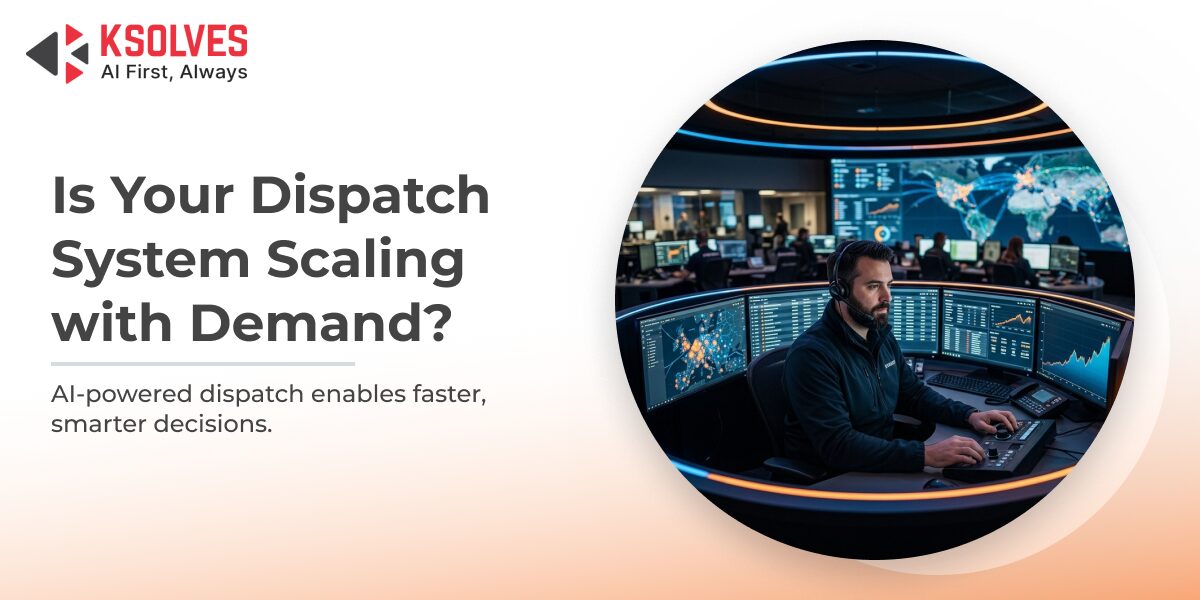
Dispatch is the heartbeat of every hyperlocal platform, and when it breaks, everything breaks with it. As platforms scale across food, mobility, and on-demand services, the traditional rule-based dispatch model hits a wall that it simply cannot climb over.
The answer is not more rules but smarter systems!
Agentic AI is redefining dispatch from a static, sequential process into an intelligent, autonomous decision layer that responds to real-world complexity in real time. Hence, this blog explores how AI-powered dispatch systems work, why conventional approaches fail under scale, and how an AI-first approach can future-proof hyperlocal operations.
Why Traditional Dispatch Breaks Under Hyperlocal Complexity
Hyperlocal platforms are not simply delivery companies. They are multi-modal & multi-category operations running simultaneous workflows, such as a food order demanding a 25-minute window, a taxi requiring immediate dispatch, a medicine pickup flagged as urgent, and a shared-ride needing dynamic passenger grouping, all happening at once.
According to a worldwide study published on Statista, last-mile delivery’s share of total shipping costs rose from 41% in 2018 to 53% in 2023, making it the single most expensive segment of the entire supply chain. For hyperlocal platforms, this cost pressure is precisely where AI-powered dispatch delivers impact by optimizing driver assignments, reducing idle time, and eliminating the manual overhead that inflates last-mile costs.
Rule-based systems were not designed for this environment. They assign jobs sequentially, treat each service category in isolation, and rely on human dispatchers to manage exceptions. As volume scales, exceptions become the norm. The result is predictable: missed SLAs, driver frustration, customer churn, and a backlog of edge cases that no static rulebook can handle.
The Shift to AI-Powered Dispatch
To overcome the limitations of rule-based systems, the focus is shifting toward an AI-first approach to dispatch system design. Instead of continuously optimizing static rules, modern systems are being built to enable intelligent & real-time decision-making.
Instead of relying on predefined rules, an AI-powered system evaluates multiple variables in real time before making a decision. These include:
- Agent location and availability
- Service type and constraints
- Traffic conditions and distance
- Demand density and time sensitivity
Understanding the different types of AI agents – from reactive systems to goal-driven planners — helps platform architects choose the right decision model for their specific dispatch constraints. Enterprises ready to move beyond static rule systems can explore how Agentic AI consulting provides the strategic foundation for building these real-time, adaptive decision layers.
What an AI-powered dispatch system enables:
The result is not just efficiency. It is adaptability.
From Fragmented Dispatch to Intelligent Operations
As an AI-first company, Ksolves helps businesses solve complex, real-time operational challenges using the power of Agentic AI. One such engagement stands out as a clear example of how AI-first expertise can transform fragmented dispatch systems into intelligent, scalable platforms.
The Problem
Ksolves worked with a hyperlocal platform to unify multiple services, including delivery and mobility, into a single system. Each service had its own logic, routing behavior, and constraints, making dispatch increasingly complex. The existing approach relied heavily on static rules, which could not adapt to real-time variables such as traffic, demand fluctuations, or service priorities.
The Solution
We replaced rule-based logic with an Agentic AI-powered decision layer that evaluates real-time data and autonomously makes context-aware dispatch decisions across services.
The Impact
- Faster and more accurate dispatch decisions
- Improved resource utilization across all services
- Unified platform for multiple service types
- Scalable operations without performance bottlenecks
What began as a fragmented, rule-heavy system evolved into an intelligent, self-optimizing dispatch platform. Read the full case here.
How Ksolves Helps You Build Smarter Dispatch Systems
Building an intelligent dispatch system requires more than just plugging in an AI model, as it demands deep domain understanding, multi-service architecture design, and the ability to make AI decisions explainable and reliable under real operational pressure.
Ksolves brings this expertise through its AI and ML Consulting Services, helping hyperlocal platforms replace fragmented, rule-heavy operations with adaptive, Agentic AI-powered systems. Whether you are managing last-mile delivery, ride-hailing, or on-demand services, our team designs solutions tailored to your specific workflows, scale, and business goals.
If your dispatch system is struggling to keep up with growing demand, connect with our AI-certified experts today or reach us at [email protected].
Conclusion
Dispatch is no longer just an operational function but has become the intelligence layer that defines how efficiently a hyperlocal platform performs at scale. As services expand and real-time variables increase, rule-based systems struggle to keep up, leading to delays, inefficiencies, and rising operational complexity.
Agentic AI changes this by enabling autonomous & context-aware decision-making. Instead of reacting to conditions, systems can continuously evaluate demand, supply, and constraints in real time to optimize outcomes. This transforms dispatch into a dynamic, self-optimizing system that adapts as the business grows. Platforms that adopt an AI-first approach will gain a clear advantage in speed, cost efficiency, and customer experience.
As an AI-first company, Ksolves delivers intelligent platforms through its AI and ML Consulting Services, helping businesses move from static systems to real-time, adaptive operations. If you are looking to make your dispatch systems smarter and more scalable, this is where that shift begins.
Frequently Asked Questions
What is an AI-powered dispatch system and how does it work?
Why do rule-based dispatch systems fail at scale for hyperlocal platforms?
How does Agentic AI improve dispatch decisions for on-demand service platforms?
How is AI-powered dispatch different from traditional GPS-based route optimization?
When should a hyperlocal platform replace its dispatch system with AI?
Which industries beyond food delivery can benefit from AI-powered dispatch systems?
How long does it take to build and deploy an AI-powered dispatch system?
Have more questions? Contact our team and we’ll be happy to help.































Author
About the Author Editorial Team The Ksolves Editorial Team includes certified Salesforce experts, Big Data engineers, AI/ML specialists, Zoho consultants, and experienced technology writers focused on delivering clear, actionable insights for modern businesses. With hands-on experience across Salesforce, Big Data platforms, AI/ML solutions, application development, software testing, and Zoho ERP/CRM, the team publishes practical guides, real-world use cases, and industry updates that support smarter decisions and faster growth. Every article is created to solve business challenges, guide technology adoption, and keep organizations aligned with evolving digital ecosystems.
Share with