



Vendor Support vs Internal Team for Hadoop Operations: Which Is Right for Your Business?
Big Data
5 MIN READ
May 17, 2026

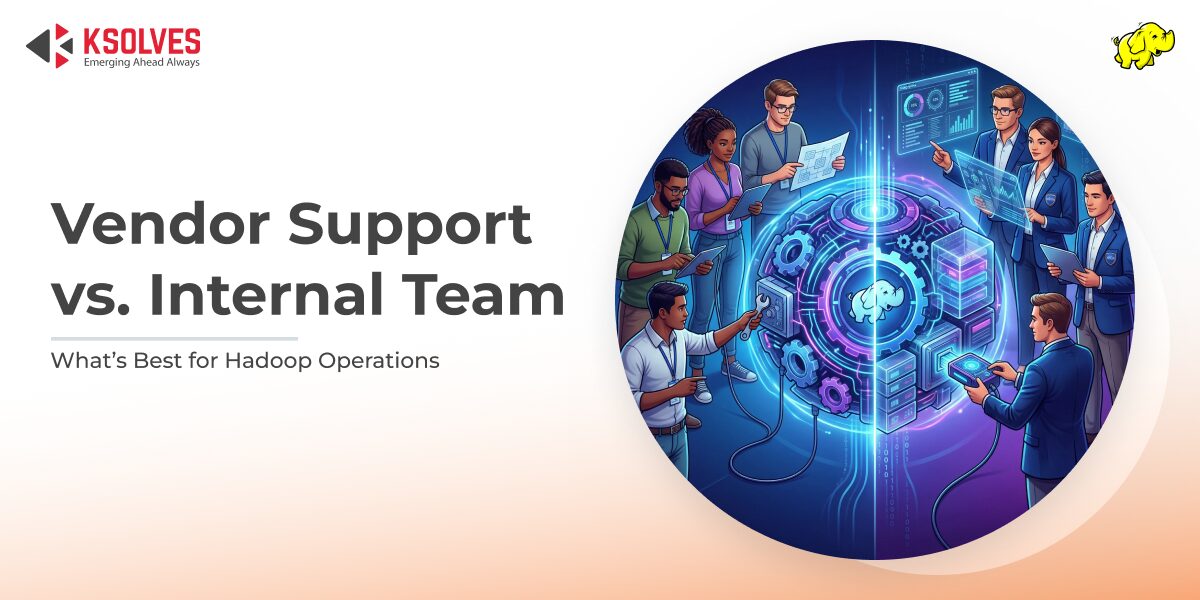
Have you ever wondered whether your organization should manage Hadoop operations internally or rely on managed support services? In this data-driven world, organizations generate massive volumes of structured and unstructured data daily. In this scenario, Hadoop has come up as a key solution for storing, processing, and analyzing this data efficiently.
But managing a Hadoop ecosystem is not just about deployment; it demands continuous monitoring, performance tuning, robust security, and regular updates. To ensure your Hadoop ecosystem runs seamlessly, reduces downtime, and scales effectively, hiring a professional Hadoop support service is often the smartest choice. In this blog, we explore the Vendor Support vs. Internal Team debate for Hadoop operations and explain why partnering with experts can give your business a competitive edge.
Internal Team vs Vendor Support: A Comparative Table |
||
| Feature | Internal Team | Vendor Support |
| Expertise | Limited by team experience | Certified, industry-wide expertise |
| Cost | High (salaries, training) | Predictable, pay-as-you-go |
| Availability | Office hours or limited coverage | 24/7 monitoring and support |
| Scalability | Requires hiring additional staff | Easily scalable without recruitment |
| Customization | Highly tailored to business | Moderate, based on provider expertise |
| Risk Management | Dependent on internal skills | Proactive monitoring, backups, and failover |
Internal Team for Hadoop Operations
An internal Hadoop operations team consists of in-house experts, including DevOps engineers, Hadoop administrators, and data architects. This team takes full ownership of your Hadoop ecosystem, managing everything from cluster setup to performance tuning.
Benefits of an Internal Team
- Understanding of Your Business: Internal teams are intimately familiar with your organization’s data pipelines, workflows, and business priorities, allowing them to align Hadoop operations with your specific goals.
- Immediate Response: Being on-site or in-house means they can act quickly to address emergencies, troubleshoot issues, or handle urgent ad-hoc requirements without delays.
- Customized Solutions: Internal engineers can design and optimize Hadoop workflows tailored precisely to your unique operational needs, ensuring maximum efficiency and relevance.
- Full Control and Ownership: Having an in-house team provides organizations with complete control over operations, decision-making, and sensitive data, which is crucial for compliance and strategic initiatives.
Cons of Relying on an Internal Team
While internal teams bring deep knowledge and control, there are several challenges to consider:
- High Costs: Building and maintaining an in-house Hadoop team is expensive. Recruiting, training, and retaining skilled professionals can exceed your budget, especially as the ecosystem evolves.
- Skill Gaps: The Hadoop landscape is constantly changing. Staying up-to-date with tools like Spark, Hive, HBase, Kafka, and other emerging technologies can be a significant challenge for internal teams.
- Resource Limitations: During periods of high data volume or large-scale projects, internal teams may struggle to scale quickly, potentially affecting performance and delivery timelines.
- Operational Risk: Without round-the-clock monitoring and support, critical failures can lead to downtime, impacting business operations and revenue.
Hire Vendor Support Services for Hadoop
When you hire a trusted vendor like Ksolves for Hadoop support services, it allows organizations to leverage expert knowledge without the overhead of building and maintaining a full internal team. These specialized vendors handle everything from cluster management and monitoring to performance optimization and maintenance while ensuring your Hadoop ecosystem runs smoothly and efficiently.
Benefits of Vendor Support Services
- Hadoop Expertise: The trusted Hadoop service providers are backed by certified Hadoop professionals with deep experience across the ecosystem, including Spark, Hive, HBase, and Kafka. By hiring the services of such vendors, you can get access to industry-best practices without hiring full-time staff.
- Cost Efficiency: Hiring and maintaining a full in-house Hadoop team can be expensive and time-consuming. With vendor support services, you need to pay only for what you need, which makes it a flexible, cost-effective solution. For instance, businesses experiencing seasonal spikes in data can easily scale support up or down without worrying about extra hiring or idle resources.
- 24/7 Monitoring and Support: With round-the-clock monitoring, managed support teams can detect and resolve issues as soon as they arise. This proactive approach minimizes downtime, keeps your Hadoop operations running smoothly, and gives your team peace of mind knowing that experts are always watching over your data ecosystem.
- Scalability: Vendor Hadoop services make it easy to handle growing or fluctuating data workloads. Whether your business experiences seasonal spikes or needs to expand your cluster, the service scales seamlessly without adding internal staff or stretching existing resources.
- Proactive Maintenance: Instead of waiting for issues to occur, vendors’ service providers take a proactive approach. They handle regular patching, system upgrades, and performance tuning to keep your Hadoop ecosystem running efficiently and reduce the risk of unexpected downtime.
- Disaster Recovery and Risk Management: Most managed providers offer comprehensive backup, failover, and recovery solutions. This ensures that your critical data is protected, and operations can continue smoothly even in the face of hardware failures or unexpected disruptions.
Cons of Hiring Vendor Hadoop Support
While managed Hadoop services offer many advantages, there are some considerations to keep in mind:
- Less Direct Control: Since operations are handled externally, key decisions may require coordination with the provider, which can sometimes slow down immediate changes.
- Onboarding Period: It takes time for the provider to fully understand your unique workflows, data architecture, and business requirements before they can operate at peak efficiency.
- Dependence on External Expertise: Relying heavily on a third-party team may limit opportunities for developing in-house Hadoop skills, which could be important for long-term knowledge retention.
When to Choose an Internal Team
An internal Hadoop operations team makes sense if your organization has steady, high-volume data workloads that require constant attention. It’s also ideal when:
- Data Security and Compliance Are Critical: Keeping sensitive data and regulatory compliance fully in-house ensures maximum control.
- You Need Full Ownership of Workflows: Custom pipelines and specialized workflows can be managed exactly the way your business requires.
- Budget Supports Skilled Talent: You have the resources to recruit, train, and retain specialized Hadoop professionals for the long term.
When to Choose Vendor Support
Vendor Hadoop service providers are the right choice when you want expert support without the overhead of building a full internal team. Consider this option if:
- Cost-Effective Expertise Is a Priority: Pay only for the services you need and avoid the expense of hiring full-time specialists.
- Your Team Lacks Specialized Skills: Hiring support services, if you need certified experts who stay up-to-date with the rapidly evolving Hadoop ecosystem.
- Scalability and 24/7 Uptime: Vendor services ensure your operations run smoothly at all times, even during peak workloads.
- Proactive Maintenance Is Required: Continuous monitoring, timely upgrades, and rapid troubleshooting reduce risks and prevent downtime before it impacts your business.
Wrapping Up
Deciding whether to rely on an internal team or support provider for Hadoop operations depends on several factors, including business size, budget, internal expertise, and long-term goals.
- Internal Teams: Ideal for organizations that require full control, deep customization, and in-house management of data workflows.
- Managed Services: Perfect for businesses seeking cost-efficient, scalable solutions with access to certified Hadoop experts and 24/7 support.
- Hybrid Approach: Combines the best of both. If you need internal knowledge and external expertise to get maximum flexibility, efficiency, and risk mitigation.
At Ksolves, we specialize in delivering Hadoop support and consulting services that help your business optimize big data infrastructure, minimize downtime, and scale effortlessly. Boost your Hadoop operations, partner with Ksolves for expert-managed services tailored to your business needs.


































AUTHOR
Big Data
Anil Kushwaha, Technology Head at Ksolves, is an expert in Big Data. With over 11 years at Ksolves, he has been pivotal in driving innovative, high-volume data solutions with technologies like Nifi, Cassandra, Spark, Hadoop, etc. Passionate about advancing tech, he ensures smooth data warehousing for client success through tailored, cutting-edge strategies.
Share with