



What to Expect When You Hire a CRM Development Company
CRM
5 MIN READ
January 14, 2026


A powerful CRM (Customer Relationship Management) system is no longer optional. It’s fundamental for modern businesses aiming to nurture customer relationships, streamline processes, and grow with purpose. Studies show that companies using CRM systems can experience:
- Up to 29% increase in sales
- Up to 34% boost in sales productivity
- Up to 42% improvement in forecast accuracy
These impressive numbers reflect productivity gains and better decision-making powered by CRM.
However, having a CRM like Salesforce, HubSpot, or a custom-built solution is only half the battle. The true return on investment depends on strategically planning, thoughtfully developing, and consistently supporting the system over time. A CRM that isn’t aligned with your workflows can lead to poor adoption, wasted effort, and disappointing results.
That’s why this article explores what you must expect and insist on when hiring a CRM development company. From in-depth needs analysis and customization to data migration and ongoing training, we’ll cover the benchmarks that ensure your CRM investment delivers real, measurable growth.
Hiring a CRM Development Company: What You Need to Know
Hiring a CRM development company involves choosing a partner who deeply understands your business processes and goals. Expect tailored solutions, seamless integrations, and continuous support for optimal ROI.
Understanding Your Business Needs
A reliable CRM development company should always start by deeply understanding how your business works. Expect them to run discovery workshops or requirement-gathering sessions with your teams to learn about your workflows, challenges, and existing tools. This helps identify exactly where a CRM can add the most value and what integrations are needed.
Instead of offering a generic setup, they should build a clear, personalized roadmap that aligns with your unique processes and goals. A CRM designed around how you actually work is far more likely to be adopted by your team and deliver the ROI you’re looking for.
Customization and Development
A great CRM development partner doesn’t just install out-of-the-box features. They tailor the system to fit your specific business processes. This means creating custom modules, workflows, and dashboards that match how your sales, marketing, or service teams actually work every day.
They should also set up smart automation to reduce repetitive tasks, and connect your CRM with third-party tools like ERP systems, marketing platforms, or customer support apps. Most importantly, the system should be built with scalability and ease of use in mind, so it can grow with your business and stay simple for your teams to adopt.
Integration Capabilities
One of the biggest advantages of a well-developed CRM is its ability to integrate seamlessly with your existing business systems. Your CRM should easily connect with email, marketing automation, ERP, accounting, and customer support systems. This ensures smooth data flow across departments.
A reliable CRM partner should also plan your data migration carefully, ensuring that customer data from legacy systems is transferred accurately and securely. They’ll help you clean and map data, run tests, and handle any potential risks to ensure your CRM becomes a single source of truth for your entire business.
User Interface and User Experience (UI/UX)
An effective CRM should be easy to navigate, visually clear, and simple for your teams to use every day. A good development partner focuses on intuitive design so that your users don’t feel overwhelmed, which helps drive adoption and ensures everyone actually uses the system.
You should expect your CRM partner to include prototyping, feedback loops, and user testing in their process. This way, real users can try out the system, share what works and what doesn’t, and suggest improvements. A flexible partner will refine and adjust the UI/UX based on this feedback, so you get a CRM that’s both powerful and user-friendly.
Deployment and Implementation
A good CRM development partner will guide you through every step of deployment. This includes final system testing to data migration, and going live. They should have a clear plan to ensure your CRM is launched smoothly, with minimal downtime or disruption to your daily operations.
You should also expect detailed training sessions and easy-to-follow documentation for your team. This helps everyone feel confident using the new system from day one, so you get the full benefit of your CRM investment without delays or confusion.
Post-Implementation Support and Maintenance
A trusted CRM development company shouldn’t disappear after your system goes live. You should expect ongoing support services, including technical help for bugs or errors, functional support for user questions, and even emergency assistance if something unexpected comes up.
They should also handle routine maintenance like regular CRM updates, performance checks, and data backups to keep your system secure and up to date. A reliable partner will build a long-term relationship with you. They will help your CRM grow as your business evolves, adding new features or integrations whenever you need them.
Cost Structure and Pricing Models
A professional CRM development company should be transparent about how they price their services. Common models include fixed-price projects (best for well-defined scopes), hourly rates for flexible tasks, or ongoing retainer models for long-term support and maintenance. Knowing which model fits your needs helps you plan your budget with confidence.
It’s also important to watch out for hidden costs, like unexpected change requests, extra integrations, or additional user training. A good partner will explain these upfront so you don’t run into surprises later. Finally, cost isn’t just about the upfront price. The true measure is the long-term ROI your CRM delivers, i.e., improved efficiency, happier customers, and higher revenue.
Evaluating Success and Measuring ROI
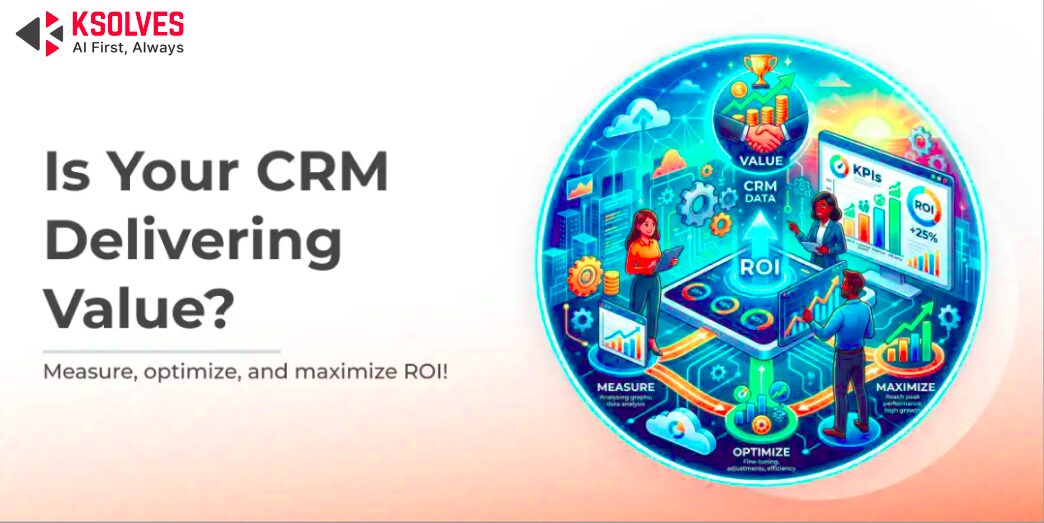
Once your CRM is live, it’s vital to track whether it’s delivering real value. A good CRM partner will help you define clear KPIs, like user adoption rates, sales cycle improvements, lead conversion rates, or customer satisfaction scores, so you can measure success objectively.
They should also support you with regular performance reviews and help you make ongoing improvements based on data and user feedback. As your business grows, they’ll adapt your CRM to new processes, keeping it aligned with your goals and maximizing your return on investment over time.
Conclusion
Hiring the right CRM development company ensures your CRM aligns with your unique business needs, enabling smoother integrations, higher adoption, and measurable growth. A trusted CRM partner delivers customized solutions, ongoing support, and clear ROI measurement. Companies like Ksolves provide comprehensive CRM development services that support businesses in maximizing efficiency, customer satisfaction, and revenue. To learn more about enhancing your CRM capabilities, contact Ksolves today at [email protected].
Frequently Asked Questions
How long does CRM development typically take?
CRM development timelines vary based on customization complexity and integrations, usually ranging
from a few weeks to several months.
What integrations should my CRM include?
Common CRM integrations include email platforms, marketing automation software, ERP systems,
accounting tools, and customer support solutions.
How do I ensure high adoption rates for my CRM?
High adoption rates depend on user-friendly UI/UX, comprehensive training, alignment with existing
workflows, and continuous support from your CRM partner.
Are there hidden costs in CRM development?
Potential hidden costs include unexpected integrations, data migration complexities, additional
training sessions, or ongoing maintenance. Transparent communication from your CRM provider reduces
these risks.































Author
About the Author Editorial Team The Ksolves Editorial Team includes certified Salesforce experts, Big Data engineers, AI/ML specialists, Zoho consultants, and experienced technology writers focused on delivering clear, actionable insights for modern businesses. With hands-on experience across Salesforce, Big Data platforms, AI/ML solutions, application development, software testing, and Zoho ERP/CRM, the team publishes practical guides, real-world use cases, and industry updates that support smarter decisions and faster growth. Every article is created to solve business challenges, guide technology adoption, and keep organizations aligned with evolving digital ecosystems.
Share with