



Top 10 Skills to Look for While Hiring ReactJS Developers
ReactJS
5 MIN READ
April 21, 2026

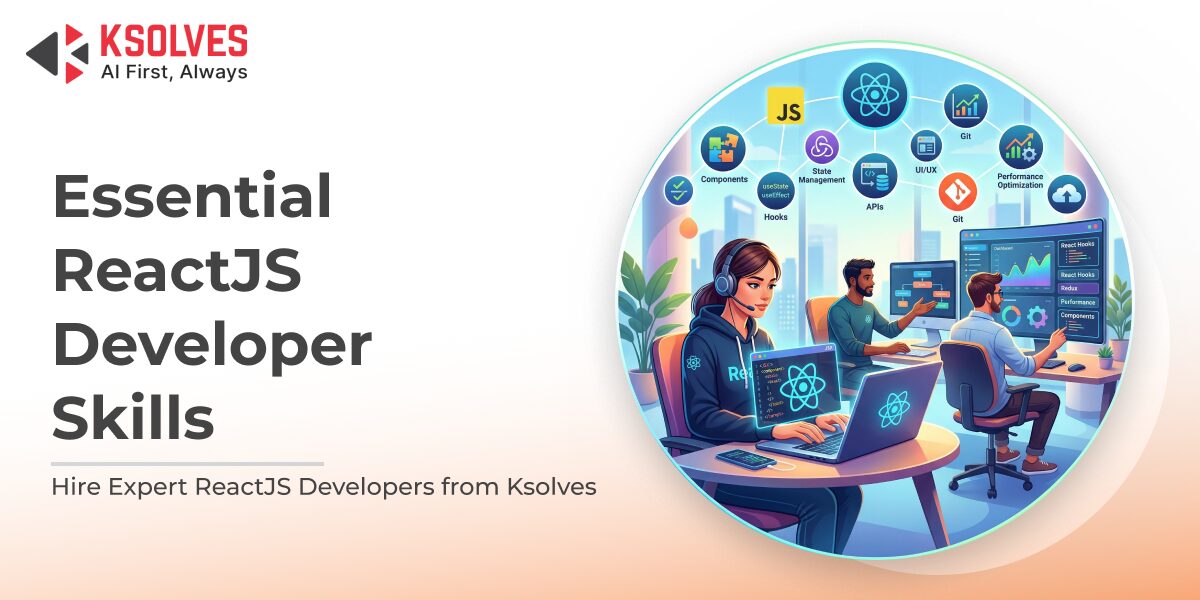
ReactJS powers some of the most intuitive and high-performing digital products today, from fast-loading SaaS platforms and enterprise dashboards to consumer apps used by millions every day. Its component-driven architecture and flexibility make React a go-to choice for modern frontend development.
But while ReactJS itself is powerful, the real differentiator lies in the developers behind it. Hiring a ReactJS developer who only “knows React” is no longer enough. Businesses need engineers who understand JavaScript deeply, architect scalable components, optimize performance, and collaborate effectively across teams.
A single poor hiring decision can lead to slow applications, unmaintainable code, performance bottlenecks, and rising technical debt. On the other hand, the right ReactJS developer can accelerate development, improve user experience, and future-proof your application.
In this blog, we break down the essential technical and soft skills to look for while hiring ReactJS developers, helping you identify talent that can build robust, scalable, and business-ready React applications.
10 Core Technical Skills to Consider While Hiring a ReactJS Developer
1. Strong JavaScript Fundamentals
React is built on JavaScript, so deep JavaScript knowledge is non-negotiable. A skilled ReactJS developer should demonstrate:
- Proficiency in core JavaScript concepts such as closures, scope, hoisting, and prototypes.
- Strong understanding of ES6+ features, including arrow functions, destructuring, modules, spread operators, promises, and async/await.
- Ability to write clean, readable, and maintainable JavaScript code.
Without this foundation, even advanced React knowledge becomes unreliable.
2. Solid Understanding of ReactJS Fundamentals
ReactJS developers must clearly understand how React works internally. Key competencies include:
- Component-based architecture and component reusability.
- JSX syntax and best practices.
- Functional vs class components (with a strong focus on modern functional components).
- React lifecycle behavior and rendering flow.
- Virtual DOM and reconciliation process.
This knowledge ensures developers can build scalable and predictable React applications.
3. Expertise in React Hooks
Hooks are central to modern React development. A competent ReactJS developer should be comfortable with:
- Core hooks such as useState, useEffect, useContext, and useRef.
- Managing side effects correctly with useEffect.
- Creating and using custom hooks for reusable logic.
- Avoiding common pitfalls like unnecessary re-renders or incorrect dependency handling.
Proper hook usage significantly improves application maintainability and performance.
Note: With React 19’s new Compiler, many manual optimizations using useMemo and useCallback are now automated. However, developers should still understand these hooks for edge cases and projects not yet using the compiler.
4. State Management Skills
Efficient state management is critical in complex React applications. Developers should understand:
- Local and global state concepts.
- Context API for lightweight state sharing.
- Popular state management libraries such as Redux, Redux Toolkit, MobX, or Zustand.
- Choosing the right approach based on application size and complexity.
The ability to architect a state logically is a strong indicator of an experienced ReactJS developer.
5. Routing and Navigation
Single-page applications rely heavily on routing. ReactJS developers should be proficient with:
- React Router for client-side routing.
- Dynamic routes, nested routes, and protected routes.
- Lazy loading routes for performance optimization.
Proper routing enhances both user experience and application scalability.
6. API Integration and Data Handling
Most React applications depend on backend services. A skilled developer must know how to:
- Consume REST APIs using fetch or Axios.
- Handle asynchronous data flows and loading states.
- Manage API errors and edge cases gracefully.
- Work with GraphQL using tools like Apollo Client (when applicable).
- Work with React 19’s Actions API for modern form handling and data mutations.
Clean data handling directly impacts application reliability and UX.
7. Frontend Tooling and Version Control
Professional ReactJS developers are comfortable with modern development tools. Key expectations include:
- Strong Git knowledge (branching strategies, pull requests, code reviews).
- Familiarity with modern build tools such as Vite (industry standard in 2026), Webpack (legacy), Babel, npm, and Yarn.
- Basic understanding of CI/CD pipelines and deployment workflows.
These skills ensure smooth collaboration and production-ready delivery.
Also Read – Integrating ReactJS Frontends Seamlessly with Odoo, SAP, or Salesforce Backends
8. Testing and Debugging Skills
Testing is essential for long-term application stability. ReactJS developers should be able to:
- Write unit and integration tests using Jest and React Testing Library.
- Debug issues using browser DevTools and React DevTools.
- Understand basic end-to-end testing concepts (e.g., Cypress).
Testing knowledge reflects maturity and engineering discipline.
9. Performance Optimization Techniques
High-performance React applications require deliberate optimization.
Look for developers who understand:
- Code splitting and lazy loading.
- React 19’s built-in Compiler that automatically optimizes components (reducing manual memoization needs).
- Memoization using React.memo, useMemo, and useCallback.
- Avoiding unnecessary re-renders.
- Server-Side Rendering (SSR) or Static Site Generation (SSG) using Next.js for SEO and faster load times.
Performance optimization is especially critical for enterprise-scale React applications.
10. Styling and Responsive UI Development
UI quality directly affects user adoption.
ReactJS developers should be skilled in:
- HTML5 and CSS3 fundamentals.
- Responsive design principles.
- CSS frameworks like Tailwind CSS or Bootstrap.
- CSS-in-JS libraries such as styled-components or Emotion.
A strong UI skillset ensures consistency across devices and platforms.
Essential Soft Skills to Look For While Hiring a ReactJS Developer
Technical expertise alone doesn’t guarantee success. The most effective ReactJS developers combine strong engineering skills with the ability to think critically, collaborate seamlessly, and adapt to evolving project needs.
Here are a few soft skills to consider while hiring a ReactJS developer:
1. Problem-Solving Ability
A strong ReactJS developer can translate complex business requirements into clean, logical component architectures. They diagnose issues quickly, debug efficiently, and make informed technical decisions that prevent future bottlenecks, not just fix immediate bugs.
2. Communication and Collaboration
ReactJS development is highly collaborative. Developers must communicate clearly with UX designers, backend teams, and product stakeholders to align on functionality, performance expectations, and timelines. This clear communication ensures smooth execution from idea to deployment.
3. Adaptability and Continuous Learning
The React ecosystem evolves rapidly, with frequent updates, new APIs, and emerging best practices. Skilled developers proactively stay current, evaluate new tools critically, and adopt improvements that enhance application performance and maintainability.
4. Code Quality and Maintainability
Beyond writing working code, experienced ReactJS developers focus on long-term maintainability. They follow consistent coding standards, write readable and reusable components, document logic clearly, and conduct thoughtful code reviews, reducing technical debt and enabling scalable growth.
Also Read – When to Rebuild vs When to Optimize Your React Application?
Experience Levels: What to Expect from ReactJS Developers
Understanding what to expect at each experience level helps set the right hiring expectations and ensures better role alignment within your ReactJS team.
1. Junior ReactJS Developers
Junior developers typically focus on implementation under guidance. They bring strong foundational knowledge and the ability to execute well-defined tasks.
- Solid understanding of React basics and core JavaScript concepts.
- Hands-on experience with functional components, JSX, and essential hooks.
- Familiarity with basic routing, form handling, and responsive UI development.
- Ability to follow coding standards and learn through code reviews.
2. Mid-Level ReactJS Developers
Mid-level developers operate more independently and contribute actively to feature development and optimization.
- Confident in managing local and global state using Context API or Redux.
- Experience integrating REST APIs and handling asynchronous data flows.
- Practical understanding of performance optimization techniques.
- Hands-on testing experience using tools like Jest and React Testing Library.
- Ability to troubleshoot issues and propose effective technical solutions.
3. Senior ReactJS Developers
Senior developers take ownership of technical direction and long-term application health.
- Design scalable React application architectures aligned with business goals.
- Make informed decisions around state management, performance, and code structure.
- Implement advanced optimization techniques and SSR/SSG strategies using frameworks like Next.js.
- Lead code reviews, enforce best practices, and reduce technical debt.
- Mentor junior developers and collaborate closely with cross-functional teams.
Also Read – Preact vs React: Key Differences Developers Must Know Before Choosing
How to Evaluate ReactJS Developers Effectively for Hiring
Evaluating ReactJS developers for hiring requires going beyond resumes and theoretical questions. A practical, hands-on assessment approach helps identify developers who can deliver real business value.
- Use Real-World Coding Assessments
Design practical coding exercises that reflect actual project requirements, such as building a small feature, managing component state, or optimizing an existing React component. This reveals how candidates structure code, handle edge cases, and apply best practices in real scenarios.
- Review GitHub Repositories and Past Work
Analyze a candidate’s GitHub profile or portfolio projects to assess code quality, component reusability, naming conventions, and documentation. Look for consistency, thoughtful commits, and evidence of maintainable architecture rather than just completed features.
- Assess Problem-Solving and Decision-Making Skills
Focus on how candidates approach problems, explain trade-offs, and reason through solutions. Strong ReactJS developers can justify technical decisions, identify performance implications, and adapt their approach, demonstrating depth beyond syntax familiarity.
Why Hire ReactJS Developers from Ksolves
At Ksolves, a leading ReactJS development company, we provide enterprise-grade services powered by deep technical expertise, agile delivery practices, and a proven track record of building high-performance applications.
Our ReactJS developers are not just coders, but they are problem solvers who understand how to translate business requirements into scalable, maintainable, and future-ready React applications.
What Sets Ksolves Apart
- Experienced ReactJS Developers: Hands-on expertise in modern React, Hooks, Redux, Next.js, and state-of-the-art frontend technologies.
- Scalable Application Development: Architecting React applications that grow with your business while maintaining performance and reliability.
- Performance-Optimized & SEO-Ready Solutions: Building web applications optimized for speed, responsiveness, and search engine visibility.
- Agile Delivery & Quality Standards: Following best practices, code reviews, and maintainable architecture to ensure long-term value.
- End-to-End ReactJS Services: From consulting and UI/UX design to development, testing, and ongoing support, we handle the full project lifecycle.
Whether you are modernizing legacy systems or building new digital products, Ksolves is your go-to place to hire the right ReactJS developers who can deliver measurable business outcomes efficiently and effectively.
Final Words
Hiring the right ReactJS developer goes beyond checking technical skills-it’s about finding professionals who combine deep JavaScript expertise, strong React knowledge, problem-solving ability, and collaborative soft skills. The right developer can transform your project from a basic application into a scalable, high-performance, and user-friendly solution.
By focusing on the core technical competencies, experience levels, and soft skills outlined in this guide, businesses can make informed hiring decisions. Partnering with a leading ReactJS development company, like Ksolves, ensures access to top ReactJS developers capable of delivering robust, maintainable, and future-ready applications.
Looking to scale your ReactJS team? Hire skilled ReactJS developers from Ksolves today!


































AUTHOR
ReactJS
Share with