



Agentforce Testing and Optimization Tips
Agentforce
5 MIN READ
March 2, 2026

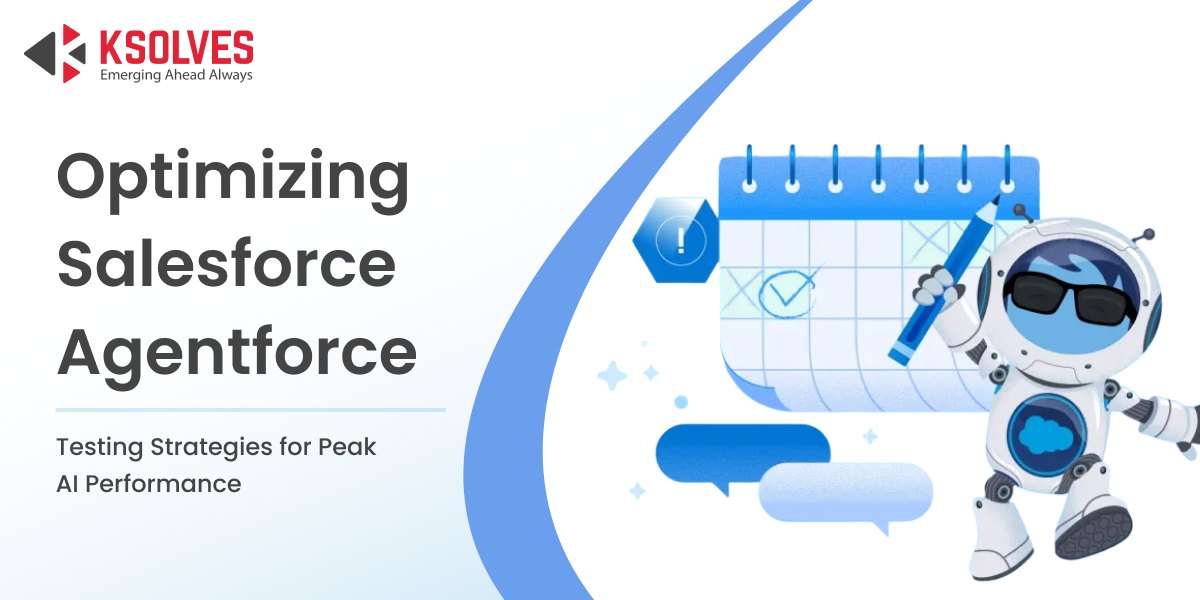
Salesforce Agentforce is redefining how businesses build and deploy AI-driven agents for customer service, sales, and operations. These agents can understand context, make decisions, and take actions autonomously, but their true effectiveness depends on how well they’re tested and optimized.
Just like any AI system, even the smartest Agentforce setup can deliver inconsistent results if not rigorously validated. Testing makes sure that your agents respond accurately, handle exceptions smoothly, and maintain brand consistency. Optimization, on the other hand, helps refine performance over time by improving speed, accuracy, and user satisfaction.
In this blog, we’ll walk through essential testing and optimization strategies for Agentforce, from pre-deployment validation to real-time performance tuning, to help you build reliable, high-performing AI agents that truly deliver business value.
Why Testing Matters in Agentforce
Testing plays a crucial role in ensuring that Salesforce Agentforce delivers consistent and intelligent performance. Since AI agents rely on reasoning, data accuracy, and workflow context to make decisions, even small errors can lead to incorrect responses or poor customer experiences.
Without proper testing, agents might misinterpret user intent, fail to recall context from previous interactions, or respond inconsistently across channels. These issues not only affect customer satisfaction but can also undermine trust in your AI-driven workflows.
Thorough testing helps identify and fix these weaknesses early. Your agents must understand queries correctly, follow business logic accurately, and comply with organizational policies or data regulations. In short, testing transforms an Agentforce prototype into a dependable, production-ready AI assistant that your teams and customers can rely on.
Essential Pre-Deployment Testing Steps for Agentforce
Before launching your Agentforce solution, it’s critical to verify that every component functions as expected. A solid pre-deployment testing phase helps prevent errors, ensures smooth integrations, and guarantees that your AI agents deliver the right responses in real-world scenarios.
Start by verifying data quality and checking that your systems are properly connected to Salesforce Data Cloud. Poor or incomplete data can lead to flawed reasoning and inaccurate outcomes. Next, test intent detection and reasoning flows using realistic sample interactions to confirm that the agent understands context and user goals correctly.
Don’t overlook permissions, APIs, and integrations with tools like CRM, Service Cloud, or third-party systems. These connections form the backbone of an effective Agentforce setup. Also, evaluate the tone and accuracy of your agent’s responses to ensure they align with your brand voice and communication standards.
Finally, conduct sandbox testing using simulated customer scenarios. This helps uncover edge cases, refine logic, and confirm that your agent behaves consistently before going live.
Also Read: Agentforce 3: Inside Salesforce’s Next-Gen AI Agent Management Platform
Functional Testing in Agentforce
Functional testing makes sure that your Agentforce agents perform as intended in real-world scenarios and handle complex workflows smoothly.
- Test Workflows Using the Testing Center: Use Salesforce’s Agentforce Testing Center, which identifies discrepancies between actual and expected responses by evaluating completeness, precision, and accuracy. This centralized hub allows you to simulate interactions, monitor agent behavior, and verify that tasks are executed correctly, ensuring consistent and reliable performance.
- Validate Multi-Step Reasoning and Error Handling: Check how agents manage multi-step tasks and handle errors. Ensuring robust reasoning and fallback logic prevents breakdowns during customer interactions.
- Ensure Seamless Handoff to Human Agents: Verify that agents can transfer conversations to human representatives smoothly when queries are too complex or sensitive, maintaining a seamless customer experience.
- Use Agentforce DX Tools for Debugging: Leverage debugging and monitoring tools within Agentforce DX to detect performance issues, optimize logic, and guarantee agents operate reliably in production environments.
Agentforce Performance Optimization Strategies
Optimizing your Agentforce agents is essential for ensuring they operate efficiently, provide accurate responses, and deliver a seamless, reliable customer experience.
Well-optimized agents reduce errors, save time for human staff, and increase customer satisfaction. Here are key strategies to enhance performance:
- Optimize Response Latency: Refine prompts, streamline workflows, and reduce unnecessary processing steps to speed up agent responses. Faster responses not only improve customer satisfaction but also allow agents to handle more interactions simultaneously, boosting overall efficiency.
- Track Performance with Analytics Dashboards: Use Agentforce dashboards to monitor key metrics like query success rates, response times, first-contact resolution, and interaction bottlenecks. These insights help identify areas for improvement and enable data-driven optimization decisions.
- Continuously Train Agents with Real-World Data: Regularly feed agents with real interaction data to improve understanding and accuracy. Continuous learning helps agents adapt to evolving customer queries, slang, and industry-specific terminology, ensuring more natural and relevant responses.
- Balance Automation and Human Intervention: Set clear thresholds for when agents should handle queries independently versus escalating to a human representative. This balance enables high efficiency without compromising the quality of service, particularly for complex or sensitive issues.
- Leverage Salesforce Atlas Reasoning Engine: Fine-tune the reasoning engine to enhance multi-step decision-making and complex query handling. Optimized reasoning allows agents to think more like humans, make smarter decisions, and provide precise, context-aware solutions across varied scenarios.
Also Read: Top 7 Customer Support Metrics to Monitor in Salesforce Agentforce
Advanced Strategies for Optimizing Agentforce Agents
Once your Agentforce agents are performing well, advanced optimization strategies can take them to the next level. These techniques help create smarter, more personalized, and continuously improving AI agents that adapt to changing business needs.
- Implement Personalization with Data Cloud Insights: Leverage customer behavior and interaction data from Salesforce Data Cloud to tailor agent responses. Personalized interactions improve customer satisfaction, increase engagement, and make agents feel more human-like.
- Integrate Einstein Copilot or Slack Workflows: Enhance agent capabilities by connecting with Einstein Copilot for AI-assisted suggestions or Slack workflows for seamless collaboration. Integration streamlines processes, accelerates decision-making, and enables smoother communication across teams.
- Automate Retraining Pipelines: Set up automated pipelines to retrain agents using new interaction data. This leads to agents continually improve, adapt to evolving queries, and maintain high accuracy without manual intervention.
- Utilize Version Control and CI/CD: Apply best practices from software development, such as version control and continuous integration/continuous deployment, for agent logic updates. This promotes safe, organized, and efficient updates while reducing the risk of errors in production.
Common Pitfalls to Avoid in Agentforce Testing and Optimization
Even the best-designed Agentforce agents can underperform if certain mistakes are made during testing and optimization. Being aware of these pitfalls helps to make sure your agents are reliable, accurate, and effective.
- Over-Automation Without Context Validation: Automating tasks without verifying that the agent understands context can lead to incorrect or irrelevant responses. Always validate reasoning paths before scaling automation.
- Ignoring Edge Cases and Fallback Scenarios : Failing to account for unusual or unexpected queries can cause agents to break or provide poor user experiences. Test for edge cases and define clear fallback mechanisms.
- Neglecting Multiple Customer Touchpoints: Agents should be tested across all channels, including voice, chat, and email. Performance may vary across touchpoints, and ignoring this can lead to inconsistent experiences.
- Failing to Document Agent Behavior Updates: Not maintaining records of updates, logic changes, or retraining sessions can create confusion and make troubleshooting difficult. Proper documentation allows continuity and easier future improvements.
Conclusion
Testing and optimization are the cornerstones of building effective Agentforce agents. By testing early, monitoring performance regularly, and continuously optimizing workflows, you can ensure your AI agents are accurate, reliable, and capable of delivering exceptional customer experiences. Strong testing combined with smart optimization transforms Agentforce agents from simple tools into trusted business assets.
If you’re looking to build, deploy, or enhance your Agentforce setup, Ksolves Salesforce experts offer comprehensive Agentforce consulting services. From initial implementation to ongoing optimization, our team can help you create intelligent, high-performing AI agents that scale with your business needs.
Get in touch with Ksolves today at [email protected] and take your AI-powered customer experiences to the next level.
Frequently Asked Questions
Why is testing important for Agentforce agents?
Testing ensures that Agentforce agents understand user intents correctly, follow business rules, handle exceptions properly, and deliver consistent responses. Without proper testing, agents may provide inaccurate answers, fail to recall context, or create poor customer experiences.
How often should Agentforce agents be optimized?
Agentforce optimization should be an ongoing process. Businesses should regularly analyze performance metrics, retrain agents using real interaction data, refine workflows, and update logic to ensure agents remain accurate, efficient, and aligned with evolving business requirements.
Can Agentforce agents handle multiple channels?
Yes. Agentforce supports interactions across multiple channels, including chat, voice, and email. Functional and performance testing should be conducted across all these channels to ensure consistent and reliable agent behavior.
Does Ksolves provide consulting for Agentforce?
Yes. Ksolves offers comprehensive Agentforce consulting services, including setup, deployment, testing, optimization, and continuous performance enhancement tailored to your specific business needs.
For more information, you can contact us directly via email.































Author
About the Author Editorial Team The Ksolves Editorial Team includes certified Salesforce experts, Big Data engineers, AI/ML specialists, Zoho consultants, and experienced technology writers focused on delivering clear, actionable insights for modern businesses. With hands-on experience across Salesforce, Big Data platforms, AI/ML solutions, application development, software testing, and Zoho ERP/CRM, the team publishes practical guides, real-world use cases, and industry updates that support smarter decisions and faster growth. Every article is created to solve business challenges, guide technology adoption, and keep organizations aligned with evolving digital ecosystems.
Share with