



The Most Common Mistakes Companies Make When Adopting Microservices
Microservices
5 MIN READ
May 11, 2026

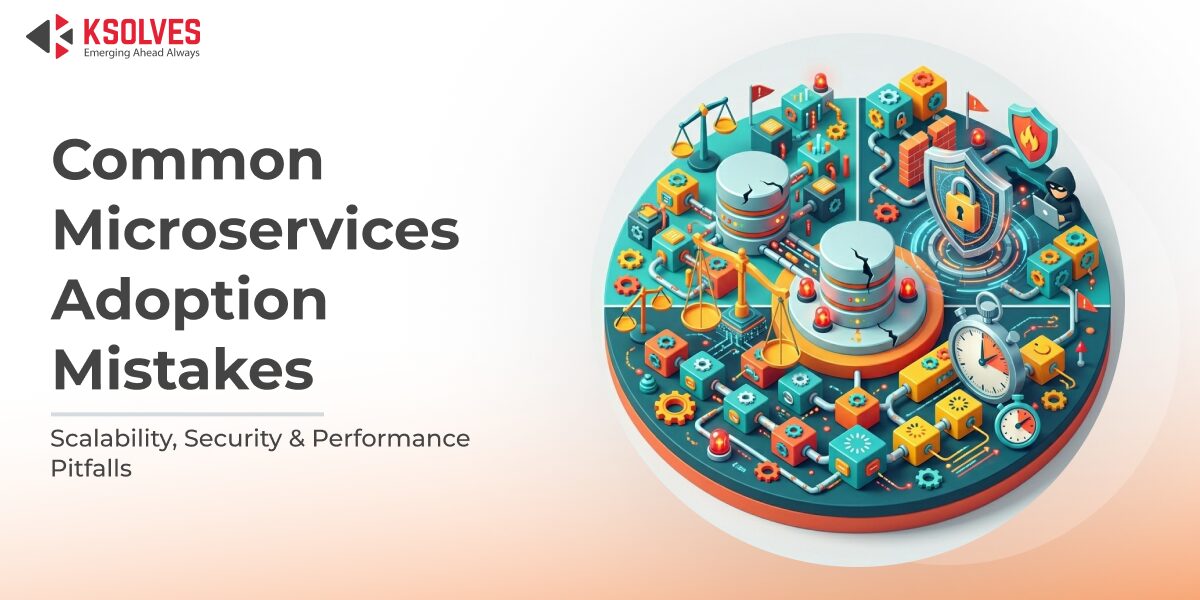
Modern enterprises are rapidly embracing microservices to improve scalability, accelerate software delivery, and modernize legacy systems. From cloud-native applications to AI-powered platforms, microservices architecture has become a preferred approach for organizations aiming to innovate faster and scale efficiently.
However, while the benefits are attractive, many businesses underestimate the operational and architectural complexity that comes with microservices adoption. Without the right strategy, companies often replace one set of problems with another, resulting in fragmented systems, rising cloud costs, deployment instability, security gaps, and operational chaos.
In reality, successful microservices adoption requires much more than splitting applications into smaller services. It demands strong DevOps practices, observability, governance, automation, security, and intelligent infrastructure management.
In this blog, we explore the most common mistakes companies make when adopting microservices and how businesses can avoid them using modern engineering and AI-driven operational strategies.
Top 12 Mistakes Enterprises Make in Adopting Microservices
1. Adopting Microservices Without a Clear Business Objective
One of the biggest mistakes organizations make is adopting microservices simply because it is considered a modern architectural trend.
Many businesses move away from monolithic systems without clearly identifying the actual business problem they are trying to solve. In some cases, applications are not large or complex enough to justify a distributed architecture. As a result, companies end up increasing operational complexity without achieving meaningful business value.
Microservices are most effective when organizations need:
- Independent scaling of services.
- Faster release cycles.
- Multi-team development environments.
- High application flexibility.
- Continuous innovation.
Without these requirements, a well-structured modular monolith may be a more practical and cost-effective solution.
Businesses should first evaluate:
- Application complexity.
- Team maturity.
- Deployment frequency.
- Scalability requirements.
- Long-term modernization goals.
AI-assisted workload analysis and architecture assessment can also help enterprises determine whether microservices are truly the right fit before modernization begins.
Also Read: The Hidden Costs of Microservices Architecture: How Ksolves Uses AI to Drive Efficiency and Control
2. Breaking Applications into too Many Small Services
Another common mistake is over-fragmenting applications into excessively small services. While microservices promote modularity, creating too many fine-grained services can introduce:
- Excessive inter-service communication.
- Increased network latency.
- Dependency management challenges.
- Difficult debugging processes.
- Higher infrastructure overhead.
This often leads to “distributed monoliths,” where services remain tightly coupled despite being separated. Successful microservices design requires clearly defined service boundaries based on business capabilities rather than technical functions alone.
Organizations should focus on:
- Domain-driven design (DDD).
- Bounded contexts.
- Logical business ownership.
- Independent deployability.
AI-driven dependency mapping tools can further help engineering teams identify optimal service boundaries and reduce architectural inefficiencies.
3. Ignoring DevOps and Automation Readiness
Microservices cannot operate efficiently without mature DevOps practices.
Many organizations adopt microservices while still relying on manual deployment workflows, inconsistent infrastructure provisioning, and fragmented operational processes. This creates deployment bottlenecks and slows down release cycles instead of improving agility.
Without automation, teams often face:
- Deployment inconsistencies.
- Configuration drift.
- Slow rollback processes.
- Increased human errors.
- Environmental instability.
To manage microservices effectively, organizations need:
- CI/CD pipelines.
- Infrastructure as Code (IaC).
- Automated testing frameworks.
- Containerized deployment strategies.
- Automated monitoring and alerting.
AI-powered DevOps automation is now helping enterprises optimize deployment workflows, predict release failures, and improve infrastructure reliability proactively.
4. Poor Observability and Monitoring Strategy
Observability becomes significantly more complex in distributed architectures.
In monolithic systems, troubleshooting is relatively centralized. In microservices environments, however, a single user request may pass through dozens of services, APIs, databases, and infrastructure layers.
Without proper observability, organizations struggle with:
- Slow incident detection.
- Limited root cause visibility.
- Performance bottlenecks.
- Service dependency blind spots.
- Increased downtime.
A strong observability strategy should include:
- Centralized logging.
- Distributed tracing.
- Metrics collection.
- Real-time dashboards.
- Intelligent alerting systems.
Modern AI-driven observability platforms can automatically detect anomalies, predict incidents, and accelerate root cause analysis across complex microservices ecosystems.
5. Neglecting Security in Distributed Architectures
Microservices significantly expand the attack surface of applications.
Every API, service endpoint, container, and communication channel becomes a potential security risk if not properly secured. Unfortunately, many organizations prioritize scalability and deployment speed while overlooking security fundamentals.
Common security mistakes include:
- Weak API authentication.
- Poor identity management.
- Unencrypted service-to-service communication.
- Misconfigured Kubernetes environments.
- Excessive user permissions.
To strengthen microservices security, businesses should implement:
- Zero-trust security models.
- API gateways.
- Service mesh security policies.
- Role-based access controls (RBAC).
- End-to-end encryption.
AI-powered threat detection systems are also becoming essential for identifying abnormal traffic patterns and security vulnerabilities in real time.
6. Choosing the Wrong Communication Patterns
Improper communication design can severely impact microservices’ performance and resilience.
Many organizations overuse synchronous APIs for all service interactions, creating tightly coupled dependencies that increase latency and failure risks. This often results in:
- Cascading service failures.
- Slower application performance.
- Poor scalability.
- Reduced fault tolerance.
Businesses should carefully evaluate when to use:
- REST APIs.
- gRPC.
- Event-driven messaging.
- Asynchronous queues.
- Streaming platforms.
Event-driven architectures can improve scalability and resilience by reducing direct service dependencies and enabling asynchronous processing.
Choosing the right communication model is critical for building highly available and scalable distributed systems.
Also Read: 5 Essential Design Patterns For Robust & Scalable Microservices
7. Failing to Prepare for Data Management Complexity
Data management is one of the most underestimated challenges in microservices adoption.
In monolithic applications, data is usually centralized. In microservices architectures, each service often maintains its own database, making consistency and synchronization more complex.
Common problems include:
- Shared database anti-patterns.
- Distributed transaction failures.
- Data duplication.
- Inconsistent data synchronization.
- Complex reporting workflows.
Organizations should adopt modern data management strategies such as:
- Database-per-service architecture.
- Event sourcing.
- CQRS (Command Query Responsibility Segregation).
- Event-driven synchronization.
AI-driven data flow optimization can also help organizations improve consistency, reduce bottlenecks, and optimize distributed database performance.
8. Underestimating Kubernetes and Infrastructure Complexity
Kubernetes has become the standard orchestration platform for microservices deployments. However, many companies underestimate the expertise required to manage Kubernetes environments effectively.
Poorly configured clusters can lead to:
- Resource wastage.
- Scaling inefficiencies.
- Application instability.
- Security vulnerabilities.
- High cloud infrastructure costs.
Managing large-scale containerized environments requires expertise in:
- Cluster governance.
- Autoscaling strategies.
- Network policies.
- Resource allocation.
- Multi-cluster management.
AI-powered infrastructure optimization is now helping enterprises improve resource utilization, automate scaling decisions, and reduce operational overhead across Kubernetes environments.
9. Lack of Governance and Standardization
As microservices environments grow, the absence of governance quickly creates operational chaos. Different teams may adopt:
- Different programming languages.
- Inconsistent APIs.
- Separate deployment standards.
- Fragmented monitoring tools.
- Varying security practices.
Over time, this increases technical debt and reduces maintainability. Strong governance frameworks help organizations establish:
- API standards.
- Security policies.
- Naming conventions.
- Infrastructure standards.
- CI/CD best practices.
Platform engineering and Internal Developer Platforms (IDPs) are increasingly being used to standardize operations while improving developer productivity.
10. Ignoring Cost and Operational Overhead
Many organizations assume microservices automatically reduce costs. In reality, poorly managed microservices environments can become significantly more expensive than monolithic systems.
Hidden costs often include:
- Increased cloud infrastructure usage.
- Higher monitoring expenses.
- Networking overhead.
- Tooling complexity.
- Larger operational teams.
Without proper optimization, organizations may face:
- Overprovisioned infrastructure.
- Idle compute resources.
- Inefficient scaling.
- Uncontrolled cloud spending.
FinOps practices combined with AI-driven infrastructure optimization can help businesses monitor usage patterns, improve resource allocation, and reduce unnecessary operational expenses.
11. Migrating From Monolith to Microservices Too Quickly
Many enterprises attempt large-scale “big bang” migrations that introduce unnecessary risks and operational disruption.
Migrating everything simultaneously often causes:
- Extended downtime.
- Service instability.
- Failed deployments.
- Data migration issues.
- Team burnout.
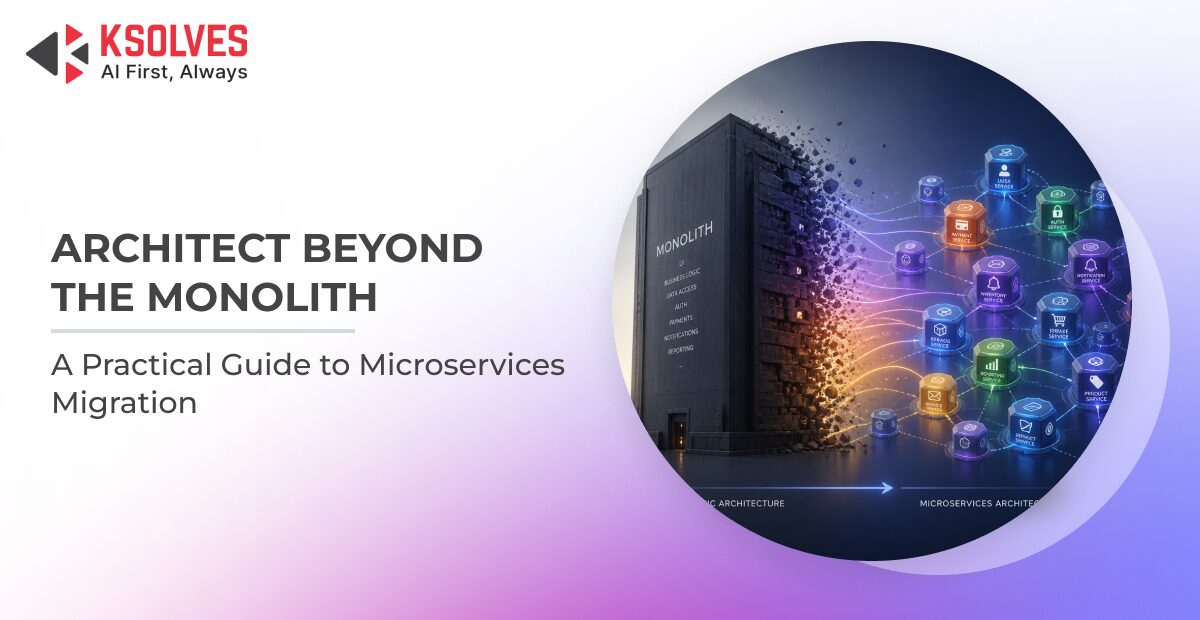
Instead, organizations should adopt incremental modernization strategies such as the Strangler Fig pattern, where specific services are gradually extracted from the monolith over time.
A phased migration roadmap helps businesses:
- Reduce risk.
- Maintain operational continuity.
- Improve testing and validation.
- Optimize resource planning.
AI-assisted migration assessment tools can also help prioritize modernization efforts based on business impact and technical complexity.
12. Not Investing in Skilled Teams and Culture Transformation
Microservices are not just a technology transformation; they are also an organizational transformation.
Many companies fail because teams are not prepared for:
- Distributed system management.
- DevOps culture.
- Continuous delivery workflows.
- Shared ownership models.
- Cloud-native engineering practices.
Successful microservices adoption requires:
- Cross-functional collaboration
- Strong SRE and DevOps practices
- Continuous learning programs
- Operational accountability
- Automation-first culture
Organizations that invest in engineering culture and operational maturity achieve significantly better long-term outcomes.
How Ksolves’ AI-Driven Approach Simplifies Enterprise Microservices Transformation
Many enterprises adopt microservices expecting faster innovation and scalability, only to face growing operational complexity, fragmented deployments, rising cloud costs, and visibility challenges across distributed systems.
Ksolves, an AI-first microservices development company, helps organizations simplify this journey with an AI-driven approach that combines cloud-native engineering, DevOps automation, Kubernetes expertise, and intelligent operational monitoring.
Instead of adding complexity, we help businesses build scalable, secure, and high-performance microservices ecosystems that support long-term growth.
1. Business-First Modernization Strategy
Successful microservices transformation starts with the right strategy, not just technology adoption.
Ksolves evaluates your existing applications, operational bottlenecks, scalability goals, and infrastructure readiness to design a modernization roadmap aligned with your business objectives.
Using AI-assisted architecture analysis, we help organizations:
- Identify the right services for modernization
- Reduce migration risks
- Avoid unnecessary architectural complexity
- Build scalable and maintainable systems
2. Intelligent Automation for Faster Operations
Microservices environments require strong automation to maintain speed and reliability.
Ksolves helps enterprises streamline operations through:
- AI-powered CI/CD optimization
- Infrastructure as Code (IaC)
- Automated testing and deployments
- Intelligent monitoring and alerting
This enables teams to accelerate releases, reduce deployment failures, and improve engineering efficiency.
3. AI-Driven Observability and Performance Optimization
Managing distributed systems without visibility can quickly impact reliability and user experience.
Ksolves implements advanced observability frameworks with:
- Centralized logging
- Distributed tracing
- Real-time monitoring
- Predictive anomaly detection
- Faster root cause analysis
Our AI-driven monitoring approach helps organizations proactively detect issues, improve uptime, and optimize application performance.
4. Scalable, Secure, and Cost-Optimized Infrastructure
Ksolves helps enterprises manage growing microservices ecosystems with:
- Kubernetes orchestration and governance
- Intelligent autoscaling
- Resource optimization
- Secure cloud-native deployments
- AI-powered infrastructure monitoring
We also integrate DevSecOps and zero-trust security practices to strengthen protection across APIs, containers, and distributed workloads.
Final Words
Microservices can accelerate scalability, innovation, and business agility, but only when backed by the right architecture, automation, and operational strategy. Without proper planning, organizations often end up managing unnecessary complexity instead of achieving faster growth.
That’s why successful microservices transformation requires intelligent automation, strong observability, secure cloud-native infrastructure, and continuous optimization.
With its AI-driven approach and deep cloud-native expertise, Ksolves helps enterprises simplify modernization, improve operational efficiency, and build scalable digital ecosystems designed for long-term business success.
Build scalable, secure, and future-ready microservices ecosystems with AI-driven consulting and cloud-native expertise from Ksolves.




































AUTHOR
Microservices
Share with