



Top Use Cases of RAG in Business | AI-Powered Solutions
AI
5 MIN READ
April 14, 2026

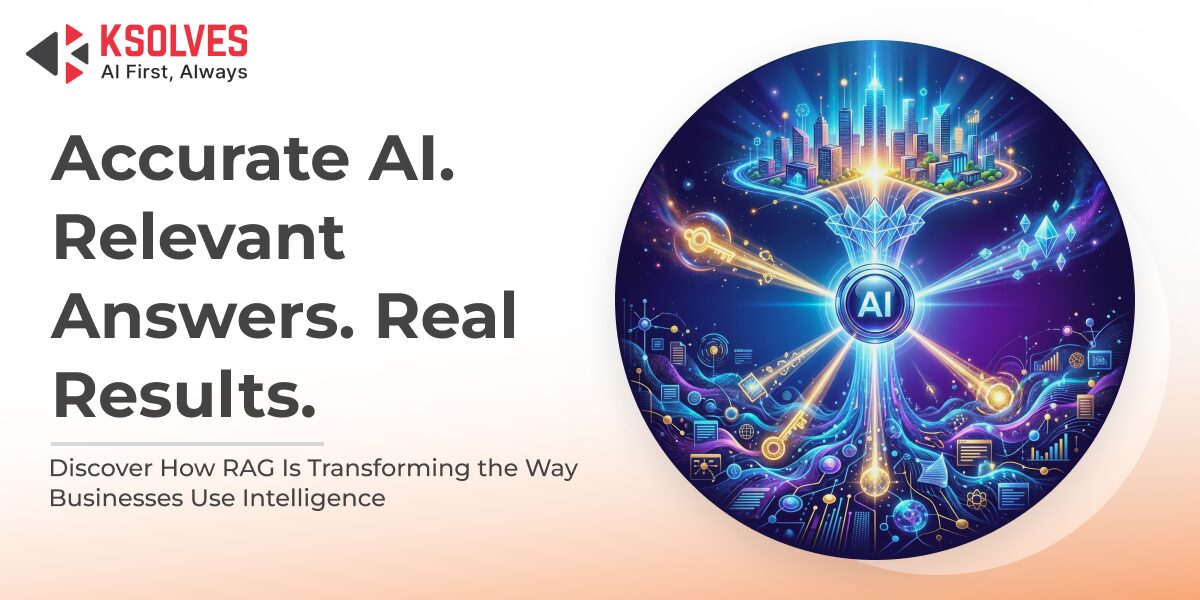
Artificial Intelligence is transforming the way businesses operate, make decisions, and serve their customers. Among the most promising advancements in AI, Retrieval-Augmented Generation (RAG) has emerged as a game-changer. By combining the power of large language models (LLMs) with external knowledge sources, RAG helps businesses generate more accurate, context-aware, and dynamic responses.
In this blog, we’ll explore the top use cases for RAG in business, highlight its benefits, and share how organizations can leverage it to stay ahead in the competitive digital era.
What is Retrieval-Augmented Generation (RAG)?
RAG is an AI framework that enables them to retrieve relevant information from structured databases, internal documents, and APIs. Instead of relying solely on pre-trained knowledge, a RAG model fetches the latest and most relevant data before generating its response.
This hybrid approach ensures that businesses can rely on AI systems that are:
- Accurate – Answers are based on verified, updated data.
- Contextual – The AI adapts responses to specific industries, tasks, or queries.
- Scalable – It can handle large and evolving datasets with ease.
Why RAG Matters for Businesses
Modern businesses thrive on data-driven decisions and personalized experiences. While standard AI models are powerful, they often struggle with outdated information or “hallucinations” (fabricating facts). RAG resolves this issue by blending generative AI with retrieval mechanisms, giving businesses a tool that is both creative and reliable.
Businesses building on large language models today are increasingly turning to Generative AI solutions that combine retrieval mechanisms with creative generation to deliver reliable, grounded outputs.
Top Use Cases of RAG in Business
1. Customer Support and Chatbots
AI-powered chatbots have become indispensable in customer service. With RAG, businesses can go beyond generic responses by integrating company-specific knowledge bases, FAQs, and product manuals.
Benefits:
- Instant, precise answers to customer queries.
- Reduction in human agent workload.
- Improved customer satisfaction and loyalty.
Example: A telecom company can use RAG-driven chatbots to provide troubleshooting steps specific to a customer’s device or service plan, not just generic advice.
2. Knowledge Management for Enterprises
Organizations often struggle to manage vast amounts of internal documents, including policies, contracts, reports, and technical manuals. RAG streamlines enterprise knowledge management by retrieving and generating insights from these sources.
Benefits:
- Quick access to relevant company policies.
- Simplified onboarding for new employees.
- Enhanced decision-making with contextual insights.
Example: A manufacturing company implements RAG to allow employees to instantly retrieve safety protocols, HR policies, and equipment manuals from thousands of internal documents.
3. Personalized Marketing and Sales Enablement
In today’s competitive market, personalization is everything. RAG enables marketing teams to craft highly tailored campaigns by retrieving customer data, market trends, and behavioral patterns.
Benefits:
- Dynamic content creation for specific customer segments.
- Up-to-date recommendations for upselling and cross-selling.
- Data-backed sales pitches with updated market insights.
Example: A retail company could use RAG to generate product descriptions personalized to local preferences, seasonal trends, and customer purchase history.
4. Financial Analysis and Risk Management
The financial industry relies on accurate and timely information. RAG can retrieve Up-to-date data from financial reports, news articles, and regulatory documents, then generate a detailed analysis.
Benefits:
- Informed investment decisions.
- Detection of fraud or anomalies.
- Compliance with ever-changing regulations.
Example: A fintech startup integrates RAG with Up-to-date stock market data, enabling analysts to generate updated reports that include regulatory updates and breaking financial news.
5. Legal and Compliance Support
Law firms and compliance departments often deal with large sets of regulatory documents. RAG-powered solutions can scan through legislation, contracts, and case files to generate precise summaries or highlight compliance gaps.
Benefits:
- Reduced time spent on document reviews.
- Improved accuracy in compliance monitoring.
- Risk mitigation by staying updated with regulatory changes.
Example: A law firm uses RAG to scan thousands of contracts and highlight clauses that may not align with current regulations, saving lawyers hours of manual review.
6. Product Research and Development
RAG assists R&D teams by retrieving relevant research papers, patents, or competitor product data, then synthesizing it into actionable insights.
Benefits:
- Faster innovation cycles.
- Identification of market opportunities.
- Avoiding duplication of existing solutions.
Example: A pharmaceutical company applies RAG to analyze global research papers and patents, identifying trends and opportunities for developing innovative treatments.
7. Healthcare and Life Sciences
In healthcare, accuracy and timeliness can be life-saving. RAG can support medical professionals by retrieving the latest research, treatment protocols, or patient records, then generating actionable recommendations.
Benefits:
- Improved patient outcomes with evidence-based recommendations.
- Enhanced medical research.
- Streamlined clinical documentation.
Example: A hospital system uses RAG to pull the latest treatment guidelines and clinical trial results, helping doctors provide evidence-based recommendations during patient consultations.
How RAG Enhances Competitive Advantage
Businesses adopting RAG stand to gain a clear edge over competitors. Here’s how:
- Operational efficiency – Faster access to critical information reduces delays.
- Enhanced customer trust – Accurate, reliable responses build credibility.
- Scalability – Adaptable across industries and departments. This scalability becomes especially powerful when RAG is embedded within agentic AI systems that can autonomously plan, retrieve, and act on data in real time.
- Future-proofing – By connecting to up-to-date data, RAG ensures AI systems remain relevant.
Partnering with Experts for AI Success
Implementing RAG in business workflows requires expertise in AI, Machine Learning, and enterprise systems integration. This is where partnering with trusted providers can make all the difference.
At Ksolves, we specialize in delivering AI ML Services tailored to unique business needs. Our team helps organizations harness the power of RAG to unlock data-driven growth, enhance customer experiences, and streamline operations.
Whether you’re looking to improve customer support, automate compliance, or drive innovation, Ksolves AI ML Services provides the right mix of technical expertise and industry knowledge.
Conclusion
Retrieval-Augmented Generation is not just a technological innovation but a strategic enabler for businesses across industries. From customer service to compliance and marketing, its applications are vast and transformative.
As data continues to grow in complexity and volume, RAG will play a crucial role in ensuring businesses remain agile, informed, and competitive. The time to explore its potential is now.
Frequently Asked Questions
What is Retrieval-Augmented Generation (RAG) and how does it work?
Why do businesses prefer RAG over standard LLMs?
What are the most impactful use cases of RAG in business?
How is RAG different from fine-tuning a large language model?
What industries are adopting RAG most aggressively?
How can Ksolves help my business implement a RAG pipeline?
How long does it take to deploy a production-ready RAG system?































AUTHOR
AI
Mayank Shukla, a seasoned Technical Project Manager at Ksolves with 8+ years of experience, specializes in AI/ML and Generative AI technologies. With a robust foundation in software development, he leads innovative projects that redefine technology solutions, blending expertise in AI to create scalable, user-focused products.
Share with