



Airbyte Roadmap 2026: What Is Next for Open-Source ELT?
Airbyte
5 MIN READ
May 10, 2026

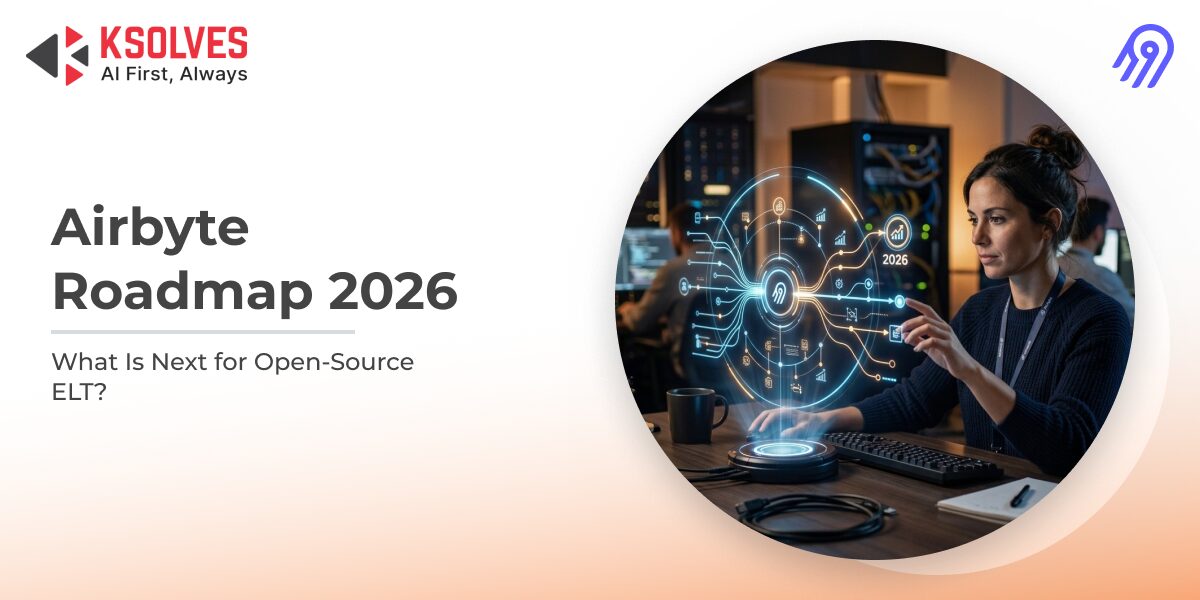
The Airbyte roadmap for 2026 signals the most significant platform expansion since the project launched in 2020. Airbyte is no longer positioning itself as a pure open-source ELT connector catalog. It is building the data infrastructure layer that AI agents need to operate reliably in production. With more than 600 connectors, a community of over 27,000 developers, and thousands of companies syncing data daily using platform version 2.1 (released April 2026), Airbyte enters the year from a strong foundation. The question is where it goes next. This post breaks down the key features Airbyte is shipping, the strategic shift from analytics ELT to AI-native data infrastructure, the accurate licensing model, and what data teams should expect across the year. We cover Agent Engine, PyAirbyte, CDC improvements, vector database integrations, and how each change affects your stack.
Why the Airbyte Roadmap for 2026 Is a Category Shift
Airbyte is not simply adding connectors in 2026. It is rearchitecting itself around a new primary use case: powering AI agents with structured, real-time access to enterprise data. Traditional analytics workflows tolerate batch processing and eventual consistency. AI agents do not. When an agent queries stale data, it produces inaccurate outputs. When it lacks permission-aware access, it risks exposing sensitive context. Traditional ELT pipelines were never designed for these requirements. Airbyte’s roadmap addresses this gap directly.

Airbyte Agent Engine: The Biggest Launch of 2026
On February 19, 2026, Airbyte launched the Agent Engine in public beta. It is a purpose-built data layer for AI agents. It gives agents structured, real-time access to enterprise systems without requiring custom integration code per source. Most AI teams spend more engineering time on integration plumbing than on agent logic. The Agent Engine eliminates that overhead.
Three Core Components at Launch
- Open-Source Agent Connectors: Python SDKs for real-time fetch, search, and write. Ten production-ready connectors launched: Salesforce, HubSpot, GitHub, Jira, Asana, Gong, Stripe, Zendesk Support, Linear, and Greenhouse. Additional alpha and beta connectors bring the total to 20-plus at launch, with new ones releasing weekly.
- Managed Authentication Module: Handles OAuth flows, token refresh, and credential storage centrally. Teams authenticate once across all connected systems. Supports per-customer credential isolation for multi-tenant applications.
- Context Store: Airbyte-managed storage that replicates and indexes a relevant subset of data from connected sources. Agents search across systems in milliseconds. Data refreshes hourly. Each source maintains its own isolated data store.
Connecting an AI agent to Salesforce through the Agent Engine takes roughly 10 lines of Python. Hundreds more agent connectors are on the roadmap, drawn from Airbyte’s existing replication ecosystem.
PyAirbyte: Open-Source ELT Inside Python Workflows
PyAirbyte lets developers run Airbyte connectors directly inside Python without deploying the full platform. Data engineers run pipeline syncs programmatically inside existing CI/CD tooling. AI developers pull data from any Airbyte connector into model training jobs, RAG pipelines, or agent workflows using Pandas, LangChain, or PydanticAI. The PyAirbyte MCP server also supports Claude Desktop, Cursor, Cline, and Warp, making pipeline management accessible through AI assistant interfaces. In 2026, PyAirbyte development focuses on tighter integration with the Agent Engine so teams manage both batch replication and real-time agent data access from a single Python interface.
For teams deciding between ELT-first and ETL-first architectures, our guide on ETL vs ELT: Key Differences and When to Use Each Approach provides a practical framework for choosing the right model for your cloud warehouse setup.
CDC Replication and Vector Database Connectors in 2026
Airbyte supports log-based CDC for PostgreSQL, MySQL, and SQL Server. In 2026, CDC feeds directly into the Agent Engine’s Context Store. When a customer updates their data in a connected CRM, CDC detects the change and streams the delta downstream within seconds. Agents get accurate context without stale-data hallucination risk.
On the AI pipeline side, Airbyte natively integrates with Pinecone, Weaviate, Milvus, Chroma, Qdrant, and PostgreSQL with pgvector. The platform handles automatic chunking, embedding generation, and metadata extraction before loading into vector destinations. This makes Airbyte a practical choice for teams building retrieval-augmented generation systems without a separate preprocessing pipeline. The AI-powered Connector Builder also uses LLMs to generate new connectors from API documentation in minutes, making Airbyte one of the best open-source ELT tools for AI pipelines in 2026.
Teams building AI pipelines on top of a full data stack can read our overview of Top Data Engineering Services for Big Data Pipelines to see how ELT, streaming, and vector storage fit together in production.
Airbyte vs Fivetran in 2026: Platform Comparison

Why Ksolves for Airbyte-Powered Data Pipeline Implementation
Deploying an open-source ELT platform like Airbyte delivers full value only inside a well-designed data architecture. At Ksolves, our Big Data engineering practice covers ingestion design, ELT development, Apache Airflow orchestration, cloud warehouse integration across Snowflake, BigQuery, and Redshift, real-time streaming with Kafka and Flink, and data quality frameworks. Our team also supports Apache NiFi deployments through the Data Flow Manager product.
As Airbyte’s 2026 roadmap expands into AI agent infrastructure, the implementation decisions become more involved: choosing between replication and agent connectors, configuring the Context Store, planning the Helm chart V2 migration from v2.0, and deciding when PyAirbyte fits better than the full platform. Ksolves brings over 11 years of big data engineering experience and applies AI-assisted project dashboards and code review tools to surface risks earlier in the delivery cycle. This delivers fewer revision cycles, faster time-to-production, and solutions built to scale. If your team is evaluating Airbyte as part of a modern data stack or AI pipeline initiative, start with a scoped architecture review.
Conclusion
The 2026 roadmap for Airbyte is technically credible and strategically coherent. The platform is building a new infrastructure layer that serves both batch analytics ELT pipelines and real-time AI agent workflows from a single source-available codebase licensed under ELv2. Agent Engine, PyAirbyte, CDC improvements, and deep vector database integrations all point toward a platform positioned as the data layer for production AI applications alongside traditional analytics. For data teams that value flexibility, cost control, and the ability to inspect and modify integration code, Airbyte remains the strongest open-source ELT choice in 2026. The stable v2.0 release gives teams a solid foundation, while the experimental v2.1 signals where the platform is heading. To explore how Ksolves can help implement Airbyte effectively as part of your data stack, contact our team at [email protected].
Frequently Asked Questions
What is the Airbyte Roadmap for 2026 focused on?
The Airbyte 2026 roadmap marks a strategic shift from pure open-source ELT connector catalog to an AI-native data infrastructure platform. Key priorities include Agent Engine for real-time data access by AI agents, PyAirbyte for Python-native pipeline workflows, CDC replication improvements, and vector database connectors for AI applications. Airbyte v2.0 provides a stable release foundation for these expansions.
How does Airbyte Agent Engine change data access for AI applications?
Airbyte Agent Engine provides a managed authentication and data layer for AI agents, LLMs, and MCP clients, giving them real-time access to business data from sources like Salesforce, HubSpot, and databases without custom integration code. Teams deploy Airbyte’s Python SDKs and a centralized Context Store that handles token refresh, credential isolation, and data freshness automatically.
What is PyAirbyte and how does it differ from the Airbyte platform?
PyAirbyte is a lightweight Python library that lets developers run Airbyte connectors directly in Python scripts or AI agent workflows without deploying the full Airbyte platform. It integrates natively with LangChain, pandas, Dagster, and Airflow, making it ideal for ML pipelines and RAG workflows. The full Airbyte platform is the right choice for production-scale, multi-team data warehouse pipelines. PyAirbyte’s native Airflow integration makes pipeline orchestration straightforward, though teams still deciding between orchestrators will find our comparison of Apache NiFi vs Airflow useful for understanding which tool handles data movement versus workflow scheduling.
Is Airbyte a better choice than Apache NiFi for ELT in 2026?
Airbyte and Apache NiFi serve different use cases. Airbyte specializes in ELT into warehouses like Snowflake or BigQuery. Apache NiFi excels at real-time data routing, streaming ingestion, edge computing, and compliance-heavy data flows. Many enterprise teams use both together. Ksolves provides expert services for both platforms.
What vector databases does Airbyte support in 2026?
Airbyte’s 2026 roadmap includes CDC-based connectors feeding the Agent Engine Context Store, with support for popular vector databases including Pinecone, Weaviate, and pgvector on PostgreSQL. These connectors help AI pipelines maintain up-to-date embeddings without separate preprocessing, reducing hallucination risk from stale context data.
How does Airbyte compare to Fivetran for open-source ELT?
Airbyte is open-source and self-hostable with 600+ connectors and a community of over 27,000 developers. Fivetran is fully managed with automatic schema drift handling, enterprise compliance on all plans, and 24/7 support. The right choice depends on engineering bandwidth, compliance needs, and connector coverage requirements.
Can Ksolves help implement Airbyte as part of a broader big data stack?
Yes. Ksolves provides end-to-end big data engineering services including Airbyte implementation alongside Apache Kafka, Spark, NiFi, Airflow orchestration, and cloud data warehouse integration with Snowflake, BigQuery, and Redshift. Contact our team at [email protected] for a free architecture consultation.
Have questions about implementing Airbyte in production? Contact our team for a free architecture review.































Author
About the Author Editorial Team The Ksolves Editorial Team includes certified Salesforce experts, Big Data engineers, AI/ML specialists, Zoho consultants, and experienced technology writers focused on delivering clear, actionable insights for modern businesses. With hands-on experience across Salesforce, Big Data platforms, AI/ML solutions, application development, software testing, and Zoho ERP/CRM, the team publishes practical guides, real-world use cases, and industry updates that support smarter decisions and faster growth. Every article is created to solve business challenges, guide technology adoption, and keep organizations aligned with evolving digital ecosystems.
Share with