


Top 7 Signs You Need Kafka Consulting (Not Just Support) in 2026
Apache Kafka
5 MIN READ
April 27, 2026

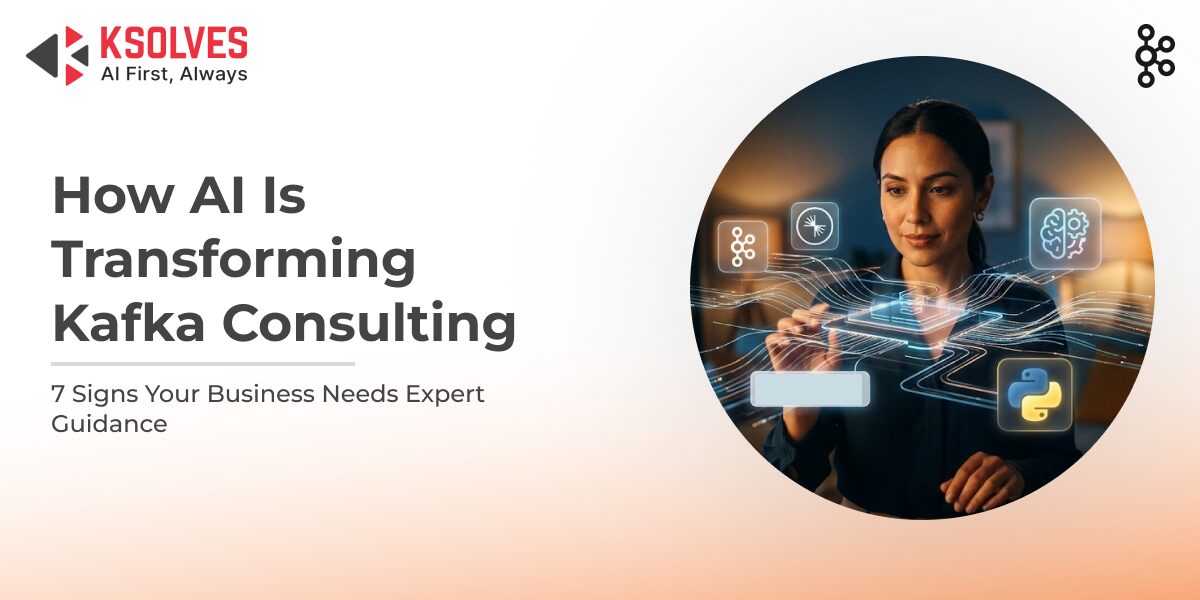
Apache Kafka has become the backbone of real-time, event-driven architectures worldwide. But as data volumes surge and AI-powered workloads proliferate, properly configuring, scaling, and governing Kafka has never been more demanding or more consequential. Gartner analysis consistently identifies misconfiguration as the leading cause of data streaming outages in enterprises, yet most organisations respond reactively, patching problems after they occur rather than engineering resilience from the start. This post explains why that approach falls short in 2026, and what to look for when the answer is strategic consulting rather than routine support.
Kafka support resolves operational incidents after they happen. AI-enabled Kafka consulting proactively identifies architectural risk, tunes system performance, and delivers strategies aligned to your long-term business goals. The difference is not just speed of resolution; it is the depth and durability of impact. Below are seven clear signs your organisation needs AI-enabled Kafka consulting, and how the right expertise turns each pain point into a competitive advantage.
7 Signs Show You Need AI-Enabled Kafka Consulting
-
You Are Struggling to Scale Your Kafka Clusters
Symptoms: Frequent throughput bottlenecks, growing consumer lag, and unevenly distributed partitions, especially as data volumes and application demand continue to increase.
Why basic support is not enough: Scaling Kafka effectively requires architectural foresight, aligning partition strategies, replication factors, and consumer group design with long-term data growth projections. Reactive support is not designed for this.
How AI-enabled consulting helps: Ksolves AI-enabled consultants evaluate your partition strategies, broker resource utilisation, and consumer group topology holistically. They also assess your readiness for KRaft mode, Kafka 3.x’s ZooKeeper-free metadata architecture, which simplifies broker coordination and improves scalability at scale. ZooKeeper support has been fully removed from Apache Kafka 3.x, making KRaft readiness assessment a critical consulting deliverable in 2026. Kafka 3.6+ tiered storage, which offloads cold log segments to object storage such as S3, GCS, or Azure Data Lake Storage, is another lever that reduces broker disk pressure without sacrificing consumer access. AI-powered capacity planning tools complement this by predicting future scaling needs based on historical traffic patterns, enabling proactive infrastructure adjustments before bottlenecks materialise.
-
Your Data Pipeline Is Growing, But So Are Your Outages
Symptoms: Higher latency, dropped messages, or inconsistent delivery during peak traffic or failover scenarios, problems that grow worse as data volume increases.
Why basic support is not enough: Support teams restore systems after an incident but rarely address the underlying design flaws, including poorly configured topics, inadequate replication factors, or missing failover strategies.
How AI-enabled consulting helps: Consultants redesign your pipelines with resilience built into the foundation, including fine-tuned topic configurations, appropriate replication settings, and tested failover plans for your specific workload. AI-assisted anomaly detection identifies subtle degradation patterns such as gradual consumer lag growth, partition skew, and leader imbalance before they escalate into full outages. The result is a pipeline that is both reliable and continuously self-monitored
-
Teams Are Using Kafka Differently Across Departments
Symptoms: Each team creates topics with its own naming conventions, access controls are inconsistent, and concerns about data visibility and security are growing across the organisation.
Why basic support cannot fix it: Inconsistent Kafka usage across departments is a governance and standardisation challenge, not a technical failure. Support resolves individual incidents; it does not unify how Kafka is used at the organisational level.
How AI-enabled consulting helps: The Ksolves AI-enabled Kafka consulting experts establish enterprise-wide standards covering topic naming, ACLs, data security policies, and DevOps workflows. Critically, they implement Schema Registry (Confluent Schema Registry or Apicurio) to enforce data contract governance, ensuring producers and consumers agree on schema evolution rules across all topics. Without Schema Registry, schema drift silently breaks downstream consumers; with it, every change is validated at publish time. AI-powered governance platforms strengthen this further by automatically flagging ACL violations, classifying data sensitivity, and recommending access control adjustments. The outcome is a consistent, governed Kafka environment every team can trust.
-
You Have Hit a Wall with Kafka Connect or ksqlDB
Symptoms: Kafka Connectors fail unpredictably, ksqlDB queries have grown complex and hard to maintain, or custom Kafka Streams applications are producing inconsistent results.
Why basic support is not enough: Support can restart a connector or patch a broken query, but it does not address whether your data flows are efficiently designed, your integrations fit your ecosystem, or your stream processing logic is built to scale.
How AI-enabled consulting helps: It is important to distinguish between ksqlDB and Kafka Streams. ksqlDB is a SQL-based stream processing layer built on top of Kafka Streams; it lets teams query and transform Kafka topics using SQL syntax without writing Java code. Kafka Streams is a Java and Scala client library for building stateful streaming applications with full programmatic control. Each has different performance levers: ksqlDB optimization focuses on query plan analysis, while Kafka Streams tuning involves state store configuration, threading models, and RocksDB settings. Our AI-enabled Ksolves consultants develop custom connectors and fine-tune both layers for your specific environment, with AI-assisted query plan analysis surfacing restructuring opportunities for better throughput across integrations with Snowflake, MongoDB, Elastic, and others.
-
Monitoring Is Set Up, But You Still Lack Real Visibility
Symptoms: Dashboards are flooded with metrics, alerts fire too late or too often, and root-causing an incident remains slow and difficult.
Why basic support is not enough: Support addresses active incidents but does not redesign your observability strategy. Many teams end up with extensive data collection but no clear framework for interpreting what that data means in context.
How AI-enabled consulting helps: Consulting brings structured observability expertise to build actionable dashboards using Grafana, Prometheus, and OpenTelemetry. AI-driven observability platforms go further by correlating metrics across brokers, consumers, and producers, surfacing root causes automatically and dramatically reducing mean time to resolution. The outcome is clear, contextual insight into cluster health, consumer lag, throughput degradation, and partition skew, without the noise that currently obscures the signal.
-
You Are Planning a Kafka Migration or Multi-DC Setup
Challenge: Moving to the cloud, expanding to a second data centre, or building hybrid Kafka environments carries real risk including data loss, replication lag, and extended downtime if not executed carefully.
Why basic support is not enough: Standard support does not design replication strategies or validate cross-cluster consistency. These projects require deep planning, tooling expertise, and careful end-to-end execution.
How AI-enabled consulting helps: Consultants manage the full migration lifecycle, from designing replication and failover strategies to coordinating the cutover with testing and documented rollback plans. It is worth distinguishing the replication tool options: MirrorMaker 2 is the open-source solution included with Apache Kafka, while Confluent Replicator is a commercial Confluent Platform component offering additional operational management features. The right choice depends on your deployment model (open-source Apache Kafka vs Confluent Platform) and your RPO and RTO requirements. With AI-powered migration validation tools continuously verify data consistency between source and target clusters throughout the process, catching discrepancies in near real time rather than discovering them after production cutover.
-
Security and Compliance Are Becoming Business Priorities
Symptoms: Unencrypted traffic, unclear user access boundaries, or missing audit trails surfacing in security reviews or compliance assessments.
Why basic support is not enough: Kafka’s security model involves multiple layers including TLS encryption, SASL authentication, and fine-grained ACLs or RBAC, each of which must be correctly configured for compliance requirements. Basic support focuses on resolving immediate issues, not proactively hardening your cluster against evolving threats or regulatory requirements.
How AI-enabled consulting helps: Ksolves professionals design and implement full-stack Kafka security: TLS in-transit encryption; SASL authentication with the appropriate mechanism for your environment (SCRAM-SHA-512 for most deployments, GSSAPI/Kerberos for enterprise identity-integrated environments, and OAUTHBEARER for OAuth2 token-based authentication); and fine-grained ACLs or RBAC. Configurations are validated against GDPR, HIPAA, or internal data governance requirements. AI-enhanced security monitoring adds real-time intelligence by detecting unusual access patterns, unauthorised topic reads, and privilege escalation attempts, creating a Kafka environment that is not only compliant but continuously protected.
How Ksolves AI-Enabled Kafka Consulting Can Help
Ksolves brings together deep Kafka expertise and AI-first thinking to help organisations move from firefighting to building with confidence. Our engineers have significantly reduced mean time to resolution for financial services clients and optimized cluster compute costs for high-throughput retail data platforms through intelligent diagnostics, architectural redesign, and proactive monitoring frameworks.
Whether you are scaling a high-throughput pipeline, migrating to a cloud-native Kafka environment, standardising governance with Schema Registry, or hardening your security architecture for compliance, Ksolves delivers strategies and implementations that produce lasting results.
Our AI-supported consulting model is built around one principle: your Kafka environment should not just run well today. It should be ready for what your business demands tomorrow.
Conclusion
Apache Kafka support keeps day-to-day operations running, but it is not a substitute for strategic expertise. If your organisation faces scaling challenges, inconsistent pipeline performance, governance gaps, or upcoming migration projects, break-fix support will only address symptoms and not the root causes embedded in your architecture. The seven signs outlined above are signals that your Kafka environment needs deeper attention than reactive incident management can provide.
By partnering with Ksolves AI-enabled Kafka consulting experts, you gain a long-term architecture strategy, optimised configurations built on current Kafka 3.x capabilities including KRaft mode, tiered storage, and Schema Registry, and the ability to future-proof your data streaming infrastructure. The right guidance ensures Kafka not only runs smoothly today but scales effectively for tomorrow’s demands. Contact our team today at sales@ksolves.com to get started with a free cluster health assessment.
Frequently Asked Questions
What is the difference between Kafka support and Kafka consulting?
Kafka support focuses on resolving issues as they occur, while consulting proactively addresses architectural design, performance optimization, and long-term scalability.
How do I know if I need Kafka consulting?
If you face recurring scaling problems, growing outages, inconsistent governance, or are planning a migration, it’s a sign you need consulting rather than just reactive support.
Can Apache Kafka support services handle migrations and multi-DC setups?
Support services generally don’t handle complex architectural changes. Consulting ensures migrations and multi-DC deployments are planned, tested, and executed with minimal downtime.
Why is Kafka security configuration so complex?
Kafka involves multiple security layers like TLS encryption, SASL authentication, and ACL/RBAC management. Consulting helps design a secure, compliant setup tailored to your industry’s requirements.
Can Kafka consulting help with performance tuning?
Yes. Consulting services evaluate your cluster holistically—partitioning, broker load, replication factors, consumer lag—to ensure optimal performance and scalability.

































AUTHOR
Apache Kafka
Atul Khanduri, a seasoned Associate Technical Head at Ksolves India Ltd., has 12+ years of expertise in Big Data, Data Engineering, and DevOps. Skilled in Java, Python, Kubernetes, and cloud platforms (AWS, Azure, GCP), he specializes in scalable data solutions and enterprise architectures.
Share with