



Security Threats in Hadoop: How Support Teams Respond
Big Data
5 MIN READ
April 18, 2026

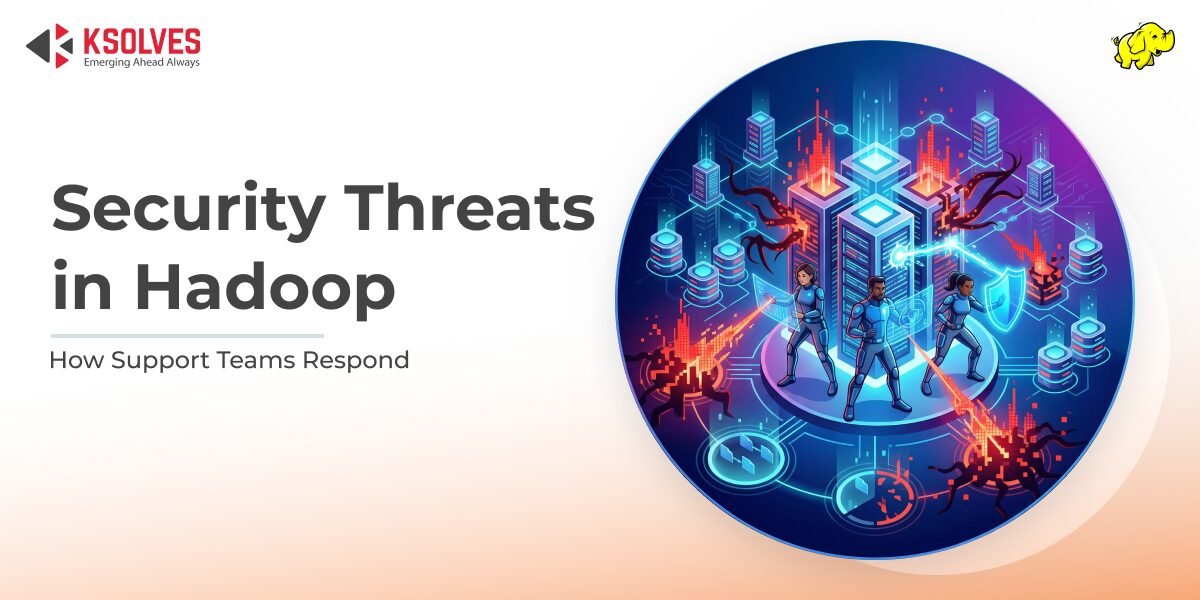
Apache Hadoop has revolutionized the way enterprises handle large-scale data. Its distributed architecture enables organizations to store and process massive datasets efficiently. However, as with any technology handling critical business data, Hadoop is vulnerable to security threats. Ensuring the security of Hadoop clusters is not just an IT responsibility; it is essential for protecting organizational assets, maintaining compliance, and fostering trust with clients.
This blog explores common security threats in Hadoop and how support teams respond to mitigate risks effectively.
Why Hadoop Security Matters
Hadoop was initially designed for large-scale data processing, with security as a secondary concern. Today, it’s widely used across finance, healthcare, government, education, and military sectors, making data protection critical.
Early Hadoop versions lacked consistent security features, leaving gaps that could expose sensitive information. Implementing Hadoop security ensures data confidentiality, integrity, and compliance, making it a crucial step for modern enterprises.
Understanding Hadoop Security Challenges
Hadoop’s ecosystem includes components like HDFS, YARN, MapReduce, Hive, and HBase. While these components are powerful, they introduce several security challenges:
- Distributed Architecture Risks: Hadoop’s nodes communicate across networks, increasing the potential attack surface for unauthorized access or data interception.
- Weak Authentication and Authorization: Without strong user management, unauthorized users could gain access to sensitive data or execute harmful operations.
- Data Leakage and Breaches: Unencrypted data, both at rest and in transit, can be intercepted or misused.
- Malicious Code and Insider Threats : Hadoop clusters may be vulnerable to malicious scripts or compromised insiders.
- Compliance and Regulatory Risks: Enterprises need to comply with GDPR, HIPAA, and other data protection regulations, making robust security practices mandatory.
Common Security Threats in Hadoop
- Unauthorized Access
Hackers or insiders exploit weak authentication to access sensitive data.
- Data Tampering
Unauthorized changes to datasets in HDFS or during processing affect analytics and decisions.
- Denial-of-Service (DoS) Attacks
Overloading Hadoop services like NameNode or ResourceManager, causing downtime and slow performance.
- Misconfiguration Exploits
Incorrect permissions or open network ports provide easy entry for attackers.
- Malware Injection
Malicious code was inserted into Hadoop jobs, compromising data integrity and pipelines.

How Support Teams Respond to Hadoop Security Threats
Securing Hadoop is a shared responsibility among administrators, developers, and support teams. Support teams follow structured processes to detect, respond to, and prevent security threats, ensuring clusters remain safe and reliable.
- Proactive Monitoring
Support teams use monitoring tools to identify unusual access patterns, failed login attempts, or abnormal job executions. Solutions like Apache Ranger, Cloudera Manager, and Hadoop audit logs enable early threat detection and quick action.
- Authentication and Authorization Management
Robust authentication mechanisms, such as Kerberos, are implemented, while fine-grained access control is enforced using Apache Ranger or Apache Sentry. Role-based access control (RBAC) ensures that only authorized users can access sensitive data.
- Data Encryption
Support teams protect data by enabling encryption at rest for HDFS and encryption in transit for network communications. This safeguards sensitive information from unauthorized access or interception.
- Patch Management and Vulnerability Fixes
Regular patching and updates of Hadoop components prevent exploitation of known vulnerabilities. Teams follow a structured patching schedule and test updates before deployment to ensure cluster stability.
- Incident Response and Recovery
Support teams maintain comprehensive incident response plans to contain threats quickly. This includes isolating affected nodes, restoring data from backups, and conducting forensic analysis to prevent future attacks.
- Compliance Management
Hadoop configurations are continuously reviewed to ensure compliance with regulatory standards. Support teams generate reports and perform audits to meet governance requirements and maintain operational integrity.
At Ksolves, we provide expert Hadoop support services that not only ensure smooth cluster operation but also strengthen security across your Hadoop ecosystem. Our teams implement best practices to protect your data, maintain compliance, and minimize risks.
Best Practices For Hadoop Security
Here are some key practices you should implement:-
- Plan Before Deployment
Identify sensitive data, determine storage locations, and consider privacy policies and regulations from the start to reduce compliance risks.
- Implement Basic Security
Create users and groups, enforce strong passwords, and apply fine-grained, need-to-know access controls. Avoid broad permissions.

- Choose Data Protection Techniques
Use masking for maximum security or encryption for flexibility. Both methods can coexist in separate Hadoop directories if needed.
- Integrate Encryption with Access Control
Ensure encryption works with access policies so users access only the data they are authorized to see.
- Monitor and Respond
Continuously monitor for suspicious activity and compliance violations, and respond quickly to security incidents.
- Train Teams and Enforce Policies
Regularly train staff and enforce security policies consistently to maintain effective data protection.
Wrapping Up
While Hadoop provides unmatched scalability and data processing capabilities, it comes with inherent security risks. Support teams play a critical role in safeguarding Hadoop clusters through proactive monitoring, strong authentication, encryption, and compliance management. By adopting structured security protocols, enterprises can fully leverage Hadoop’s power while minimizing threats and ensuring data integrity.
If you are looking for expert Hadoop support services, Ksolves provides comprehensive solutions to secure your Hadoop environment, ensure compliance, and maintain smooth cluster operations.
Frequently Asked Questions
What are the most common security threats in Hadoop?
What happens if Hadoop security vulnerabilities are left unaddressed?
How do support teams detect and respond to Hadoop security threats?
How does Hadoop security compare to Apache Spark?
Which company provides dedicated Hadoop security and support services?
How can organizations make Hadoop clusters GDPR and HIPAA compliant?
Is it cost-effective to outsource Hadoop security management?
Have a Hadoop security challenge? Contact our team
































AUTHOR
Big Data
Anil Kushwaha, Technology Head at Ksolves, is an expert in Big Data. With over 11 years at Ksolves, he has been pivotal in driving innovative, high-volume data solutions with technologies like Nifi, Cassandra, Spark, Hadoop, etc. Passionate about advancing tech, he ensures smooth data warehousing for client success through tailored, cutting-edge strategies.
Share with