

Apache Artemis Support
Keep messages flowing
across
every protocol,
even through
failover

Active Contributor to Open Source
100+
Tickets
Contributed
30+
Open
Tickets
17+
Total
Contributors
Apache Artemis Support That's Built to Meet the World's Strictest Data Standards


 Zero-Day Vulnerability Fixes
Critical Vulnerability Assessment
Roadmap & Recommendations
SLA-Backed Technical Support
Zero-Day Vulnerability Fixes
Critical Vulnerability Assessment
Roadmap & Recommendations
SLA-Backed Technical Support
Zero-Day Vulnerability Fixes
Critical Vulnerability Assessment
Roadmap & Recommendations
SLA-Backed Technical Support
Zero-Day Vulnerability Fixes
Critical Vulnerability Assessment
Roadmap & Recommendations
SLA-Backed Technical Support
En(AI)blingTM Success for Industry Leaders

















Apache Artemis Support Packages
One misconfigured quorum setting means split-brain for one team, duplicate messages for another. Support plans scale to match what that failure actually costs you, backed by clearly defined Apache Artemis SLA support.
Standard
Advanced
Platinum

What Ksolves Has Delivered for Organizations Running Apache Artemis at Scale
Enterprises running AMQP, MQTT, STOMP, and OpenWire clients rely on Ksolves for enterprise Apache Artemis support services. Clustering, failover, and broker-to-broker mirroring keep running without disruption.
99.99%
SLA Maintained
SLA Maintained
Ksolves holds 99.99% uptime across client environments through proactive monitoring, auto-healing pipelines, and zero-drama incident response.
40%
Lower TCO
Lower TCO
From licensing audits to compute consolidation, Ksolves cuts the total cost of ownership by 40%, without cutting corners on performance or reliability.
98%
Contract Renewal Rate
Contract Renewal Rate
We take pride in saying 98% of clients come back. Not because of lock-in, but because the work speaks for itself. That’s Ksolves Promise - on time, on budget, and exactly what was promised.
30 Min
Turnaround Time
Turnaround Time
Ksolves responds and resolves in under 30 minutes, keeping production running and teams unblocked.
End-to-End Apache Artemis Support Services
Artemis is more than a message queue. Its cluster topology, quorum-based failover, multi-protocol acceptors, and broker-to-broker mirroring all need dedicated attention. Every layer gets covered, from daily operations to compliance audits.
Apache Artemis Setup and Configuration Support
Getting acceptor protocols, cluster topology, and storage configuration right at rollout avoids most of the failover and throughput issues teams run into later.
- Broker and cluster configuration with journal storage sized for expected throughput
- Acceptor setup across Core, AMQP, MQTT, STOMP, and OpenWire for existing client libraries
- Address and queue design, including routing types, mapped to application ownership
- HA configuration setup, using shared store, replication, or pluggable quorum, matched to your failover requirements
- Initial performance baseline before production rollout

Managed Apache Artemis Support
Day-to-day operations run through ongoing Apache Artemis support services that keep the broker cluster and its backing journal healthy without disrupting live message traffic.
- Broker, acceptor, and cluster connection health checks across the topology
- Journal and paging maintenance to keep address memory and disk usage in check
- User, role, and security-settings governance as applications and teams change
- Broker-to-broker mirroring and federation health checks against connected brokers
- Monthly health reviews covering message throughput and consumer lag trends

24/7 Apache Artemis Monitoring Support
Quorum misconfigurations and paging backlogs get caught before they surface as a stalled queue or a failover that doesn't complete, through continuous monitoring coverage.
- Message throughput and consumer lag monitoring across every queue
- Backing journal and connection pool performance monitoring
- Alerting on queue depth, paging activity, and broker-to-broker mirror sync failures
- Failed authentication and authorization attempt tracking
- Alert routing across Slack, PagerDuty, and OpsGenie with runbook links

Apache Artemis Performance Tuning Support
Message latency under multi-protocol load gets fixed at the root, not patched by adding more brokers in front of it.
- Acceptor and connector concurrency tuning for high-throughput producers and consumers
- Journal type tuning (NIO vs. libaio/ASYNCIO) matched to storage and OS characteristics
- Paging and flow-control tuning to keep memory-bound addresses from blocking producers
- Consumer window size and prefetch tuning for high-frequency consumption patterns
- Load testing and bottleneck isolation across the broker, network, and consumer layers

Apache Artemis Health Check Service
Hidden risk in an Artemis deployment rarely announces itself until a failover misfires or a queue backs up. Every deployment gets audited, assessed, and reported on to catch that risk first.
- Broker, address, and queue inventory audit across the cluster
- HA topology review, including replication lag and quorum/lock-manager readiness
- Cluster connection and load-balancing policy audit identifying imbalance risk
- Version and CVE exposure review against known Apache Artemis advisories
- Written report with severity-ranked findings and projected reliability improvement

Apache Artemis Migration and Upgrade Support
Migrating from ActiveMQ 5.x "Classic," or bridging it alongside Artemis during transition, happens with full validation before cutover.
- ActiveMQ 5.x to Artemis migration planning, or OpenWire-based bridging where a full cutover isn't required yet
- Client compatibility validation across existing OpenWire, AMQP, MQTT, and STOMP applications
- Broker-to-broker mirroring for zero-downtime message replication during cutover
- Version upgrade validation for the broker and its backing journal
- Rollback planning for every migration and upgrade stage

Apache Artemis Security & Compliance
Since access control in Artemis is enforced at the address and queue layer, independent of which protocol a client connects over, getting it right protects every application at once.
- Role design and security-settings configuration following least-privilege access
- JAAS authentication hardening across properties file, LDAP, Kerberos, and certificate-based login modules
- Encryption in transit across client-to-broker and broker-to-broker connections
- CVE monitoring and patch alerts tied to the Apache Artemis security advisory feed
- GDPR, HIPAA, and SOC 2-aligned data handling for regulated message payloads

Apache Artemis Expert Support & Consulting
Senior-level broker architecture expertise is available without the hiring overhead, backed by a formal Apache Artemis support contract with clearly defined escalation paths.
- Expert guidance on shared-store, replication, or pluggable-quorum HA design for your failure tolerance
- Architecture reviews comparing Artemis against Kafka or RabbitMQ for specific workload needs
- Capacity planning covering journal sizing, broker memory, and cluster scaling
- Support contract with dedicated engineer access and monthly reviews
- Performance profiling for brokers with unexplained latency or failed mirror syncs

Through the Client's Lens
Why Ksolves Is a Trusted Apache Artemis Support Partner for Global Engineering Teams
Enterprise teams choose Ksolves as their Apache Artemis managed service provider because our engineers have already solved the hard problems: split-brain failovers, paging under real load, and legacy broker migrations with zero message loss

90%
Client Retention Rate

750+
Projects Successfully
Delivered

NSE & BSE
Publicly Listed
Company

600+
Workforce and still
growing

350+
Certifications

200+
Happy Clients

150K+
Support Hours
Completed
Industries We Help Scale with Apache Artemis
Apache Artemis powers multi-protocol messaging across different industries in different ways. Ksolves builds Apache Artemis support services around what each industry actually demands.
Telecom
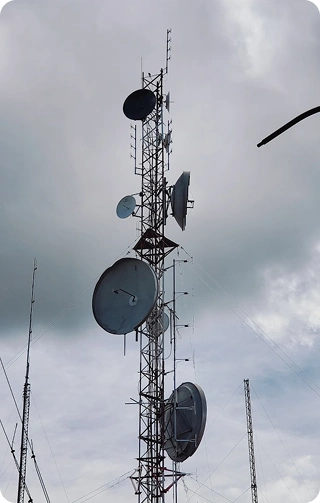
High-throughput event and signaling delivery for subscriber systems at carrier scale. Ksolves manages cluster topology and load-balancing policy for consistent throughput.

Healthcare
HIPAA-compliant Artemis deployments for clinical event streams and interoperability messaging. Ksolves manages role-based access control and audit logging at the broker layer.

E-Commerce
Fast, reliable order and inventory event processing during peak traffic. Ksolves tunes paging and consumer concurrency for seasonal surges.

Fintech
Reliable delivery and failover for transaction and settlement event queues. Ksolves manages Apache Artemis SLA support where message durability directly affects compliance.

Entertainment
Consistent delivery for real-time notification and recommendation streams under high concurrency. Ksolves manages clustering and broker placement at audience scale.

Manufacturing
High-frequency IoT telemetry and MQTT-based sensor messaging feeding operational analytics. Ksolves manages Artemis performance for continuous, high-volume publish workloads.

Retail
POS and loyalty event synchronization across store systems. Ksolves keeps Artemis performant across seasonal peaks and promotional surges.

Banking and Financial Services
Strict security and guaranteed message delivery for core banking event pipelines. Ksolves provides enterprise Apache Artemis support services across multiple jurisdictions.

Logistics and Supply Chain
Field and warehouse systems publishing over intermittent networks. Ksolves manages broker-connection and mirroring features for reliable store-and-forward delivery.

Technology and SaaS
Multi-tenant event-driven workloads without dedicated messaging-ops headcount. Ksolves provides the Apache Artemis support services that make it sustainable.

Aviation
Deliver zero-downtime data migration and integration services that keep flight operations, crew scheduling, and maintenance data flowing without disruption.

Oil and Gas
Provide secure, phased data migration services that keep exploration, production, and pipeline monitoring data flowing without interrupting field operations.
Frequently Asked Questions
Pricing is scoped to cluster size, HA complexity, and the tier you need, rather than a flat rate. Essentials, Professional, and Enterprise tiers set the coverage window and response commitment, and a custom quote gets built around your actual deployment during the initial consultation.
Yes, under the Enterprise tier. Essentials covers business hours, and Professional covers 16×5, while Enterprise is built for round-the-clock incident response on production brokers.
Artemis is open-source and natively multi-protocol (AMQP, MQTT, STOMP, Core, OpenWire), which suits teams wanting protocol flexibility without per-connection licensing. IBM MQ and Solace are commercial platforms with their own strengths in areas like guaranteed enterprise support SLAs and advanced routing. Which fits best depends on your existing stack, licensing model, and protocol requirements.
Yes, capacity planning covers expected throughput, journal storage sizing, broker memory, and cluster topology, validated with load testing before go-live rather than after a production incident forces the conversation.
Both. HA and mirroring get configured, and then failover and split-brain scenarios get exercised to confirm they behave as expected under an actual network partition or node failure, not just on paper.
Artemis supports MQTT 3.1, 3.1.1, and 5, and STOMP 1.0, 1.1, and 1.2, all independently enabled per acceptor depending on which client libraries you’re running.
Clustering distributes load across brokers in the same logical deployment, using cluster connections to forward messages toward whichever node has active consumers. Mirroring is a separate broker-connection feature that asynchronously replicates messages, acknowledgments, and queue changes to an independent broker, typically across data centers for disaster recovery rather than load distribution.
Yes, through the community-maintained ArtemisCloud Kubernetes Operator (now under the arkmq-org project), which handles broker provisioning, HA configuration, and scaling on Kubernetes and OpenShift. It’s a separate project from Apache’s core Artemis distribution, not a bundled feature.