

Apache Ignite Support Services
Keep Your Clusters Configured
for Full Speed

Active Contributor to Open Source
100+
Tickets
Contributed
30+
Open
Tickets
17+
Total
Contributors
Apache Ignite Support Services Built to Meet the World's Strictest Data Standards


 Zero-Day Vulnerability Fixes
Critical Vulnerability Assessment
Roadmap & Recommendations
SLA-Backed Technical Support
Zero-Day Vulnerability Fixes
Critical Vulnerability Assessment
Roadmap & Recommendations
SLA-Backed Technical Support
Zero-Day Vulnerability Fixes
Critical Vulnerability Assessment
Roadmap & Recommendations
SLA-Backed Technical Support
Zero-Day Vulnerability Fixes
Critical Vulnerability Assessment
Roadmap & Recommendations
SLA-Backed Technical Support
En(AI)blingTM Success for Industry Leaders


















Apache Ignite Support Packages
A slow topology rebalance can mean a delayed batch job for one team, or a full outage at peak for another. Get support scaled to match that cost, backed by enterprise Apache Ignite SLAs.
Standard
Advanced
Platinum

What Ksolves Has Delivered for Organizations Running Apache Ignite at Scale
Ksolves delivers managed Apache Ignite services that keep in-memory data grids, distributed caches, and compute workloads running smoothly across all nodes, with zero disruption to the baseline topology or data regions.
99.99%
SLA Maintained
SLA Maintained
Ksolves holds 99.99% uptime across client environments through proactive monitoring, auto-healing pipelines, and zero-drama incident response.
40%
Lower TCO
Lower TCO
From licensing audits to compute consolidation, Ksolves cuts the total cost of ownership by 40%, without cutting corners on performance or reliability.
98%
Contract Renewal Rate
Contract Renewal Rate
We take pride in saying 98% of clients come back. Not because of lock-in, but because the work speaks for itself. That’s Ksolves Promise - on time, on budget, and exactly what was promised.
30 Min
Turnaround Time
Turnaround Time
Ksolves responds and resolves in under 30 minutes, keeping production running and teams unblocked.
End-to-End Apache Ignite Support Services
Apache Ignite is more than an in-memory cache. Durable memory architecture, baseline topology, data regions, native persistence with WAL, and compute grid all need dedicated attention. Our Apache Ignite managed services cover every layer, from daily operations to compliance audits.
Apache Ignite Setup and Configuration Support
Getting data region sizing, baseline topology, and persistence settings right at rollout avoids most of the rebalancing and eviction issues teams run into later.
- Cluster installation with server and client node topology design
- Data region configuration for isolating hot, persistent, and analytical workloads
- Native persistence and write-ahead log setup for durability requirements
- Third-party database integration for read-through/write-through caching
- Initial performance baseline and capacity sizing before go-live

Managed Apache Ignite Support
Day-to-day operations run through ongoing apache ignite maintenance, keeping nodes, caches, and baseline topology healthy without disrupting live workloads.
- Baseline topology governance to control when rebalancing triggers after node changes
- Data region and cache configuration maintenance across environments
- Node health checks across server and client node roles
- Persistence layer maintenance, including WAL and checkpoint monitoring
- Monthly health reviews covering cache eviction and rebalancing trends

24/7 Apache Ignite Support
Node failures and rebalancing delays get caught before they surface as application latency, through continuous apache ignite monitoring service and apache ignite cluster monitoring coverage.
- Cluster topology and node availability monitoring across server and client nodes
- Data region memory utilization and eviction rate tracking
- Alerting on baseline topology changes, checkpoint delays, and WAL growth
- SQL query and cache operation latency monitoring
- Alert routing across Slack, PagerDuty, and OpsGenie with runbook links

Apache Ignite Performance Tuning Service
Latency problems get fixed at the root, not patched with more nodes, tuning both the memory layer and the compute layer.
- Data region sizing and eviction policy tuning per workload type
- Co-located compute tuning to reduce network shuffling between nodes
- SQL index review, since Ignite only enforces uniqueness on primary indexes
- Baseline topology and rebalancing throttling tuning for large clusters
- Load testing and bottleneck isolation across memory, disk, and network layers

Apache Ignite Health Check
Hidden risk in an Ignite cluster rarely announces itself until a node fails to rejoin the baseline topology or persistence falls behind. Every deployment gets audited, assessed, and reported on to catch that risk first.
- Cluster and baseline topology inventory audit
- Data region and cache configuration review for eviction and memory pressure risk
- Persistence and WAL reliability review
- Version and CVE exposure review against known Ignite advisories
- Written report with severity-ranked findings and projected reliability improvement

Apache Ignite Migration and Upgrade Support
Migrating from a legacy caching layer to Ignite, or upgrading cluster versions, happens with full validation before cutover.
- Migration planning from third-party caches or databases into Ignite's in-memory data grid
- Baseline topology and data region mapping during migration
- Version upgrade validation across server and client nodes
- Rolling upgrade orchestration to avoid cluster-wide downtime
- Rollback planning for every migration and upgrade stage

Apache Ignite Security & Compliance
Known vulnerabilities left open in a cluster holding hot, mission-critical data are just a matter of time before they're exploited.
- Authentication and authorization hardening across cluster nodes
- TLS/SSL enforcement across node-to-node and client-to-cluster communication
- Encryption at rest for persisted data and WAL files
- CVE monitoring and patch alerts tied to the Apache Ignite security advisory feed
- GDPR, HIPAA, and SOC 2-aligned data handling for regulated in-memory workloads

Apache Ignite Expert Support & Consulting
Apache Ignite experts are available without the hiring overhead, backed by a formal Apache Ignite support contract with clearly defined escalation paths.
- Expert guidance on data region design and cache mode selection (partitioned vs. replicated)
- Baseline topology and cluster sizing reviews for scaling decisions
- Capacity planning covering memory allocation, node count, and persistence sizing
- Support contract with dedicated engineer access and monthly reviews
- Performance profiling for clusters with unexplained latency or rebalancing delays
- Three tiers: Essentials (business hours), Professional (16x5), Enterprise ongoing Apache Ignite support plan (24x7)

Through the Client's Lens
Why Ksolves Is a Trusted Apache Ignite Support Partner for Global Engineering Teams
Real Apache Ignite support takes more than docs. It takes engineers who've tuned baseline topologies, fixed cache eviction issues, and run cluster-wide upgrades at scale, backed by clear SLAs. That's why enterprises choose Ksolves.

90%
Client Retention Rate

750+
Projects Successfully
Delivered

NSE & BSE
Publicly Listed
Company

600+
Workforce and still
growing

350+
Certifications

200+
Happy Clients

150K+
Support Hours
Completed
Industries We Help Scale with Apache Ignite
Apache Ignite powers low-latency, high-throughput workloads across different industries in different ways. Ksolves builds Ignite support services around what each industry actually demands.
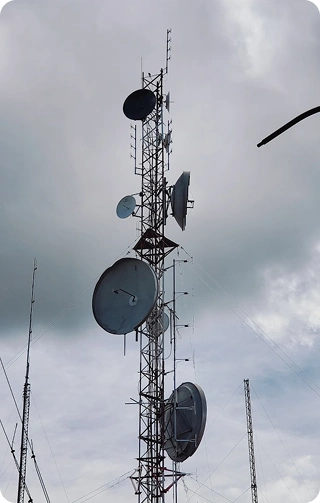
Telecom
High write throughput and low-latency reads for subscriber and billing data at carrier scale. Ksolves manages baseline topology and data region tuning for consistent performance.

Healthcare
HIPAA-compliant in-memory caching for patient records and device telemetry. Ksolves manages encryption and access control across the cluster, with logging configured at the infrastructure layer.

E-Commerce
Sub-millisecond catalog and order reads during peak traffic. Ksolves tunes cache eviction and data region sizing for seasonal surges.

Fintech
Fast, reliable in-memory processing for transaction and fraud-detection workloads. Ksolves manages Apache Ignite SLA support where latency directly affects compliance.

Entertainment
Fast, consistent reads for recommendation datasets under high concurrency. Ksolves manages data region and cache design at audience scale.

Manufacturing
High-frequency IoT telemetry processed through Ignite's compute grid. Ksolves manages performance for continuous, high-volume ingestion.

Retail
POS and loyalty data cached for real-time access across peak periods. Ksolves keeps Ignite performant through seasonal traffic surges.

Banking and Financial Services
Strict security and guaranteed availability for core banking data in memory. Ksolves provides managed Apache Ignite service provider support across multiple jurisdictions.

Logistics and Supply Chain
Low-latency access to shipment and inventory data feeding real-time dashboards. Ksolves manages cluster availability where data freshness has direct cost implications.

Technology and SaaS
Multi-tenant in-memory workloads without dedicated platform headcount. Ksolves provides the Apache Ignite managed services that make it sustainable.

Aviation
Deliver zero-downtime data migration and integration services that keep flight operations, crew scheduling, and maintenance data flowing without disruption.

Oil and Gas
Provide secure, phased data migration services that keep exploration, production, and pipeline monitoring data flowing without interrupting field operations.
Frequently Asked Questions
Start with the cluster logs and topology state. Most “not working” reports trace back to a node that silently dropped out of the baseline topology, or a discovery issue preventing nodes from seeing each other. A full cluster diagnostic is the first step in any Apache Ignite support services engagement.
Node failures usually come down to either a JVM crash, often GC-related, or a network partition that cut the node off from the rest of the cluster. Once the logs confirm the cause, the fix is either persistence and WAL recovery, or a controlled rejoin. It’s rarely a manual data copy.
Debugging starts by isolating which layer is slow: network, disk, or memory. From there, data region eviction rates and rebalancing activity get checked next, since those two are the most common root causes of unexplained slowdowns.
This happens when a data region hits its configured memory limit, and Ignite starts evicting entries faster than expected. The fix is resizing the region or adjusting the eviction policy to match actual data volume, not ignoring the warning.
Out-of-memory errors usually mean a data region was undersized for the workload. Sometimes off-heap memory also wasn’t allocated correctly relative to JVM heap settings. Both get corrected together, since tuning one without the other often just moves the problem elsewhere.
Split-brain happens when a network partition causes part of the cluster to keep operating as if it’s the whole cluster. This risks data inconsistency across the split segments. Fixing it means correcting discovery and topology configuration so partitioned segments can’t both accept writes independently.
Stuck rebalancing is often caused by one of three things: a network bottleneck between nodes, a paused node mid-transfer, or a rebalancing throttle setting that’s too conservative. The right fix depends on which one it is. That’s why diagnosis always comes before any configuration change.