


Legacy ETL to IDMC: Validated, Phased Migration of DataStage and SSIS
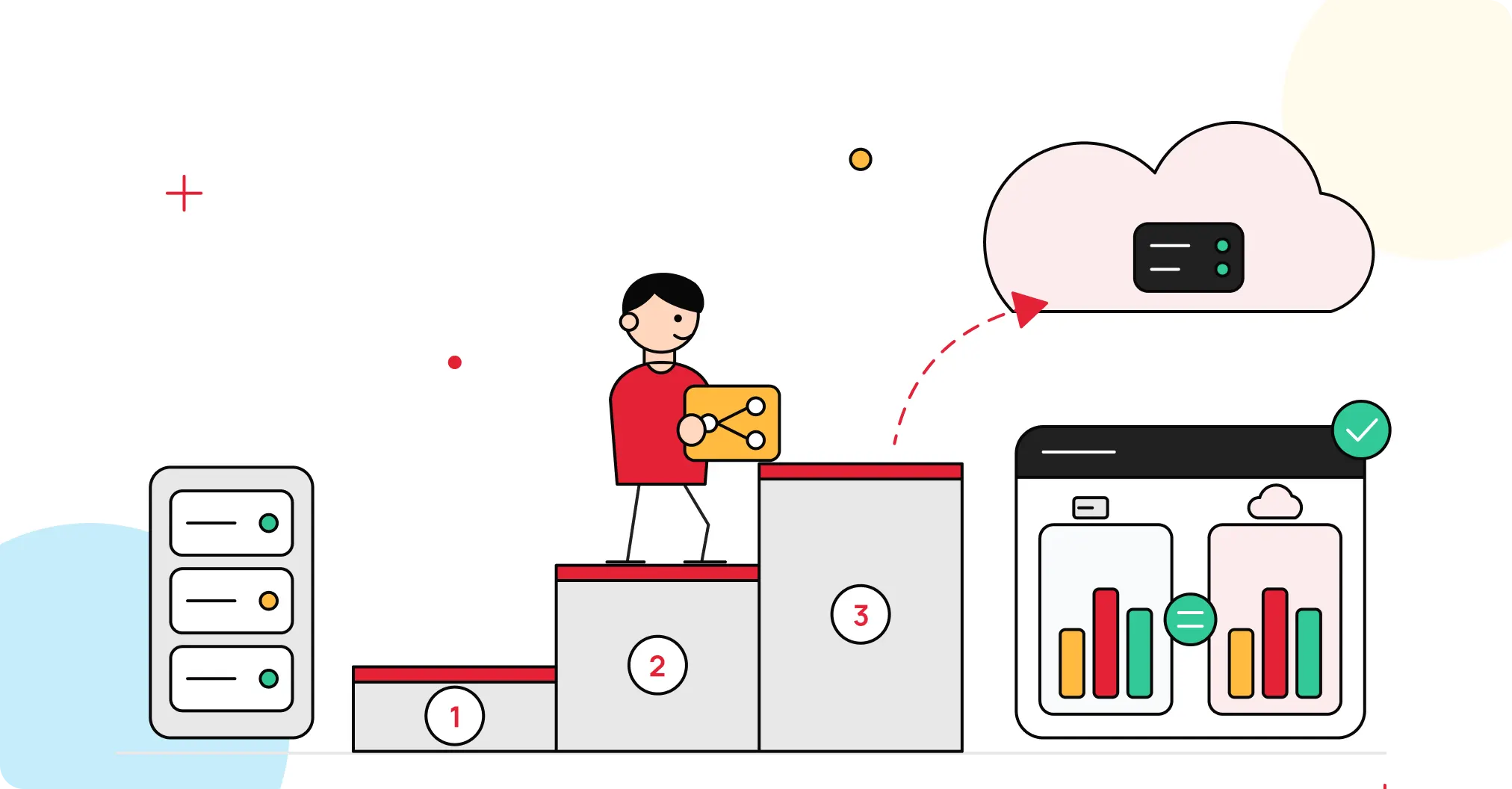
We built a delivery model that moves DataStage jobs, SSIS packages and SQL scripts to Informatica IDMC. Every job is sorted by complexity first and proven correct by automated data validation before it switches.
3
legacy ETL tools brought into one inventory
4
complexity groups, each with its own treatment
6
automated checks before any job cutover
O V E R V I E W
Hundreds of legacy jobs, no map, and no safe way to check a rebuild
Teams running DataStage, SSIS, and SQL scripts often assume that moving to IDMC means hand-rewriting hundreds of jobs with no map and no safety net. The fear is reasonable. These tools have fewer automated routes to IDMC than PowerCenter; years of business logic sit inside the jobs, documentation is thin, and some rules exist only in scripts or in people’s heads.
Ksolves built a delivery model that answers that fear with two ideas: sort the work before touching it, and let automated validation, not opinion, decide whether a rebuilt job is correct. Every job is inventoried, grouped by complexity, then converted or rebuilt in Cloud Data Integration the way that suits its group. Each job is proven against its legacy output and cut over in phased waves, each with a way back.
C H A L L E N G E
01
No Single View Across Three Tools Jobs live in DataStage, SSIS and SQL scripts, each with its own sources, targets and schedules. Nobody has the full picture.02
Logic With No Documentation The only description of what a job does is often the job itself, and the people who wrote it may have moved on.03
Business Rules Buried in SQL Scripts Procedural SQL and stored procedures mix several steps in one block, so the logic cannot be moved one to one.04
Small Differences That Look Like Bugs Data types, rounding, null handling, and date formats vary between tools, and they show up as mismatches in rebuilt output.05
Dependencies Hidden in Schedulers and People Job order and file hand-offs often live in the scheduler or in someone’s memory, not in the jobs themselves.06
Effort Nobody Can Estimate Without grouping, every job looks equally uncertain. Plans pad everything, and the move looks like a slow, error-prone rewrite at scale.S O L U T I O N
One sorted, validated migration that moves jobs in safe waves
Ksolves, an AI-first Big Data services company, built a five-phase migration model from DataStage, SSIS and SQL scripts to Informatica IDMC Cloud Data Integration. The phases are assess, group, convert and rebuild, validate, and cutover, and no phase starts until the exit check of the one before it is met. A Secure Agent connects IDMC to the client’s own sources. Every rebuilt job first runs clean in a test project, then is proven against its legacy output by automated validation. Each fix below answers the challenge with the same number.
- 01 One Inventory Across Every Tool Every DataStage job, SSIS package and SQL script is recorded with its type, sources, targets, schedule, dependencies and documentation level. The result is a single signed inventory.
- 02 Reverse-Engineered Logic, Written Down Undocumented rules are read from the code and run history, confirmed with the job owner, and written down before rebuilding. For many jobs, this is the first time the logic is documented.
- 03 SQL Scripts Split Into Mapping-Sized Steps Procedural SQL and stored procedures are broken into smaller pieces, rebuilt as Cloud Data Integration mappings, and joined with a taskflow.
- 04 Comparison Rules Agreed Before Validation Tolerances for data types, rounding, nulls and date formats are defined once. Automated validation then checks row counts, key totals, a row-level hash or full compare, null and type handling, rejects, and downstream reports, so only real problems are reported.
- 05 Dependencies Rebuilt as Taskflows Job order and file hand-offs are captured during assessment, rebuilt as IDMC taskflows, and the run order is tested before cutover.
- 06 Four Complexity Groups With Their Own Treatment Simple jobs are rebuilt from repeatable patterns in batches and checked on row counts and key totals. Moderate jobs are rebuilt one by one with shared patterns and a row-level comparison. Complex jobs are redesigned, often into several mappings and a taskflow, with a full compare and edge-case checks. Unused or duplicated jobs are retired after owner sign-off. Effort is then estimated per group, so the plan shows where the work really sits.
- 07 Cutover-Specific Handling Switching everything at once puts every report at risk together, so job groups move in waves, starting with the simplest. Consumers are pointed at the IDMC output only after the report owner signs off, the legacy job stays ready as a rollback for an agreed period, and old jobs are disabled and removed once each wave is stable.
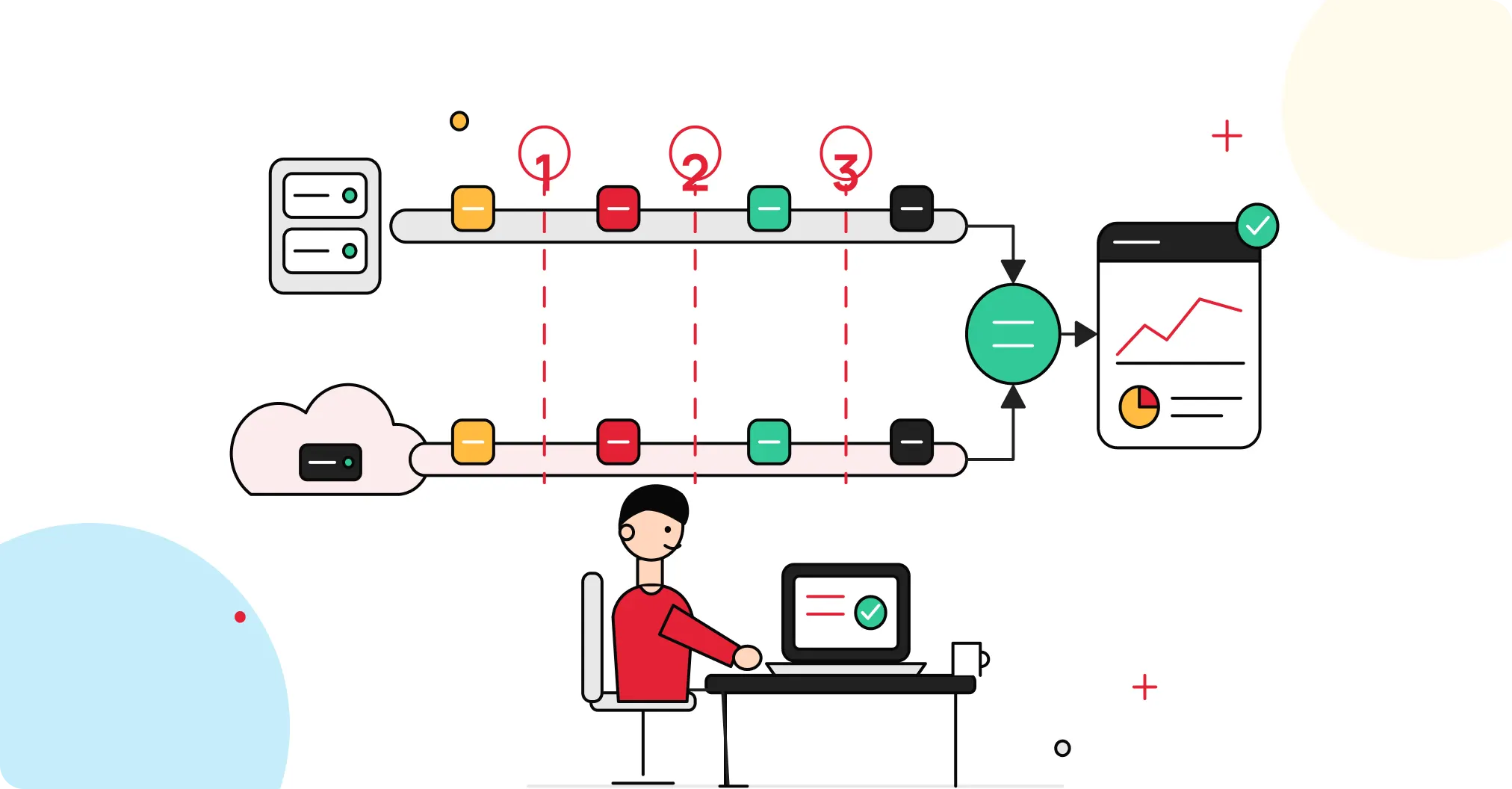
Data Flow Daigram

Technology Stack
| Category | Technology |
|---|---|
| Source Platforms | IBM DataStage, Microsoft SSIS, SQL scripts and stored procedures |
| Target Platform | Informatica IDMC |
| Integration | Cloud Data Integration (CDI) Mappings |
| Orchestration | IDMC Taskflows (rebuilt dependencies and schedules) |
| Runtime | Informatica Secure Agent, connected to the client’s own sources |
| Validation | Automated source-to-target checks: row counts, key totals, hash or full compare, null and type checks, rejects |
| Architecture | Assess → Group → Convert / Rebuild → Validate → Cutover in Waves |
D E L I V E R Y
How one daily SSIS customer-orders package moves to IDMC
Ksolves delivered a migration model in which every legacy job follows the same path from inventory to retirement. A typical case is an SSIS package that loads daily customer orders. It is listed with its source tables, target table, daily schedule and the one report that reads it. Because it joins two sources and applies a few business rules, it is placed in the moderate group and rebuilt as a Cloud Data Integration mapping, using the shared lookup pattern and a task for the schedule.
The same source data then runs through both versions, with row counts, key totals and a row-level compare reported automatically. The compare finds a date format difference, which is corrected in the mapping, and the next run matches. The report owner signs off, the report is pointed at the IDMC target, and the SSIS package stays ready as a rollback until the wave is stable. It is then disabled and removed.
R E S U L T S
From rewriting blind to a sorted, proven migration
Teams no longer face hundreds of jobs with no map. Every job is inventoried, grouped, rebuilt the way that suits it, and proven correct by the same automated checks before it switches. Ksolves replaced the fear of a blind, job-by-job rewrite with a sorted plan and automated proof. Clients get one map of their legacy estate, effort that sits where it really is, and business logic written down for the first time. Once on IDMC, data quality, cataloguing and governance can be added on the same platform. For a new engagement, the assessment comes first, because its inventory sets the grouping, the wave plan and the effort.
- 100% Jobs Inventoried Before Conversion Every job across DataStage, SSIS and SQL scripts is recorded in a signed inventory.
- 4 Complexity Groups Driving the Plan Simple, moderate, complex and retire, each with its own treatment and validation depth, set out in an approved wave plan.
- 0 Unexplained Differences Legacy and IDMC outputs must match under agreed rules, shown in an automated validation report.
- 0 Reports Changed at Cutover Report owners sign off before any job switches.
- 1 Rollback per Wave Every wave stays reversible until it is stable, proven by a rollback test.
T E A M
Meet the Engineers on Your Project
Every engagement is staffed by senior engineers from our Informatica Migration and Integration team, who will assess, rebuild, and validate your legacy ETL.


READY TO BUILD YOURS?
Move DataStage, SSIS, and SQL Scripts to IDMC Without Rewriting Blind
Tell us how your legacy ETL estate looks today. The team that built this model will walk you through what an inventory, complexity grouping, automated validation, and phased cutover could look like for your jobs and reports.
Other Success Stories