


 Machine Learning
 5 MIN READ


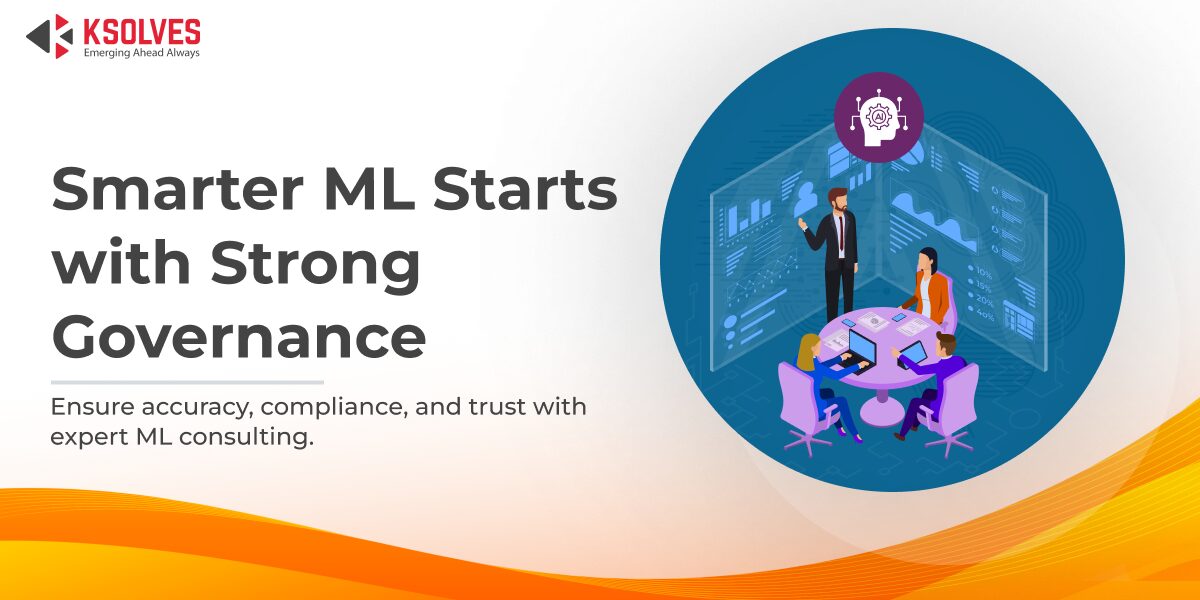
In today’s AI-powered world, data is not just fuel for machine learning, but it’s the foundation upon which intelligent systems are built. However, without clear rules around how data is collected, processed, and used, even the most advanced ML models can fail spectacularly. Data governance, the practice of managing data availability, usability, integrity, and security, is essential to ensuring machine learning delivers on its promise ethically, compliantly, and reliably.
This blog will cover what data governance in machine learning entails, why it’s no longer optional, the key risks of neglecting it, best practices, and how leveraging expert AI/ML services from partners like Ksolves can streamline governance for more innovative and safer AI deployments.
What is Data Governance in Machine Learning?
In machine learning, data governance refers to the oversight of data collection, labeling, transformation, and usage to ensure that training and inference datasets remain accurate, unbiased, privacy-compliant, and explainable.. In the realm of machine learning, governance plays a critical role in:
- Ensuring ethical AI outcomes
- Preventing model bias
- Achieving regulatory compliance
- Increasing the reliability of predictions
Core Elements of Data Governance in ML

1. Data Quality and Integrity
Models trained on messy or incomplete data produce unreliable results. Data governance enforces:
- Data validation
- Cleaning protocols
- Source verification
2. Privacy and Compliance
With laws like GDPR, HIPAA, and CCPA, organizations must:
- Protect personally identifiable information (PII)
- Secure consent for data use
- Anonymize sensitive records
3. Model Transparency
Governance ensures traceability, allowing users to know where data originated, how it was altered, and how it influenced outcomes. This supports internal reviews and external audits.
4. Bias Mitigation
Unchecked bias can propagate discrimination in predictions. Data governance practices include:
- Use re-sampling techniques to balance underrepresented groups.
- Apply fairness metrics (e.g., demographic parity, equalized odds).
- Leverage tools like IBM AI Fairness 360 or Google’s What-If Tool.
What Happens Without Governance?
1. Legal Consequences
Non-compliance with regulations can lead to multi-million-dollar fines and legal actions.
2. Reputational Harm
Bad AI behavior, like discriminatory loan approvals or biased hiring, can destroy trust.
3. Poor Business Decisions
Models trained on flawed data often produce faulty outputs, hurting business strategy and ROI.
Best Practices for Data Governance in Machine Learning
1. Assign Data Stewards
Designate responsible roles to maintain oversight of data processes.
2. Define Clear Policies
Create standardized rules around:
- Data access
- Data labeling
- Retention and deletion
3. Integrate Governance into the ML Lifecycle
Embed checkpoints throughout:
- Data collection
- Model training
- Model deployment and monitoring
4. Leverage Automation
Use governance platforms and AI tools to monitor for anomalies, violations, and risks continuously.
Empower Your Data Governance with Ksolves
Implementing robust data governance is complex, but it doesn’t have to be a roadblock. By partnering with experts in ML consulting, you can accelerate your governance maturity while focusing on innovation.
Ksolves specializes in machine learning solutions that are responsible, scalable, and governance-ready. With deep expertise in compliance, model auditability, and data integrity, their consulting services include:
- Comprehensive data governance assessments
- Privacy-preserving ML workflows
- Bias detection and mitigation tools
- Real-time data monitoring and quality control
Whether you’re in healthcare, finance, retail, or manufacturing, Ksolves ML consulting services can help ensure your models are not only smart but safe, ethical, and future-proof.
Conclusion
In the evolving world of machine learning, data governance is no longer optional; it’s essential. From ensuring compliance with global regulations to minimizing bias and enhancing model accuracy, governance plays a vital role in developing trustworthy AI systems. Without it, businesses risk legal, ethical, and operational setbacks. With it, they gain a competitive edge rooted in transparency, integrity, and accountability. To fully realize the benefits of machine learning, organizations must embed governance into every stage of the ML lifecycle. Partnering with experts like Ksolves and their specialized AI/ML services can help ensure governance is done correctly, scalable, secure, and future-ready.


 Mayank Shukla