



A Beginner’s Guide to Salesforce Health Cloud
Salesforce
5 MIN READ
April 24, 2026

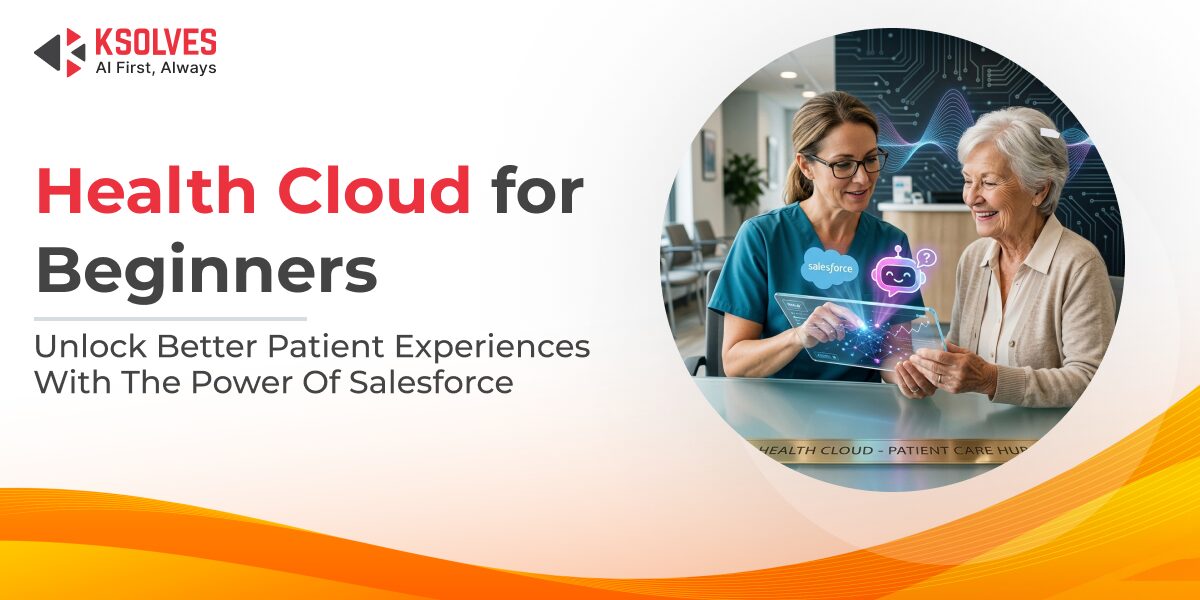
Healthcare organizations manage vast amounts of patient data across EHRs, claims systems, and multiple engagement platforms. When this information remains fragmented, care teams struggle to access a complete patient view, leading to poor coordination, inconsistent communication, and limited patient engagement.
Salesforce Health Cloud addresses these challenges by bringing clinical and non-clinical data together on a single, secure platform. Built for healthcare and life sciences, it enables a 360-degree patient view, supports better care coordination, and helps organizations deliver more connected and personalized healthcare experiences.
In this beginner’s guide, we’ll explore what Salesforce Health Cloud is, its key features, common use cases, benefits, and how healthcare organizations can get started.
What Is Salesforce Health Cloud?
Salesforce Health Cloud is a healthcare-focused CRM platform designed to help organizations manage patient and member relationships more effectively. It brings together clinical and non-clinical data from multiple sources into a single, unified view, enabling healthcare teams to better understand, engage, and support patients throughout their care journey.
Built on the Salesforce platform, Health Cloud extends traditional CRM capabilities to meet healthcare-specific needs such as care coordination, patient engagement, and data interoperability. It integrates data from EHRs, claims systems, wearables, and third-party applications, while providing tools like patient timelines, care plans, and care teams. With enterprise-grade security and a HIPAA-ready architecture, Health Cloud ensures sensitive health data is managed securely and compliantly.
Who Is Salesforce Health Cloud Built For?
- Healthcare Providers: Hospitals, clinics, and care delivery organizations use Health Cloud to gain a 360-degree patient view, coordinate care across teams, and improve patient experiences.
- Payers: Insurance providers and health plans leverage Health Cloud to manage member relationships, improve service interactions, and support population health and care management initiatives.
- Life Sciences and Pharma Organizations: Pharmaceutical and life sciences companies use Health Cloud to support patient programs, strengthen healthcare provider engagement, and gain real-world insights while maintaining compliance.
Also Read: 6 Ways Healthcare Teams Use Salesforce to Manage Compliance
How Salesforce Health Cloud Works
Salesforce Health Cloud brings together healthcare data from multiple sources to create a connected and actionable patient or member experience.
Health Cloud integrates data from EHR systems, claims platforms, wearable devices, and third-party healthcare applications using industry-standard protocols including HL7 FHIR R4, HL7 v2, and SMART on FHIR. The MuleSoft Accelerator for Healthcare serves as the recommended integration layer, providing pre-built connectors and healthcare-specific API templates that significantly reduce integration time and complexity..
Once integrated, Health Cloud unifies and normalizes this data into a standardized format. This eliminates data silos and enables meaningful insights, such as identifying care gaps, tracking patient progress, and supporting proactive decision-making.
At its core, Health Cloud is built on a purpose-built healthcare data model that includes standard clinical objects such as PatientMedicationSummary, CareObservation, EpisodeOfCare, and CareDiagnosis. These objects are aligned with FHIR-based data structures, ensuring compatibility with modern interoperability standards. This standardized data model eliminates the need for heavy custom development and allows organizations to map incoming clinical data from EHRs and other systems quickly and consistently.
With a unified data foundation, organizations can drive engagement across multiple channels, including email, SMS, patient portals, and care coordination tools. This ensures timely communication, better follow-ups, and more personalized interactions throughout the care journey.
Key Features of Salesforce Health Cloud
Salesforce Health Cloud offers a set of powerful features designed to help healthcare organizations manage patient and member relationships more effectively while ensuring secure and compliant data handling.
1. Unified Patient/Member Profile
Health Cloud creates a single, unified profile by bringing together patient or member data from multiple sources. This 360-degree view includes demographics, clinical information, care gaps, and non-clinical data such as communication history, enabling care teams to make more informed decisions.
2. Care Plans and Care Teams
Health Cloud supports personalized care plans built on structured clinical objects, including CarePlan, CarePlanTemplate, Goal, and CarePlanProblem. These objects support standard medical coding systems such as SNOMED CT and ICD-10, ensuring clinical accuracy and consistency across care teams. Care plan templates can be pre-configured for specific conditions or patient populations, allowing organizations to standardize care delivery while still accommodating individual patient needs.
3. Timeline View of Patient Data
The timeline feature provides a longitudinal view of patient interactions, health events, appointments, and communications in one place. This helps care teams quickly understand patient history, identify trends, and respond more effectively at every stage of care.
4. Secure Data Management
Built on the Salesforce platform, Health Cloud offers a HIPAA-ready architecture with enterprise-grade security controls. Features such as role-based access, data encryption, and audit trails help healthcare organizations protect sensitive health information and meet regulatory requirements.
Also Read: Top Salesforce Health Cloud Consultants
Common Use Cases of Salesforce Health Cloud
Salesforce Health Cloud enables healthcare and life sciences organizations to deliver connected care by bringing patient, member, and clinical data onto a single platform. These use cases highlight how Health Cloud is applied across real-world healthcare scenarios.
1. Care Coordination and Care Management
Health Cloud plays a critical role in coordinating care for patients with complex or long-term health needs. It allows care teams to create personalized care plans, assign responsibilities, and monitor progress across departments. By providing a shared view of patient information, Health Cloud reduces communication gaps between clinicians, nurses, and care coordinators.
Example: A hospital treating patients with chronic conditions such as diabetes or heart disease can use Health Cloud to manage care plans, schedule follow-ups, and ensure timely interventions, improving continuity of care and patient outcomes.
2. Patient Engagement and Experience Management
Effective patient engagement requires timely, relevant, and consistent communication. Health Cloud enables organizations to personalize interactions based on patient history, preferences, and care stage. This ensures patients receive the right information at the right time, improving trust and engagement.
Example: A healthcare provider can automatically send appointment reminders, lab result notifications, and post-visit care instructions, helping patients stay informed and actively involved in their care journey.
3. Population Health Management
Health Cloud helps organizations analyze and segment patient populations to proactively manage health outcomes. By identifying trends and care gaps, healthcare teams can design targeted outreach programs focused on prevention and early intervention.
Example: A healthcare network can identify high-risk patient groups, such as those overdue for screenings, and run targeted campaigns to encourage preventive care, reducing emergency visits and long-term treatment costs.
4. Member Services and Payer Operations
For payers, managing member relationships efficiently is essential. Health Cloud provides a unified view of member data, service history, and interactions, enabling support teams to deliver faster and more personalized service experiences.
Example: An insurance provider’s customer service agent can quickly access a member’s policy details, claims status, and past interactions, allowing them to resolve inquiries efficiently and improve member satisfaction.
5. Chronic Disease and Long-Term Care Management
Managing chronic conditions requires continuous monitoring and long-term engagement. Health Cloud supports this by tracking patient interactions, treatment plans, and adherence over time, enabling proactive care management.
Example: Care coordinators can monitor patients with asthma or hypertension, track follow-up activities, and intervene early if patients miss appointments or show signs of declining health.
6. Life Sciences and Pharma Engagement
Life sciences and pharmaceutical organizations use Health Cloud to manage patient support programs and strengthen collaboration with healthcare providers. The platform enables compliant data management while offering insights into patient journeys and program effectiveness.
Example: A pharma company can manage patient onboarding for support programs, track engagement, and gather real-world data to improve treatment adherence and outcomes.
7. Remote Care and Digital Health Enablement
Health Cloud supports modern care delivery models by integrating with remote monitoring tools, telehealth platforms, and external data sources. Supported integrations include Apple HealthKit and Google Fit for consumer health data, along with third-party Remote Patient Monitoring (RPM) devices connected via IoT Cloud connectors or the Salesforce Streaming API. This allows care teams to receive continuous patient data in near real-time, enabling proactive outreach and timely clinical interventions without requiring in-person visits.
Example: A provider can monitor patient data from wearable devices and follow up proactively when readings indicate potential health risks, enabling timely interventions without requiring in-person visits.
How Ksolves Can Help You Get Started with Salesforce Health Cloud
Getting started with Salesforce Health Cloud requires the right balance of healthcare domain knowledge and Salesforce expertise. Ksolves, a Salesforce Summit Partner with 100+ certified experts, helps healthcare and life sciences organizations implement Health Cloud with a strong focus on real-world outcomes, interoperability, and scalable care delivery.
How Ksolves Supports Health Cloud Implementation
Ksolves provides end-to-end Salesforce Health Cloud services, including:
- Health Cloud assessment and implementation planning aligned with clinical and operational goals
- EHR and third-party integrations to create a unified patient view
- Custom care workflows and automation tailored to real healthcare processes
- Ongoing support, optimization, and compliance guidance to ensure long-term success
Choosing the right Salesforce Health Cloud partner matters because healthcare implementations go beyond CRM. They require a deep understanding of care coordination, data governance, and patient privacy.
Real-World Salesforce Health Cloud Case Studies by Ksolves
Streamlining Clinical Workflows and Patient Management
In this project, Ksolves helped a pharmaceutical organization modernize its clinical workflows using Salesforce Health Cloud.
Solution highlights:
- Implemented Salesforce Health Cloud with Experience Cloud for patient onboarding
- Designed a decoupled architecture to improve system performance
- Automated patient communication using Twilio
- Merged duplicate patient records to maintain a clean, reliable patient database
Business impact:
- Enabled a real-time 360° patient view for care teams
- Increased patient handling capacity from 500 to 2,000 per day
- Resolved over 500 patient cases daily with improved efficiency
- Reduced manual effort and improved care coordination
Improving Medication Management and Patient Communication
Ksolves also partnered with a pharmaceutical research organization to improve medication journey management through Salesforce Health Cloud.
Solution highlights:
- Built an ESB-based integration for seamless data flow across systems
- Implemented patient registration and engagement portals
- Enabled record deduplication and centralized patient data management
- Optimized patient communication workflows
Business impact:
- Delivered a unified Patient 360 view for better clinical decision-making
- Improved coordination across care and research teams
- Reduced data handling complexity and operational overhead
Conclusion
Salesforce Health Cloud implementation offers healthcare providers, payers, and life sciences organizations a powerful platform to unify patient and member data, improve care coordination, and deliver personalized, connected healthcare experiences. From chronic disease management to population health initiatives, Health Cloud helps organizations streamline operations, enhance patient engagement, and make data-driven decisions.
With Ksolves’ expertise in Salesforce implementation, integration, and workflow automation, healthcare organizations can get started confidently and see measurable results. Explore Salesforce Health Cloud with Ksolves today to transform your care delivery and patient engagement. Contact us at [email protected].
Frequently Asked Questions
What is Salesforce Health Cloud used for?
Salesforce Health Cloud is a healthcare-focused CRM platform that helps organizations unify patient and member data, coordinate care, engage patients, and improve operational efficiency.
Who can benefit from Salesforce Health Cloud?
It is designed for healthcare providers, payers, and life sciences or pharmaceutical organizations looking to improve care delivery, patient engagement, and operational outcomes.
What are the key features of Salesforce Health Cloud?
Key features include unified patient or member profiles, care plans and care teams, a timeline view of patient data, secure HIPAA-compliant data management, and integration with EHRs and third-party systems.
Can Salesforce Health Cloud integrate with existing healthcare systems?
Yes. Health Cloud can integrate with EHRs, claims systems, wearable devices, and other third-party platforms to create a comprehensive 360-degree patient view.
How does Ksolves help with Salesforce Health Cloud?
Ksolves provides end-to-end Health Cloud services including assessment, implementation planning, custom care workflows, system integrations, automation, ongoing support, and compliance guidance.































Author
About the Author Editorial Team The Ksolves Editorial Team includes certified Salesforce experts, Big Data engineers, AI/ML specialists, Zoho consultants, and experienced technology writers focused on delivering clear, actionable insights for modern businesses. With hands-on experience across Salesforce, Big Data platforms, AI/ML solutions, application development, software testing, and Zoho ERP/CRM, the team publishes practical guides, real-world use cases, and industry updates that support smarter decisions and faster growth. Every article is created to solve business challenges, guide technology adoption, and keep organizations aligned with evolving digital ecosystems.
Share with