



DevOps vs DevSecOps: Understanding the Key Differences That Matter Most in 2026 & Beyond
DevOps
5 MIN READ
March 18, 2026

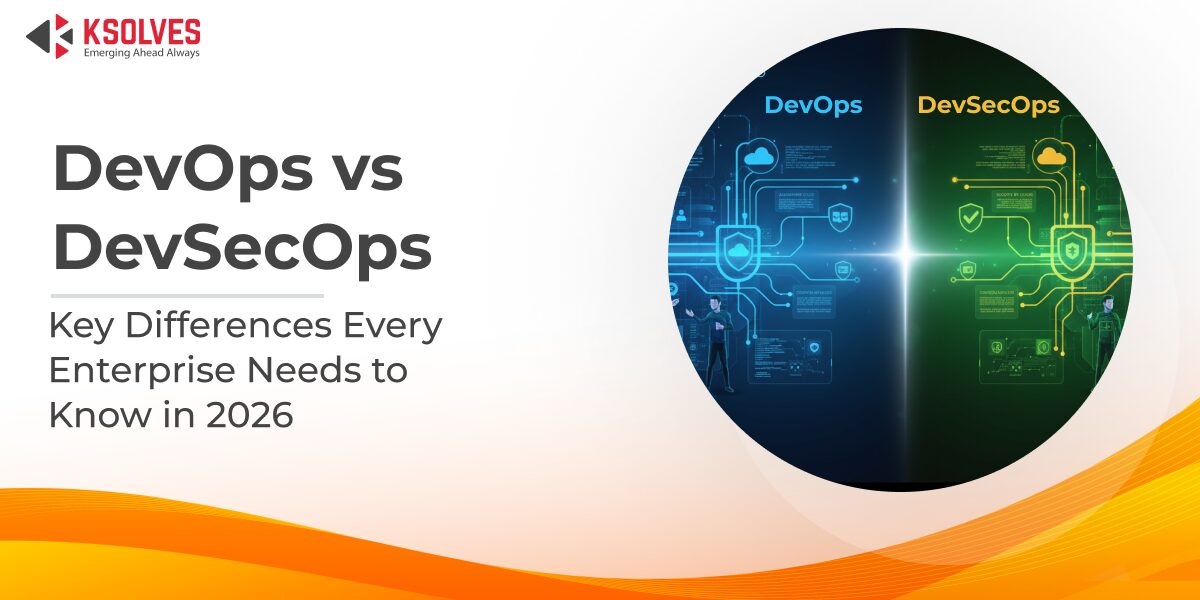
Software development has evolved quickly in the last few years. Organizations deploy updates multiple times a day, build cloud-native applications, and automate almost every part of the delivery pipeline. While this speed has unlocked innovation, it has also created a growing concern: security incidents are rising faster than ever.
In the last few years, several major breaches have revealed how vulnerable modern software ecosystems can be. The SolarWinds supply chain compromise affected thousands of organizations when attackers injected malicious code into a trusted software update.
The Colonial Pipeline attack disrupted fuel supply across the United States after attackers accessed a single compromised password. Multiple cloud-related breaches, including those caused by misconfigured Amazon S3 buckets, exposed millions of sensitive customer records publicly.
These real incidents highlight an important truth. Speed is valuable, but speed without security exposes the entire business to serious risk. This has made enterprises revisit the conversation around DevOps vs DevSecOps and evaluate which approach is best for modern development.
What Is DevOps
DevOps is a cultural and technical approach that brings developers and operations teams together. The goal is to deliver software faster, remove manual tasks, improve collaboration across teams, and ensure consistent deployment quality.
Core principles of DevOps include:
- Continuous Integration and Continuous Delivery
- Automation across build, test, and deployment
- Infrastructure as Code
- Monitoring and feedback loops
- Collaboration between development and operations teams
DevOps helps organizations release quickly and consistently. However, traditional DevOps workflows usually rely on security checks at the end of the pipeline. This creates bottlenecks and sometimes allows high-risk issues to slip into production.
This limitation is what sparked the debate around DevOps vs DevSecOps as businesses needed an approach that maintained speed while strengthening security.
What Is DevSecOps
DevSecOps extends DevOps by embedding security into every phase of the development lifecycle. The idea is simple. Security should not come after development. It should travel with development.
DevSecOps focuses on:
- Shifting security checks to the earliest stages
- Automating vulnerability scanning
- Integrating security directly into CI/ CD pipelines
- Performing continuous monitoring
- Shared security responsibility across all teams
A well-known example is Netflix. The company integrated automated security scans into its CI and CD workflows. Vulnerabilities and misconfigurations are flagged during development itself, so developers can fix issues immediately. This example is frequently cited in DevSecOps vs DevOps comparisons because it proves that strong security can coexist with rapid delivery.
The Difference Between DevOps and DevSecOps
DevOps and DevSecOps differ in mindset, timing, workflows, responsibilities, tools, and overall business impact. Below is a detailed comparison between the two:
- Purpose and Mindset
DevOps aims to increase delivery speed and operational efficiency. It reduces friction between development and operations so that new features reach users faster.
DevSecOps aims for the same speed but ensures that every change is also checked for security risks. It promotes the belief that security should be part of the delivery engine, not a final obstacle.
- When Security Happens
In DevOps, security usually appears near the end of the pipeline. It may happen during pre-release testing or as a manual review after development. If a risk is discovered at this point, it often delays release cycles.
In DevSecOps, security begins during planning and continues through coding, building, testing, deployment, and operations. Issues are identified when they are easiest and cheapest to fix.
- Team Collaboration
DevOps encourages collaboration between development and operations teams. Security teams often work separately.
DevSecOps integrates security engineers into the delivery pipeline. Developers understand security practices, and security experts understand development timelines. The responsibility becomes shared across all teams.
- Automation Scope
Automation is an important difference between DevOps and DevSecOps.
DevOps automates CI and CD pipelines to reduce manual work. DevSecOps automates security inside those pipelines. It includes:
- Static code analysis
- Dynamic testing
- Dependency and library scanning
- Secrets detection
- Container scanning
- Infrastructure as Code scanning
- Policy enforcement
This results in a secure, fully automated delivery pipeline.
- Risk Management
DevOps often identifies risks late in the cycle. Fixing these late-stage issues becomes expensive and time-consuming.
DevSecOps identifies vulnerabilities early. This reduces risk, cost, and deployment delays.
Teams new to both approaches may benefit from understanding the common DevOps challenges that arise before security integration is in place.
- Compliance and Governance
Compliance standards such as GDPR, HIPAA, PCI DSS, and SOC 2 require strict security controls. DevOps teams often perform these checks manually.
DevSecOps embeds compliance into the automation pipeline. Policies are checked automatically during builds and deployments, which ensures continuous compliance without slowing down development.
- Tooling
DevOps tools include Jenkins, GitLab CI, Docker, Kubernetes, Terraform, and Ansible.
DevSecOps uses these tools along with additional security tools like Snyk, Trivy, SonarQube, Checkmarx, HashiCorp Vault, and Prisma Cloud. This ensures that every stage of the pipeline is secure.
- Cost Impact
Fixing vulnerabilities during development is significantly cheaper than fixing them after deployment. DevSecOps minimizes long-term cost by preventing issues early.
- Business Outcomes
DevOps focuses on speed. DevSecOps delivers speed with built-in security. As organizations scale their systems and face more threats, DevSecOps becomes a more suitable approach for long-term success.
DevOps vs DevSecOps Comparison Table
| Factor | DevOps | DevSecOps |
| Primary Purpose | Faster delivery and operational efficiency | Secure and fast delivery across the entire SDLC |
| Mindset | Speed first | Security and speed together |
| Security Integration | Added at the end of the pipeline | Embedded at every stage starting from planning |
| Workflow Structure | Linear workflow with security as a final checkpoint | Security integrated within each step of the workflow |
| Team Collaboration | Dev and Ops collaborate | Dev, Sec, and Ops collaborate as one team |
| Automation Scope | Automates CI and CD tasks | Automates CI, CD, and all security checks (SAST, DAST, IaC, etc.) |
| Risk Management Approach | Reactive and discovered after development | Proactive and identified early during development |
| Compliance Handling | Mostly manual and late stage | Automated and continuous compliance checks |
| Tooling | CI/CD and infrastructure automation tools | CI/CD tools plus security scanning and monitoring tools |
| Cost Impact | Higher cost due to late fixes | Lower long-term cost due to early prevention |
| Ideal Use Case | Teams focused on speed and early-stage automation | Teams handling sensitive data or requiring strong security and compliance |
Benefits of DevOps and DevSecOps
Both DevOps and DevSecOps offer strong advantages for modern engineering teams. DevOps focuses on speed and efficiency, while DevSecOps adds a layer of integrated security to protect systems throughout the development lifecycle. Below are the key benefits of each approach.
DevOps advantages:
DevOps helps teams release faster and work more efficiently by improving collaboration and automating repetitive tasks.
- Faster releases
- Improved collaboration
- Higher deployment frequency
- Less manual effort
Many organizations choose DevOps consulting to build effective and automated pipelines.
DevSecOps advantages:
DevSecOps strengthens development workflows by embedding security early, reducing risk, and supporting continuous compliance.
- Lower vulnerabilities
- Continuous compliance
- Stronger security posture
- Reduced cost of fixes
- Faster issue resolution
Enterprises often adopt DevSecOps consulting to integrate automated security directly into development workflows.
When Should You Choose DevOps or DevSecOps
Choosing between DevOps and DevSecOps depends on your organization’s maturity, risk level, and long-term goals. Both approaches improve development workflows, but they serve slightly different needs.
When DevOps Is the Right Fit
Choose DevOps if your primary goal is to accelerate delivery and streamline collaboration between development and operations. It is ideal for teams that are building automation for the first time, operate in a low to moderate-risk environment, or are focused mainly on improving deployment speed and efficiency.
When DevSecOps Is the Better Choice
Choose DevSecOps if your applications handle sensitive, financial, or regulated data, or if your organization needs strong security and continuous compliance. DevSecOps is also a better fit for teams working with microservices, containers, or multi-cloud environments where vulnerabilities can spread quickly. Most growing enterprises eventually move toward DevSecOps because it provides both speed and protection across the entire development lifecycle.
How Ksolves Can Help
Ksolves supports enterprises in building development pipelines that are both fast and secure. Our services help teams modernize with the right combination of automation, security, and cloud native practices.
- DevOps consulting services
Our DevOps consulting services improve workflows, enhance collaboration, and set up automation that boosts deployment speed and reliability.
- DevSecOps implementation services
We embed security into the development lifecycle through automated scans, compliance checks, and secure pipeline design.
- CI and CD pipeline setup
Our engineers build scalable pipelines that ensure smooth and consistent releases.
- Security automation and monitoring
We implement automated scanning, threat detection, and continuous monitoring to maintain strong security.
- Cloud native security frameworks
Ksolves secures containers, microservices, and Kubernetes environments using modern cloud security methods.
- End-to-end DevOps and DevSecOps transformation
We guide organizations through a complete transformation journey that combines speed and security from start to finish.
Conclusion
DevOps transformed how software is delivered. DevSecOps enhances this approach by ensuring that every release is also secure. Understanding the difference between DevOps and DevSecOps is essential for modern enterprises that want to balance speed with safety. As cyber threats continue to increase, secure speed is becoming the new standard for development teams worldwide.
To transform your engineering lifecycle with secure, automated, and scalable workflows, Ksolves offers expert-led DevOps consulting services, DevSecOps consulting services, DevOps implementation, and Cloud DevOps services to support your growth. To explore how Ksolves can support your DevOps or DevSecOps journey, contact us at [email protected].
Frequently Asked Questions
FAQs
What is the main difference between DevOps and DevSecOps?
DevOps focuses on fast delivery, while DevSecOps integrates security into every part of the development process to ensure safer releases.
Does DevSecOps slow down development?
No. Automated security checks help identify issues early, which reduces rework and speeds up overall delivery.
Do all companies need DevSecOps?
Any organization handling sensitive data or operating in regulated industries should adopt DevSecOps for better security and compliance.
Can DevSecOps be added to an existing DevOps pipeline?
Yes. Most companies begin with DevOps and gradually integrate DevSecOps practices and tools.
Are DevOps and DevSecOps tools the same?
DevSecOps uses all DevOps tools and adds security testing tools that integrate directly into pipelines.



































Author
About the Author Editorial Team The Ksolves Editorial Team includes certified Salesforce experts, Big Data engineers, AI/ML specialists, Zoho consultants, and experienced technology writers focused on delivering clear, actionable insights for modern businesses. With hands-on experience across Salesforce, Big Data platforms, AI/ML solutions, application development, software testing, and Zoho ERP/CRM, the team publishes practical guides, real-world use cases, and industry updates that support smarter decisions and faster growth. Every article is created to solve business challenges, guide technology adoption, and keep organizations aligned with evolving digital ecosystems.
Share with