



Top 5 Signs You Need DevOps Support for Your Software Projects
DevOps
5 MIN READ
April 15, 2026

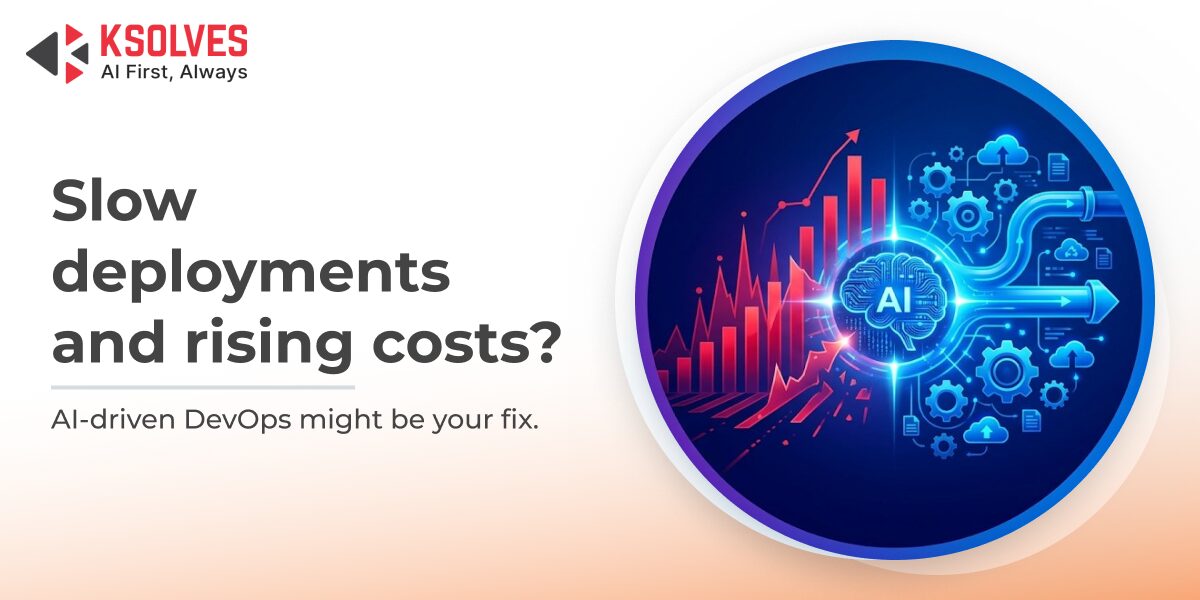
Software teams today face pressure on two fronts: move fast and never break anything. Whether you’re launching a new product, scaling an existing platform, or shipping frequent updates, the development lifecycle has grown more complex than ever. Between managing environments, automating deployments, fixing bugs, and ensuring uptime, there’s a lot that can go wrong when modern DevOps practices aren’t in place.
That’s where AI-powered DevOps support changes the game. Traditional DevOps focused on aligning development and operations to streamline workflows and reduce bottlenecks. Today, AI takes that a step further by detecting anomalies before they cause incidents, automating intelligent rollbacks, and predicting capacity needs based on usage patterns. The result is software delivery that’s faster, smarter, and more resilient.
But how do you know when your team actually needs DevOps support? Here are five telltale signs, and how the right expertise (combined with AI) can help you move forward with confidence.
Why AI-Powered DevOps Support Services Matter in 2026
DevOps support services bridge the gap between development speed and operational stability. With 24×7 monitoring, intelligent automation, and expert guidance, they help your team ship faster, fix issues proactively, and scale confidently.
AI layers on predictive capabilities by surfacing patterns in logs, forecasting infrastructure needs, and flagging anomalies in real time, doing what traditional DevOps tooling alone can’t match.
Sign 1: Your Deployments Are Painfully Slow or Error-Prone
The Pain: Every deployment is a stressful event. It takes hours, involves multiple manual steps, and often breaks things in production.
What It Really Means: Your CI/CD process is either missing or poorly implemented. Without automation and structured testing gates, each release becomes a high-risk gamble.
How AI-Powered DevOps Support Helps: A DevOps support team designs, builds, and maintains robust CI/CD pipelines tailored to your workflows. More importantly, AI-enhanced pipelines can automatically detect failing test patterns, flag risky code changes before they reach production, and trigger intelligent rollbacks when deployment health signals degrade. The outcome is zero-downtime deployments and release cycles that your team actually looks forward to.
Sign 2: Environments Are Inconsistent Across Dev, QA, and Production
The Pain: Features that worked in development suddenly break in QA or behave unpredictably in production. The classic “it works on my machine” problem surfaces again and again.
What It Really Means: Your infrastructure isn’t standardized. Inconsistent environments cause bugs that are difficult to catch and even harder to reproduce.
How AI-Powered DevOps Support Helps: DevOps support services enforce Infrastructure as Code (IaC), containerization (Docker), and orchestration (Kubernetes) to make environments deterministic and reproducible. AI-powered configuration drift detection automatically alerts teams when any environment deviates from its defined state, preventing the subtle discrepancies that lead to production surprises. Support engineers manage environment configuration across dev, QA, staging, and production, saving hours of debugging time every sprint.
Sign 3: You Have Zero Visibility into System Health and Performance
The Pain: You only find out there’s an issue when users start complaining. There’s no way to see what went wrong, when it started, or why.
What It Really Means: Your system lacks observability. There’s no structured monitoring or alerting to catch issues before they escalate into outages.
How AI-Powered DevOps Support Helps: A DevOps support provider sets up and manages your full observability stack, including real-time dashboards, structured logs, alerts, and health checks using tools like Prometheus, Grafana, ELK, or Datadog. AI-driven anomaly detection takes this further by learning normal system behavior and flagging deviations automatically, often identifying root causes that rule-based alerting would miss entirely. With 24×7 monitoring and intelligent incident response, issues get resolved before most users even notice.
Sign 4: Manual Processes Are Slowing Down Your Team
The Pain: Developers and testers spend hours manually deploying code, setting up environments, or running repetitive test suites. Strategic work keeps getting pushed to “next sprint.”
What It Really Means: Automation is missing from key stages of your development lifecycle. This adds time, increases the risk of human error, and steadily drains team productivity.
How AI-Powered DevOps Support Helps: DevOps support teams automate routine processes using CI/CD pipelines, IaC tools like Terraform and Ansible, and cloud provisioning scripts. AI-assisted test generation and intelligent test selection further reduce the manual burden by automatically identifying which tests to run based on code changes, cutting test suite execution time significantly. Workflows become optimized, auto-triggered, and self-healing, freeing your engineers for the work that actually moves the product forward.
Sign 5: Your Software Projects Struggle to Scale
The Pain: As traffic grows, performance drops or systems fail. Scaling feels reactive, a last-minute scramble every time there’s a usage spike.
What It Really Means: Your architecture and infrastructure aren’t optimized for elasticity or resilience. Scaling manually is always one step behind demand.
How AI-Powered DevOps Support Helps: DevOps engineers specialize in building scalable, cloud-native infrastructure on AWS, Azure, or GCP with auto-scaling and load balancing built in. AI-driven capacity planning adds predictive intelligence to this equation by analyzing usage trends and workload patterns to recommend scaling actions before demand spikes rather than after. Your system scales seamlessly as your business grows, without the scramble.
What Do AI-Powered DevOps Support Services Include?
Bringing in a DevOps support team means more than setup and handoff. You get ongoing, proactive care and optimization across:
- CI/CD pipeline management and continuous improvement
- Infrastructure provisioning, IaC, and environment consistency
- AI-driven observability, anomaly detection, and incident response
- Cloud cost optimization and capacity planning
- Security, compliance, and access control
- 24×7 incident handling with defined SLAs
Also Read: Top DevOps Principles for Faster Software Delivery
How to Choose the Right DevOps Support Provider
Choosing the right DevOps support partner has long-term implications for your delivery velocity and system reliability. Here’s what to evaluate:
- Experience and Specialization: Look for a partner with proven expertise in your tech stack, including AWS, Azure, GCP, containers, and CI/CD tooling. Ask for case studies relevant to your industry.
- 24×7 Support Availability: Ensure they offer round-the-clock coverage with clearly defined SLAs for incident response and escalation paths.
- AI and Automation Depth: The best providers go beyond reactive support. They leverage AI for predictive monitoring, intelligent automation, and root cause analysis rather than just ticket resolution.
- Customization and Flexibility: Services should be tailored to your unique infrastructure, workflow, and growth trajectory, not templated from a generic playbook.
- Security and Compliance: Confirm they follow best practices for access control, vulnerability management, and any regulatory frameworks relevant to your business.
- Transparent Reporting: Regular health checks, performance reports, and optimization recommendations should be standard, not optional.
Also Read: DevOps – The Ultimate Guide
How Ksolves Can Help
Ksolves offers end-to-end DevOps consulting services tailored to your software goals and technology stack. Our certified AI-enabled DevOps engineers combine deep infrastructure expertise with AI-powered monitoring, intelligent automation, and proactive incident management.
From redesigning fragile CI/CD pipelines to scaling cloud-native infrastructure on demand, we ensure your software delivery is fast, reliable, and built for what comes next. Partner with Ksolves to eliminate operational bottlenecks, reduce downtime, and give your team the freedom to focus on building great products.
Ready to make DevOps work for you? Reach out at [email protected].
Final Thoughts
In today’s software landscape, speed, stability, and scalability aren’t optional, and AI-powered DevOps support services are how forward-thinking teams achieve all three. If you’re facing deployment delays, invisible system failures, or constant scaling crises, the problem isn’t your team. It’s the absence of the right practices and tooling.
With the right DevOps partner, you gain more than technical help. You gain the operational confidence to innovate without fear.































Author
About the Author Editorial Team The Ksolves Editorial Team includes certified Salesforce experts, Big Data engineers, AI/ML specialists, Zoho consultants, and experienced technology writers focused on delivering clear, actionable insights for modern businesses. With hands-on experience across Salesforce, Big Data platforms, AI/ML solutions, application development, software testing, and Zoho ERP/CRM, the team publishes practical guides, real-world use cases, and industry updates that support smarter decisions and faster growth. Every article is created to solve business challenges, guide technology adoption, and keep organizations aligned with evolving digital ecosystems.
Share with