



Agentic AI: Revolutionizing Autonomous Retail Supply Chains and Inventory Optimization in 2026
AI
5 MIN READ
June 13, 2026

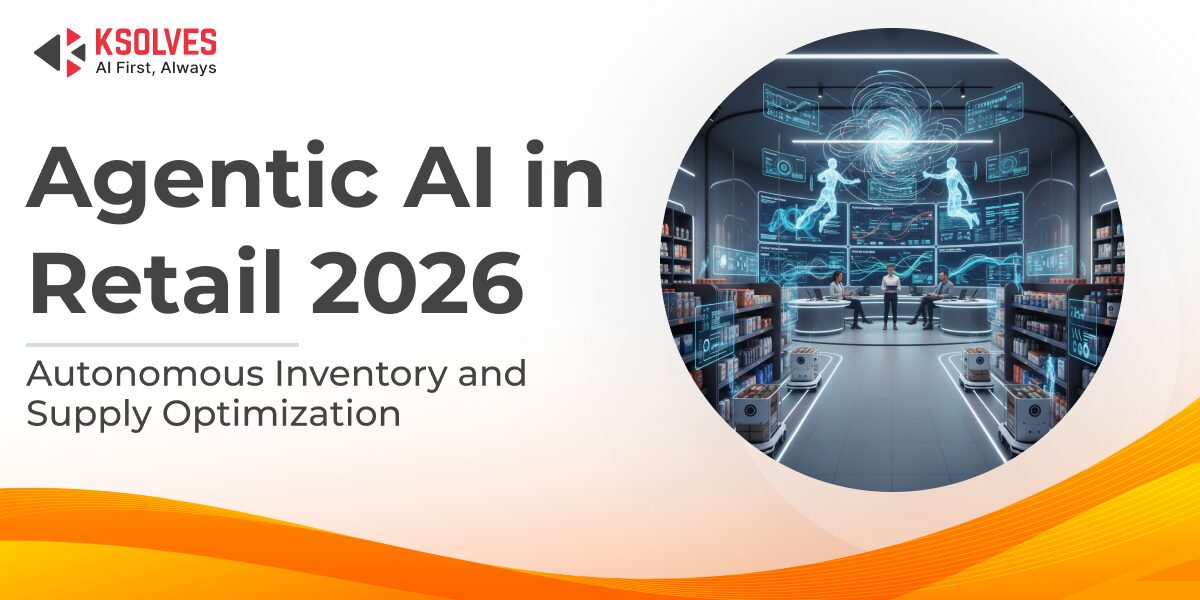
Retail supply chains are navigating an era of extreme volatility, with unpredictable consumer behavior, geopolitical disruptions, climate impacts on logistics, and relentless pressure to deliver faster, cheaper, and more sustainable operations. Traditional rule-based systems and even early predictive AI are increasingly inadequate for handling this complexity in real time. Agentic AI changes the game by creating autonomous systems that can independently perceive their environment, set goals, plan multi-step actions, use tools, execute decisions, and learn from results.
This blog examines how agentic AI is poised to transform retail supply chains and inventory management in 2026, highlighting emerging trends, tangible benefits, and strategic implications.
Understanding Agentic AI in Retail Supply Chains
Agentic AI refers to goal-driven, autonomous AI systems that go beyond generating predictions or content. These systems act as proactive digital teammates that observe data streams, reason about objectives, break down complex tasks, interact with enterprise tools (APIs, ERPs, supplier portals, logistics APIs), execute actions, and continuously improve based on outcomes.
In retail, agentic AI connects IoT shelf sensors, point-of-sale data, weather forecasts, social media signals, and supplier systems to orchestrate adaptive workflows.
Example: During an unexpected heatwave, a multi-agent system might detect rising demand for beverages, check warehouse stock levels, evaluate supplier lead times, negotiate expedited shipping with carriers, and adjust in-store shelf allocations — all within minutes and without human approval.
Recent industry indicators point to accelerating adoption:
- 75% of retailers say AI agents will be essential to compete within the next year, with 76% increasing AI investments in 2025.
- 86% of retailers have unified commerce initiatives underway to enhance AI effectiveness across channels.
- 81% of retailers report that inefficient processes drain associate productivity, underscoring the need for agentic automation in operations like inventory management.
- Shoppers are ready: 39% use AI for product discovery (over 50% among Gen Z), and 63% of Gen Z are interested in agents making purchases on their behalf.
These numbers signal that 2026 will be a pivotal year for scaling agentic AI from pilots to core operations.
Elements That Define Agentic AI in Retail
Five core characteristics distinguish agentic AI from conventional automation:
| Characteristic | What It Means in Retail |
|---|---|
| Goal Orientation | Works toward explicit business objectives (e.g., maintain 98% in-stock rate while minimizing inventory holding cost) |
| Adaptive Planning | Dynamically decomposes goals into executable steps and replans when conditions change |
| High Autonomy | Makes decisions and takes actions within defined guardrails and compliance boundaries |
| Tool Integration | Actively uses APIs, databases, robotic process automation, and external services |
| Long-term Continuity & Learning | Maintains memory across tasks and improves performance through feedback loops |
These traits enable retail agents to manage complex, interdependent processes end-to-end.
Five Major Agentic AI Trends Shaping Retail in 2026
In 2026, the retail sector is moving beyond simple automation toward Agentic AI — systems that not only suggest actions but execute them. This transformation is turning supply chains into self-healing networks that operate with minimal human intervention. Here are the five major trends driving this shift:
1. Autonomous Inventory Replenishment
Moving beyond basic forecasting, specialized agents now autonomously manage the end-to-end restocking process. These agents monitor real-time sales and supplier lead times to generate purchase orders independently, shifting inventory management from reactive human planning to a continuous, self-correcting cycle.
2. Multi-Agent Logistics Orchestration
Supply chains are becoming collaborative ecosystems where specialized agents for freight, warehousing, and last-mile delivery negotiate in real time. If a shipment is delayed, these agents autonomously reroute logistics and update warehouse schedules to maintain service levels — without human prompts.
3. Dynamic Safety Stock Adjustment
Fixed buffer rules are being replaced by agents that recalculate safety stock levels daily. By analyzing shifting weather patterns and regional demand spikes, these agents adjust local inventory positions instantly — minimizing carrying costs while ensuring high-demand items remain available.
4. Self-Healing Supply Networks
Agentic AI identifies potential disruptions — like port strikes or material shortages — before they escalate into crises. These systems proactively contact alternative vendors and secure backup transport lanes, transforming the supply chain into a resilient, self-healing network that prioritizes business continuity.
5. AI-Driven Circular Merchandising
Agents are now orchestrating the complex reverse logistics of the circular economy. They autonomously evaluate the condition of returned goods to decide whether to refurbish, recycle, or re-list them — maximizing margin recovery and ensuring sustainable inventory flows across all channels.
Ksolves Agentic AI Consulting Services for Retail Transformation
Ksolves supports retailers in adopting agentic AI with end-to-end expertise, including:
- Strategic planning and custom multi-agent development
- Seamless integration with ERP systems and IoT devices
- Robust safety controls and regulatory compliance
- Ongoing performance tuning and optimization
Backed by more than 12 years of experience and enterprise-level security, Ksolves enables retailers to create adaptive, future-ready supply chains.
Conclusion
With 2025 nearing its end, 2026 is emerging as the defining year for agentic AI adoption in retail. Organizations that integrate autonomous multi-agent systems will secure lasting advantages in operational speed, cost efficiency, customer satisfaction, and supply chain durability.
Moving from manual to agent-supported processes is no longer a choice — it is essential for long-term success. Is your organization ready for this change? Connect with our experienced AI experts and get your free agentic AI blueprint today!































Author
About the Author Editorial Team The Ksolves Editorial Team includes certified Salesforce experts, Big Data engineers, AI/ML specialists, Zoho consultants, and experienced technology writers focused on delivering clear, actionable insights for modern businesses. With hands-on experience across Salesforce, Big Data platforms, AI/ML solutions, application development, software testing, and Zoho ERP/CRM, the team publishes practical guides, real-world use cases, and industry updates that support smarter decisions and faster growth. Every article is created to solve business challenges, guide technology adoption, and keep organizations aligned with evolving digital ecosystems.
Share with