AI systems fall into different regulatory tiers depending on what they do, what data they touch, and
where they're deployed. Ksolves' Enterprise AI compliance consulting services start with a full
inventory of your AI systems, classify each one against the frameworks that actually apply, and
identify exactly where your current setup falls short.
From there, our AI compliance consultants build the governance framework, technical documentation,
and monitoring systems needed to close those gaps, covering the EU AI Act, NIST AI RMF, ISO/IEC
42001, and sector-specific rules like GDPR, HIPAA, and FCRA. Whether
you're validating an AI concept before you build, auditing a system already in production, or
maintaining compliance as regulations shift, our AI compliance consulting service adapts to where
you are.
This is AI governance consulting built for compliance-first teams. You get AI ethics and compliance
consultants who stay with your systems as they evolve. That continuity is part of what has kept
Ksolves growing fast enough to place in the Deloitte Technology Fast 50 India
2024.

Deploying AI Across Industries.

Our Services
We help businesses with AI compliance across industries, tailored to your specific business requirements. Our services include the following:
Regulatory Gap Assessment & Risk Classification
We start with a full inventory of every AI system in use, including AI embedded in third-party tools that often gets missed, and classify each one against the frameworks that actually apply to your business.
Includes:
- Full AI system inventory across teams and vendors
- Risk tiering against EU AI Act, NIST AI RMF, and sector rules
- Role classification (provider, deployer, importer, distributor)
- Gap report with prioritized remediation steps
AI Governance Framework Design
We build the policies and accountability structure your teams need to operate AI responsibly, not a document that sits unused after sign-off.
Includes:
- AI acceptable use policy
- Model risk management policy
- Vendor AI risk policy
- Ownership and sign-off workflow design
Bias, Fairness & Technical Audits
We test your models against the metrics that matter for your specific use case and confirm your training data can withstand scrutiny.
Includes:
- Disparate impact testing across protected classes
- Data provenance and consent basis review
- Model robustness and adversarial testing
- Human oversight mechanism design
Documentation & Conformity Assessment Support
We prepare the technical file your risk tier requires and route you to the right assessment path.
Includes:
- Technical documentation packages
- System description and development process records
- Testing and validation reports
- Self-assessment vs. third-party conformity routing
AI Literacy Training
We build training that meets the actual obligation, tailored to the role, not a generic slide deck.
Includes:
- Engineering-track training
- Business user training
- Executive risk briefings
- Training completion documentation
Ongoing Monitoring & Incident Response
We keep your systems compliant after launch and give you a plan for when something breaks.
Includes:
- Drift-detection thresholds and re-review triggers
- Post-market monitoring setup
- Incident response and reporting protocol
- Scheduled re-certification checkpoints
Our Services
We help businesses with AI compliance across industries, tailored to your specific business requirements. Our services include the following:
Regulatory Gap Assessment & Risk Classification
We start with a full inventory of every AI system in use, including AI embedded in third-party tools that often gets missed, and classify each one against the frameworks that actually apply to your business.
Includes:
- Full AI system inventory across teams and vendors
- Risk tiering against EU AI Act, NIST AI RMF, and sector rules
- Role classification (provider, deployer, importer, distributor)
- Gap report with prioritized remediation steps
AI Governance Framework Design
We build the policies and accountability structure your teams need to operate AI responsibly, not a document that sits unused after sign-off.
Includes:
- AI acceptable use policy
- Model risk management policy
- Vendor AI risk policy
- Ownership and sign-off workflow design
Bias, Fairness & Technical Audits
We test your models against the metrics that matter for your specific use case and confirm your training data can withstand scrutiny.
Includes:
- Disparate impact testing across protected classes
- Data provenance and consent basis review
- Model robustness and adversarial testing
- Human oversight mechanism design
Documentation & Conformity Assessment Support
We prepare the technical file your risk tier requires and route you to the right assessment path.
Includes:
- Technical documentation packages
- System description and development process records
- Testing and validation reports
- Self-assessment vs. third-party conformity routing
AI Literacy Training
We build training that meets the actual obligation, tailored to the role, not a generic slide deck.
Includes:
- Engineering-track training
- Business user training
- Executive risk briefings
- Training completion documentation
Ongoing Monitoring & Incident Response
We keep your systems compliant after launch and give you a plan for when something breaks.
Includes:
- Drift-detection thresholds and re-review triggers
- Post-market monitoring setup
- Incident response and reporting protocol
- Scheduled re-certification checkpoints
Not sure where your AI systems stand?
Get a clear gap report against every framework that applies to your business.
Compliance at Every Stage
Built as an interactive circular stage-selector in the live page. Content per stage below.
Stage 1: Before you build
Idea & Concept: Get a risk classification before writing a line of code, so architecture decisions don't have to be undone later.
Includes:

Feasibility read against EU AI Act, NIST AI RMF, and sector rules
Early risk tier estimate
Build-vs-rework cost comparison
Stage 2: Mid-build
In Development: Catch documentation and data gaps while they're still cheap to fix, not after the system ships.
Includes:
Training data provenance and consent review
Draft technical documentation
Early bias and fairness testing
Stage 3: Live systems
In Production: A full audit of systems already deployed, with a prioritized report your team can act on immediately.
Includes:
Disparate impact and fairness testing
Documentation completeness audit
Prioritized remediation plan
Stage 4: Ongoing
Post-Compliance: Compliance isn't a certificate you earn once. We keep monitoring as regulations and models shift.
Includes:
Drift-detection thresholds
Scheduled re-review triggers
Incident response protocol
Frameworks We Work Against
Our assessments are built against named, recognized standards, not an internal checklist.

ISO/IEC 42001

HIPAA

EU AI Act

ISO/IEC 42001

NIST AI RMF

FCRA

Colorado AI Act

NYC Local Law 144
Ready to move past a policy binder nobody reads?
We build the framework your team actually runs, not just the paperwork that says you have one.
Why Choose Ksolves?
200+
Happy Clients
150+
Software Products
Delivered
30+
Countries Served
100%
Global Salesforce
Support
99%
On-Time Project
Delivery
350+
Certifications
100+
AI Developers & Consultants
Our Process at a Glance
A structured, six-step process that takes your AI systems from initial assessment to ongoing compliance monitoring.
Discover
We start with a working session to understand your AI stack, including tools your teams may not think to flag, as AI features embedded in third-party SaaS platforms.
Assess
We inventory every AI system in scope and classify each one against the frameworks that apply, then hand you a plain-language gap report ranked by exposure.
Design
We draft the specific policies, documentation templates, and accountability structure needed to close each gap, built to match how your team actually operates rather than a generic template.
Implement
We work alongside your engineering and legal teams to put the framework into practice, handling technical documentation while your team runs day-to-day operations.
Train
We roll out role-specific AI literacy training so the framework survives contact with the people using it daily, not just the people who signed off on it.
Monitor
We set drift-detection thresholds and re-review triggers so compliance holds up as your models and the regulations around them keep changing.
Our Process at a Glance
A structured, six-step process that takes your AI systems from initial assessment to ongoing compliance monitoring.
Discover
We start with a working session to understand your AI stack, including tools your teams may not think to flag, as AI features embedded in third-party SaaS platforms.
Assess
We inventory every AI system in scope and classify each one against the frameworks that apply, then hand you a plain-language gap report ranked by exposure.
Design
We draft the specific policies, documentation templates, and accountability structure needed to close each gap, built to match how your team actually operates rather than a generic template.
Implement
We work alongside your engineering and legal teams to put the framework into practice, handling technical documentation while your team runs day-to-day operations.
Train
We roll out role-specific AI literacy training so the framework survives contact with the people using it daily, not just the people who signed off on it.
Monitor
We set drift-detection thresholds and re-review triggers so compliance holds up as your models and the regulations around them keep changing.
Ready to Move Past a Policy Binder Nobody Reads?
We build the framework your team actually runs, not just the paperwork that says you have one.




Industries We Serve
AI compliance obligations look different by sector, and our AI consultants work across the regulatory issues specific to each one.

Finance & Banking
Responsible AI consulting services for financial sector compliance, including AI governance consulting for banking regulations and NLP-based compliance monitoring for financial institutions handling credit, fraud, and AML systems.

Healthcare
Clinical AI tools, diagnostic models, and patient-facing systems assessed for HIPAA compliance, PHI handling, and safety oversight.

HR
An AI consultant for compliance monitoring in HR audits hiring algorithms and workforce analytics against bias and automated decision-making rules, including NYC Local Law 144.

Legal
An AI consultant for compliance monitoring in legal workflows evaluates AI research and document review tools for accuracy, confidentiality, and professional responsibility exposure.
Manufacturing
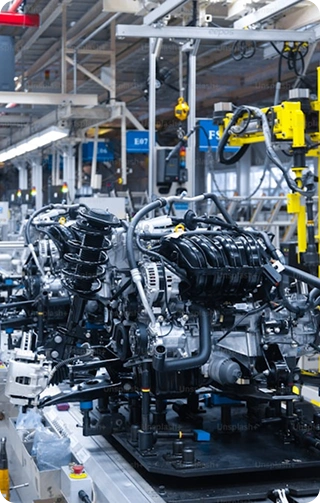
An AI consultant for compliance monitoring in manufacturing reviews predictive maintenance and quality control AI for safety-critical decision accountability and documentation.

Ecommerce
An AI consultant for compliance monitoring in ecommerce assesses recommendation engines and dynamic pricing models for consumer protection and algorithmic transparency requirements.

Marketing
An AI consultant for compliance monitoring in marketing reviews AI for personalization and targeting, as well as data privacy, consent management, and disclosure obligations.

Real Estate
An AI consultant for compliance monitoring in real estate audits valuation models and tenant screening tools for fair housing rules and lending-adjacent compliance risk.

Customer Service
An AI consultant for compliance monitoring in customer service reviews AI-mediated conversations for disclosure requirements, complaint handling, and escalation protocols on regulated topics.

Education
An AI consultant for compliance monitoring in education assesses adaptive learning and admissions AI for fairness, accessibility, and student data protection requirements.
Most AI systems are misclassified under the rules
that
govern them.
Find out where yours stands before a regulator does.
Frequently Asked Questions
Our Enterprise AI compliance consulting services assess your AI systems against applicable regulations, classify their risk level, and build the documentation, governance, and monitoring needed to meet those obligations.
Governance covers the internal policies and accountability structures for how AI is built and used. Compliance consulting includes governance, but also covers the regulatory classification, documentation, and audit-readiness work needed to meet specific legal requirements.
Look for a track record against named frameworks (EU AI Act, NIST AI RMF, ISO/IEC 42001), not just a policy template library. A firm that can run a technical bias audit as well as draft a governance policy is doing the full job, not half of it.
The ones worth hiring pair technical audit capability (bias testing, data provenance review, model robustness) with governance and documentation work. A firm that only does one half will hand you a policy that doesn’t hold up to a technical audit, or an audit with no governance framework behind it.
Usually, yes. Automation tools are good at tracking policy documents and flagging obvious gaps. They can’t defend the reasoning behind a risk classification or hold a bias assessment up to regulatory scrutiny. Consulting builds that case; software tracks it afterward.
For generative AI and content-producing systems specifically, look for expertise in disclosure and transparency obligations, like content-labeling requirements under the EU AI Act, not just the broader risk-classification work that applies to AI systems generally.
Yes, if any AI system you build or deploy touches EU users, regardless of where your company is headquartered. US state laws and sector rules apply independently of that.
A gap assessment usually takes two to four weeks depending on how many AI systems are in scope. Full governance framework implementation runs longer and depends on how much of your policy and documentation infrastructure already exists.
Yes. Pre-build assessment is the cheapest point to get classification right, before architecture decisions are locked in.