 AI
 5 MIN READ


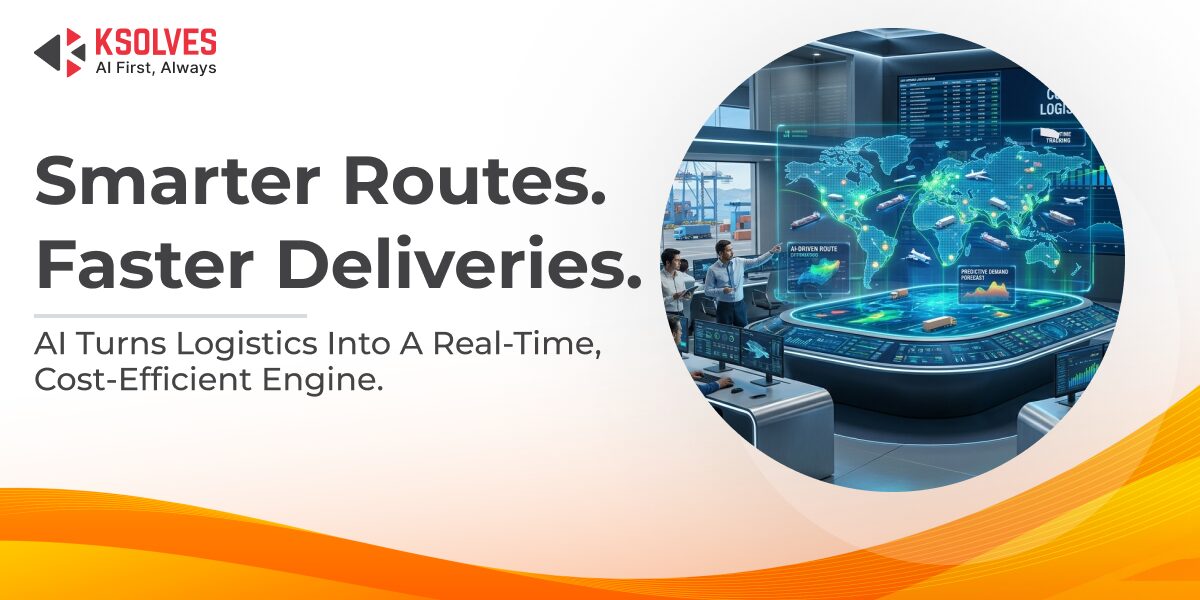
The logistics industry is undergoing a rapid digital transformation, with Artificial Intelligence (AI) at the helm. The surge in e-commerce, globalization, and customer demand for fast and accurate deliveries has rendered traditional routing models outdated and inefficient. AI, along with Machine Learning (ML), is now enabling logistics companies to make data-driven decisions, optimize delivery routes in real time, and significantly reduce operational costs.
This blog explores how AI is reshaping the logistics industry, key use cases in routing and delivery, benefits, real-world examples, and how businesses can start their AI journey with a trusted AI and ML Development Company like Ksolves.
The Challenges in Traditional Logistics Routing
Before diving into how AI helps, it’s important to understand the bottlenecks of conventional logistics routing:
- Static Route Planning: Routes are planned based on fixed variables, ignoring real-time changes like traffic, weather, or road closures.
- Manual Decision-Making: Logistics managers often rely on historical data or experience rather than predictive analytics.
- Inefficient Fleet Utilization: Lack of data insights leads to underused or overworked delivery vehicles.
- Customer Dissatisfaction: Delays, wrong deliveries, and a lack of real-time updates reduce customer trust and loyalty.
These challenges result in increased fuel consumption, delayed deliveries, and higher carbon footprints, directly impacting profitability.
How AI Is Reshaping Routing and Delivery
1. Dynamic Route Optimization
AI uses real-time data such as traffic conditions, weather forecasts, delivery urgency, and vehicle availability to suggest the most efficient route dynamically. This leads to:
- Faster deliveries
- Lower fuel consumption
- Improved driver productivity
Machine learning algorithms learn from each delivery to refine future route suggestions, making the system smarter over time.
2. Predictive Maintenance
By analyzing vehicle sensor data, AI can predict potential breakdowns or maintenance needs. This helps logistics firms avoid costly downtime and keep the fleet running smoothly.
3. Real-Time Tracking and Visibility
AI integrates GPS, IoT, and machine learning to provide real-time tracking of shipments. This enhances transparency and allows both customers and managers to receive accurate ETAs, reroute vehicles in case of emergencies, and improve delivery planning.
4. Automated Delivery Scheduling
AI can analyze historical order data to identify optimal delivery windows, reduce failed delivery attempts, and enhance customer satisfaction. AI-powered chatbots are also being used to coordinate delivery timings with end customers.
5. Load Optimization
Using AI, companies can better plan how packages are loaded into delivery vehicles to maximize space and minimize shifting or damage. This is especially useful in last-mile delivery, where speed and space are critical.
Ksolves’ end-to-end AI automation solutions cover every layer of this stack, from warehouse computer vision to real-time route optimization and predictive shipment tracking.
Benefits of AI in Logistics Routing and Delivery
Implementing AI technologies in logistics provides a host of measurable benefits:
- Reduced Operational Costs
- Improved Delivery Accuracy
- Enhanced Customer Experience
- Lower Carbon Emissions
- Faster Turnaround Times
- Proactive Issue Resolution
With the right AI tools, logistics companies can transition from being reactive to proactive, predicting and solving issues before they escalate. For a detailed look at how data forecasting strengthens operations end-to-end, read our blog on predictive analytics in supply chain management.
Real‑World Examples & Key Statistics
- A recent academic study found that AI‑based route optimization, which considers variables like traffic, delivery requirements, and vehicle capacity, can significantly reduce transportation costs and improve delivery times.
- The same study reported that AI‑powered warehouse management systems and robotics are improving order fulfillment rates and productivity in major logistics operations.
- Technologies like real‑time tracking and last‑mile delivery optimization have shown improvements in delivery accuracy and customer satisfaction when AI is employed.
These real‑world examples showcase how early adopters are seeing significant ROI by implementing AI in routing, delivery, and broader logistics operations.
Partner with an Expert AI and ML Development Company Like Ksolves
To truly unlock the power of AI, you need the right technology partner. That’s where Ksolves, a leading AI and ML company, steps in. We specialize in building custom AI-driven logistics solutions that automate and optimize every step of the delivery process, from predictive route planning to smart fleet management.
With deep domain expertise, scalable architecture, and real-time data analytics capabilities, Ksolves helps logistics firms modernize their operations, improve efficiency, and meet evolving customer expectations.
Conclusion
AI is revolutionizing the logistics industry by transforming how routes are planned, deliveries are managed, and customer expectations are met. With real-time data analysis, predictive maintenance, and dynamic route optimization, logistics companies can reduce costs, improve delivery accuracy, and enhance customer satisfaction. As the industry grows more complex, adopting AI is no longer optional; it’s essential for staying competitive.
Moreover, by partnering with an experienced expert AI/ML services provider like Ksolves, businesses can implement tailored AI solutions that drive efficiency and innovation across their supply chains. The future of logistics is intelligent, data-driven, and powered by AI.


 Mayank Shukla