Project Name
Ksolves Compresses Deployment Cycles From 6 Hours to Under 60 Minutes via Microservices
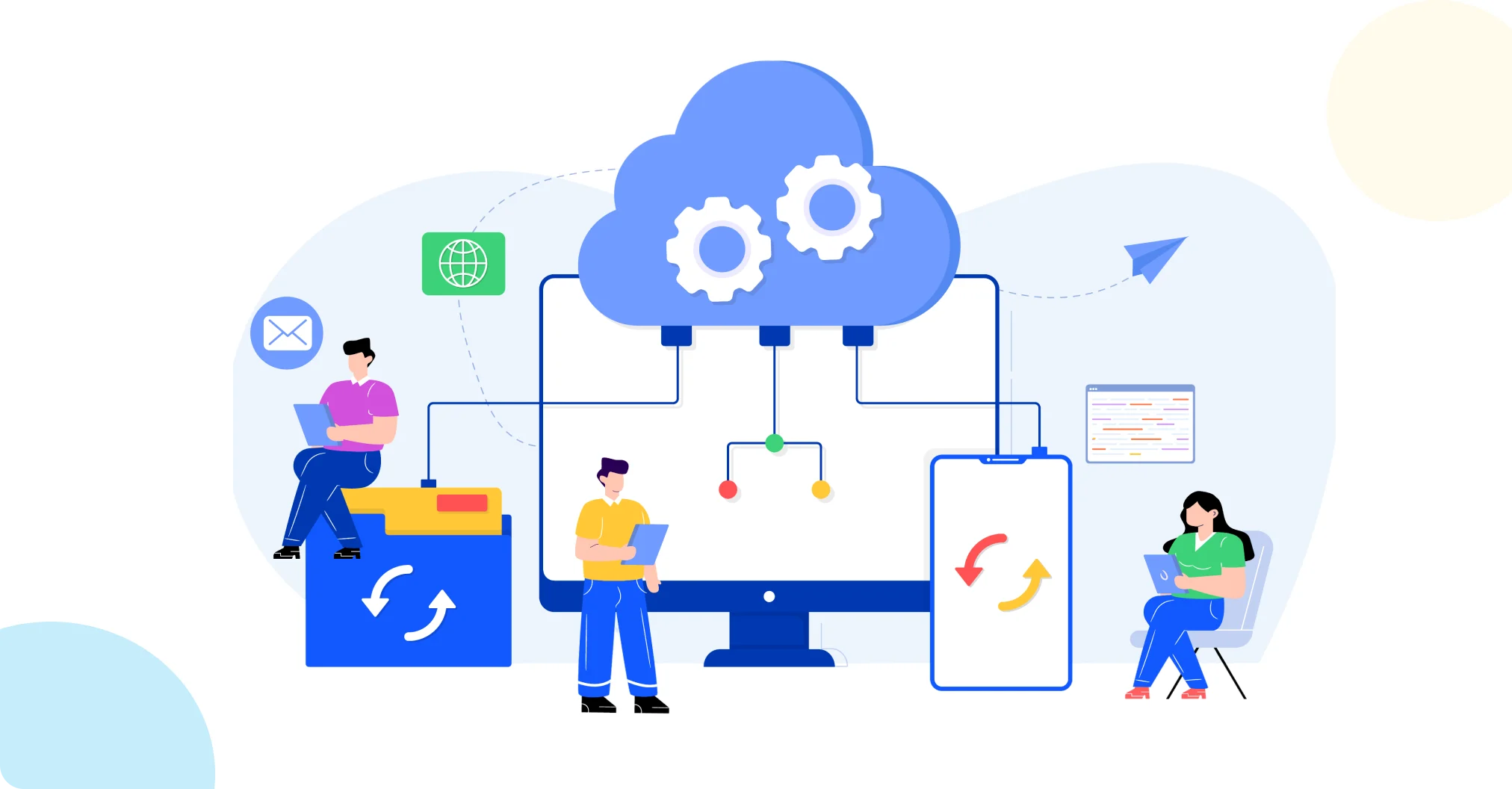

Six years of catalog growth and rising sales throughput had pushed a North American retail platform past what its original monolith could comfortably carry. Every release meant bundling Orders, Inventory, Catalog, and Support into one deployment, and every deployment meant a six-hour window where one bad change could take the whole platform down with it. Leadership wanted same-day releases. The monolith made that impossible.
Ksolves broke the system apart by business domain using a Strangler Fig migration behind an API Gateway, and the platform stayed live the entire time it was happening. Deployments now finish in under 60 minutes, down from six hours, and the four resulting services ship independently, several times a day.
- Monolithic Bottleneck for Release Independence: Orders, Inventory, Catalog, and Support All Shipped as One Unit, So a Change in Any Single Module Could Hold Up Releases for Every Other Team.
- Fragility via Shared Transactional Schemas: Because the Modules Shared Database Transactions, a Fix in One Corner of the Codebase Had a Habit of Quietly Breaking Something Untouched in Another.
- Inefficient Six-Hour Deployment Cycles: The Full Build-and-Test Cycle for the Monolith Ran Past Six Hours Most Weeks, Which Meant a Bad Rollback Was Not a Quick Fix but a Multi-Hour Recovery Operation.
- Opaque Cross-Module Observability: There Was No Request Tracing Across Module Boundaries, So Tracking Down a Production Issue Meant Manually Combing Through Logs End to End.
- Synchronized Product Development Constraints: Four Feature Teams Were Locked to One Release Train, Which Meant the Slowest Team's Timeline Set the Pace for Everyone Else, Regardless of What Was Actually Ready to Ship.
Ksolves took the monolith apart along business domain lines instead of technical layers, using a Strangler Fig migration behind an API Gateway so the platform kept shipping throughout the transition rather than freezing for a rewrite.
- Domain-Driven Service Boundaries: An Event-Storming Exercise With the Client's Engineers Mapped Out Four Bounded Contexts: Orders, Inventory, Catalog, and Support, and Each One Became Its Own Independently Deployable Service.
- Saga-Based Cross-Service Consistency: The Shared Database Transactions That Caused Cross-Module Regressions Were Replaced With an Event-Coordinated Saga Pattern, Including Compensating Actions for the Orders-Inventory Workflow.
- Strangler Fig Migration Path: An API Gateway Shifted Traffic to the New Services Gradually, by Percentage, So the Team Could Validate Each Extracted Service Under Real Load Before Retiring the Corresponding Piece of the Monolith.
- Proactive Distributed Tracing: Tracing Infrastructure Went In Before the First Service Was Even Extracted, So Nobody Had to Debug a Distributed System Blind on Day One.
- 6 Hours to Under 60 Minutes: What Used to Be a Six-Hour Deployment Marathon Is Now a Sub-Hour Release, Service by Service.
- Multiple Daily Releases: The Four Services Ship on Their Own Schedules Now, Several Times a Day in Some Cases, Instead of Waiting on One Shared Weekly Train.
- Zero Cross-Module Regressions: Giving Each Service Its Own Schema Ownership Closed Off the Entire Failure Mode That Shared Transactions Used to Cause.
- Real-Time Incident Diagnosis: Engineers Pull Up a Tracing Dashboard and Watch a Request Move Across Services Live, Instead of Piecing It Together From Scattered Logs After the Fact.
- Four Independently Deployable Services: Orders, Inventory, Catalog, and Support Each Run, Release, and Fail Independently of the Others.
- Zero-Downtime Migration Path: None of This Required a Maintenance Window or a System Freeze. The Platform Stayed Shippable the Whole Way Through.

The client came to Ksolves with a six-hour deployment cycle standing between them and the release cadence their business actually needed. Ksolves’ microservices development team took the monolith apart along business domain lines instead of technical layers, using a Strangler Fig migration behind an API Gateway so the platform kept shipping throughout the transition rather than freezing for a rewrite.
Before, one release train carried four teams, and one bad database change could ripple into modules nobody had touched that week. Now, each service deploys on its own, schema ownership has closed off the regression pattern that used to eat engineering time, and a tracing dashboard shows exactly where a request is at any given moment.
The same extraction pattern is sitting there ready for whatever piece of the monolith gets carved out next.
Planning a Transition From a Monolithic Architecture Without Interrupting Your Product Roadmap?