



Healthcare Imaging: How Computer Vision Enhances Diagnostic Accuracy
AI
5 MIN READ
August 27, 2026

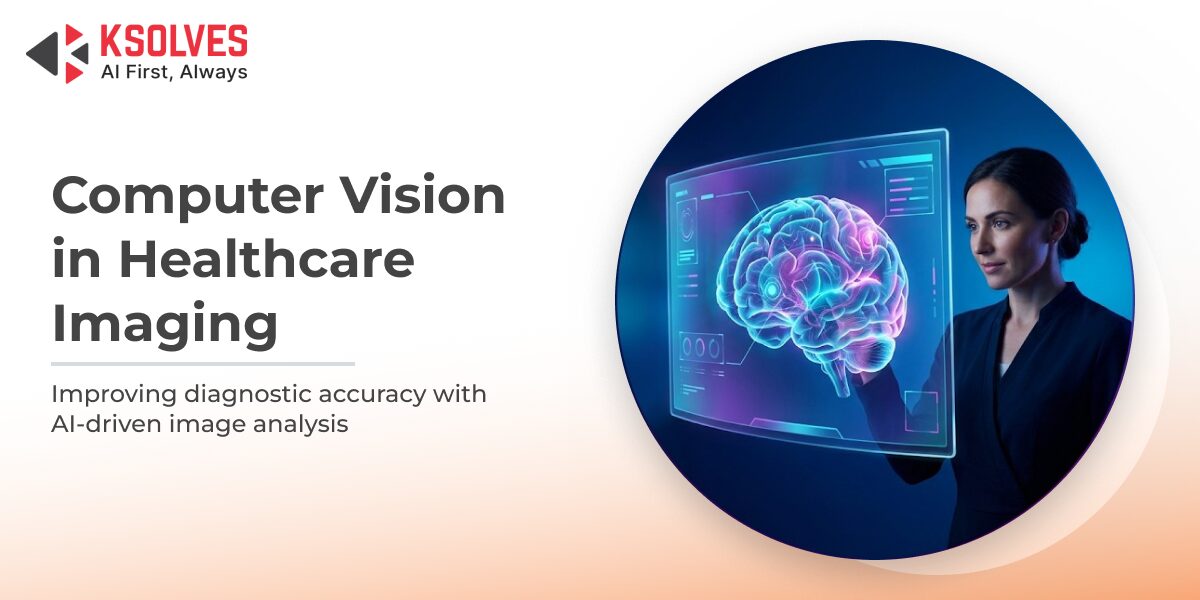
Medical imaging plays a critical role in modern healthcare. From X-rays and MRIs to CT scans and pathology slides, clinicians rely heavily on visual data to diagnose diseases, plan treatments, and monitor patient progress. However, increasing imaging volumes, complex cases, and human limitations can impact diagnostic accuracy. This is where computer vision is transforming healthcare imaging.
By enabling machines to analyze and interpret medical images with high precision, computer vision helps clinicians detect abnormalities earlier, reduce diagnostic errors, and improve overall patient outcomes. As healthcare providers increasingly adopt AI-driven solutions, computer vision development services are becoming essential for building scalable and reliable diagnostic systems. This blog explores how computer vision enhances diagnostic accuracy in healthcare imaging, its key applications, and the role of Computer Vision Development Services in building reliable AI-driven diagnostic solutions.
What Is Computer Vision in Healthcare Imaging
Computer vision is a field of artificial intelligence that enables systems to extract meaningful insights from images and videos. In healthcare imaging, it involves training AI models to analyze medical images and identify patterns associated with diseases or abnormalities.
Unlike traditional rule-based image processing, computer vision models learn directly from large datasets of labeled medical images. Using deep learning techniques, these systems can recognize subtle visual cues that may be difficult for the human eye to detect consistently, especially under time pressure or high workloads.
Why Diagnostic Accuracy Matters in Healthcare
Accurate diagnosis is the foundation of effective treatment. Even minor errors in image interpretation can lead to delayed treatment, unnecessary procedures, or incorrect clinical decisions. Radiologists and pathologists often review hundreds of images daily, increasing the risk of fatigue-related oversight.
Healthcare imaging also faces challenges such as variability in image quality, complex anatomical structures, and the need for rapid turnaround times. Computer vision addresses these challenges by providing consistent, data-driven analysis that complements clinical expertise rather than replacing it.
How Computer Vision Improves Diagnostic Accuracy
Automated Detection of Abnormalities
Computer vision models can automatically detect anomalies such as tumors, fractures, lesions, or internal bleeding. These systems highlight areas of concern, enabling clinicians to focus on high-risk regions and make informed decisions faster.
Image Enhancement and Noise Reduction
AI-powered image enhancement improves clarity by reducing noise and enhancing contrast. This is particularly valuable in low-quality scans or early-stage disease detection, where subtle details are critical.
Pattern Recognition at Scale
Computer vision excels at identifying patterns across thousands of images. It can detect correlations and disease markers that may not be obvious in isolated cases, improving diagnostic consistency across patients.
Reduced Variability and Bias
Human interpretation can vary based on experience, fatigue, and subjective judgment. Computer vision provides more standardized analysis, reducing inter-reader variability.
Also Read: List of Computer Vision Trends to Watch in 2026
Build AI-Powered Diagnostic Imaging Solutions
Key Healthcare Imaging Use Cases
Radiology Imaging
Computer vision is widely used in X-rays, CT scans, and MRIs to detect conditions such as lung nodules, fractures, strokes, and organ abnormalities. AI-assisted radiology systems act as a second reader, improving detection rates without increasing clinician workload.
Oncology Diagnostics
In cancer detection, computer vision supports tumor identification, segmentation, and progression monitoring. For example, AI models analyze mammograms to identify early signs of breast cancer, helping radiologists detect malignancies at earlier stages.
Ophthalmology and Retinal Imaging
Retinal image analysis is a strong real-world example of computer vision in healthcare. AI systems are used to detect diabetic retinopathy, glaucoma, and macular degeneration by analyzing retinal scans with high accuracy, often before symptoms become severe.
Pathology and Histopathology
Digital pathology uses computer vision to analyze tissue samples and cell structures. AI-powered pathology systems assist in identifying cancerous cells, grading tumors, and supporting faster pathology workflows.
Emergency and Critical Care
In emergency settings, computer vision helps rapidly analyze imaging data for conditions such as internal bleeding or traumatic injuries, supporting faster clinical decisions when time is critical.
Also Read: Computer Vision in Manufacturing: Better Quality & Automation
Core Computer Vision Techniques Used in Medical Imaging
- Convolutional Neural Networks (CNNs) for image classification and detection
- Image segmentation for identifying precise boundaries of organs or tumors
- Object detection models for locating abnormalities within scans
- 3D image analysis for volumetric imaging, such as CT and MRI
- Feature extraction and classification for disease prediction and monitoring
These techniques form the backbone of healthcare-focused computer vision development services.
The Future of Computer Vision in Healthcare Imaging
The future of healthcare imaging lies in the deeper integration of computer vision with clinical decision-making systems. Advancements such as real-time image analysis, multimodal AI combining imaging with patient data, and predictive diagnostics will further enhance diagnostic accuracy and treatment planning.
As these solutions move from research to real-world clinical adoption, healthcare organizations need reliable and scalable AI implementations. Regulatory pathways such as FDA 510(k), De Novo classification, and CE marking remain critical for clinical deployment, and any AI-based diagnostic tool must undergo rigorous validation to meet these standards.
This is where Computer Vision Development Services play a crucial role. With the right technology partner, healthcare providers can build custom, secure, and compliant computer vision solutions tailored to specific imaging workflows, clinical requirements, and regulatory standards. Ksolves helps healthcare organizations design, develop, and deploy AI-powered imaging solutions that improve diagnostic confidence while seamlessly integrating with existing healthcare systems.
Conclusion
Computer vision is reshaping healthcare imaging by improving diagnostic accuracy, consistency, and speed across clinical workflows. By enabling intelligent analysis of medical images, it supports early disease detection and better clinical decisions while reducing operational strain on healthcare teams.
To implement these capabilities effectively, organizations need reliable expertise. Computer Vision Development Services from Ksolves can help healthcare providers build secure, scalable, and compliant imaging solutions that translate advanced AI into real-world clinical impact.

































Author
About the Author Editorial Team The Ksolves Editorial Team includes certified Salesforce experts, Big Data engineers, AI/ML specialists, Zoho consultants, and experienced technology writers focused on delivering clear, actionable insights for modern businesses. With hands-on experience across Salesforce, Big Data platforms, AI/ML solutions, application development, software testing, and Zoho ERP/CRM, the team publishes practical guides, real-world use cases, and industry updates that support smarter decisions and faster growth. Every article is created to solve business challenges, guide technology adoption, and keep organizations aligned with evolving digital ecosystems.
Share with