



Managing Multi-Client Projects with Odoo’s Project Forecasting
Odoo
5 MIN READ
April 12, 2026

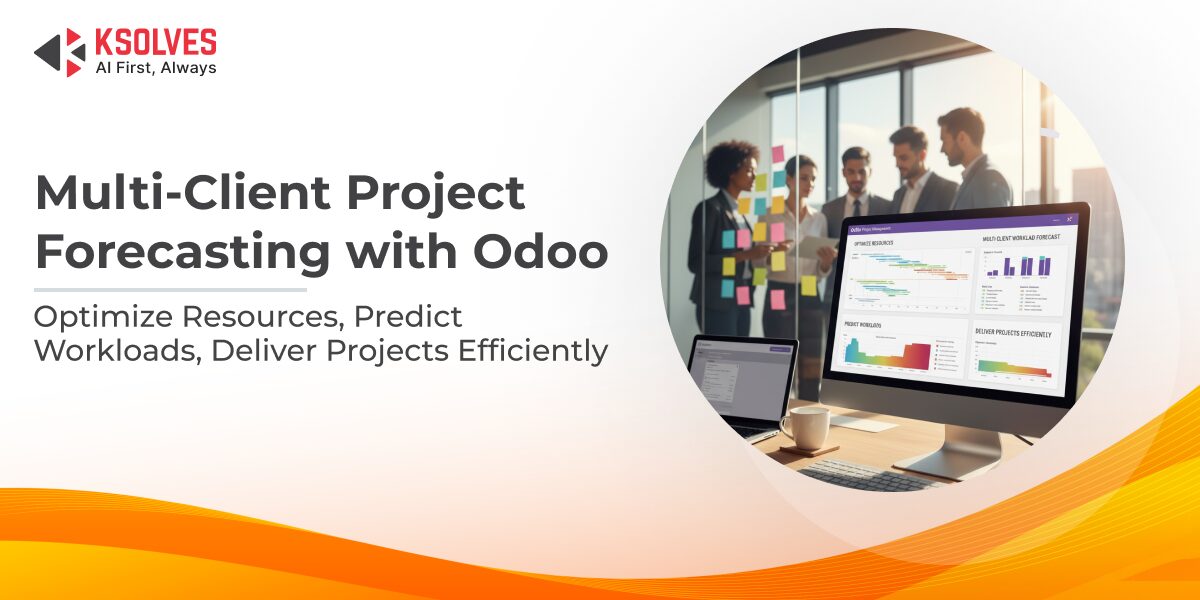
Managing multiple client projects simultaneously can feel like juggling flaming torches – one misstep, and deadlines slip, teams burn out, or budgets spiral out of control. Each client has unique expectations, timelines, and priorities, making it a constant challenge for project managers to maintain visibility, allocate resources efficiently, and keep every project profitable.
Traditional project management methods, such as spreadsheets, scattered tools, or siloed reports, often fail under this complexity, leaving managers reactive instead of proactive. That’s where Odoo’s Project Forecasting comes in. By combining real-time insights, predictive analytics, and centralized dashboards, it transforms multi-client project management from chaos into clarity.
In this blog, we’ll explore the challenges of managing multiple client projects, how Odoo’s Project Forecasting addresses them, key features to leverage, and best practices to ensure every project runs smoothly, on time, and within budget.
Why Multi-Client Project Management Breaks at Scale
Delivering a single project successfully requires discipline and coordination. Delivering ten or fifty projects simultaneously across shared teams, competing client priorities, and fixed commercial commitments introduces an entirely different level of complexity.
As organizations grow, several structural challenges begin to surface:
- Limited visibility into future resource availability, making it difficult to plan work beyond the immediate sprint.
- Overlapping and conflicting client commitments, often competing for the same critical skills.
- Inaccurate or overly optimistic delivery timelines, driven by static plans that fail to reflect real execution.
- Gradual margin erosion, caused by late-stage overruns and reactive resourcing decisions.
Also Read: Mastering Multi-Project Management: 6 Effective Strategies for Success
Understanding the Real Challenges of Multi-Client Project Environments
1. Resource Conflicts Across Clients
In most professional services organizations, the same consultants, engineers, or creatives work across multiple client projects. Without a consolidated view of future allocations, teams are often double-booked or pulled into urgent work at the expense of planned commitments.
This leads to missed deadlines, employee burnout, and constant reprioritization.
2. Inaccurate Effort and Cost Estimation
Initial project estimates are rarely the problem. The real issue is the inability to continuously adjust those estimates as work progresses. Without forecasting, teams only discover overruns after they happen, when margins are already impacted.
3. Lack of Real-Time Visibility for Managers
Many project managers can see what has already been completed, but struggle to answer critical questions such as:
- Do we have enough capacity next month?
- Which projects are at risk of delay?
- Where will resource bottlenecks occur?
Without forward-looking data, decisions are delayed or based on assumptions.
4. Difficulty Balancing Utilization and Client Commitments
High utilization does not always equal healthy delivery. Overloaded teams compromise quality, while underutilized teams reduce profitability. Striking the right balance requires visibility into both current workload and future demand.
What is Project Forecasting in Odoo and Why It Matters
Traditional project planning focuses on tasks, deadlines, and milestones, essentially tracking what should happen. Project forecasting goes a step further by estimating future effort, capacity, and workload distribution based on both current plans and evolving project realities.
In Odoo, forecasting provides not just a snapshot of planned activities but a predictive view of what is likely to happen, enabling managers to make proactive, data-driven decisions.
Core Concepts Behind Odoo Project Forecasting
Odoo’s project forecasting revolves around three key elements:
- Forecasted Hours: The estimated effort required to complete tasks, updated as project progress evolves.
- Allocated Resources: A view of who is expected to work on what, and when, helping prevent overbooking and conflicts.
- Remaining Effort: The work still required to complete tasks, based on actual progress and logged timesheets.
Unlike static project plans, Odoo forecasts are continuously refined using real-time data, providing a dynamic and accurate picture of future workload and resource needs.
How Forecasting Fits into Odoo’s Unified ERP Model
One of Odoo’s strengths is its fully integrated ecosystem. Project forecasting is tightly connected with:
- Projects and Tasks: Ensuring forecasts align with actual deliverables.
- Timesheets and Effort Tracking: Capturing real work to refine future predictions.
- Employees and Roles: Factoring in availability, skill sets, and allocations.
- Sales Orders and Billable Services: Linking delivery capacity to commercial commitments.
By connecting these elements, Odoo ensures that forecasts are grounded in operational reality and aligned with financial outcomes. It gives organizations a reliable foundation for decision-making and strategic planning.
Also Read – How Odoo Automates Raw Material Procurement for Food & Beverage Businesses
How Odoo Modules Support Multi-Client Project Forecasting
Managing multiple client projects can quickly become overwhelming—teams get stretched, deadlines clash, and profitability can slip without warning. Odoo’s ecosystem of modules provides the tools needed to forecast effectively, make proactive decisions, and keep delivery on track. Here’s how:
1. Project Management (Projects & Tasks)
At the heart of Odoo’s forecasting capabilities is the Project module. By structuring projects into tasks and milestones, managers can see the big picture while tracking the smallest details.
For multi-client environments, it allows you to visualize overlapping projects, identify dependencies, and understand which tasks might compete for the same resources. This clarity ensures better scheduling and fewer last-minute firefights.
2. Timesheets & Attendance
Forecasts are only as good as the data behind them. The Timesheets module captures actual hours spent by each team member, enabling managers to compare planned vs. actual effort.
This real-time insight helps spot scope creep, adjust future workload predictions, and improve estimation accuracy, ensuring that your forecasts evolve with the reality of project execution.
3. Employees & HR
Resource planning is critical in multi-client projects, and Odoo’s Employees module integrates human resources directly into forecasting.
Managers can track availability, skill sets, and role-specific capacity, ensuring the right people are assigned to the right projects at the right time. This minimizes bottlenecks and prevents overloading high-demand resources.
4. Sales & Invoicing
Delivery doesn’t happen in a vacuum; projects exist to serve clients and generate revenue. By linking project forecasts with Sales and Invoicing modules, managers can see how planned workload aligns with client commitments, billable hours, and expected revenue.
This connection helps maintain profitability, prevent budget overruns, and make sure forecasts reflect both operational and financial reality.
Also Read: Redefine Your Sales Operations with the Odoo Sales
5. Planning & Resource Management
Odoo’s Planning module provides a visual, bird’s-eye view of resource allocation across all projects.
Managers can quickly identify periods of overload or underutilization, rebalance assignments, and even make strategic decisions about hiring or outsourcing. This proactive approach prevents conflicts before they disrupt client delivery.
6. Analytics & Reporting (Odoo Studio & Dashboards)
Finally, Odoo’s reporting tools and dashboards give managers actionable insights at a glance. Forecasted vs. actual effort, team utilization, and project profitability are all visible in one place.
This data-driven perspective allows teams to adapt plans quickly, communicate confidently with clients, and make strategic decisions that support both delivery and growth.
Featured Addon: Dashboard Ninja with AI for Reporting
Managing multiple client projects can quickly overwhelm even the most organized teams, but Dashboard Ninja with AI turns chaos into clarity. By bringing data from various Odoo modules into one interactive, real-time dashboard, managers gain a single pane of glass to track progress, spot bottlenecks, and make informed decisions without hopping between modules.
What sets it apart is its AI-powered insights. Beyond visualizing data, it highlights trends, predicts capacity risks, and surfaces actionable opportunities before they become problems. With a modern, intuitive interface, teams can create, customize, and share dashboards effortlessly, making project forecasting not just visible, but smart, proactive, and collaborative.
How Ksolves Turns Project Forecasting into a Real Competitive Advantage
Most growing service organizations reach a point where project chaos doesn’t come from lack of effort, but from lack of visibility. Teams are working hard, clients are demanding more, and yet leaders still struggle to answer simple questions:
- Who’s overloaded next month?
- Which client is quietly slipping off track?
- Where are margins at risk?
This is where Ksolves makes the difference. Instead of implementing Odoo “by the book,” Ksolves starts by understanding how your teams actually deliver work across multiple clients.
Forecasting is configured around real delivery patterns, such as shared resources, changing priorities, and evolving scopes, so project managers see risks early, not after deadlines are missed.
From Setup to Adoption, Not Just Configuration
Ksolves, a trusted Odoo Gold Partner and Best Partner India 2025, goes beyond technical implementation. We help teams adopt forecasting as a daily decision-making tool, not just a reporting feature. With intuitive dashboards, role-based views, and practical workflows, managers gain clarity without complexity, and leadership gets the confidence to commit to timelines and growth plans.
Predictable Delivery, Happier Teams, Stronger Margins
The result is a noticeable shift: fewer last-minute escalations, better-balanced workloads, and more predictable client delivery. Teams stop firefighting and start planning ahead. Leaders stop guessing and start acting on insight. That’s how project forecasting becomes more than a feature; it becomes a competitive advantage.
Final Words
Managing multi-client projects at scale demands more than powerful software – it requires the right strategy, configuration, and execution expertise. Odoo provides the foundation for intelligent project forecasting, but its real value is unlocked when the platform is aligned with how your teams deliver work in the real world.
This is where Ksolves’ Odoo services make a difference. From designing scalable project and resource models to enabling meaningful forecasting, dashboards, and adoption, Ksolves helps organizations turn Odoo into a system they can rely on – one that supports predictable delivery, balanced workloads, and sustainable growth.

































AUTHOR
Odoo
Share with