



Why Headless eCommerce Is the Future of Digital Commerce, and How Odoo Makes It Possible
Odoo
5 MIN READ
July 7, 2026

The rules of e-commerce have changed dramatically over the past decade. Customers no longer compare your online store with your direct competitors; they compare it with the fastest digital experiences they encounter every day. Whether shopping on a smartphone, browsing products on a desktop, placing repeat orders through a mobile application, or interacting with a self-service kiosk, users expect speed, convenience, personalization, and consistency across every touchpoint.
Unfortunately, many traditional eCommerce platforms struggle to meet these expectations. Their tightly coupled architecture makes even small frontend changes dependent on backend deployments, slowing innovation and limiting customer experience improvements.
This is why organizations across retail, manufacturing, wholesale, D2C, and B2B commerce are adopting Headless eCommerce. By separating the customer-facing storefront from the commerce engine, businesses gain the flexibility to create modern digital experiences while maintaining a robust backend for products, pricing, inventory, orders, and fulfillment.
In this guide, we’ll explore how Headless eCommerce works, why it has become a strategic business priority, the value it delivers, and how Ksolves helps organizations build enterprise-grade Headless Commerce solutions using React and Odoo.
Why Traditional eCommerce Platforms Are Holding Businesses Back
Most legacy eCommerce platforms were designed for a simpler digital landscape where customers primarily shopped through desktop websites. Today, businesses must deliver seamless experiences across websites, mobile apps, marketplaces, kiosks, progressive web apps (PWAs), and even IoT devices.
Traditional platforms combine the frontend and backend into a single application. While this approach simplifies initial development, it introduces significant limitations as businesses scale.
Common challenges include:
- Slow page loading and full-page refreshes.
- Limited design flexibility.
- Complex deployments for minor UI changes.
- Slower innovation cycles.
- Difficulty supporting multiple customer channels.
- High maintenance costs.
- Vendor lock-in.
As customer expectations continue to rise, these limitations directly impact conversion rates, customer satisfaction, and revenue growth.
What is Headless eCommerce?
Headless eCommerce is an architectural approach where the presentation layer (frontend) is separated from the commerce engine (backend). Instead of rendering webpages directly from the backend, the backend exposes APIs that deliver products, pricing, inventory, customer information, and order data to any frontend application.
The frontend, typically built with modern frameworks like React, consumes these APIs to create highly interactive shopping experiences.
This separation enables both systems to evolve independently. Development teams can redesign customer experiences without affecting backend operations, while backend teams continue enhancing business processes without disrupting the storefront.
Traditional Commerce vs. Headless Commerce
| Traditional Commerce | Headless Commerce |
| Frontend & backend locked together | Fully decoupled via APIs |
| Template-driven, rigid UI | Any design, any framework |
| Full deployment for small changes | Frontend & backend deploy independently |
| Full page reloads on every action | Instant, app-like navigation (SPA) |
| One storefront only | Web, mobile, kiosk, IoT, all from one backend |
| Locked to vendor themes | Technology-agnostic frontend |
| High risk, slow releases | Low risk, fast releases |
Understanding Headless Single Page Applications (SPA)
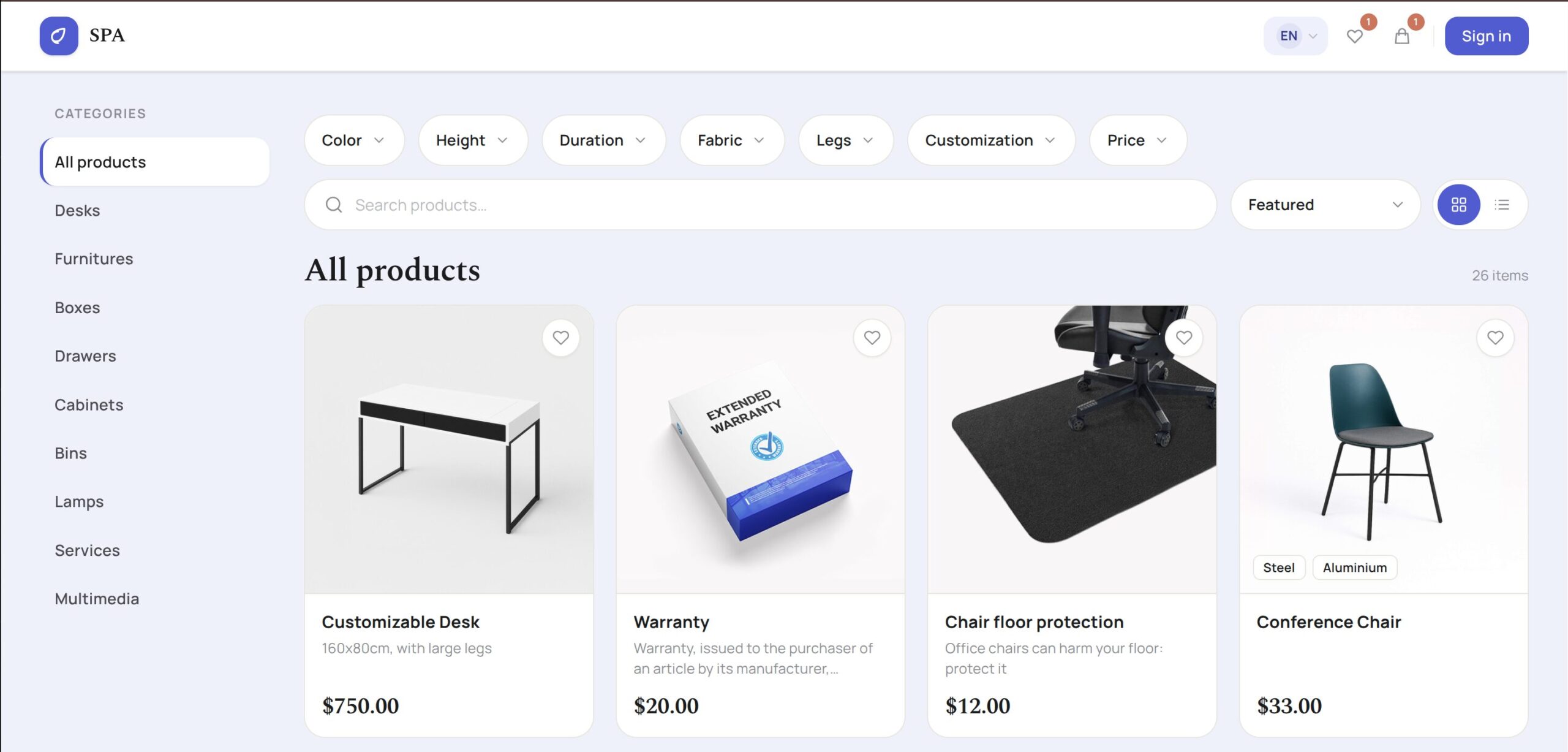
A Single Page Application (SPA) loads the application once and dynamically updates content without refreshing the entire page.
When combined with Headless Commerce, this creates a shopping experience similar to native mobile applications.
Customers enjoy:
- Instant page transitions.
- Real-time filtering.
- Faster search.
- Seamless checkout.
- Smooth product browsing.
- Reduced waiting time.
Popular frameworks used for Headless SPAs include:
Among these, React has become the preferred choice because of its reusable component architecture, massive ecosystem, and excellent performance.
Why Businesses Are Investing in Headless eCommerce
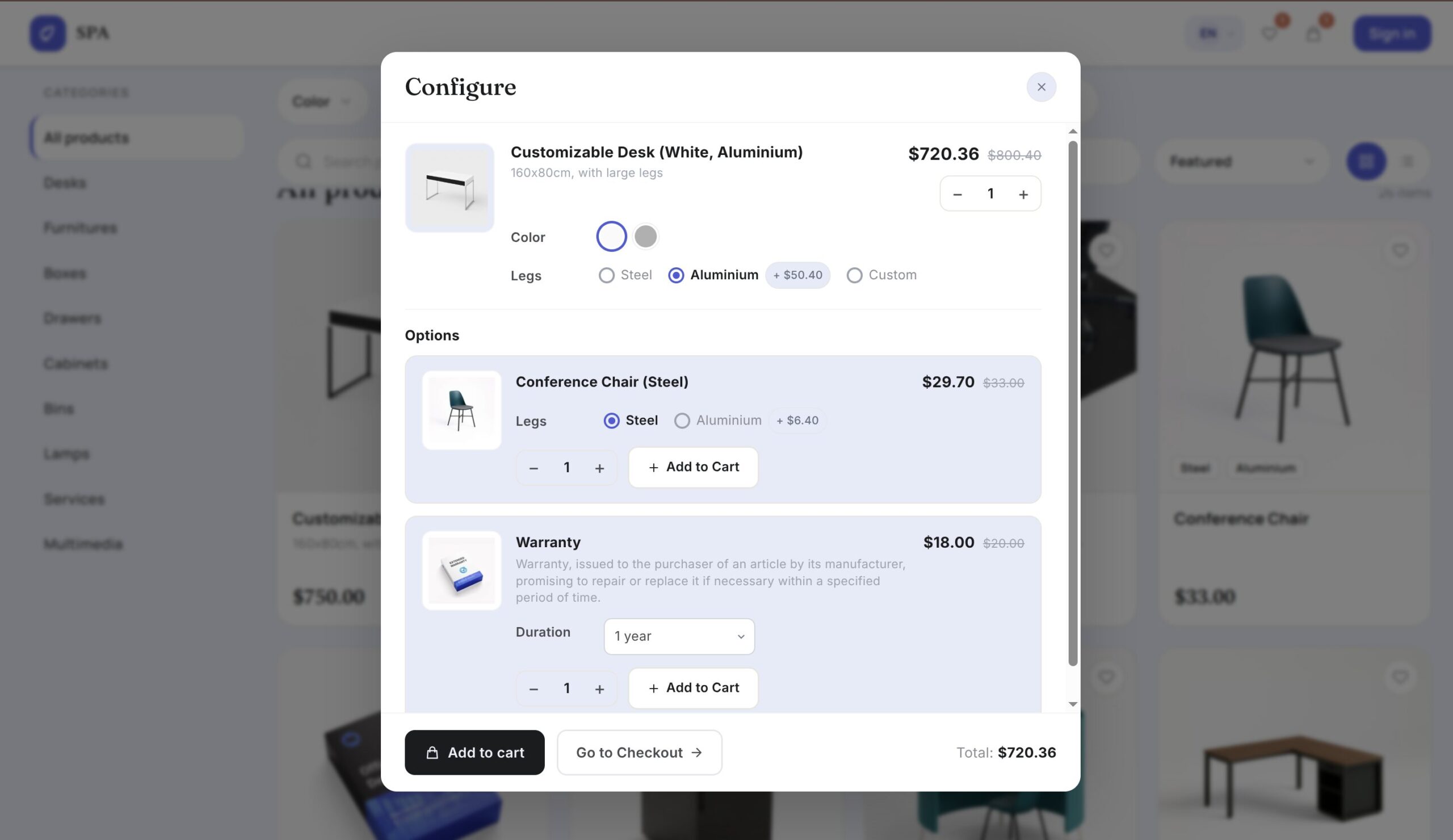
Headless Commerce is no longer reserved for global brands. Businesses of every size are adopting it because it directly impacts revenue, customer experience, and operational agility.
1. Superior Website Performance
Website speed directly influences customer behavior.
A fast storefront reduces bounce rates, improves engagement, and increases completed purchases.
Since frontend assets are independently optimized and delivered through CDNs, Headless Commerce significantly improves loading performance.
2. Omnichannel Commerce
Modern customers don’t interact through a single channel.
They may:
- Browse on a phone.
- Compare products on the desktop.
- Purchase through an app.
- Track orders through customer portals.
- Visit physical stores.
Headless Commerce enables all these experiences from a single backend.
3. Faster Innovation
Marketing teams frequently launch campaigns, promotions, and seasonal experiences.
With traditional systems, these changes often depend on backend deployments.
Headless Commerce enables frontend teams to release new experiences independently, dramatically reducing time-to-market.
4. Better Customer Experiences
A Headless SPA creates an experience that feels responsive and intuitive.
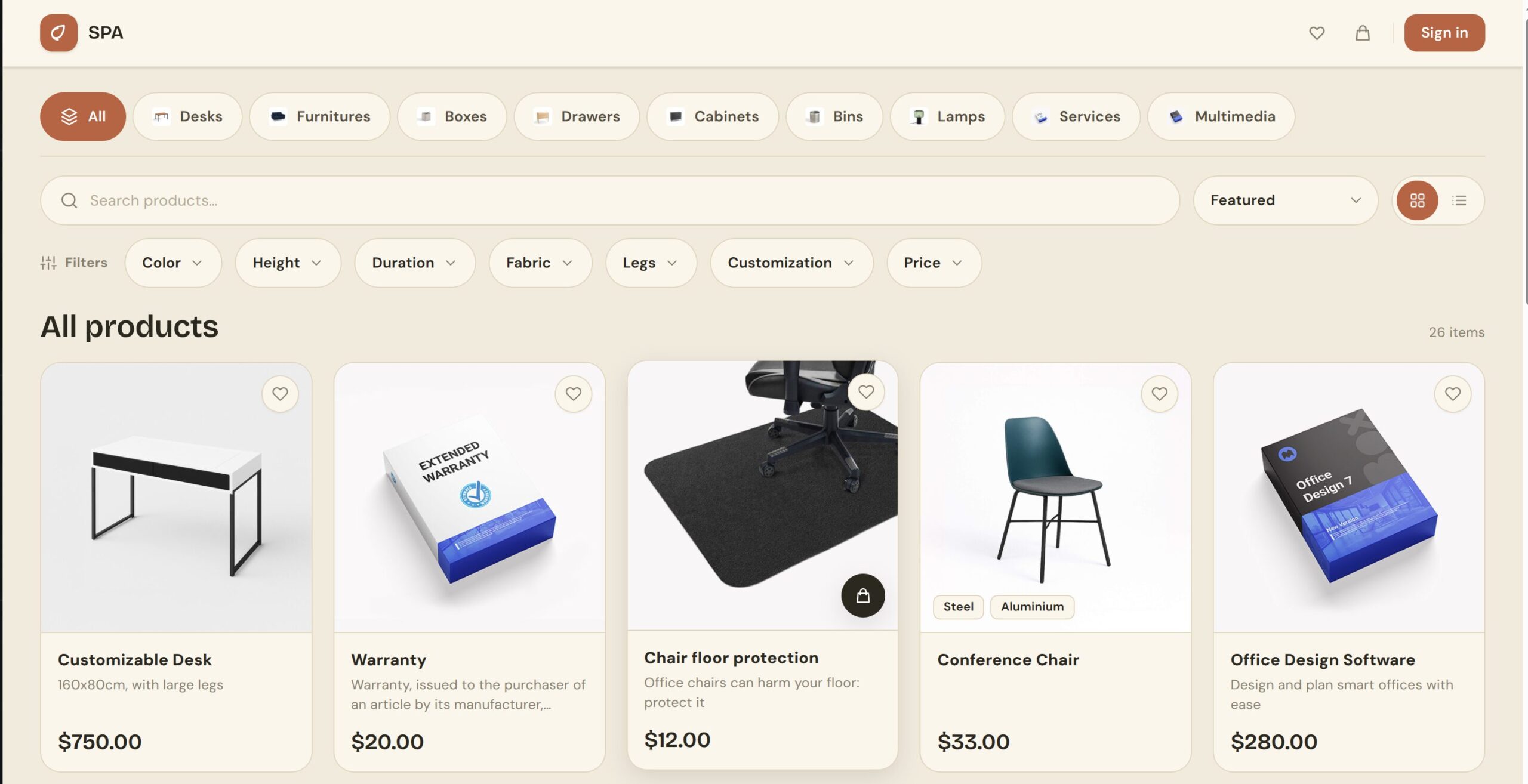
Customers experience:
- Faster navigation.
- Dynamic product recommendations.
- Personalized content.
- Smooth checkout.
- Better mobile usability.
These improvements contribute directly to higher conversion rates.
Headless makes your life easy – it separates the application layer from the presentation layer. All the operations (backend) take place in Odoo.
Business Gains of Headless SPA eCommerce
Headless SPA eCommerce is more than a modern development approach – it’s a smarter way to build digital commerce. By separating the storefront from the backend, businesses can innovate faster, deliver better customer experiences, and adapt quickly to changing market demands. The result is a platform that empowers developers, supports business teams, and provides a secure foundation for long-term growth.
1. Boost Developer Productivity
Traditional eCommerce platforms often make development slow and complex. Even a small frontend update may require changes to the backend, increasing development time and deployment risks.
With a Headless SPA architecture, development becomes faster and more efficient. Frontend and backend teams work independently through APIs, allowing them to build, test, and deploy features in parallel. Developers can also leverage reusable React components, modern JavaScript libraries, and automated CI/CD pipelines to accelerate delivery while maintaining code quality.
Key advantages include:
- Reusable component-based architecture that reduces development effort and ensures a consistent user experience.
- Hot Module Replacement (HMR) for instant preview of code changes without refreshing the entire application.
- Parallel frontend and backend development, enabling faster release cycles.
- Access to the vast npm ecosystem for integrating third-party libraries, UI components, and tools.
- Modern CI/CD pipelines simplify testing, deployment, and ongoing maintenance.
- Independent deployments, allowing new features to be released without affecting the rest of the platform.
2. Improve Business Agility
The benefits of Headless eCommerce extend far beyond the development team. It enables marketing, merchandising, and business leaders to respond quickly to customer needs and market opportunities.
Marketing teams can launch new campaigns and update landing pages more rapidly, while merchandising teams gain greater control over product displays and promotional content. As businesses expand into new regions, adding languages, currencies, or localized storefronts becomes much simpler without major backend changes.
Headless architecture also reduces dependency on a single commerce platform. Businesses can upgrade or replace backend systems while preserving the customer-facing experience, giving them greater flexibility as technology evolves.
Some of the biggest business advantages include:
- Launching marketing campaigns without lengthy development cycles.
- Updating product displays and promotional content in real time.
- Expanding into new markets with multilingual and multi-currency storefronts.
- Reducing vendor lock-in with a flexible, API-first architecture.
- Responding faster to changing customer expectations and market trends.
3. Strengthen Security and Reliability
A Headless architecture not only improves flexibility but also creates a more secure and resilient commerce platform.
Because the storefront communicates with the backend through secure APIs, sensitive business logic and databases remain protected from direct public access. Authentication, authorization, and rate limiting can be managed centrally, improving overall security.
The separation of frontend and backend also improves system reliability. If one layer requires maintenance or experiences an issue, the other can continue operating independently, reducing downtime and improving the customer experience.
Key security and reliability benefits include:
- Reduced attack surface, with no direct exposure of backend systems.
- Secure API communication protected by authentication and rate limiting.
- Independent frontend and backend deployments, minimizing operational risks.
- Improved platform resilience, as issues in one layer are less likely to affect the entire application.
- Faster security updates and patches, with each layer maintained independently.
4. Building a Future-Ready Commerce Platform
Ultimately, Headless SPA eCommerce provides much more than faster websites. It gives businesses the flexibility to innovate, the agility to respond to changing customer expectations, and the resilience to scale with confidence. By combining modern frontend technologies with a powerful commerce backend, organizations can build digital experiences that are faster, more engaging, and ready for the future.
Why Odoo is the Ideal Backend for Headless eCommerce
A successful headless commerce strategy requires more than a modern frontend – it needs a powerful backend capable of managing every aspect of your commerce operations. This is where Odoo stands out.
As an integrated ERP and eCommerce platform, Odoo serves as the central engine that powers your online business. While the React-based frontend delivers fast, engaging shopping experiences, Odoo seamlessly manages the business processes behind the scenes, from product catalogs and pricing to inventory, orders, and fulfillment.
With its API-first architecture, Odoo securely exposes commerce services to any frontend application, allowing businesses to build highly customized digital experiences without compromising operational efficiency. This decoupled approach gives organizations the freedom to innovate on the customer-facing side while relying on a stable and scalable backend.
Key Commerce Capabilities
Odoo provides everything needed to run modern commerce operations from a single platform, including:
- Product and catalog management for maintaining accurate product information.
- Dynamic pricing and promotions to support flexible sales strategies.
- Real-time inventory and warehouse management for improved stock visibility.
- Customer and order management to streamline the entire purchase lifecycle.
- Shopping cart and checkout functionality for seamless transactions.
- Integrated accounting, invoicing, and shipping to automate post-purchase operations.
- Native CRM integration to strengthen customer relationships and support personalized engagement.
Built for Global, Enterprise-Scale Commerce
Beyond its comprehensive commerce capabilities, Odoo offers the flexibility and scalability required by growing businesses.
Its built-in support for multiple languages, multiple currencies, and right-to-left (RTL) languages such as Arabic enables organizations to deliver localized shopping experiences across global markets. Being open source, Odoo offers complete customization without restricting frontend design or API usage, giving businesses the freedom to build experiences that reflect their brand and customer expectations.
Combined with native integration across finance, inventory, procurement, manufacturing, and customer management, Odoo eliminates data silos and creates a unified digital commerce ecosystem that scales as your business grows.
Whether you’re serving a single market or managing a global omnichannel operation, Odoo provides the enterprise-grade foundation needed to power a modern Headless eCommerce platform.
How Ksolves Delivers Headless Commerce with React and Odoo
Building a successful Headless eCommerce platform requires more than choosing the right technologies – it demands the right strategy, architecture, and implementation expertise. At Ksolves, an AI-first Odoo development company, we help businesses modernize their digital commerce ecosystem by combining the flexibility of React with the enterprise capabilities of Odoo, delivering solutions that are fast, scalable, and built for long-term growth.
Our approach begins with understanding your business objectives, customer journey, and operational workflows. Based on these insights, we design a future-ready architecture that seamlessly connects a high-performance frontend with a robust Odoo backend, ensuring an exceptional customer experience without compromising business operations.
Our End-to-End Headless Commerce Services
We support organizations throughout their Headless Commerce journey by offering:
- Business discovery and solution architecture to design a scalable commerce foundation aligned with your goals.
- Modern UX/UI design that creates intuitive, engaging, and conversion-focused shopping experiences.
- React-based Single Page Application (SPA) development for lightning-fast, app-like storefronts.
- Seamless API integration with Odoo to synchronize products, pricing, inventory, customers, carts, and orders in real time.
- Performance optimization to improve website speed, Core Web Vitals, and overall user experience.
- SEO-ready architecture that supports discoverability and organic search performance.
- Multi-language and multi-currency implementation to enable seamless expansion into global markets.
- Payment gateway and third-party integrations for secure, connected commerce operations.
- End-to-end ERP integration to unify sales, inventory, accounting, warehouse management, and fulfillment.
- Enterprise-grade security and deployment automation to ensure reliable, secure, and scalable operations.
- Continuous support and optimization to keep your platform aligned with evolving business and customer needs.
When Should You Choose Headless Commerce?
Headless architecture becomes essential when your business needs to:
- Support multiple digital channels.
- Scale during flash sales or peak traffic.
- Deliver personalized shopping experiences.
- Expand into international markets.
- Support multiple languages and currencies.
- Integrate ERP, CRM, PIM, or WMS platforms.
- Perform frequent UI updates and A/B testing.
- Improve website performance and Core Web Vitals.
If these requirements align with your growth strategy, Headless Commerce is no longer optional – it becomes a competitive necessity.
| Your Situation | Why Headless Is Mandatory |
| Flash sales, peak events, high traffic | Only decoupled scaling can guarantee uptime and speed under load |
| Selling across web, app, kiosk, PWA | A single headless backend powers all channels consistently |
| Arabic, Hebrew, or other RTL languages | Frontend i18n + locale-aware backend is the only reliable solution |
| Frequent UX changes and A/B testing | Monolithic platforms cannot support the required pace of iteration |
| ERP, CRM, WMS, or PIM integration | API-first architecture is required for reliable, scalable integrations |
| Multiple regions or currencies | Add new markets via frontend config – no backend re-engineering |
| High competition, fast-moving market | Speed of delivery is a competitive weapon – headless enables it |
Final Thoughts
Modern eCommerce success depends on more than product catalogs and checkout functionality – it depends on delivering exceptional digital experiences that keep pace with evolving customer expectations.
Headless Commerce empowers businesses to innovate faster, create engaging storefronts, support omnichannel strategies, and scale confidently without being constrained by legacy architectures.
By combining React’s frontend flexibility with Odoo’s powerful ERP and commerce capabilities, Ksolves delivers enterprise-grade Headless Commerce solutions that are fast, secure, scalable, and built for long-term growth.
Whether you’re modernizing an existing online store or launching a new digital commerce platform, our team can help you build a future-ready architecture that drives measurable business outcomes.
Frequently Asked Questions
What is Headless eCommerce?
Headless eCommerce separates the customer-facing storefront from the backend commerce engine, allowing both to evolve independently through APIs.
Why use React for Headless Commerce?
React enables fast, interactive, component-based user interfaces that deliver app-like shopping experiences and accelerate frontend development.
Why choose Odoo as the backend?
Odoo combines eCommerce with ERP capabilities, including inventory, accounting, CRM, and fulfillment, making it a powerful API-driven backend for headless architectures.
Is Headless Commerce suitable for B2B businesses?
Yes. Headless Commerce supports complex pricing, customer-specific catalogs, multi-warehouse inventory, multilingual storefronts, and ERP integrations, making it ideal for both B2B and B2C commerce.
How can Ksolves help?
Ksolves designs, develops, and supports end-to-end Headless Commerce solutions using React and Odoo, helping organizations improve customer experiences, accelerate innovation, and build scalable digital commerce platforms.






























AUTHOR
Odoo
Share with