



How AI Agents Are Transforming Nonprofit Operations
Salesforce
5 MIN READ
July 18, 2026

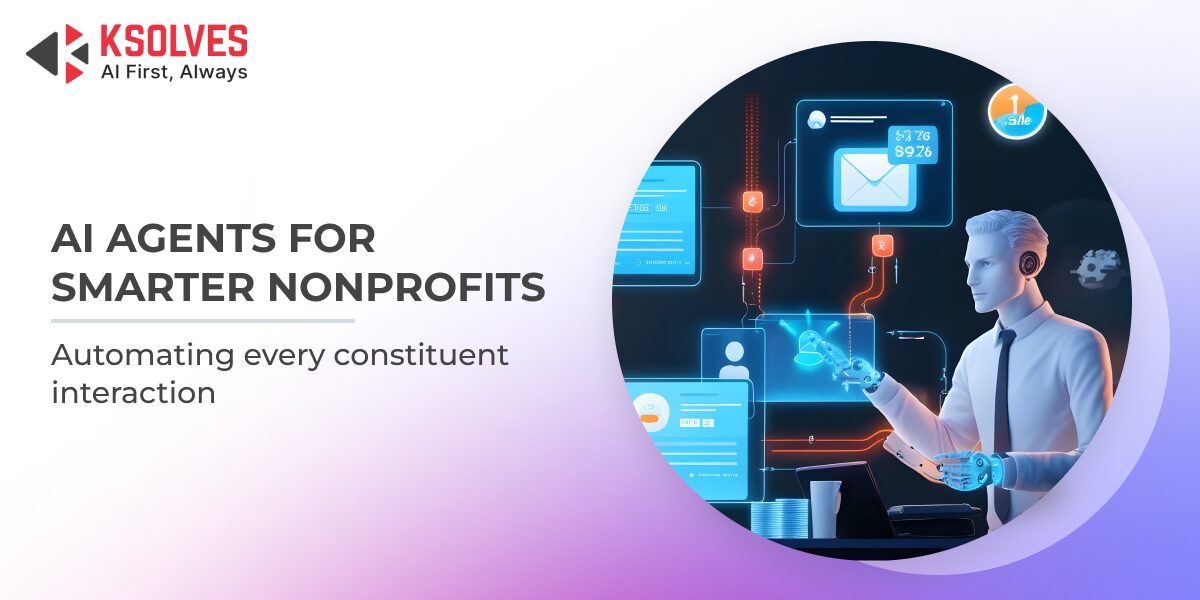
Nonprofits have always been asked to deliver more with less. Staff stretches across multiple roles, budgets remain tight, and the communities they serve cannot wait for administrative backlogs to clear. Yet the tools available to mission-driven organizations have historically lagged far behind those in the private sector.
That is changing rapidly. AI agents, software systems capable of reasoning, planning, and taking autonomous action across multi-step tasks, are now accessible to organizations of every size. Unlike basic automation or rule-based chatbots, AI agents can adapt to new information, make contextual decisions, and execute complex workflows without constant human supervision.
For nonprofits, this is not a technology trend to observe from a distance. It is a practical solution to some of the most persistent operational challenges in the sector. This blog explores four proven use cases where nonprofits are already deploying AI agents and seeing measurable results.
The Real Cost of Operational Overload in Nonprofits
Most nonprofits have not suffered from a lack of commitment or capability. They have suffered from a lack of capacity.
Program staff spend hours each week on intake paperwork instead of serving clients. Development teams manage dozens of grant relationships manually, often missing deadlines or opportunities. Volunteer coordinators chase confirmations by email and fill last-minute gaps by hand. Fundraisers who should be building donor relationships spend their time pulling reports and drafting routine communications.
This fragmentation creates persistent challenges:
- High administrative burden consumes program staff time
- Grant deadlines missed due to manual tracking
- Volunteer attrition caused by poor follow-up and engagement
- Donor relationships are weakened by infrequent and impersonal communication
- Beneficiary services are limited to business hours and staff availability
- Knowledge is lost when staff turn over
- Compliance and documentation backlogs are creating audit risk
- Limited visibility into program outcomes and organizational performance
The issue is not a shortage of effort. There is a shortage of connected, automated workflows. This is where AI agents change the equation entirely.
AI Agents: From Buzzword to Operational Reality
Many nonprofits are familiar with basic digital tools like donor management systems, volunteer platforms, and program databases. What makes AI agents different is their ability to operate across these systems autonomously, taking action based on context rather than waiting for human instruction at every step.
At their core, AI agents provide a layer of intelligent automation that connects people, data, and processes across an organization. Rather than relying on manual handoffs, email follow-ups, and spreadsheet tracking, nonprofits can manage programs, grants, volunteers, and donor relationships through coordinated agent-driven workflows.
Key capabilities AI agents bring to nonprofits:
- Conversational intake and triage across multiple languages and channels
- Automated grant discovery, drafting, and compliance tracking
- Proactive volunteer engagement and retention workflows
- Personalized donor stewardship at scale
- Real-time program data collection and impact reporting
- 24/7 constituent support without additional headcount
- Cross-system workflow orchestration connecting CRM, program, and finance tools
- Intelligent alerts and escalation when human judgment is required
By building this foundation, nonprofits can move from reactive administration to proactive, mission-focused operations.
4 Proven Use Cases Where AI Agents Are Making a Real Difference
1. AI Agents for Program Delivery and Case Management
For nonprofits delivering direct services, housing support, food assistance, mental health counseling, legal aid, or workforce development, the intake and case management process is frequently the single largest operational bottleneck. A new client may wait days simply to have their information collected, eligibility verified, and their case routed to the right program. For people in crisis, that wait has real human consequences.
AI agents address this by handling the intake process end-to-end through a natural, guided conversation available around the clock and across multiple languages. The agent collects structured eligibility information, screens for program fit, flags urgent situations for immediate human review, and automatically populates the case management system, eliminating manual data entry.
Core program delivery capabilities include:
- Conversational intake via web, SMS, or messaging apps in the client’s preferred language
- Real-time eligibility screening against program criteria
- Automatic case record creation and routing to the appropriate team or program
- Proactive milestone check-ins and appointment reminders throughout the service journey
- Escalation alerts when a case goes silent or a deadline approaches
- Knowledge base integration for self-service answers to common questions
- Outcome data collection at program milestones for reporting and evaluation
Organizations that modernize intake and case management with AI agents often experience dramatically reduced time from first contact to first service, higher client conversion rates as intake friction is removed, reduced administrative burden on program staff, and improved data quality through structured, consistent collection.
2. AI Agents for Grant Lifecycle Management
Grant funding is the lifeblood of most nonprofits, yet the work required to secure and sustain it is enormously time-consuming. Identifying relevant opportunities, crafting compliant proposals, monitoring submission deadlines, and preparing detailed narrative and financial reports all fall on development staff who are simultaneously managing funder relationships, board communications, and program oversight.
AI agents can take on significant portions of this lifecycle, freeing development teams to focus on the relationship-driven work that cannot be automated.
A discovery agent continuously scans public and private grant databases, filters opportunities against the organization’s mission, geography, program areas, and eligibility criteria, and delivers a prioritized digest of the most relevant matches on a regular cadence. A reporting agent pulls program outcome data from existing systems, generates first-draft narrative reports structured to match each funder’s specific requirements, and identifies sections that require human input before submission.
Core grant lifecycle capabilities include:
- Continuous scanning of grant databases and foundation portals
- Intelligent matching of opportunities to organizational eligibility and priorities
- First-draft proposal generation drawing on existing program descriptions and data
- Compliance calendar tracking across all active grants
- Automated deadline alerts sent to responsible staff well in advance
- Structured progress report drafting aligned to funder requirements
- Centralized audit trail of all submissions, correspondence, and deliverables
- Budget narrative generation from financial system data
Organizations that modernize grant operations with AI agents often experience significantly reduced time spent on proposal development, fewer missed opportunities due to better funding visibility, lower compliance risk through proactive deadline tracking, and improved audit readiness through centralized documentation.
3. AI Agents for Volunteer Recruitment and Retention
Volunteers are the operational foundation of most community-focused nonprofits. But managing them is a full-time job. Coordinators spend hours posting to platforms, responding to inquiries, manually matching skills to open roles, sending reminders, and filling last-minute gaps when volunteers cancel.
AI agents can transform this entire workflow from the moment a prospective volunteer first makes contact through their ongoing engagement with the organization.
A recruitment agent responds to volunteer inquiries instantly, gathers availability and skills through a guided conversation, and schedules orientation sessions automatically without any coordinator involvement. During active service, the agent sends shift reminders, collects post-shift feedback, and monitors engagement signals, flagging declining activity before a volunteer churns so a human coordinator can reach out personally at the right moment.
Core volunteer management capabilities include:
- Instant response to volunteer inquiries through web, email, or social channels
- Conversational skills and availability collection during onboarding
- Automatic role matching and orientation scheduling
- Shift confirmation, reminder, and cancellation management
- Post-shift feedback collection and sentiment monitoring
- Engagement tracking and early churn detection
- Searchable skills database for specialized role matching
- Recognition and re-engagement workflows for long-term volunteers
Organizations that modernize volunteer coordination with AI agents often experience faster onboarding from inquiry to first shift, higher first-year retention rates through proactive engagement, reduced administrative time spent on scheduling and confirmation logistics, and greater capacity to grow the volunteer base without proportional staffing increases.
4. AI Agents for Donor Stewardship and Impact Reporting
Donors do not simply want acknowledgement; they want to feel genuinely connected to the outcomes their contributions make possible. Yet for fundraising teams managing hundreds or thousands of donor relationships, delivering truly personalized stewardship at scale is an impossible task without the right technology infrastructure.
AI agents change this by monitoring donor behavior, giving history, and engagement patterns continuously and triggering personalized outreach at exactly the right moments. A giving anniversary. A program milestone directly connected to a donor’s area of interest. A news event related to the organization’s cause. The agent drafts a communication grounded in real data about that specific donor’s relationship with the organization, queues it for human review, and ensures no relationship goes quiet for too long.
Core donor stewardship capabilities include:
- Continuous CRM monitoring for giving anniversaries, lapsed periods, and engagement signals
- Personalized stewardship communication drafting for human review and approval
- Individualized impact reports linking each donor’s cumulative giving to program outcomes
- Major donor briefing documents prepared ahead of scheduled calls or meetings
- Lapsed donor identification and prioritized reactivation sequencing
- Prospect research synthesis for new donor cultivation
- Event follow-up automation and feedback collection
- Giving trend analysis and retention risk alerts
Organizations that modernize fundraising operations with AI agents often experience higher donor retention rates through timely and relevant communication, increased mid-level and major donor conversion through consistent cultivation, and stronger funder confidence through clear, data-grounded impact reporting.
Real-World Impact: Nonprofit Agentforce Transformation with Ksolves
A large nonprofit organization serving millions of community members was struggling to scale operations due to manual processes, disconnected systems, and growing service demands. Fundraising teams faced challenges managing donor engagement, grant reporting consumed valuable staff time, volunteer coordination was largely manual, and member service teams struggled to keep pace with increasing inquiries.
See How Ksolves Helped a Nonprofit Transform with Agentforce
How Ksolves Helps Nonprofits Build AI-Powered Operations
Implementing AI agents is about far more than deploying new software. It is about redesigning how work gets done, and that requires a partner who understands both the technology and the operational realities of mission-driven organizations.
Through our Salesforce Implementation for Nonprofit services, our team works directly with nonprofit program, development, and operations leaders to identify the highest-impact opportunities, design agent workflows that reflect real organizational needs, and build solutions that integrate with existing systems and scale as the organization grows.
Our nonprofit AI expertise includes:
- AI agent strategy and implementation roadmaps
- Program delivery and intake automation
- Grant lifecycle management solutions
- Volunteer recruitment and retention workflows
- Donor stewardship and impact reporting automation
- CRM and program system integrations
- Staff training and change management support
- Ongoing optimization and performance monitoring
What sets our work apart is a focus on mission outcomes, not just technology deployment. We help nonprofits design workflows that connect teams, eliminate bottlenecks, and create better experiences for the people they serve.
Top Salesforce Non-Profit Cloud Consultants
Conclusion
The mission of a nonprofit does not change when AI enters the picture. What changes is the capacity to pursue it.
AI agents give nonprofit teams their time back, time that was previously consumed by intake paperwork, grant tracking, scheduling logistics, and routine donor communications. That recovered time flows back into the work that only humans can do: building trust with clients, cultivating funder relationships, inspiring volunteers, and designing programs that genuinely change lives.































Author
About the Author Editorial Team The Ksolves Editorial Team includes certified Salesforce experts, Big Data engineers, AI/ML specialists, Zoho consultants, and experienced technology writers focused on delivering clear, actionable insights for modern businesses. With hands-on experience across Salesforce, Big Data platforms, AI/ML solutions, application development, software testing, and Zoho ERP/CRM, the team publishes practical guides, real-world use cases, and industry updates that support smarter decisions and faster growth. Every article is created to solve business challenges, guide technology adoption, and keep organizations aligned with evolving digital ecosystems.
Share with