Project Name
Computer Vision Vehicle Inspection System for a Large Transport Authority in the Middle East
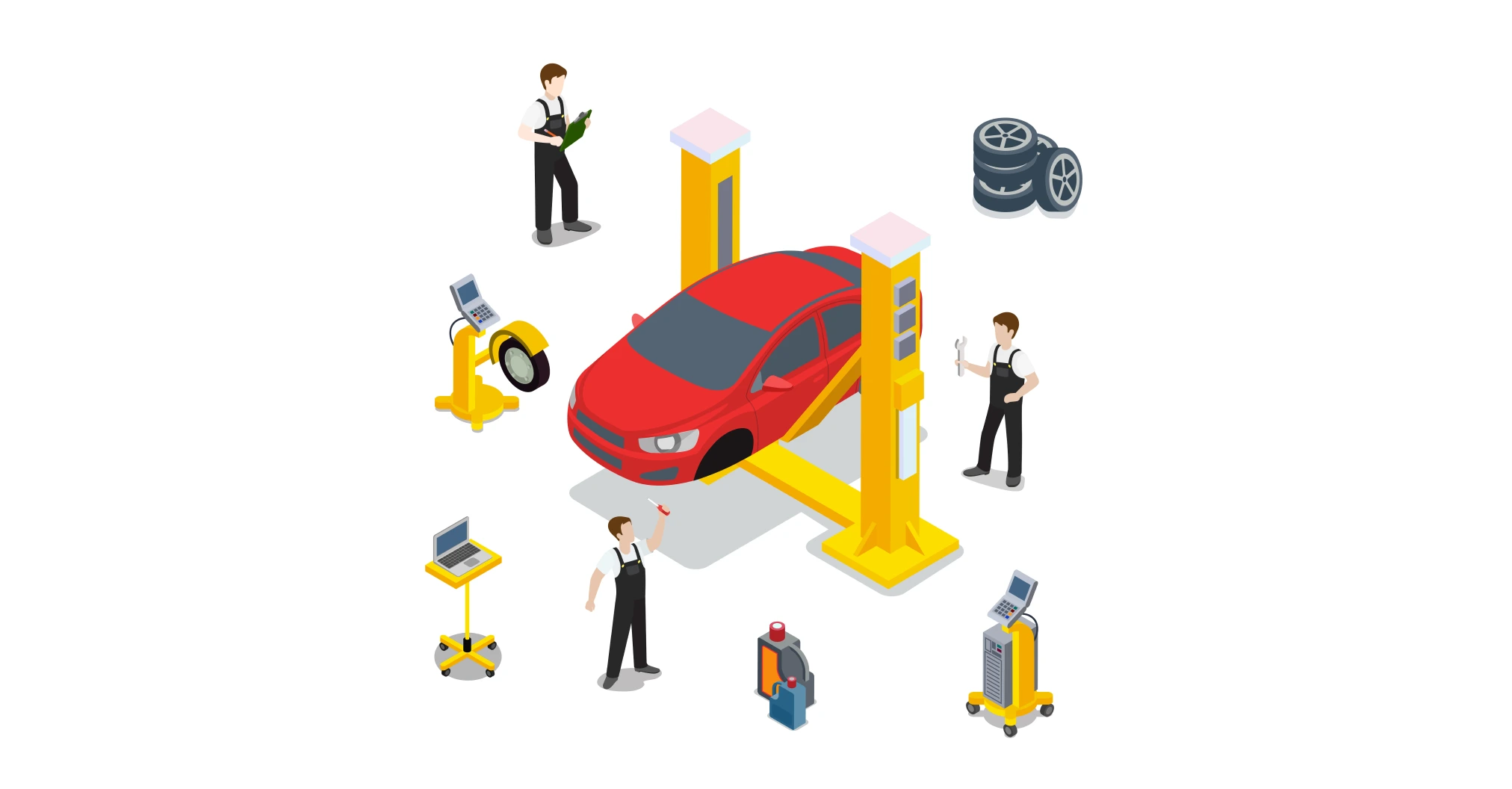

A large transport authority in the Middle East was running vehicle safety inspections entirely through manual processes as fleet volumes grew. Throughput was bounded by the number of inspectors on shift and the number of lanes in operation. Outcomes varied across inspectors and locations. Records were paper-based with no systematic photographic documentation. And the cost of scaling the programme tracked directly with headcount, meaning every increase in fleet size required a proportional increase in inspection staffing. Ksolves designed and deployed a computer vision vehicle inspection system that automates safety checks using AI image analysis, producing consistent, documented, auditable outcomes at scale.
- Throughput Capped by Inspector Headcount: The number of vehicles that could be inspected in a day was a direct function of how many inspectors were on shift and how many lanes were operational. As registered vehicle volumes grew, the programme had no way to increase throughput without adding proportional staffing.
- Inconsistent Outcomes Across Inspectors and Locations: Inspection results varied depending on which inspector conducted the check and at which location. The same defect could receive different determinations at different sites, creating credibility risk for the programme and inconsistent enforcement outcomes across the fleet.
- No Photographic Defect Documentation: Manual inspections produced paper-based records with no systematic imagery. There was no photographic evidence trail for disputed outcomes, no structured defect classification across the vehicle estate, and no digital record that could feed downstream compliance or analytics systems.
- Adverse Condition Coverage Gaps: Human inspectors operated under constraints in low-light conditions and adverse weather, reducing both the reliability and the coverage of inspections conducted outside standard operating conditions.
- Scaling Cost Tied Directly to Fleet Growth: Every increase in vehicle volume required a proportional increase in inspector headcount to maintain throughput and turnaround standards. There was no path to scaling the programme efficiently without restructuring how inspections were conducted.
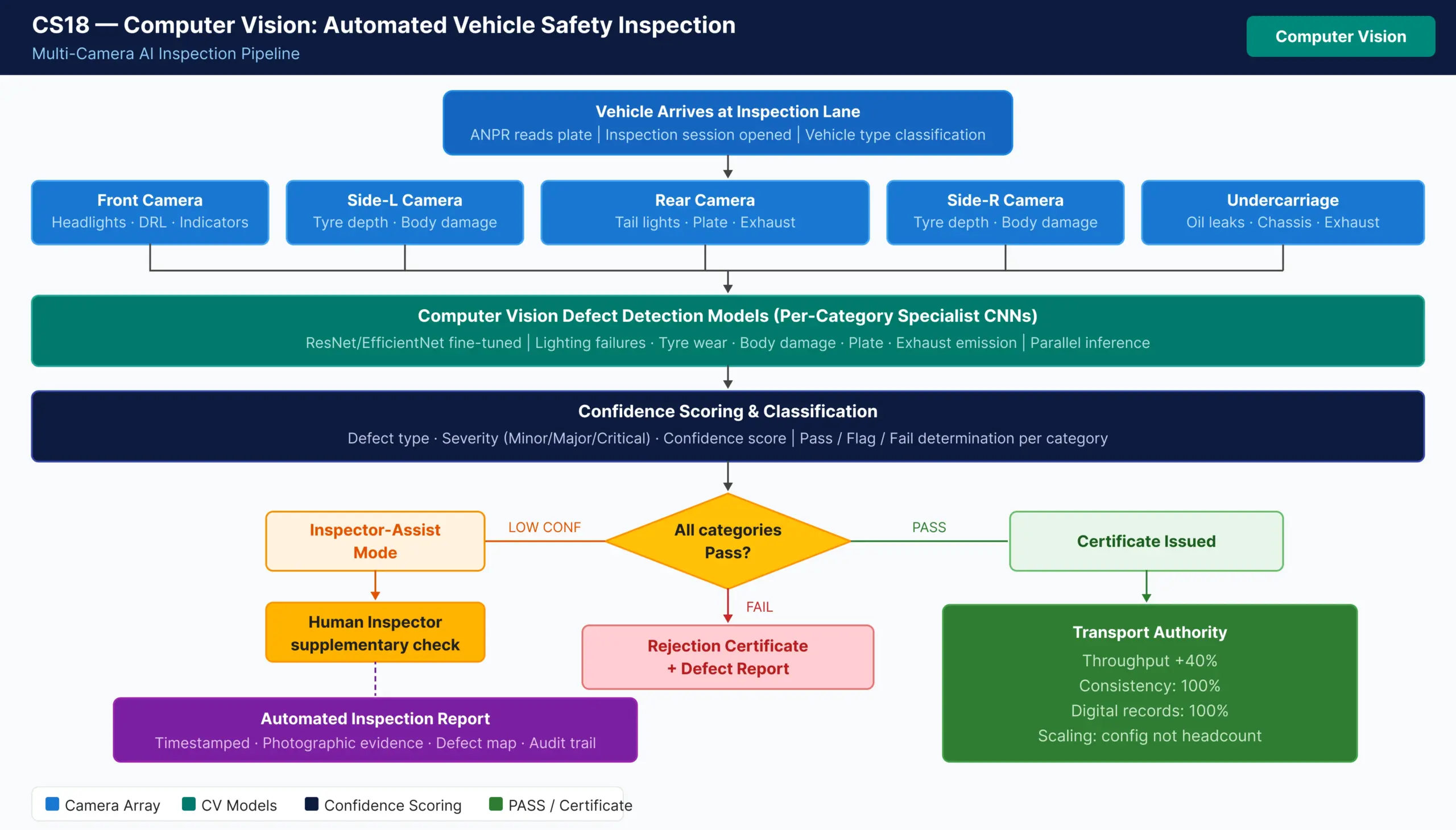
Ksolves designed the computer vision vehicle inspection system as a multi-layer architecture covering physical camera infrastructure, trained defect detection models, automated reporting, human escalation for edge cases, and direct integration with the authority's compliance management systems. AI-assisted model training and pipeline configuration reduced the development and calibration timeline by approximately three weeks compared to a conventional computer vision deployment of equivalent scope.
- Multi-Camera Inspection Array: Multi-angle camera arrays were deployed across inspection lanes, capturing comprehensive vehicle imagery across all specified inspection areas simultaneously. The physical camera infrastructure was configured to maintain full coverage under standard and low-light operating conditions, eliminating the adverse condition coverage gaps that constrained manual inspection.
- Computer Vision Defect Detection: Trained CV models analyse the captured imagery to automatically identify specified vehicle safety defects across defined inspection categories. The models apply identical classification criteria to every vehicle regardless of inspector, location, time of day, or operating conditions, producing consistent outcomes across the entire fleet.
- Automated Inspection Report Generation: Every inspection automatically generates a structured digital report containing defect classifications, timestamped photographic evidence, and a pass or fail determination. Reports are produced at the point of inspection and available to the authority's compliance teams immediately, replacing the paper-based record system entirely.
- Human-in-the-Loop Escalation: Low-confidence detections and novel defect types that fall outside the model's trained classification categories are automatically flagged and routed to a human inspector for supplementary review. This escalation layer ensures edge cases receive appropriate human judgment without requiring human review of every vehicle.
- Transport Management System Integration: Inspection results are transmitted in real time to the authority's vehicle registration and compliance management systems. The integration eliminates manual data entry between inspection and registration workflows and ensures the compliance record is updated at the point of inspection completion.
Technology Stack
| Category | Technology |
|---|---|
| Core AI | Computer Vision Defect Detection Models |
| Infrastructure | Multi-Camera Inspection Array |
| Reporting | Automated Digital Inspection Reporting |
| Integration | Transport Management System Connector |
| Governance | Human-in-the-Loop Escalation Layer |
- 40% Increase in Inspection Throughput Per Lane: AI-assisted processing reduced per-vehicle inspection time, increasing the number of vehicles processed per lane per shift without adding inspector headcount or expanding physical infrastructure.
- Zero Outcome Variability Across Inspectors and Locations: CV-based inspection applies identical defect classification criteria to every vehicle across every lane and location, eliminating the outcome inconsistency that varied by inspector under the manual system.
- 100% of Inspections Produce a Digital Record with Photographic Evidence: Every inspection generates a structured digital report with timestamped imagery and classified defect documentation, replacing the paper-based record system and providing a complete photographic audit trail for every vehicle assessed.
- Adverse Condition Coverage Gaps Eliminated: Multi-camera arrays configured for low-light and variable weather conditions extend full inspection coverage to operating conditions where manual inspection reliability was previously reduced.
- Scaling Cost Decoupled from Fleet Growth: Throughput now scales through system configuration and lane deployment rather than inspector headcount, breaking the direct cost relationship between fleet volume growth and inspection programme staffing.
- Compliance System Updated in Real Time at Point of Inspection: Direct integration with the transport authority's vehicle registration and compliance systems eliminates manual data entry between inspection and registration workflows, reducing the data lag between inspection completion and compliance record update to under 60 seconds.
Ksolves delivers computer vision and AI/ML consulting services for government and enterprise organisations that need to automate high-volume inspection and quality assurance workflows at scale.
Before this engagement, the authority’s inspection programme was structurally constrained: throughput limited by headcount, outcomes inconsistent across sites, and records paper-based with no photographic trail. After deploying the computer vision vehicle inspection system, throughput increased by 40%, every inspection produces a timestamped digital record, and outcome consistency is enforced by the model rather than managed by the inspector.
The next phase extends the system to additional vehicle categories and integrates predictive maintenance flagging based on recurring defect patterns across the inspected fleet.
Is your inspection programme still limited by inspector capacity and inconsistent outcomes?