



Improving Inventory Visibility & Order Fulfillment with Salesforce in Retail
Salesforce
5 MIN READ
May 11, 2026

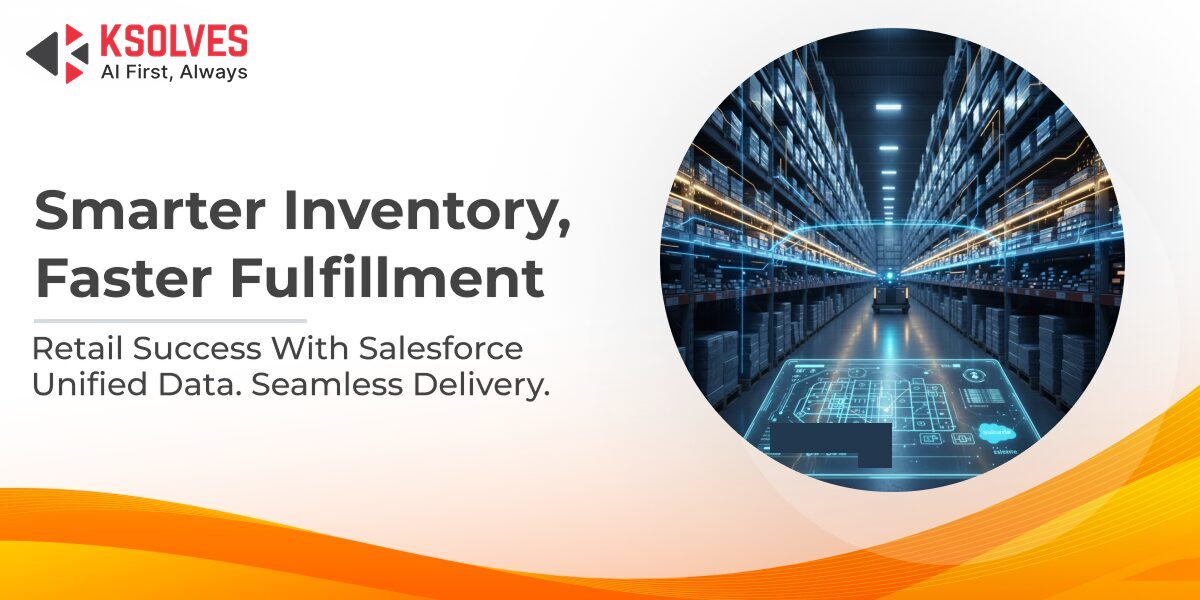
Managing inventory and order fulfillment in retail is becoming increasingly complex. Retailers often face challenges such as stockouts that frustrate customers, overstocking that ties up capital, and fragmented systems that make it difficult to get a clear view of inventory across stores, warehouses, and online channels. These inefficiencies can lead to lost sales, poor customer experiences, and operational bottlenecks.
Salesforce offers a unified platform that brings together inventory, orders, and customer data in real time. By providing complete visibility into stock levels, automating workflows, and connecting all sales channels, Salesforce helps retailers optimize inventory, fulfill orders faster, and enhance overall operational efficiency.
With Salesforce in retail, businesses can make data-driven decisions, prevent costly stock issues, and deliver seamless shopping experiences that enhance customer loyalty.
Enhancing Inventory Visibility Across Retail Channels
Accurate inventory visibility is critical for retailers to meet customer demand, reduce costs, and optimize operations. Salesforce provides a centralized platform to track stock levels in real time across all channels, helping prevent stockouts and minimize overstocking.
Key Benefits:
- Real-time updates on inventory across stores, warehouses, and e-commerce platforms
- Insights to make informed replenishment decisions
By integrating physical stores, warehouses, and online platforms, retailers maintain a single, cohesive view of inventory. This ensures orders are fulfilled efficiently from the most appropriate location and customers receive a seamless shopping experience.
Additional Advantages:
- Unified inventory view across multiple sales channels
- Faster order processing and reduced fulfillment errors
Salesforce also supports inventory valuation methods such as FIFO (First In, First Out) and LIFO (Last In, First Out), enabling precise financial reporting and better cash flow management. Retailers can optimize purchasing decisions, maintain accurate financial records, and plan inventory investments effectively.
Financial Impact:
- Accurate inventory valuation
- Improved cost management and operational efficiency
Optimizing Order Fulfillment with Salesforce in Retail
Efficient order fulfillment is essential for customer satisfaction and repeat business. Salesforce enables retailers to streamline the entire fulfillment process, from order capture to delivery, ensuring accuracy and speed.
Key Benefits:
- Automated order processing to reduce manual errors
- Real-time order tracking for staff and customers
By connecting all sales channels and inventory locations, Salesforce ensures orders are fulfilled from the most suitable source, whether it’s a store, warehouse, or drop-ship partner. This omnichannel approach reduces delays and keeps customers informed throughout the purchase journey.
Additional Advantages:
- Faster fulfillment and shorter delivery times
- Reduced operational bottlenecks and labor costs
Salesforce also provides insights into fulfillment metrics, helping retailers identify inefficiencies, forecast demand, and optimize staffing and logistics. By leveraging data-driven analytics, retailers can continuously improve their fulfillment strategy and enhance customer loyalty.
Operational Impact:
- Increased fulfillment accuracy
- Improved customer satisfaction and repeat sales
Leveraging AI and Automation for Retail Efficiency
Modern retail demands agility, and Salesforce equips businesses with AI and automation tools that simplify complex inventory and order workflows. By applying intelligence at every stage, retailers can reduce errors, cut costs, and stay ahead of demand.
- Demand Forecasting: AI-powered analytics in Salesforce use historical sales data, seasonal patterns, and emerging trends to forecast inventory needs. This helps retailers prevent both stockouts and overstocking, ensuring shelves and digital stores are stocked with the right products at the right time.
- Automated Replenishment: With automation, retailers can set up dynamic reorder points. Salesforce triggers purchase orders or stock transfers automatically when levels hit predefined thresholds. This minimizes manual intervention while maintaining optimal stock levels.
- AI Agents in Retail
Salesforce’s Agentforce introduces AI-driven assistants that enhance day-to-day retail operations. These virtual agents can:
- Place orders automatically based on predefined rules
- Run real-time inventory checks across locations
- Provide sales and support staff with instant insights for faster decision-making
By combining predictive intelligence with automation, Salesforce enables retailers to run leaner, smarter, and more customer-centric operations.
Best Practices for Inventory Visibility and Order Fulfillment with Salesforce in Retail
Effective inventory visibility and order fulfillment are critical to retail success. By leveraging Salesforce in retail, businesses can gain real-time insights, streamline workflows, and deliver seamless customer experiences. Below are some proven best practices:
- Quality Control & Accuracy: Regularly inspect inventory and ensure accurate stock records. Salesforce automates checks and provides real-time alerts to prevent errors.
- Just-in-Time (JIT) & Demand Forecasting: Minimize excess stock by aligning inventory with demand. Salesforce AI and analytics help forecast needs and optimize replenishment cycles.
- Omnichannel & Multi-Echelon Optimization: Manage inventory across warehouses, stores, and online platforms. Salesforce unifies this data, enabling smarter allocation and reduced costs.
- Frictionless Order Fulfillment: Use Salesforce Order Management to automate order routing, streamline processes, and ensure on-time delivery.
- Integration & Scalability: Connect Salesforce with ERP, POS, and logistics systems. Its scalable architecture ensures your solution grows with your retail operations.
- Training & Continuous Support: Invest in Salesforce training and ongoing support to maximize adoption, efficiency, and ROI.
How Ksolves Can Help Retailers Succeed with Salesforce
At Ksolves, we understand the unique challenges retailers face in managing inventory and order fulfillment. As a Salesforce Summit Partner with 12+ years of experience, we specialize in delivering end-to-end Salesforce solutions that empower retailers to gain real-time visibility, streamline operations, and enhance customer satisfaction.
Our Salesforce implementation services cover every stage of the journey:
- Consulting & Strategy: We analyze your retail operations, identify inefficiencies, and design tailored Salesforce solutions that align with your business goals.
- Implementation & Customization: From deploying Salesforce Order Management to configuring custom workflows, dashboards, and reports, our experts ensure seamless setup that fits your processes.
- Integration Services: We connect Salesforce with ERP, POS, e-commerce platforms, and third-party logistics tools for a unified retail ecosystem.
- AI & Automation Enablement: Our team helps you leverage Salesforce AI and automation to optimize forecasting, automate replenishment, and enhance customer engagement.
- Ongoing Support & Optimization: With 24×7 support services, we provide continuous monitoring, upgrades, and enhancements to keep your retail operations running at peak efficiency.
With 100+ Salesforce-certified professionals and proven expertise across multi-cloud implementations, Ksolves has helped leading retailers optimize inventory visibility, accelerate fulfillment, and unlock new growth opportunities with Salesforce in retail.
So, are you ready to optimize your retail operations? Connect with our Salesforce experts today at sales@ksolves.com and transform your inventory and order fulfillment strategy with Ksolves.
Frequently Asked Questions
What does Salesforce do for inventory visibility in retail?
What happens to retail businesses that lack real-time inventory visibility?
How does Salesforce Order Management improve fulfillment speed and accuracy?
How does Salesforce Agentforce help with inventory and order operations in retail?
What is the difference between Just-in-Time inventory and traditional stock management in retail?
How long does it typically take to implement Salesforce for retail inventory management?
Can Salesforce integrate with existing ERP and POS systems for inventory management?
Have questions about implementing Salesforce for your retail operations? Contact our team for a free consultation.
































Author
About the Author Editorial Team The Ksolves Editorial Team includes certified Salesforce experts, Big Data engineers, AI/ML specialists, Zoho consultants, and experienced technology writers focused on delivering clear, actionable insights for modern businesses. With hands-on experience across Salesforce, Big Data platforms, AI/ML solutions, application development, software testing, and Zoho ERP/CRM, the team publishes practical guides, real-world use cases, and industry updates that support smarter decisions and faster growth. Every article is created to solve business challenges, guide technology adoption, and keep organizations aligned with evolving digital ecosystems.
Share with