



Angular Consulting vs In-House Developers: Which is Right for Your Business?
Angular
5 MIN READ
August 15, 2026

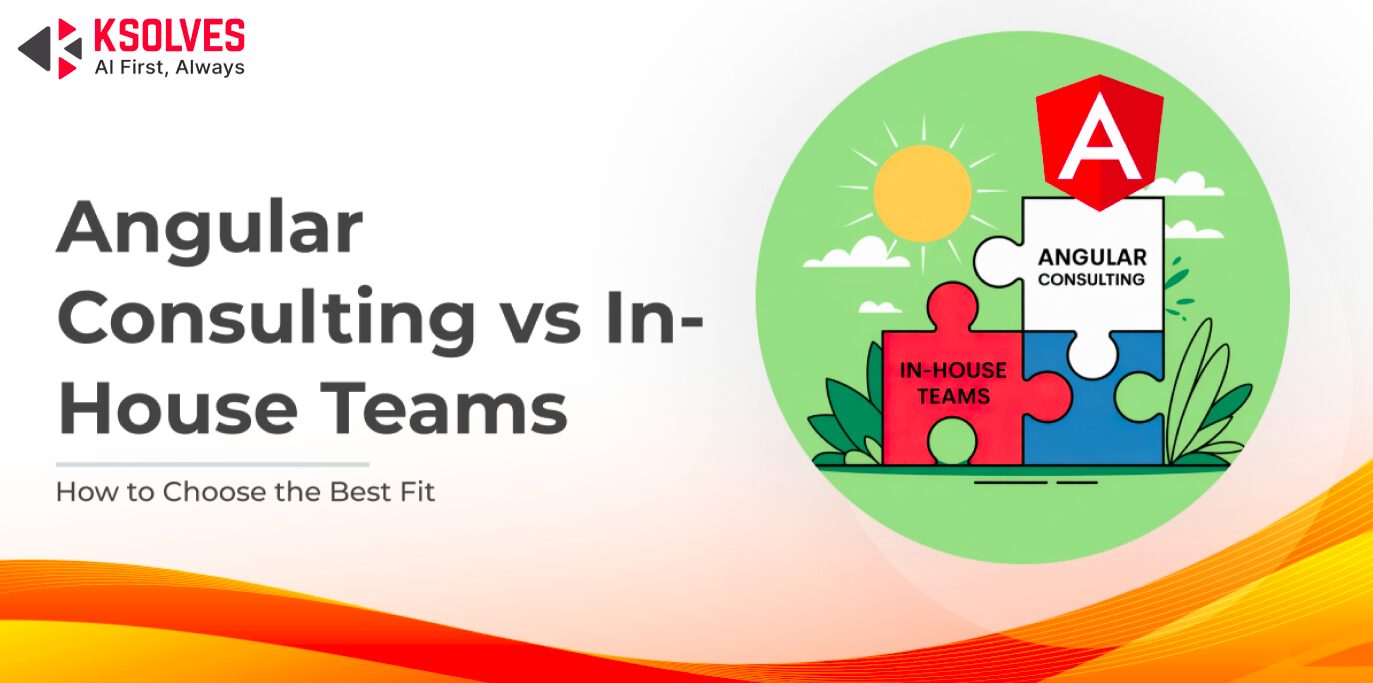
Angular is one of the most powerful and reliable frameworks for building enterprise-scale applications. Its structured architecture, TypeScript foundation, and support from Google make it a top choice for companies that want performance, security, and long-term stability.
Once you decide to build with Angular, the next challenge is choosing the right development model. Many companies consider Angular consulting or hiring an Angular developer to leverage specialized expertise. Others prefer to hire Angular developers and build a dedicated in-house Angular development team that stays aligned with internal goals.
Understanding the differences in the Angular outsourcing vs in-house approach is essential. This blog explores both models to help you choose the option that best fits your business objectives.
What Is Angular Consulting?
Angular consulting refers to bringing in external Angular specialists who offer targeted support, guidance, and execution. An Angular consultant is typically a senior professional or part of an Angular development company with extensive experience solving complex Angular challenges.
Common Angular Consulting Services Include:
- Angular development consulting for strategic planning and implementation
- Angular architecture consulting for designing scalable application foundations
- Code audits, performance optimization, and security checks
- Migration to Angular from legacy frameworks
- Training internal teams
- Angular project rescue for underperforming or delayed projects
Businesses choose Angular consulting when they want quick access to Angular expert developers who can accelerate delivery, solve deep technical issues, or guide early-stage architecture.
What Does an In-House Angular Team Look Like?
Building an internal team means hiring full-time in-house Angular developers who work exclusively on your product. This model suits companies with long-term roadmaps and multiple Angular modules or features planned.
A Typical In-House Angular Development Team Includes:
- Angular developers
- Senior Angular or front-end lead
- UI/UX designers
- QA engineers
- Product managers
Hiring your own developers ensures continuity, deeper collaboration, and full ownership over the product’s evolution.
Angular Consulting: Key Benefits
Choosing Angular consulting services can give your business a strategic edge by combining specialized expertise, flexibility, and speed, all tailored to accelerate your project’s success.
1. Access to High-Level Expertise
Partnering with an Angular consultant gives you immediate access to specialized knowledge and years of hands-on experience. These experts have worked on diverse projects across industries, helping you avoid common pitfalls and implement proven strategies. Whether you’re optimizing performance, enhancing UI/UX, or modernizing legacy code, Angular consultants bring technical depth that ensures quality and efficiency from the very beginning.
2. Faster Execution
With an experienced Angular consulting team, your project moves faster from concept to delivery. Consultants bring established workflows, best coding practices, and a clear understanding of Angular’s ecosystem. This eliminates the guesswork that often slows down internal teams. Their ability to identify the right tools, frameworks, and libraries early in the process enables your team to meet tight deadlines without compromising on quality.
3. Cost Efficiency for Short-Term Needs
Hiring full-time developers for short-term projects can strain budgets. Angular consulting offers a more flexible model, allowing businesses to pay only for the expertise they need, whether that’s a few hours of guidance or support for a specific milestone. This approach is particularly valuable for startups or businesses testing new ideas, as it minimizes overhead costs while maintaining high-quality outcomes.
4. Ideal for Complex Challenges
Angular consultants excel in tackling advanced technical challenges that go beyond everyday development. From designing robust application architectures to resolving performance bottlenecks or rescuing underperforming projects, they bring a problem-solving mindset that delivers real impact. Their deep understanding of Angular’s structure and ecosystem enables them to craft scalable, maintainable, and future-ready solutions.
5. Easy Scalability
As your project evolves, the demand for development resources can fluctuate. Angular consulting services make it easy to scale your technical support up or down without the complexities of full-time hiring. Whether you need an entire consulting team for a large rollout or a few specialists to support your in-house developers, this flexibility helps align your development capacity with your business goals.
In-House Angular Developers: Key Benefits
Building an in-house Angular development team empowers businesses to maintain greater control, ensure long-term product alignment, and foster deeper collaboration across departments.
1. Deep Product Understanding
In-house Angular developers gain an in-depth understanding of your product, workflows, and customer needs over time. Since they’re part of your organization’s daily operations, they build strong contextual awareness and can align development decisions with long-term business goals. This familiarity helps them create solutions that fit seamlessly within your product ecosystem and continuously improve user experiences.
2. Greater Control
Having an internal Angular development team gives you full visibility and control over project priorities, timelines, and deliverables. You can set goals, make adjustments on the fly, and directly oversee how resources are being utilized. This level of control ensures that the team’s efforts stay aligned with your company’s strategy and allows for faster decision-making when requirements change.
3. Better Cross-Team Collaboration
In-house Angular developers can collaborate more effectively with other departments, including backend teams, designers, QA engineers, and business stakeholders. Regular communication and shared goals foster a unified approach to development, reducing silos and accelerating problem-solving.
Angular Consulting vs In-House: Challenges Faced
Challenges of Angular Consulting
While Angular consulting offers flexibility and deep expertise, it also comes with a few considerations that businesses should keep in mind:
- External Dependency: Your project timeline may depend on the consultant’s availability or engagement schedule.
- Knowledge Transfer: Once the engagement ends, structured documentation and handovers are essential to ensure no critical knowledge is lost.
- Tech Stack Alignment: It’s crucial to verify that the consultant’s experience matches your existing technologies and architectural standards.
Challenges of In-House Hiring
Building and managing an in-house Angular team brings long-term benefits but also poses several operational and financial hurdles:
- Recruitment and Retention Costs: Hiring skilled Angular developers, especially senior-level experts, can be time-consuming and expensive.
- Slower Project Kickoff: Recruitment cycles, onboarding, and setup can delay development compared to immediate consulting engagements.
- Continuous Training Needs: Frequent Angular updates require regular upskilling to keep your team current with the latest best practices.
- Scalability Limitations: Expanding or shrinking your team based on project needs can be costly and logistically challenging.
Because of these factors, choosing between Angular outsourcing vs in-house development often becomes a strategic decision, one that depends on your project goals, budget, and long-term vision.
Key Factors to Consider Before Choosing Between Angular or In-House Developers
Before deciding between Angular consulting and in-house developers, it’s essential to evaluate your project needs, business goals, and long-term strategy. The right choice often depends on these key factors:
1. Project Timeline
Your project’s duration plays a major role in determining the ideal development model. If you’re working under tight deadlines or need to get a product to market quickly, Angular consulting is often the better choice. Consultants can start immediately, bring pre-tested processes, and help accelerate delivery.
For long-term products or ongoing feature development, in-house Angular developers are more suitable since they can provide continuous support, handle regular updates, and grow with the product over time.
2. Budget
Budget planning is another critical factor. Angular consulting can be highly cost-effective for short-term engagements, pilot projects, or specific problem-solving needs since you only pay for the hours or deliverables required.
However, if your business requires consistent Angular development over an extended period, building an in-house team may be more economical in the long run, as it reduces repeated consulting costs and allows better resource utilization.
3. Expertise Required
The nature of your technical requirements should influence your choice. If your project demands advanced architecture design, troubleshooting, performance optimization, or migration from older frameworks, Angular consultants bring specialized skills and experience that can ensure a smoother process.
On the other hand, if your project involves daily feature development, UI improvements, or ongoing maintenance, in-house Angular developers offer the consistency and context needed for long-term collaboration.
4. Scalability
Project demands can fluctuate, especially in agile environments. Angular consulting services offer greater flexibility. This means you can easily scale the number of experts up or down depending on your workload without the complexities of hiring or layoffs.
In contrast, in-house teams may face challenges when scaling quickly due to hiring cycles, training needs, and fixed employment costs, making consulting a better choice for dynamic or evolving project scopes.
5. Control and Ownership
If maintaining direct oversight and complete ownership of the project is a top priority, an in-house Angular team gives you that control. You can monitor progress daily, set priorities instantly, and make adjustments on the go.
However, Angular consultants bring focused, high-value expertise that complements your internal resources. While you might have slightly less control over their processes, their specialized input often accelerates development and improves overall project outcomes.
Angular Consulting vs In-House Developers: A Quick Comparison
Here’s a side-by-side look at how Angular consulting and in-house development compare across key business factors:
| Factor | Angular Consulting | In-House Angular Developers |
|---|---|---|
| Expertise Level | Access to senior Angular consultants with specialized skills in architecture, optimization, and large-scale migrations. | Developers gradually build product-specific expertise over time but may need external training for complex challenges. |
| Project Timeline | Consultants can begin immediately with proven workflows and best practices. | Slower to start due to recruitment, onboarding, and setup time. |
| Cost Model | Pay per project or engagement. Ideal for short-term, high-impact projects. | Fixed salaries and operational costs; more cost-efficient for long-term, continuous development. |
| Scalability | Easily scale team size up or down based on project needs. | Scaling up requires new hires; scaling down may lead to underutilized resources. |
| Control and Oversight | Less direct control but more strategic focus from experienced consultants. | Full control over priorities, workflows, and delivery timelines. |
| Knowledge Transfer | Requires proper documentation and handover to avoid knowledge gaps when consultants exit. | Knowledge stays within the company, ensuring long-term continuity. |
| Training Needs | Consultants are already up to date with the latest Angular versions and practices. | Ongoing training and upskilling required as Angular evolves. |
| Best Suited For | Businesses needing quick results, technical troubleshooting, architecture consulting, or migrations. | Companies with long-term products, stable roadmaps, and continuous feature development. |
How Ksolves Can Help
At Ksolves, we specialize in delivering end-to-end Angular consulting and development services that empower businesses to build high-performing, scalable, and secure web applications. Our certified Angular experts bring hands-on experience in architecture design, performance tuning, and full-cycle implementation.
Whether you need short-term Angular architecture consulting, code audits, migration support, or a dedicated Angular development team, Ksolves adapts to your project needs with flexibility and precision.
We focus on:
- Accelerating delivery with agile development and proven best practices
- Optimizing performance and improving maintainability of Angular applications
- Providing expert guidance for architecture, version upgrades, and modernization
- Supporting your in-house teams with training and collaboration
With a global presence and a strong portfolio across industries, Ksolves stands as your trusted Angular consulting partner. Our experts will help you balance speed, scalability, and cost-effectiveness to achieve long-term business success. So, contact us today at [email protected].
Conclusion
Both Angular consulting and in-house development come with unique strengths. Angular consulting services deliver expertise, speed, and flexibility, making them ideal for critical or complex development needs. Hiring in-house Angular developers, on the other hand, offers ownership, continuity, and long-term alignment with your business goals.
Your choice ultimately depends on your project scale, internal capabilities, budget, and timelines. Whether you choose consulting, in-house hiring, or a hybrid model, the right Angular talent is essential for building secure, scalable, and future-ready applications.
FAQs
1. Should you hire Angular consultants or in-house developers?
The choice between hiring Angular consultants or in-house developers depends on your business goals, project duration, and budget. If you need specialized expertise, faster execution, or help with a specific project phase, Angular consulting is often the smarter option. However, for long-term products and continuous development, an in-house Angular team offers more control.
2. What’s the difference between Angular consulting and an in-house team?
Angular consulting involves partnering with external Angular experts who offer high-level guidance, architecture design, troubleshooting, and project execution. They’re ideal for short-term or complex tasks. An in-house Angular team, on the other hand, consists of full-time employees who work exclusively on your projects.
3. What’s the best way to hire Angular developers for your business?
The best way to hire Angular developers depends on your immediate and long-term needs. For rapid project launches, you can hire Angular consultants from a trusted Angular development company like Ksolves.
4. When should you hire an Angular consultant?
You should hire an Angular consultant when your project demands specialized skills or rapid problem-solving, such as during architecture setup, Angular version migration, performance optimization, or project rescue. Consultants bring years of expertise and can quickly identify and fix issues that would take an in-house team much longer to resolve.
5. What are the benefits of Angular consulting services?
Angular consulting services provide businesses with access to expert developers, faster execution, and flexible engagement models. Consultants help improve code quality, scalability, and performance while reducing risks associated with trial-and-error development.
6. What is the cost of Angular consultants vs in-house developers?
Consultants usually charge hourly or project-based fees, which can be higher upfront but more cost-effective for short-term engagements. In-house developers involve ongoing costs like salaries, benefits, and training, making them better suited for long-term, continuous development efforts.
































Author
About the Author Editorial Team The Ksolves Editorial Team includes certified Salesforce experts, Big Data engineers, AI/ML specialists, Zoho consultants, and experienced technology writers focused on delivering clear, actionable insights for modern businesses. With hands-on experience across Salesforce, Big Data platforms, AI/ML solutions, application development, software testing, and Zoho ERP/CRM, the team publishes practical guides, real-world use cases, and industry updates that support smarter decisions and faster growth. Every article is created to solve business challenges, guide technology adoption, and keep organizations aligned with evolving digital ecosystems.
Share with