



Odoo SaaS Architecture Blueprint for High-Density Multi-Tenant Systems
Odoo
5 MIN READ
August 18, 2026

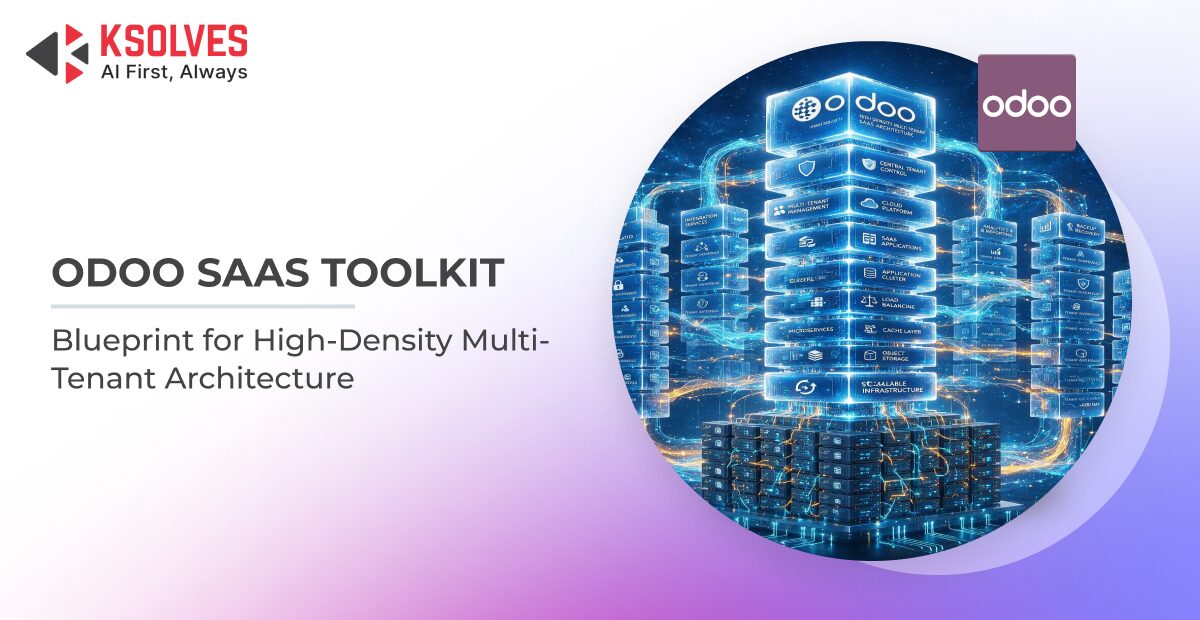
Launching an Odoo instance is straightforward. Launching hundreds or even thousands is a completely different challenge.
As more businesses adopt subscription-based ERP models, Odoo partners, SaaS providers, and managed service providers are increasingly offering Odoo as a service. While the demand is growing, so are the operational complexities.
Every new customer brings additional deployments, updates, backups, monitoring, security, and infrastructure requirements. What starts as a manageable setup can quickly become a time-consuming and resource-intensive operation.
The biggest misconception is that scaling an Odoo SaaS business simply requires more servers. In reality, successful multi-tenant SaaS platforms are built on well-designed architecture that automates deployment, simplifies tenant management, ensures high availability, and supports continuous growth without increasing operational overhead.
In this blog, we’ll explore the architectural principles behind high-density multi-tenant Odoo environments, the challenges businesses face as they scale, and the essential building blocks required to create an enterprise-grade Odoo SaaS platform.
Understanding High-Density Multi-Tenant Odoo Architecture
A multi-tenant architecture enables multiple customers (tenants) to run their own isolated Odoo environments while being managed through a centralized platform. Each tenant operates independently with its own database, users, configurations, and applications, but the overall deployment, monitoring, updates, and lifecycle management are controlled from a single administrative layer.
Unlike traditional one-server-per-client deployments, a high-density multi-tenant architecture is designed to maximize infrastructure utilization without compromising security, performance, or reliability. It allows SaaS providers to onboard new customers faster, standardize operations, and support a growing customer base efficiently.
The goal isn’t just to host multiple Odoo instances but to manage them intelligently at scale.
Key Characteristics of a High-Density Multi-Tenant Platform
A scalable Odoo SaaS architecture typically includes:
- Centralized tenant management for simplified administration.
- Automated provisioning to eliminate manual deployments.
- Resource isolation to ensure one tenant doesn’t impact another.
- High availability to maintain uninterrupted service.
- Automated lifecycle management for updates, backups, renewals, and maintenance.
- Elastic infrastructure that scales as customer demand grows.
Together, these capabilities create a platform that can support rapid business growth while keeping operational complexity under control.
Why Architecture Matters More Than Infrastructure
Many organizations focus on choosing the right cloud provider, whether it’s AWS, Azure, DigitalOcean, or another platform. While infrastructure is important, it is only one piece of the puzzle.
Without the right architecture, even the most powerful infrastructure can become difficult to manage. Manual deployments, inconsistent configurations, scattered monitoring tools, and disconnected update processes often lead to increased downtime, higher operational costs, and slower customer onboarding.
A well-designed architecture addresses these challenges by introducing automation, standardization, and centralized management into every stage of the SaaS lifecycle.
Instead of asking:
“Which cloud provider should we use?”
A more important question is:
“How can we build an Odoo platform that remains efficient as we grow from 50 customers to 500 or even 5,000?”
The answer lies in creating an architecture that is designed for scale from day one.
Also Read: Rollback Strategies When an Odoo SaaS Release Fails
Common Challenges in Scaling an Odoo SaaS Platform
As customer numbers increase, the operational model that worked for a handful of deployments often becomes unsustainable. Below are some of the most common roadblocks businesses encounter while scaling their Odoo SaaS offerings.
1. Manual Deployments Become a Growth Bottleneck
Provisioning every new customer manually may seem manageable in the early stages, but it quickly turns into a repetitive and error-prone process. Creating databases, configuring domains, installing modules, setting up user access, and verifying deployments for every new tenant consume valuable engineering time.
As the number of customers grows, onboarding becomes slower, operational costs increase, and configuration inconsistencies become more common.
Automated provisioning is no longer a convenience, but it’s a necessity for businesses that want to scale efficiently.
2. Managing Hundreds of Customer Instances
Every Odoo customer expects a reliable, secure, and up-to-date environment. However, maintaining hundreds of individual instances introduces challenges such as:
- Applying updates consistently across all tenants.
- Supporting multiple Odoo versions simultaneously.
- Managing customer-specific configurations and custom modules.
- Tracking subscriptions, renewals, and tenant lifecycles.
Without centralized management, these tasks become increasingly difficult and often require significant manual intervention.
3. Infrastructure Doesn’t Scale Automatically
Business growth often comes with unpredictable spikes in resource demand. During seasonal sales, product launches, or business expansion, server utilization can increase dramatically.
Without proper resource planning, organizations may experience:
- Slow application performance.
- Increased response times.
- Resource contention between tenants.
- Unexpected downtime.
- Higher infrastructure costs due to overprovisioning.
Simply adding more servers isn’t always the answer. A scalable architecture should intelligently distribute workloads, optimize resource utilization, and adapt to changing demand without disrupting customer operations.
4. Operational Overhead Increases Rapidly
Scaling an Odoo SaaS platform isn’t just about deployments, but it also means managing everything that happens after deployment.
Operations teams must continuously handle:
- Infrastructure monitoring.
- Automated backups.
- Security updates.
- Performance optimization.
- Incident management.
- Disaster recovery.
- Environment maintenance.
As the customer base grows, these responsibilities can quickly overwhelm IT and DevOps teams if they rely on manual processes and disconnected tools.
The result is higher operational costs, longer response times, and less capacity to focus on business growth.
5. Delivering a Consistent Customer Experience
Regardless of how many tenants a platform hosts, every customer expects the same level of reliability and performance. Even a single outage or failed deployment can affect customer trust and satisfaction.
To maintain a consistent experience across all tenants, SaaS providers need:
- Reliable deployment processes.
- Minimal downtime during updates.
- Secure tenant isolation.
- Continuous monitoring.
- Fast recovery from failures.
Achieving this level of consistency requires an architecture built around automation, resilience, and operational efficiency rather than manual administration.
Managing Odoo at Scale Doesn’t Have to Be Complex
As your SaaS business grows, manually handling deployments, updates, monitoring, and tenant management can quickly become unsustainable. A purpose-built platform can automate these operations, allowing your team to focus on delivering value instead of managing infrastructure.
Ksolves Odoo SaaS Toolkit is designed with these challenges in mind, providing centralized tenant management, automated provisioning, rolling updates, cluster deployment, CI/CD readiness, and enterprise-grade scalability, all from a single platform.
Core Components of a High-Density Odoo SaaS Architecture
A scalable Odoo SaaS platform isn’t built by simply adding more servers. It requires an architecture that automates deployments, optimizes resources, and simplifies tenant management while maintaining performance and reliability.
Here are the essential components of an enterprise-ready Odoo SaaS architecture.
1. Automated Instance Provisioning
Manually deploying Odoo instances becomes unsustainable as your customer base grows. Automating the provisioning process allows new environments to be created in minutes with standardized configurations, reducing onboarding time and eliminating deployment inconsistencies.
Benefits
- Faster customer onboarding.
- Consistent deployments.
- Reduced manual effort.
- Fewer configuration errors.
2. Centralized Multi-Tenant Management
Managing hundreds of Odoo instances individually increases administrative overhead and makes operations harder to scale.
A centralized management layer enables administrators to monitor tenants, manage subscriptions, allocate resources, and oversee deployments from a single dashboard, improving efficiency while reducing operational complexity.
3. Cluster Deployment & Auto Scaling
As workloads increase, single-server deployments can quickly become performance bottlenecks.
Cluster deployment distributes workloads across multiple servers, while auto-scaling adjusts resources based on demand. Together, they ensure high availability, better performance, and the flexibility to support business growth without service disruptions.
4. Rolling Updates & Staging Environments
Frequent updates are essential, but downtime isn’t.
Rolling updates deploy changes gradually, allowing updates to be applied without interrupting customer operations. Combined with staging environments, businesses can test changes safely before moving them into production, reducing deployment risks.
5. Monitoring, Backup & Disaster Recovery
A reliable SaaS platform requires continuous visibility and protection.
Real-time monitoring helps detect issues before they impact customers, while automated backups and disaster recovery plans ensure business continuity in the event of unexpected failures.
6. CI/CD for Faster Releases
A CI/CD pipeline automates software testing and deployments, allowing teams to release updates more frequently and with greater confidence. This reduces deployment errors, shortens release cycles, and keeps SaaS platforms continuously improving.
Security and Governance for Multi-Tenant Odoo Platforms
Scalability alone isn’t enough. As more businesses rely on cloud-based ERP systems, security and governance become equally important.
A robust Odoo SaaS architecture should protect customer data while ensuring secure and efficient platform management.
- Tenant Isolation
Each customer should operate in a secure, isolated environment where data, resources, and configurations remain independent. Proper tenant isolation prevents performance interference and strengthens data security across the platform.
- Role-Based Access Control
Different users require different levels of access. Implementing Role-Based Access Control (RBAC) ensures administrators, developers, support teams, and customers can only access the resources relevant to their responsibilities, reducing security risks.
- Data Protection & Infrastructure Security
A secure SaaS platform should combine automated backups, encrypted communications, regular security updates, and continuous monitoring to protect customer data and maintain service availability.
Security should be built into the architecture, not added as an afterthought.
Blueprint: What an Enterprise-Ready Odoo SaaS Architecture Looks Like
While every SaaS business has unique requirements, a scalable Odoo platform generally follows a layered architecture that separates infrastructure, application management, and customer environments.
Typical Architecture Flow
Users
│
Load Balancer
│
SaaS Management Layer
│
Odoo Cluster
│
PostgreSQL & Storage
│
Monitoring & Backup Services
│
CI/CD Pipeline
Each layer plays a critical role:
- Load Balancer distributes traffic for optimal performance.
- SaaS Management Layer automates tenant provisioning and administration.
- Odoo Cluster ensures high availability and horizontal scalability.
- PostgreSQL & Storage securely manage application data.
- Monitoring & Backup Services maintain system health and protect business data.
- CI/CD Pipeline enables faster, more reliable software delivery.
Together, these components create an architecture capable of supporting hundreds or even thousands of Odoo tenants while maintaining consistent performance and reliability.
Bringing the Blueprint to Life with Ksolves Odoo SaaS Toolkit
Building an enterprise-grade Odoo SaaS platform from scratch requires significant engineering effort and ongoing maintenance. From deployment automation to infrastructure monitoring, every capability must work together seamlessly.
Ksolves Odoo SaaS Toolkit delivers these capabilities through a unified platform, enabling businesses to launch, manage, and scale Odoo SaaS environments with confidence.
Key Capabilities
- One-click Odoo deployment
- Centralized multi-tenant management
- Cluster deployment with auto-scaling
- Rolling updates with minimal downtime
- Multi-version Odoo support
- Staging environments
- Automated backups
- Resource monitoring
- CI/CD readiness
- Subscription and tenant management
- Hosted and self-hosted deployment options
Rather than assembling multiple tools and custom automation scripts, businesses can adopt a platform purpose-built for enterprise-scale Odoo SaaS operations.
Conclusion
Scaling an Odoo SaaS business is about much more than provisioning new instances. As customer demands increase, success depends on an architecture that automates deployments, optimizes resources, simplifies operations, and delivers a consistent experience across every tenant.
By embracing principles such as automated provisioning, centralized management, cluster deployment, CI/CD, and continuous monitoring, businesses can build a platform that’s ready for long-term growth instead of constantly reacting to operational challenges.
If you’re looking to accelerate your Odoo SaaS journey, Ksolves Odoo SaaS Toolkit provides the enterprise-ready foundation to deploy, manage, and scale high-density multi-tenant Odoo environments.































AUTHOR
Odoo
Neha Negi, Presales and Business Associate Head at Ksolves is a results-driven ERP consultant with over 8 years of expertise in designing and implementing tailored ERP solutions. She has a proven track record of leading successful projects from concept to completion, driving organizational efficiency and success.
Share with