



Inventory Agility: Avoiding Stockouts with Salesforce AI
Salesforce
5 MIN READ
June 3, 2026

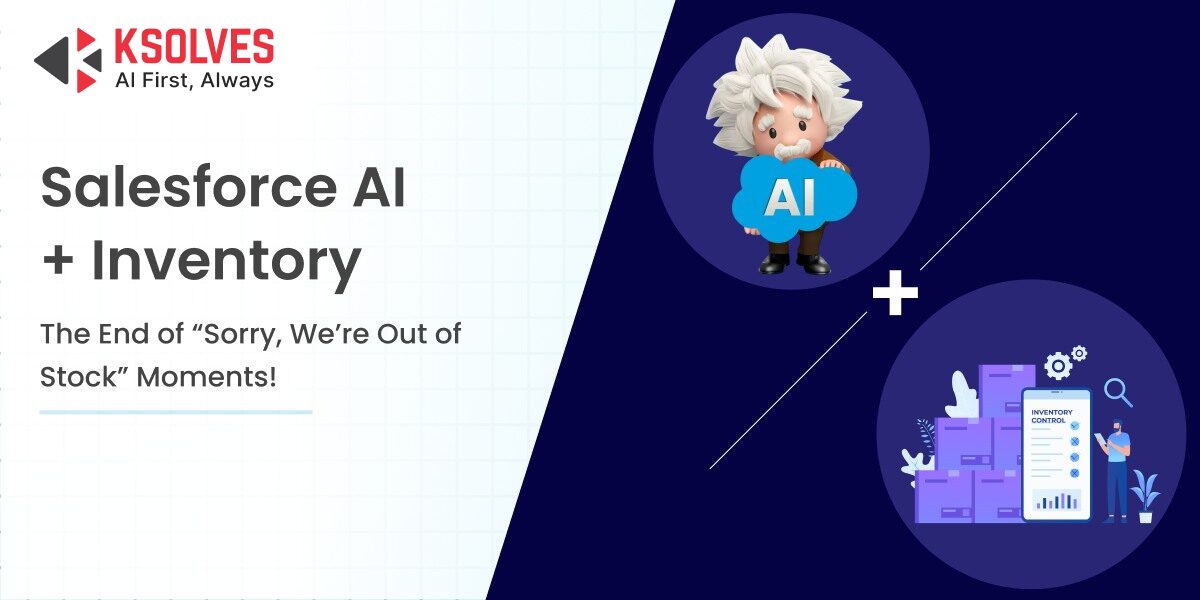
Inventory management is one of the most critical aspects of any product-based business. When done right, it ensures that products are available where and when customers need them. When done poorly, it leads to stockouts, overstocking, increased costs, and missed revenue opportunities. Among these, stockouts are particularly damaging. They not only result in immediate lost sales but also erode customer trust, push buyers to competitors, and impact long-term brand loyalty.
This is where the concept of inventory agility comes in. Inventory agility is the ability to respond quickly and intelligently to changing demand, supply disruptions, and market conditions. It’s about moving away from reactive planning and toward predictive, AI-driven decision-making. In fast-paced markets where customer expectations are high and product lifecycles are short, agility in managing inventory can make the difference between a profitable quarter and a poor one.
Salesforce AI for customer engagement is helping businesses achieve this agility. By combining real-time data, machine learning, and automation, Salesforce enables companies to predict demand more accurately, optimize stock levels, and take proactive steps before a stockout occurs.
In this article, we’ll cover:
- What inventory agility means and why it matters today
- The common causes and consequences of stockouts
- How Salesforce AI helps businesses prevent stockouts with predictive insights
- Key Salesforce tools that support smarter inventory planning
- Real-world examples of improved supply chain performance
- Tips to get started with AI-powered inventory management
By the end, you’ll understand how Salesforce AI can become a strategic asset in building a resilient, customer-focused inventory management system.
Why Stockouts Hurt Your Business More Than You Think
Stockouts can quietly erode a business from within. While a missing product on the shelf or in the warehouse may seem like a short-term inconvenience, its ripple effects are far more damaging. For many companies, the financial loss is only the beginning.
At the core, stockouts directly impact sales. When a customer is ready to buy but the product isn’t available, that sale is lost and often permanently. In highly competitive markets, shoppers rarely wait; they simply switch to a competitor. Over time, these missed opportunities chip away at revenue targets and customer lifetime value.
Worse, frequent stockouts diminish customer trust. Inconsistent availability signals unreliability, making customers less likely to return. This is particularly damaging in industries like fashion, electronics, or pharmaceuticals, where timing and availability are crucial. A few repeated experiences can undo years of brand loyalty.
Internally, stockouts disrupt workflows and lead to inefficient decision-making. Operations teams may have to:
- Place urgent purchase orders with expedited shipping
- Reallocate stock from other locations, increasing logistics costs
- Delay fulfillment cycles or pause production schedules
These last-minute adjustments not only inflate costs but also strain supplier relationships and forecasting accuracy.
And the numbers speak for themselves. A study by IHL Group found that global retailers lose $1 trillion each year due to out-of-stock situations. In the B2B space, even a single unavailable component can delay entire supply chains or client deliveries, sometimes costing far more than the value of the product itself.
In short, stockouts are more than just inventory hiccups. They’re a serious threat to both customer satisfaction and operational efficiency.
What is Inventory Agility?
Inventory agility refers to a company’s ability to adapt quickly to changes in demand, supply, or market conditions without disrupting operations. In a fast-paced supply chain environment, agility means being able to respond in real time, adjusting stock levels, rerouting shipments, or replenishing inventory, based on up-to-date insights.
Traditional, static inventory systems rely heavily on historical data and fixed rules. These systems often struggle to keep up with sudden shifts in demand or supply chain disruptions. They lack the flexibility to respond dynamically, which can lead to stockouts, overstocks, or delayed order fulfillment.
Agile inventory systems, on the other hand, use real-time data, predictive analytics, and AI to make smarter decisions. Salesforce AI, for example, can continuously track demand trends, supplier reliability, and customer behavior. It then uses this information to forecast inventory needs more accurately, flag potential shortages, and automate restocking actions. This proactive approach helps businesses stay ahead of demand, avoid missed sales, and reduce excess inventory holding costs.
How Salesforce AI Powers Inventory Agility
Salesforce AI transforms traditional inventory systems into intelligent, adaptive networks that respond in real time. By combining predictive analytics with automation, it empowers businesses to stay ahead of demand and avoid costly stockouts.
- AI-Powered Demand Forecasting
Salesforce AI analyzes historical sales trends, seasonal variations, promotions, and real-time buying behavior to predict future demand with high accuracy. This helps businesses stock just the right amount of inventory. It reduces the risk of overstocking slow-moving items or running out of high-demand products.
- Automated Replenishment Triggers
Using machine learning models, Salesforce AI can detect when stock levels are nearing a critical point and automatically trigger replenishment orders. This eliminates manual tracking and ensures timely restocking based on actual consumption patterns, not guesswork.
- Real-Time Inventory Visibility
Salesforce integrates data across warehouses, retail locations, POS systems, and ERP platforms into a unified dashboard. With real-time updates, teams can see stock levels across channels instantly and respond quickly to inventory shifts, backorders, or demand spikes.
- Predictive Lead Time Management
AI monitors supplier performance and delivery trends over time to forecast potential delays before they impact fulfillment. It enables procurement teams to adjust ordering schedules or switch to alternate suppliers proactively, minimizing disruptions.
- Intelligent Product Segmentation
Salesforce AI segments inventory based on factors like sales velocity, margin contribution, or seasonal relevance. This allows for smarter stocking decisions, such as prioritizing high-demand or high-margin items for faster replenishment and tighter control.
Salesforce Tools That Enable Smart Inventory
Salesforce offers a connected suite of tools that enable real-time inventory visibility, smarter forecasting, and seamless coordination across the supply chain:
- Salesforce Einstein
Einstein brings AI and machine learning into your inventory planning process. It analyzes historical sales data, seasonal trends, and real-time behavior to predict demand more accurately. By automating reorder points and surfacing insights before issues arise, Einstein helps businesses reduce excess stock and avoid costly stockouts.
- MuleSoft
With MuleSoft, you can integrate Salesforce with third-party ERP, WMS, and supplier systems. This integration ensures that inventory, order, and shipping data flow seamlessly across platforms, eliminating manual errors and giving you a real-time, unified view of stock levels across all warehouses and channels.
For example, Ksolves provided MuleSoft integration services to a global retail user, successfully connecting their Salesforce system with multiple third-party inventory platforms. Read the full case study.
- Salesforce Commerce Cloud and Service Cloud
These platforms give you a centralized system to track customer orders, service requests, and fulfillment status. With live inventory data synced across online stores, physical locations, and customer service teams, you can respond to demand faster, route orders more efficiently, and improve the customer experience.
- Tableau CRM (formerly Einstein Analytics)
Tableau CRM empowers decision-makers with intuitive dashboards and predictive analytics. Teams can set up alerts for low stock, visualize SKU performance, and simulate inventory scenarios. This makes it easier to prioritize high-impact actions and continuously improve inventory strategies.
Getting Started: Implementation Steps
Adopting AI-powered inventory agility with Salesforce requires a structured approach to ensure success. Here’s how to get started:
- Audit Current Inventory Management Practices
Begin by assessing your existing systems and workflows. Identify where delays, errors, or inefficiencies occur, whether in stock visibility, manual reordering, or data silos between systems.
- Identify Integration Points for Salesforce with ERP or Warehouse Systems
Evaluate how Salesforce can be connected with your ERP, warehouse management system (WMS), or supplier platforms. Integration tools like MuleSoft play a key role here, enabling seamless data flow across your supply chain.
- Set Up AI Forecasting Models and Alert Rules
Utilize Salesforce Einstein to create demand forecasting models based on seasonality, trends, and real-time data. Configure automated alerts and replenishment triggers to respond to low-stock scenarios before they impact operations.
- Train Teams and Monitor Key KPIs
Equip your inventory and operations teams with the tools and knowledge needed to use the new system effectively. Track performance through KPIs like stockout frequency, forecast accuracy, fill rate, and inventory turnover to continually optimize.
Why Partner with Experts Like Ksolves
Salesforce implementation for intelligent inventory management is a high-stakes transformation; one that benefits from expert guidance. Here’s why businesses choose Ksolves:
- Expertise in Salesforce AI, Commerce Cloud, and MuleSoft Integration
Ksolves brings deep domain knowledge across Salesforce platforms. Our certified team specializes in leveraging Einstein for predictive analytics, integrating systems using MuleSoft, and customizing Commerce Cloud for inventory agility.
For instance, Ksolves helped a global electronics distributor enhance its sales performance by integrating Salesforce AI with automation workflows. By leveraging predictive insights and streamlining repetitive tasks, the company saw a significant boost in lead conversions and inventory responsiveness. Read the full case study.
- Proven Track Record in Supply Chain Transformation
From retail flash sales to complex manufacturing logistics, Ksolves has delivered measurable results by enhancing inventory visibility, streamlining operations, and enabling real-time decision-making.
- Tailored Solutions for Retail, Manufacturing, and E-Commerce
We understand that no two industries or businesses are the same. Our Salesforce professional services are customized to fit the specific inventory challenges and goals of your sector, whether that’s managing high SKU volumes in retail or syncing supplier data in manufacturing.
Conclusion
Inventory issues aren’t just operational hiccups—they directly impact revenue, customer satisfaction, and business continuity. Stockouts, delays, and missed demand signals can be avoided with the right systems in place.
Salesforce AI equips businesses with real-time insights, smarter forecasts, and automation capabilities that bring agility to inventory management. When paired with the right integration strategy and expert support, these tools can help you stay ahead of demand, improve fulfillment, and reduce costly inefficiencies.
If you’re ready to modernize your inventory operations, the team at Ksolves is here to help. Reach out at [email protected] to get started.































Author
About the Author Editorial Team The Ksolves Editorial Team includes certified Salesforce experts, Big Data engineers, AI/ML specialists, Zoho consultants, and experienced technology writers focused on delivering clear, actionable insights for modern businesses. With hands-on experience across Salesforce, Big Data platforms, AI/ML solutions, application development, software testing, and Zoho ERP/CRM, the team publishes practical guides, real-world use cases, and industry updates that support smarter decisions and faster growth. Every article is created to solve business challenges, guide technology adoption, and keep organizations aligned with evolving digital ecosystems.
Share with